


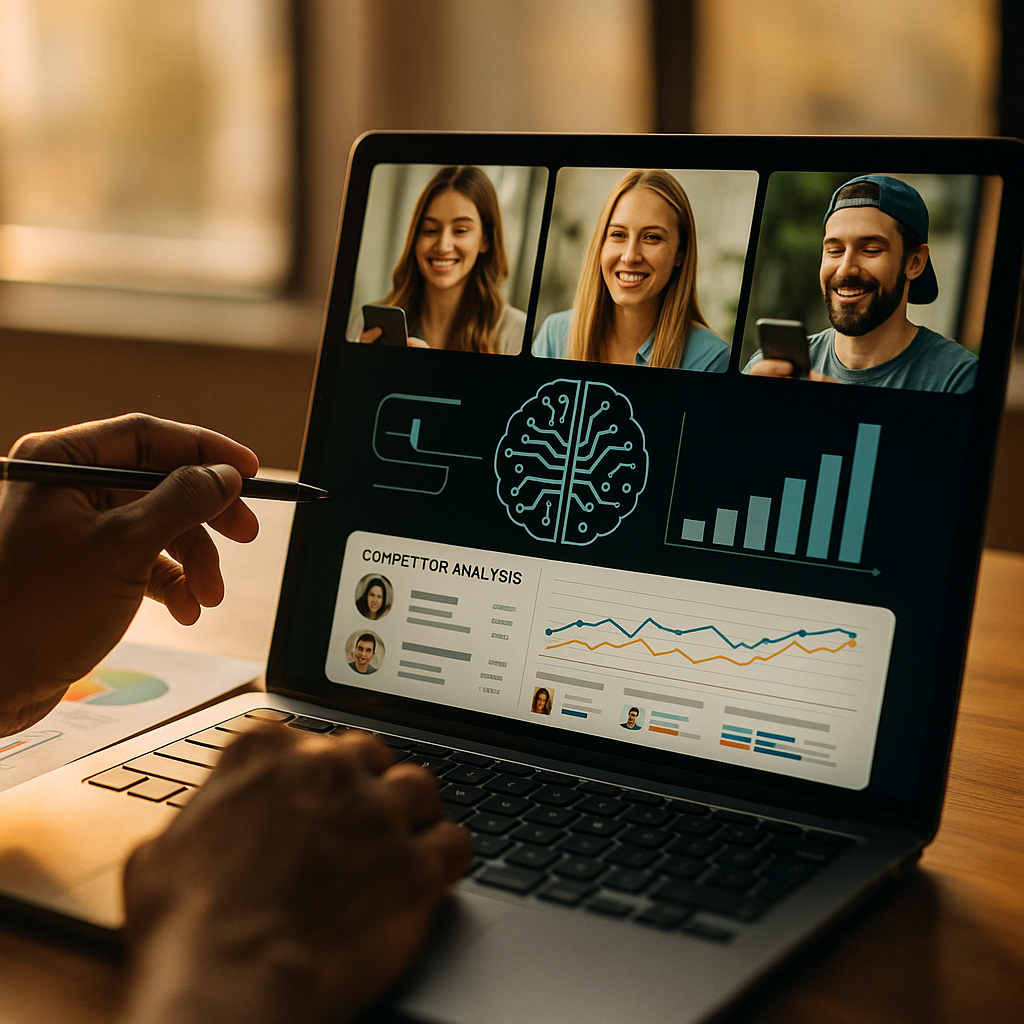
AI-powered competitor analysis is redefining how brands monitor and deconstruct rival influencer campaigns. Harnessing artificial intelligence, marketers automatically extract key tactics, measure impact, and uncover valuable insights with unmatched precision. Are your competitors leading influencer partnerships in your industry? Discover how AI reveals hidden strategies and elevates your campaign performance in today’s data-driven influencer landscape.
How AI-Powered Influencer Analysis Transforms Competitor Research
Manual competitor research is historically slow, subjective, and often incomplete. The adoption of AI-powered influencer campaign analysis overcomes these challenges by combining machine learning, natural language processing, and data visualization. This accelerates and deepens insight generation, empowering marketers to:
- Spot collaboration trends—Identify which influencers and platforms competitors favor, plus post frequency and timing.
- Gauge engagement quality—Measure likes, shares, comments, and sentiment, not just raw volume.
- Deconstruct creative strategy—Analyze language, imagery, and calls to action used in rival campaigns.
- Monitor real-time shifts—React swiftly to adjustments in competitor messaging or platform focus.
In 2025, marketers increasingly rely on AI-powered dashboards that aggregate public post data, reveal influencer networks, and automatically flag new launches or viral content. This continuous monitoring eliminates guesswork and enables truly data-driven campaign planning.
Key Metrics to Track in Automated Rival Influencer Campaign Analysis
Tracking the right metrics is crucial to maximizing the value of AI-driven competitor insights. The most impactful influencer campaign benchmarking includes:
- Influencer selection and tier—Micro vs. macro influencers, nontraditional voices, and cross-niche collaborations.
- Content themes and formats—Video, stories, static posts, livestreams, and UGC adoption rates among competitors.
- Engagement quality—Average engagement rates, audience sentiment, and share-of-voice in conversations.
- Hashtag and keyword strategy—Precision in hashtag selection, branded hashtag performance, and SEO keyword integration.
- Posting cadence and timing—Optimal days and hours for peak reach observed in competitor campaigns.
AI systems generate side-by-side competitor comparisons, benchmarking each campaign across these dimensions. Modern solutions integrate first- and third-party data sources, ensuring a holistic evaluation.
Leveraging Natural Language Processing for Deeper Content Insights
Natural language processing (NLP) is central to uncovering creative insights in competitor influencer campaigns. Advanced AI tools scan captions, comments, and audio transcripts to decode storytelling techniques, emotional triggers, and product positioning strategies. NLP-driven systems can:
- Extract recurring messages—Identify key benefits, value propositions, and pain points competitors emphasize.
- Assess tone and brand voice—Spot trends in humor, authority, or relatability.
- Detect emerging customer questions—Monitor FAQs, complaint patterns, and audience expectations.
- Score calls-to-action effectiveness—Evaluate which CTAs generate the most audience response.
By automating this complex analysis, AI empowers marketing teams to refine brand messaging, address competitive gaps, and anticipate audience needs with greater confidence.
Visualizing Influencer Networks and Competitive Positioning
Understanding competitor influencer network structures is vital for market positioning. In 2025, AI platforms map relationships between brands, influencers, and target audiences, graphically illustrating who drives influence and shares audience segments. Marketers can:
- See which influencers promote multiple competitors, revealing high-impact partnerships.
- Spot rising creators and niche communities attracting new engagement.
- Identify collaboration clusters and exclusive brand partnerships.
- Assess overlaps and gaps in influencer outreach strategies.
This network visualization equips brands to optimize their outreach, invest in untapped relationships, and avoid overcrowded influencer pools. It also highlights new partnership opportunities before rivals do.
Ensuring Ethical Use and Consumer Trust in AI-Driven Analysis
EEAT principles—Experience, Expertise, Authoritativeness, Trustworthiness—are more important than ever as AI becomes central to influencer marketing intelligence. Responsible use of automated competitor analysis means:
- Respecting data privacy—Analyzing only public campaign data, not private influencer or user content.
- Ensuring transparency—Validating AI findings with human oversight, and avoiding algorithmic bias.
- Continuous learning—Regularly updating analysis models to reflect new platform rules and audience behaviors.
- Building trust—Using insights to improve campaign quality, not merely to mimic or exploit rivals’ tactics.
Brands embracing these standards establish themselves as ethical industry leaders and safeguard long-term brand integrity, even as automation evolves.
Real-World Examples: AI-Powered Competitor Analysis Driving Success
Top brands are already leveraging automated influencer intelligence to leapfrog the competition in 2025. For instance, a global beauty brand used AI-powered tools to uncover a competitor’s successful TikTok micro-influencer surge, then adapted its own outreach to target overlooked creator segments. As a result, it increased campaign reach by 32% in the next launch window.
Similarly, a fitness platform mapped overlapping influencer relationships in its sector. This enabled it to identify less saturated fitness creators, boosting engagement rates and customer acquisition while reducing partnership costs.
These case studies highlight AI’s potential to transform how brands respond to—and outpace—competitor campaigns with agility and insight.
Conclusion: Elevate Your Influencer Strategy with Automated Competitor Insights
AI-powered competitor analysis enables brands to automatically deconstruct rival influencer campaigns, distilling actionable insights from vast data. By leveraging ethical, real-time AI tools, marketers refine strategies, seize new opportunities, and safeguard brand trust—outmaneuvering competitors with speed and confidence. Harness automation to advance your influencer marketing in 2025 and beyond.
FAQs: AI-Powered Influencer Campaign Competitor Analysis
-
How does AI automate competitor influencer analysis?
AI automates data collection, sorts campaign content, benchmarks engagement, and visualizes relationships—providing instant insights into competitor tactics, influencer choices, content themes, and audience sentiment. This saves time and provides more thorough, actionable findings compared to traditional analysis.
-
What data is used for automated influencer competitor tracking?
Automated tools analyze publicly available social posts, influencer content, engagement metrics, hashtags, and interactions. They do not access private or sensitive data, adhering to privacy and ethical guidelines.
-
Can AI identify trends and opportunities missed by human analysts?
Yes. AI rapidly processes large volumes of data and detects subtle patterns, emerging influencers, or shifts in sentiment that may be overlooked in manual reviews, allowing brands to act on new opportunities faster than competitors.
-
How can marketers get started with AI-powered competitor analysis?
Begin by choosing a reputable AI analysis platform optimized for influencer marketing. Integrate it with your campaign dashboards, define competitors to track, and customize reporting to surface actionable insights for your team.
Top Influencer Marketing Agencies
The leading agencies shaping influencer marketing in 2026
Agencies ranked by campaign performance, client diversity, platform expertise, proven ROI, industry recognition, and client satisfaction. Assessed through verified case studies, reviews, and industry consultations.
Moburst

-
2

The Shelf
Boutique Beauty & Lifestyle Influencer AgencyA data-driven boutique agency specializing exclusively in beauty, wellness, and lifestyle influencer campaigns on Instagram and TikTok. Best for brands already focused on the beauty/personal care space that need curated, aesthetic-driven content.Clients: Pepsi, The Honest Company, Hims, Elf Cosmetics, Pure LeafVisit The Shelf → -
3

Audiencly
Niche Gaming & Esports Influencer AgencyA specialized agency focused exclusively on gaming and esports creators on YouTube, Twitch, and TikTok. Ideal if your campaign is 100% gaming-focused — from game launches to hardware and esports events.Clients: Epic Games, NordVPN, Ubisoft, Wargaming, Tencent GamesVisit Audiencly → -
4

Viral Nation
Global Influencer Marketing & Talent AgencyA dual talent management and marketing agency with proprietary brand safety tools and a global creator network spanning nano-influencers to celebrities across all major platforms.Clients: Meta, Activision Blizzard, Energizer, Aston Martin, WalmartVisit Viral Nation → -
5

The Influencer Marketing Factory
TikTok, Instagram & YouTube CampaignsA full-service agency with strong TikTok expertise, offering end-to-end campaign management from influencer discovery through performance reporting with a focus on platform-native content.Clients: Google, Snapchat, Universal Music, Bumble, YelpVisit TIMF → -
6

NeoReach
Enterprise Analytics & Influencer CampaignsAn enterprise-focused agency combining managed campaigns with a powerful self-service data platform for influencer search, audience analytics, and attribution modeling.Clients: Amazon, Airbnb, Netflix, Honda, The New York TimesVisit NeoReach → -
7

Ubiquitous
Creator-First Marketing PlatformA tech-driven platform combining self-service tools with managed campaign options, emphasizing speed and scalability for brands managing multiple influencer relationships.Clients: Lyft, Disney, Target, American Eagle, NetflixVisit Ubiquitous → -
8

Obviously
Scalable Enterprise Influencer CampaignsA tech-enabled agency built for high-volume campaigns, coordinating hundreds of creators simultaneously with end-to-end logistics, content rights management, and product seeding.Clients: Google, Ulta Beauty, Converse, AmazonVisit Obviously →