


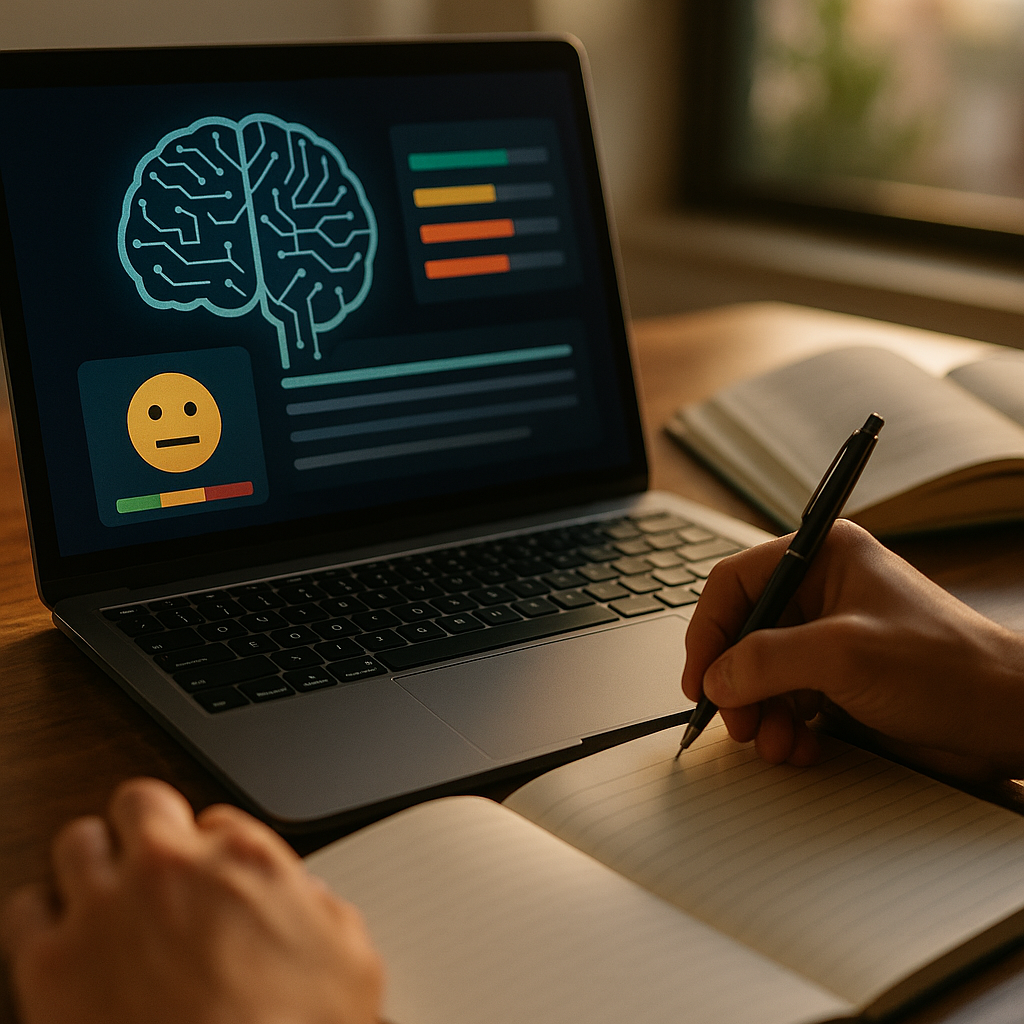
Brands, platforms, and researchers now rely on AI for contextual sentiment and understanding real time cultural slang to interpret what people actually mean online. Traditional sentiment scoring misses irony, shifting slang, and community-specific cues that drive real conversations. In 2026, accurate language intelligence shapes moderation, customer experience, and market insight. So how do modern systems keep up without losing nuance?
Contextual sentiment analysis: why meaning depends on context
Contextual sentiment analysis goes beyond labeling words as positive, negative, or neutral. It evaluates surrounding phrases, speaker intent, audience expectations, platform norms, emojis, and even conversation history. A phrase like that’s sick may signal praise in one community and concern in another. Without context, sentiment models routinely misclassify what users mean.
This matters because digital language is compressed, playful, and highly social. People use sarcasm, understatement, coded references, and in-group slang to communicate efficiently. A standard lexicon-based system may flag dead as negative, while users may actually mean they found something hilarious. In customer support, brand monitoring, and trust and safety workflows, that kind of error creates flawed insights and poor decisions.
Modern AI systems improve performance by combining several signals:
- Semantic embeddings to capture word meaning in relation to nearby language
- Conversation-level analysis to understand replies, quote posts, and thread dynamics
- Speaker and audience patterns to account for community-specific usage
- Multimodal cues such as emojis, GIF references, punctuation, and formatting
- Domain adaptation for industries like gaming, finance, entertainment, and politics
Helpful content must acknowledge a core truth: sentiment is not a fixed dictionary property. It is a relational signal shaped by culture, timing, and medium. Any business using AI for language interpretation should evaluate models against real conversational examples from its own audiences, not only benchmark datasets.
Real-time cultural slang detection: why static language models fall behind
Real-time cultural slang detection is essential because slang evolves faster than traditional data refresh cycles. New expressions spread from niche communities into mainstream channels within days, sometimes hours. Their meanings can also flip quickly. A model trained on older examples may understand the term but miss the current sentiment, tone, or social implication.
That challenge is bigger in 2026 because language now moves across short-form video, livestream comments, private communities, gaming chat, fan spaces, and regional creator ecosystems. Slang is no longer only geographic. It is platform-native, identity-linked, and highly contextual. The same term may signal approval on one platform, mockery on another, and simple imitation elsewhere.
To detect emerging slang in real time, robust systems typically use:
- Streaming data pipelines that ingest public conversational signals continuously
- Trend emergence models that identify unusual frequency spikes and new phrase combinations
- Community clustering to see where terms originate and how meanings differ by group
- Human-in-the-loop validation to verify whether a term is playful, harmful, ironic, or brand-safe
- Feedback loops from moderators, analysts, and customer teams
This is where experience matters. Teams that build language monitoring programs know that raw velocity is not enough. Fast detection without interpretation creates noise. Effective programs combine automation with expert review so brands can respond to cultural shifts intelligently instead of reacting to every trend spike.
For example, a beauty brand tracking social feedback should not treat every viral slang term as relevant. It needs AI that can distinguish between creator-driven hype, genuine product sentiment, coordinated mockery, and unrelated meme traffic. That level of filtering protects strategy quality.
Natural language understanding for slang: how AI interprets irony, memes, and code-switching
Natural language understanding for slang depends on models that learn relationships, not just keywords. Large language models and transformer-based architectures now interpret broader context better than earlier systems, but they still require task-specific tuning. Slang is often layered with irony, intentional misspelling, meme references, and code-switching between dialects or languages.
Consider a post that says a product launch was criminally good. A literal model may detect negativity because of the word criminally. A context-aware system recognizes emphasis and praise. Now add an eye-roll emoji, a stitched video, or a quote-post argument, and the meaning may shift again. This is why production-grade AI should not rely on single-message inference alone when business decisions depend on precision.
Several capabilities improve slang understanding:
- Pragmatic inference: estimating likely intent, including sarcasm and playful exaggeration
- Dialect and sociolect sensitivity: reducing false positives when communities use language differently
- Cross-lingual competence: interpreting hybrid speech common in multilingual markets
- Meme literacy: mapping references and recurring templates to likely emotional meaning
- Temporal awareness: recognizing that meaning changes over time
Businesses should ask a practical question before deployment: What kinds of mistakes matter most? For trust and safety, false negatives on harmful coded language may be critical. For marketing research, false positives around enthusiasm may distort campaign analysis. Clarifying the use case helps teams choose the right balance between automation, human review, and model conservatism.
EEAT principles are especially important here. Helpful content should be based on demonstrated use, clear limitations, and transparent methods. If a vendor claims near-perfect slang comprehension across all communities, decision-makers should ask how the model was evaluated, how recently it was updated, and whether community experts reviewed outputs.
Social listening AI tools: practical use cases for brands, platforms, and researchers
Social listening AI tools increasingly rely on contextual sentiment and slang understanding to support real business decisions. The value is not just better dashboards. It is faster, more reliable interpretation of what audiences feel, why they feel it, and how those signals should shape action.
Common use cases include:
- Brand monitoring: distinguishing genuine praise from sarcasm and identifying emerging reputational risks
- Customer experience: routing urgent complaints accurately when users speak informally or indirectly
- Product research: spotting unmet needs hidden inside jokes, memes, or creator commentary
- Trust and safety: detecting harmful slang, dog whistles, and evasive language patterns
- Campaign analysis: measuring audience reception across regions, subcultures, and platforms
- Media and academic research: tracking discourse shifts with greater linguistic precision
A practical example helps. Imagine a gaming company launching a new update. Early community posts describe the patch as broken in a good way, absolutely wild, and too clean. Older sentiment models might split those reactions across negative and neutral categories. A context-aware system can identify them as positive excitement, while also separating legitimate bug reports from hype language.
Researchers benefit too. Social discourse now develops inside fragmented communities with distinct lexicons. AI that maps sentiment accurately across those communities helps analysts avoid overgeneralizing from mainstream language. That leads to better reporting, better policy insight, and stronger decision support.
The key takeaway for buyers is simple: the best tools do not just count mentions. They explain meaning with confidence scores, examples, source context, and clear pathways for human verification.
Multilingual sentiment analysis: handling regional dialects and cultural nuance at scale
Multilingual sentiment analysis has become more demanding as global audiences mix languages fluidly. In many markets, users blend English with local slang, abbreviations, and culturally specific references in a single post. Direct translation often destroys tone. A phrase that looks neutral after translation may be highly emotional in its original setting.
Accurate multilingual systems therefore need native-context evaluation, not just language conversion. They must understand dialects, local internet humor, and regional power dynamics that shape how words land. This is especially important in markets where youth slang, diaspora language, and creator culture influence mainstream communication.
Strong multilingual sentiment programs usually include:
- Region-specific training data rather than one generic multilingual layer
- Dialect-aware labeling to reduce bias against nonstandard language
- Local reviewer input for quality checks and edge cases
- Cultural risk analysis for sensitive phrases, reclaimed language, or context-dependent offense
- Continuous evaluation as slang shifts within each market
This is not only a performance issue. It is also a trust issue. If a model consistently misreads certain communities, the downstream impact can include unfair moderation, flawed market conclusions, and missed opportunities. Organizations that care about accuracy should audit outcomes by language variety, region, and user segment.
From an EEAT perspective, credibility comes from acknowledging uncertainty. The most responsible teams document where their models perform well, where human escalation is required, and how quality is monitored over time.
AI content moderation and ethics: reducing bias while keeping pace with language change
AI content moderation and ethics sit at the center of contextual sentiment and slang analysis. Systems that understand live culture can improve safety and reduce false alarms, but they also carry risk. Slang often emerges from marginalized communities first. If moderation models lack cultural context, they may over-penalize harmless expression while missing genuinely harmful coded language.
Responsible deployment starts with governance. Organizations should define what the model is allowed to do, what requires human review, and how users can appeal decisions. They should also test for disparate impact across dialects, identities, and regions.
Best practices include:
- Bias audits across communities and language styles
- Transparent labeling guidelines with examples of irony, reclaimed language, and coded abuse
- Human escalation paths for ambiguous or high-impact decisions
- Model update documentation so teams know when language rules changed
- Privacy-aware data practices when monitoring public or consented data sources
Another ethical concern is overreach. Not every use case needs deep cultural inference. A support triage system may only need enough context to route tickets correctly. A public safety system may need stricter thresholds and additional review. Matching the model to the risk level is part of trustworthy AI practice.
Organizations should also monitor drift. Language does not just evolve; it can be intentionally manipulated. Coordinated groups may invent new phrases to evade moderation or sentiment tracking. That is why static policy lists fail. Teams need adaptive systems supported by experts who can investigate anomalies and retrain policies quickly.
Done well, AI becomes a force multiplier for human judgment rather than a replacement for it. It helps teams understand fast-moving language at scale while preserving accountability where nuance matters most.
FAQs about AI for contextual sentiment and cultural slang
What is contextual sentiment analysis?
It is the process of identifying emotion or opinion based on surrounding context, not just individual words. It considers tone, community norms, sarcasm, conversation history, emojis, and platform-specific usage to determine what a message actually means.
Why is cultural slang difficult for AI to understand?
Slang changes rapidly, varies by community, and often carries meanings that contradict literal definitions. The same word can express praise, humor, insult, or irony depending on the speaker, audience, and moment.
Can AI detect sarcasm accurately?
AI can detect sarcasm better than older rule-based systems, especially when trained on conversational data, but it is not perfect. Accuracy improves when models analyze threads, user context, punctuation, emojis, and multimodal signals rather than isolated sentences.
How do companies use AI for real-time slang tracking?
They use streaming data pipelines, trend detection, clustering, and human review to identify new phrases, interpret meaning, and update sentiment or moderation rules quickly. This helps brands and platforms respond to emerging discourse without relying on outdated vocabularies.
Does multilingual sentiment analysis require native-language review?
Yes. Translation alone is not enough. Native or regionally informed reviewers help validate local slang, dialects, and cultural references so the system does not misread tone or unfairly classify certain communities.
What should buyers look for in a vendor?
Look for transparent evaluation methods, recent model updates, community-aware testing, human-in-the-loop workflows, bias monitoring, and examples from your industry. Ask how the system handles drift, ambiguity, and high-risk edge cases.
Can this technology improve brand monitoring?
Absolutely. It helps teams separate genuine praise from sarcasm, identify crises earlier, understand emerging audience language, and measure campaign response more accurately across subcultures and platforms.
Is AI alone enough for high-stakes moderation or research?
No. AI is powerful for scale and speed, but human oversight remains essential when decisions affect safety, reputation, fairness, or public understanding. The strongest programs combine automation with clear review and governance processes.
AI can now read digital language with far more nuance, but success depends on context, recency, and responsible oversight. Organizations that invest in adaptive models, local expertise, and human review gain sharper insight into sentiment and slang without sacrificing trust. In 2026, the clear takeaway is this: language intelligence works best when technology and cultural understanding evolve together.