


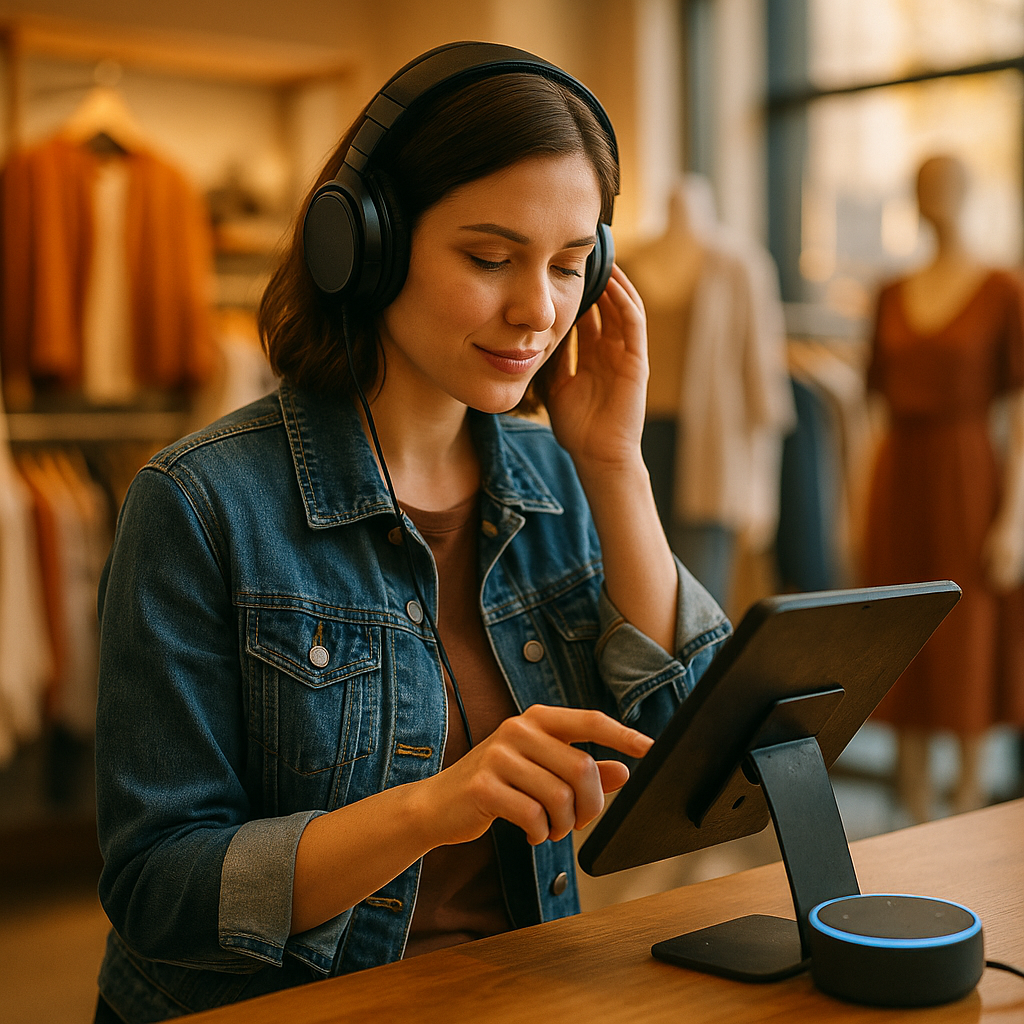
Retailers in 2026 are moving beyond generic playlists and embracing AI audio soundscapes for retail spaces to shape mood, dwell time, and brand memory. Instead of filling stores with random background noise, teams can now build highly specific sonic environments for different shoppers, departments, and times of day. The real opportunity is not just automation, but precision that customers actually feel.
What Hyper Niche Retail Sound Design Means
Hyper niche retail sound design is the practice of creating highly specific audio environments tailored to a store’s identity, customer profile, product category, and physical layout. It goes far beyond choosing “upbeat” or “relaxing” music. A luxury fragrance boutique, a running shoe store, a zero-waste grocer, and a collectible toy shop each need a different sonic strategy.
In practical terms, this can include ambient textures, subtle nature elements, rhythmic patterns, branded audio cues, localized language snippets, and music beds matched to time of day or traffic flow. AI makes this level of variation scalable. Instead of manually curating every minute of audio, retailers can define rules, mood profiles, and brand guardrails, then generate or adapt soundscapes quickly.
Helpful implementation starts with a clear question: What should customers feel in this exact space? The answer should be linked to business goals, not personal taste. For example:
- Luxury retail: calm confidence, slower browsing, premium perception
- Sports retail: motion, focus, energy, product trial encouragement
- Wellness retail: trust, quiet discovery, lower sensory overload
- Kids retail: playfulness without chaos, short attention engagement
That specificity is what makes a soundscape “hyper niche.” It is not just audio content. It is a designed sensory layer that supports how the store sells.
How AI Soundscape Generation Works in Stores
AI soundscape generation typically combines several capabilities: generative audio models, recommendation systems, environmental inputs, and retail operations data. Together, these systems can create, remix, or select audio based on what is happening inside the store at a given moment.
A modern setup may use inputs such as foot traffic, queue length, weather, time block, promotional calendar, product launches, and local demographic trends. The AI then matches those signals to a predefined sonic framework. For example, the store may shift from airy, minimal textures in the morning to warmer, higher-energy layers during peak afternoon traffic.
Retailers generally use one of three approaches:
- Fully generated soundscapes: AI creates original ambient audio or music-like backgrounds from prompts and brand parameters.
- Adaptive curation: AI selects from licensed tracks, stems, and sound elements, then arranges them dynamically.
- Hybrid systems: Human-designed sonic branding is combined with AI-driven variation and scheduling.
The hybrid model is often the most practical because it balances originality, quality control, and compliance. It also aligns with EEAT principles: experienced audio directors, brand teams, and store operators define standards, while AI handles speed and variation.
To make these systems useful, retailers need documented inputs and review loops. If the AI can change the experience, someone must define what “good” sounds like. That usually means setting boundaries for tempo, density, volume, instrumentation, emotional tone, and transition frequency. Without those controls, the result may feel inconsistent or distracting.
It is also important to distinguish between customer-facing value and technical novelty. Shoppers do not care whether a soundscape uses a complex model. They care whether the store feels coherent, comfortable, and memorable. The technology matters only if the experience improves.
Benefits of Personalized In-Store Audio for Retail Brands
Personalized in-store audio can support several retail goals when used deliberately. The strongest benefit is environmental fit. Different zones in a store serve different purposes, and sound can guide behavior without adding visual clutter.
Common advantages include:
- Stronger brand identity: Custom sound helps a store feel distinct rather than interchangeable.
- Improved dwell time: The right ambience can encourage browsing, especially in lifestyle and specialty retail.
- Better zoning: Separate sound profiles can support entrances, fitting rooms, demo areas, and checkout zones.
- Operational agility: Teams can adapt audio by season, campaign, or local audience without rebuilding everything manually.
- Lower fatigue: Non-repetitive, intelligently varied audio can reduce the irritation caused by looping playlists.
There is also a staff benefit that many brands overlook. Employees spend hours inside the same acoustic environment. If a soundscape is harsh, repetitive, or mismatched to store rhythms, staff energy can drop. AI-assisted variation can help maintain consistency without creating monotony.
Still, retailers should avoid overselling direct causation. Audio alone will not fix poor merchandising, weak staffing, or unclear layouts. It works best as part of a broader customer experience strategy. The soundscape should reinforce visual design, product storytelling, and service style.
For decision-makers, the key metric is not whether the audio is “interesting.” It is whether it supports measurable outcomes such as dwell time, conversion in key zones, repeat visits, staff satisfaction, and brand recall. Testing should compare specific store conditions, not just general impressions.
Best Practices for AI Music Licensing and Compliance
AI music licensing and compliance are critical in retail environments. Many brands get excited about generative audio and ignore legal and operational risks until rollout. That is a mistake. Any in-store audio program should be reviewed for intellectual property rights, public performance obligations, training-data concerns, and vendor accountability.
Retailers should ask vendors clear questions:
- Is the generated audio fully licensable for commercial in-store use?
- How was the model trained, and what indemnification is offered?
- Are public performance rights covered if curated music is included?
- Can the retailer export, archive, and document audio usage histories?
- What happens if a rights claim appears after deployment?
Compliance also includes practical matters such as volume standards, accessibility, and regional regulations. Some retail spaces need a quieter sensory profile to support comfort and inclusion. Others may need “low stimulation” hours, where AI must switch to a softer sound environment automatically.
EEAT matters here because trust is built through transparent process. If you are advising a retail brand, document the audio workflow, vendor contracts, review criteria, and escalation path for issues. Experience-based governance is more valuable than vague promises about “ethical AI.”
Another important point: data inputs used to personalize soundscapes should be privacy-safe. Retailers do not need invasive profiling to make good audio decisions. Aggregated traffic patterns, time blocks, and store-level trends are often enough. Keep personalization focused on context, not individual identity, unless there is explicit consent and a clear business reason.
Creating Sensory Branding With AI for Different Retail Formats
Creating sensory branding with AI starts by mapping the store experience from entrance to exit. Each touchpoint has a different emotional job. The entrance should attract and orient. Browsing zones should match product discovery. Trial zones should remove friction. Checkout should reduce perceived waiting time without adding pressure.
Here is a practical framework retailers can use:
- Define the brand sound: Choose three to five attributes, such as refined, playful, grounded, futuristic, or organic.
- Map store zones: List the sonic needs of entry, browse, trial, service, and checkout areas.
- Set audio rules: Define acceptable tempo ranges, volume windows, texture density, and transition logic.
- Create variants: Build different soundscapes for weekday mornings, peak traffic, seasonal promotions, and special events.
- Test in real conditions: Review customer flow, staff response, and sales patterns before scaling.
Different retail formats will use this framework differently:
- Grocery: Fresh departments may use lighter, spacious ambience, while checkout areas need calm pacing.
- Fashion: Audio can segment premium collections from trend-driven zones without changing store design.
- Beauty: Sound should support consultation, testing, and confidence, not overwhelm conversation.
- Home goods: Layered ambient textures can help customers imagine products in lived environments.
- Pop-ups: AI enables quick, brand-safe audio deployment for short-term physical experiences.
Retailers often ask how localized these soundscapes should be. The answer depends on the brand. If local identity is central to the concept, regional adaptation can be powerful. If consistency is the brand promise, localization should stay subtle. In both cases, keep a recognizable sonic core so the brand still feels like itself.
Measuring ROI From Adaptive Retail Audio Experiences
Adaptive retail audio experiences should be measured with the same discipline applied to any in-store optimization. Start with a baseline. If a brand changes audio, lighting, staffing, and merchandising at the same time, results will be hard to interpret. Controlled testing is essential.
Useful KPIs include:
- Dwell time by zone
- Conversion rate in featured areas
- Average transaction value
- Queue abandonment or waiting tolerance
- Customer satisfaction feedback
- Staff sentiment and fatigue indicators
Qualitative data matters too. Ask store teams what customers comment on. Observe whether people linger, move naturally, and engage with displays differently. In retail, small sensory shifts can create measurable effects over time, even if customers never explicitly mention the audio.
To improve reliability, run tests across multiple store types rather than one flagship location. A soundscape that performs well in a high-traffic urban store may not suit a suburban format. AI helps because variations can be deployed and adjusted quickly, but human review is still necessary to interpret results.
One of the most useful ways to think about ROI is in terms of repeatable systems. If a retailer can create a validated audio framework for launches, promotions, and store formats, the value extends beyond one campaign. The brand gains a scalable sensory asset. That is where AI becomes strategically useful, not just creatively interesting.
FAQs About AI Audio Soundscapes for Retail Spaces
What is an AI-generated retail soundscape?
An AI-generated retail soundscape is an audio environment created or adapted by AI using rules such as brand tone, store zone, time of day, and traffic conditions. It may include ambient sound, music-like layers, branded cues, or a mix of licensed and generated elements.
How is a soundscape different from a playlist?
A playlist is a sequence of tracks. A soundscape is a designed environment. It can be more fluid, less repetitive, and better matched to physical space, customer behavior, and brand identity.
Can AI soundscapes increase retail sales?
They can support sales by improving atmosphere, dwell time, and customer comfort, but they are not a standalone growth tool. Results depend on product mix, store design, staffing, and how well the audio aligns with the brand experience.
Are AI-generated audio systems legal for in-store use?
They can be, but retailers must confirm licensing, public performance rights where relevant, training-data safeguards, and vendor indemnification. Legal review is essential before rollout.
Do small retailers need expensive systems to use AI audio?
No. Smaller retailers can start with a limited hybrid setup: a defined brand sound, a few AI-assisted variations, and simple daypart scheduling. The key is strategic fit, not technical complexity.
How often should retail soundscapes change?
That depends on foot traffic, visit frequency, and store format. Many brands benefit from subtle daypart changes, campaign-based variations, and seasonal refreshes without making the environment feel unpredictable.
What data is needed to personalize in-store audio?
Often, store-level context is enough: time of day, traffic patterns, weather, promotions, and zone activity. Retailers do not need invasive personal data to make audio more relevant.
Who should own this strategy inside a retail organization?
Usually a cross-functional group: brand or marketing, store operations, experience design, and legal or procurement. Audio affects both customer perception and operational reality, so ownership should not sit in one silo.
AI gives retailers a practical way to build soundscapes that fit specific spaces, audiences, and moments with far more precision than traditional playlists. The best results come from combining brand strategy, human oversight, legal care, and measured testing. If the audio supports how customers browse, feel, and buy, it becomes a real retail asset rather than background noise.