


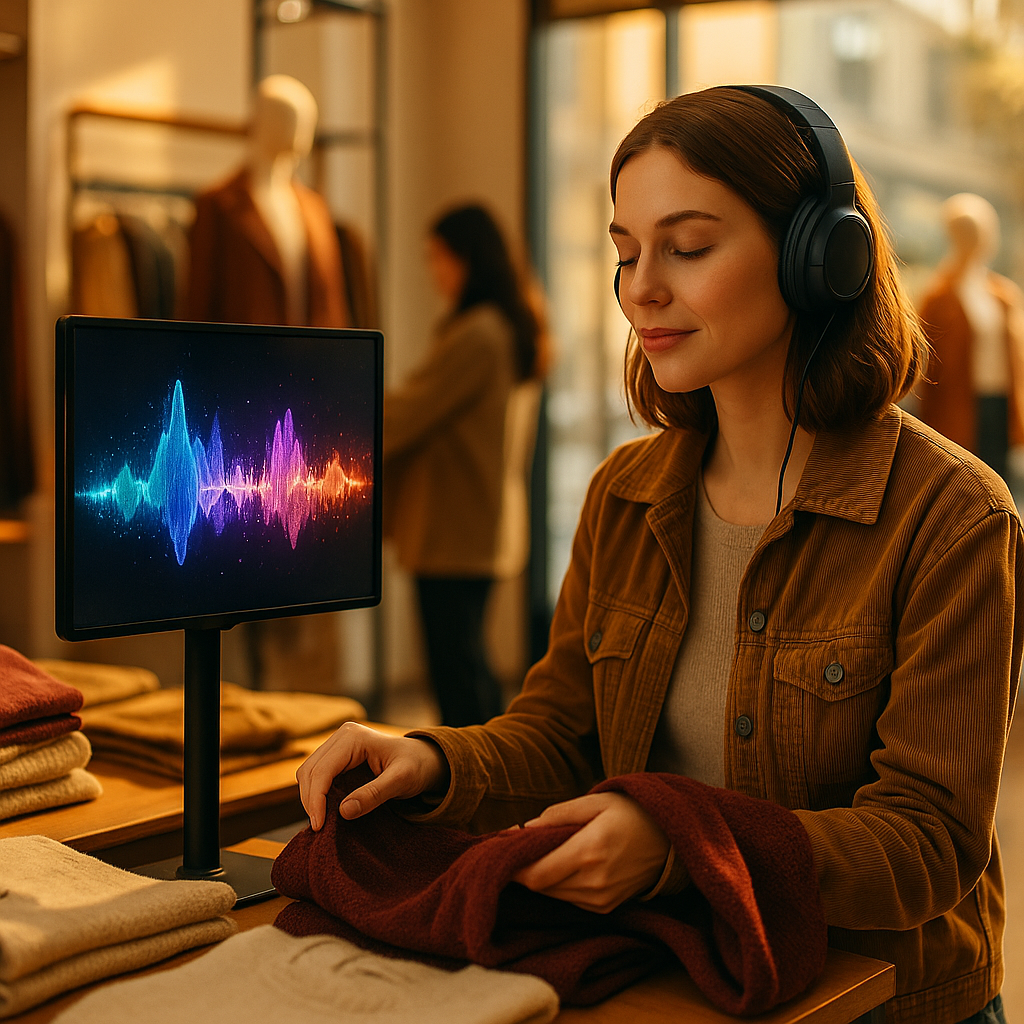
Using AI audio soundscapes for retail spaces is changing how stores shape mood, guide behavior, and strengthen brand identity. In 2026, retailers can move beyond generic playlists and create hyper niche sonic environments tailored to time of day, customer profiles, store zones, and campaign goals. The result is a more memorable shopping experience that can quietly influence dwell time and conversion.
Why custom retail sound design matters more in 2026
Retailers have spent years optimizing lighting, displays, signage, and scent. Sound often remained an afterthought, limited to licensed background music or silent spaces that felt flat. That gap is now closing. Custom retail sound design gives brands a practical way to shape emotion without adding visual clutter or operational friction.
In physical retail, the atmosphere affects how long customers stay, how comfortable they feel, and how easily they navigate the store. Audio can support all three. A luxury boutique may use sparse, textured ambience to create calm and exclusivity. A wellness store may layer soft nature cues and low-tempo tonal beds to reduce stress. A comic shop may build subtle sci-fi textures around release days. These are not just aesthetic choices. They help align the environment with customer expectations.
Hyper niche soundscapes take this further. Instead of using one generic soundtrack across every location, retailers can tailor audio to:
- Store format and square footage
- Neighborhood demographics
- Time of day and traffic patterns
- Seasonal campaigns and product launches
- Specific in-store zones such as fitting rooms, checkout, or experiential displays
This level of precision matters because modern shoppers notice inconsistency. If a brand claims sustainability, craftsmanship, speed, or innovation, the sonic environment should reinforce that promise. AI now makes that possible at scale, even for retailers with multiple locations and changing campaign calendars.
From an EEAT perspective, this is where experience and expertise matter. The best results come from combining AI tools with human brand strategy, acoustic awareness, and retail operations knowledge. AI can generate options quickly, but retailers still need intentional design choices based on real customer behavior and measurable business goals.
How AI-generated ambient audio works in retail environments
AI-generated ambient audio uses machine learning models to create or adapt sound layers based on prompts, brand rules, and contextual inputs. In retail, that usually means generating non-intrusive sonic backgrounds rather than full songs with lyrics. The goal is atmosphere, not distraction.
A typical workflow starts with a creative brief. The brand defines its tone, target audience, store mission, and practical boundaries such as acceptable volume range, instrumentation, emotional intent, and prohibited elements. The AI system then produces audio variations that fit those parameters. A human curator reviews them, tests them in the space, and adjusts the mix.
These systems can generate:
- Low-intensity ambient textures
- Nature-inspired layers such as wind, water, or forest cues
- Subtle rhythmic beds for energetic retail formats
- Transitional audio for changing dayparts
- Localized sound identities for campaigns or featured zones
More advanced setups connect audio generation to live signals. For example, a retailer may change the soundscape based on occupancy, weather, local events, or queue length. If the store gets crowded, the system may shift toward calmer, less dense textures. If traffic is low during an afternoon lull, it may introduce a warmer and slightly more upbeat atmosphere to support energy.
Retailers often ask whether AI-generated ambient audio replaces music licensing. Not always. In some stores, AI soundscapes complement licensed music rather than replace it. For example, ambient layers may play in entrances, fitting rooms, product galleries, or wellness zones, while music remains the primary sound in central areas. In other cases, AI-generated non-melodic environments reduce licensing complexity, especially where the brand wants a less commercial feel.
Implementation quality matters. Poorly tuned soundscapes can become repetitive, fatiguing, or acoustically muddy. That is why pilot testing in real stores is essential. Retail acoustics vary widely depending on ceiling height, flooring materials, refrigeration noise, and customer density. AI can produce content fast, but only careful testing reveals whether it actually improves the in-store experience.
Benefits of personalized in-store audio for shoppers and brands
Personalized in-store audio helps retailers make physical spaces feel intentional and distinctive. The strongest benefit is brand differentiation. Many stores still sound interchangeable. A tailored soundscape gives customers an emotional cue they may not consciously describe, but they still remember.
For shoppers, the benefits often include:
- A more cohesive and immersive environment
- Lower perceived stress in busy spaces
- Better alignment between the environment and the product category
- Clearer transitions between store zones
- A more premium or curated overall impression
For brands, the upside can extend beyond aesthetics. Personalized in-store audio may support:
- Longer dwell time in experiential zones
- Improved comfort during peak traffic periods
- Stronger recall of campaigns and product launches
- More consistent brand expression across locations
- Reduced dependence on generic playlists that clash with store identity
Another major advantage is flexibility. Traditional audio programming often requires manual updates, expensive curation, or a one-size-fits-all schedule. AI allows retailers to build modular systems that adapt continuously. A bookstore cafe can sound different from the children’s section without losing brand consistency. A flagship store can support a product drop with a temporary sonic identity while core zones remain stable.
There is also a practical measurement opportunity. Retail teams can compare locations or periods with different sound profiles and monitor metrics such as dwell time, customer feedback, sales lift by zone, staff sentiment, and even return visit patterns where data is available. That testing mindset aligns with helpful content principles and EEAT: decisions should be based on real-world evidence, not assumptions.
Retailers should still stay grounded. Audio is influential, but it is not magic. It works best when paired with thoughtful store design, trained staff, and a clear merchandising strategy. AI-generated soundscapes are one layer of experience design, not a substitute for the rest.
Building a branded sonic identity with hyper niche soundscapes
A branded sonic identity is the audio equivalent of a visual system. It includes recurring tonal qualities, pacing, texture, and emotional signatures that customers associate with the brand. Hyper niche soundscapes help make that identity more specific and more usable in retail.
Start by defining what the brand should feel like in sound, not just in words. “Premium” is too vague on its own. Does premium mean spacious and restrained, or rich and tactile? Does “playful” mean bright percussive textures, or softer whimsical cues? A clear sonic strategy helps AI tools generate usable results.
Retailers can build a strong branded sonic identity by defining:
- Core sonic traits: tempo range, density, timbre, warmth, and energy level
- Category fit: beauty, fashion, grocery, electronics, home, and specialty retail each need different approaches
- Zone-based rules: entrances, consultation areas, checkouts, and event spaces should not all sound the same
- Daypart logic: mornings, lunch periods, evenings, and weekends may require different emotional intensity
- Campaign overlays: product drops, seasonal moments, and local collaborations can add temporary layers
Hyper niche examples are where this becomes powerful. A sustainable skincare retailer could use soft mineral textures, airy pads, and light water-inspired detail to suggest calm, purity, and ritual. A high-performance running store could introduce subtle kinetic pulses and urban environmental textures that imply motion without overwhelming conversation. A children’s science store could use gentle futuristic cues that feel curious and inventive rather than chaotic.
The key is restraint. Effective retail soundscapes should support shopping, not dominate it. Staff must still hear customers clearly. Customers must still feel comfortable. If people notice the audio because it is irritating or confusing, the design has failed.
Retailers should also create governance around sonic identity. Document what the soundscape should and should not do. This helps maintain quality across multiple stores and vendors, especially when AI is used to generate many variations quickly.
Best practices for retail experience optimization with AI audio
If a retailer wants results rather than novelty, retail experience optimization should guide every audio decision. That means starting with business objectives and customer needs before selecting tools.
Use these best practices:
- Begin with one measurable use case
Do not deploy AI audio across every store zone at once. Start with a defined challenge such as improving comfort in checkout queues, supporting dwell time in a discovery area, or strengthening a flagship campaign experience. - Audit the acoustic environment
Measure baseline noise levels, speaker placement, and common disruptions. Hard surfaces, HVAC systems, refrigeration units, and street noise all affect how soundscapes perform. - Test with staff before full rollout
Employees experience the audio for hours, not minutes. Their feedback on fatigue, clarity, and mood is critical. A soundscape that seems elegant to leadership may become exhausting in daily operations. - Keep prompts and rules structured
The best AI outputs come from precise creative direction. Define acceptable frequencies, pacing, instrumentation, and mood boundaries. Avoid vague requests that produce inconsistent results. - Review legal and licensing issues
If the system generates music-like content or uses training inputs from third parties, legal review is important. For branded retail deployment, rights clarity is not optional. - Measure and iterate
Compare store performance, customer sentiment, and staff feedback before and after deployment. Fine-tune by zone, time, and season. Good sound design is iterative.
Retailers often ask how much personalization is too much. A useful rule is that shoppers should feel the difference more than consciously track it. The environment should feel right, not theatrical. Hyper niche does not mean hyper busy.
Another practical question is cost. AI reduces production time and expands creative possibilities, but quality still requires investment in testing, curation, and system setup. The most effective programs treat sound as part of the customer experience stack, alongside lighting, scent, signage, and service design.
Finally, transparency and trust matter. If retailers use responsive systems based on occupancy or contextual inputs, they should ensure privacy-safe implementation and avoid using invasive personal data. Helpful, trustworthy experiences support long-term brand value better than aggressive personalization.
Common challenges in adaptive soundscapes for stores and how to solve them
Adaptive soundscapes for stores offer clear potential, but there are common obstacles. Most are solvable with planning and oversight.
Challenge 1: Repetition fatigue
AI-generated loops can become noticeable over time, especially for employees. The solution is to build a larger library of modular layers, vary arrangement logic, and refresh content on a schedule.
Challenge 2: Poor fit with the physical space
What sounds balanced in headphones may fail in-store. Always test the mix on-site, in real traffic conditions, across multiple times of day.
Challenge 3: Overdesign
Some brands try to add too much personality. Soundscapes become distracting or gimmicky. Use fewer elements, longer transitions, and lower density.
Challenge 4: Inconsistent brand expression across locations
Without governance, local teams may make random adjustments. Create a sonic style guide, approved presets, and review workflows.
Challenge 5: Unclear ROI
If success metrics are not defined, leadership may see audio as subjective. Tie the initiative to operational and commercial KPIs such as dwell time, campaign engagement, customer satisfaction, and employee feedback.
Challenge 6: Tool-first thinking
Retailers can get distracted by flashy AI demos. Start with the customer journey and store purpose, then choose technology that supports that strategy.
The brands that succeed here use AI as an amplifier for thoughtful experience design. They do not ask the system to invent the brand. They define the brand clearly, then use AI to make sonic execution faster, more adaptive, and more scalable.
FAQs about AI audio soundscapes for retail spaces
What are AI audio soundscapes for retail spaces?
They are ambient or semi-ambient audio environments generated or adapted by AI to match a store’s brand, customer profile, time of day, or specific zones. They go beyond standard playlists by creating tailored atmosphere.
How are hyper niche retail soundscapes different from background music?
Background music usually consists of songs or playlists chosen for general mood. Hyper niche soundscapes are more customized, often less intrusive, and designed to reflect a brand identity or support a specific retail objective.
Can AI-generated retail audio increase sales?
It can support conditions that influence sales, such as dwell time, comfort, and brand perception. Results depend on store type, execution quality, and whether the sound strategy aligns with customer expectations and merchandising.
Do small retailers need a large budget to use AI soundscapes?
No. Small retailers can start with a single zone or campaign and test impact before expanding. The most important step is having a clear creative and operational brief.
Is AI-generated audio legally safe for commercial retail use?
It can be, but retailers should review licensing, intellectual property, and platform terms carefully. Commercial deployment requires clear rights and compliance processes.
How often should retailers update soundscapes?
Core brand sound can remain stable, but seasonal and campaign variations should be refreshed regularly. Staff feedback can help identify when content starts to feel repetitive.
What store areas benefit most from AI audio soundscapes?
Entrances, fitting rooms, consultation areas, experiential displays, wellness sections, cafes, and checkout zones often benefit most because atmosphere strongly shapes behavior in those spaces.
Can AI soundscapes work alongside licensed music?
Yes. Many retailers use AI-generated ambient layers in selected zones while keeping licensed music in main traffic areas. This hybrid approach can improve flexibility without changing the entire audio strategy.
AI gives retailers a practical way to create soundscapes that are specific, flexible, and brand-led. When used thoughtfully, hyper niche audio can improve atmosphere, support customer comfort, and make stores more memorable without overwhelming the shopping journey. The clearest takeaway is simple: start small, test in real conditions, and let strategy, not novelty, shape how AI sound transforms your retail space.