


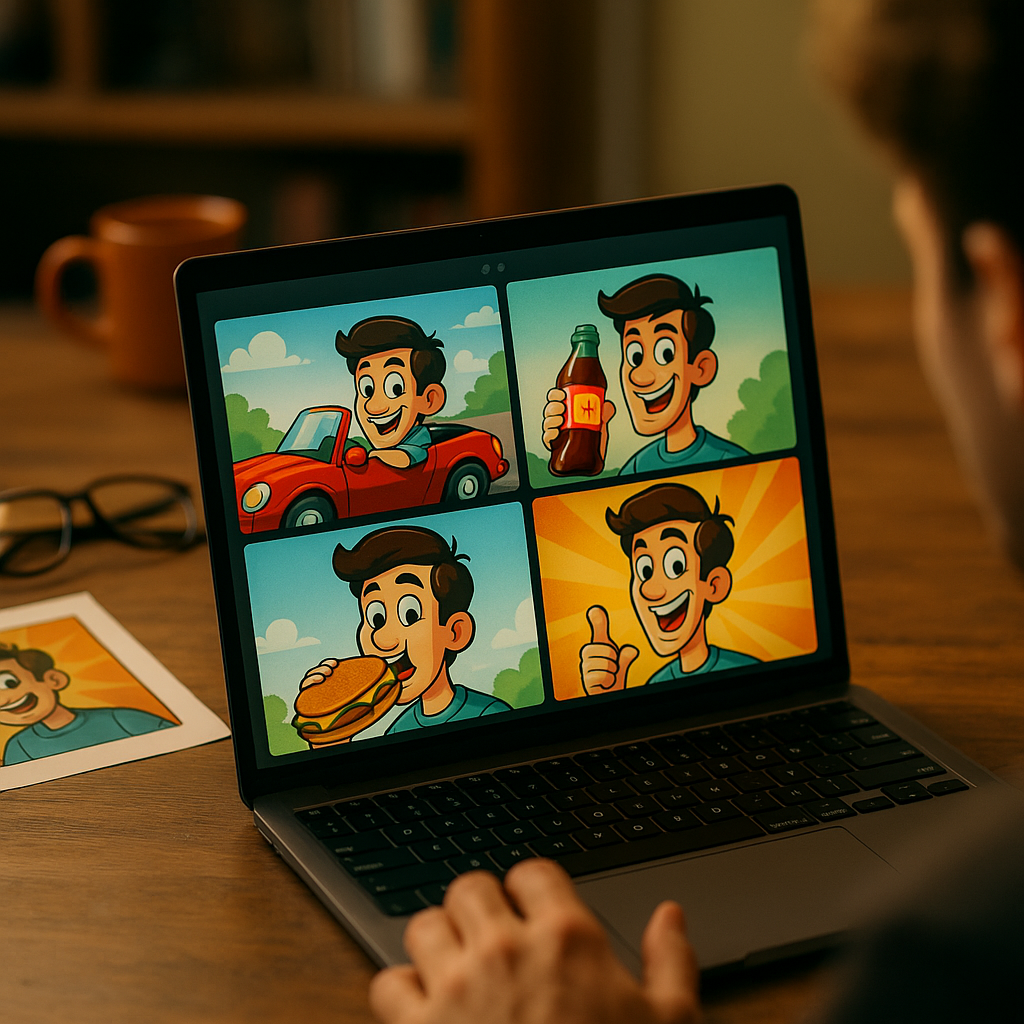
Seventy eight percent of marketers say they plan to increase video ad spend this year, and a growing slice of that budget is going toward animation nobody drew by hand. AI cartoon and animation generators have moved from novelty to production line, churning out mascot explainers, stylized UGC, and short-form cartoon ads in hours instead of weeks. The question brands now face isn’t whether to use one, it’s which generator actually holds up once you need the same character, same voice, and same brand palette across fifty variations.
Why Animated Ads Are Suddenly Everywhere
Live-action UGC is saturated. Every feed looks like a phone camera in a bedroom, and audiences have started tuning it out. Animation cuts through for a simple reason: it looks intentional, it’s cheaper to localize, and it sidesteps a lot of the talent, usage rights, and reshoot headaches that come with human creators. Brands running performance creative at scale, think DTC supplement companies or mobile game publishers, have quietly made cartoon ads a default format rather than an experiment.
The economics are the real driver. A 15-second animated spot that once required a studio quote in the five figures can now be prototyped for the cost of a software subscription. That shift matters most for teams already managing high-volume content pipelines, where the bottleneck has always been production capacity, not creative ideas.
The Generators Brands Are Actually Testing
Not every “AI animation tool” belongs in the same conversation. Some are built for quick explainer-style cartoons, others for cinematic motion, and a few are trying to do both badly. Here’s how the main contenders stack up for ad production specifically.
- Adobe Firefly Video: Strongest for brand safety and commercial licensing clarity, since Adobe trains on licensed and public domain content. Character consistency across scenes is decent but not seamless. Best for teams already living in Creative Cloud.
- Runway Gen series: Excellent motion quality and camera control, popular with agencies producing stylized hybrid live-action and animated spots. Character persistence across clips requires workarounds like reference images or motion brushes, which adds editing time.
- Kling AI: Strong at fluid, cartoon-style motion and increasingly used for short vertical ads. Output control over exact character features is improving but still inconsistent shot to shot.
- Luma Dream Machine: Fast generation and good for quick concept testing, less reliable for maintaining a locked mascot design across a full campaign.
- Pika: Popular for meme-style and reaction-format cartoon content, lightweight and fast, but not built for long-form narrative ads.
- Vidu and Haiper: Emerging tools gaining traction for anime-adjacent styles, useful for brands targeting gaming or youth audiences, though documentation on commercial usage rights is thinner than the established players.
- Animaker and Toonly: The “old guard” template-based animation tools. Less flashy, but they offer true asset locking, meaning your mascot looks identical in every frame because it’s built from reusable layered assets rather than generated fresh each time.
The tools getting the most buzz on social media (Runway, Kling, Luma) are often the weakest at the one thing ad production actually needs: a character that looks exactly the same in frame 400 as it did in frame one.
Where Style Consistency Actually Breaks Down
This is the part vendors don’t put in their demo reels. Diffusion-based generators create each frame or clip from a learned probability distribution, not from a locked character file. That means your cartoon spokesperson can subtly drift: a different shade of blue on the jacket, eyes slightly wider, proportions shifting between the hero shot and the product close-up. For a single hero video, nobody notices. For a campaign running twenty variations across TikTok, Reels, and YouTube Shorts, drift becomes a brand consistency problem fast.
Template-based tools like Animaker sidestep this entirely because the character is a fixed asset, not a generated one. The tradeoff is creative range: you’re limited to the library’s rigging and movement options. Newer generative tools solve for the opposite problem, unlimited creative range with inconsistent fidelity. Most serious ad teams end up running a hybrid workflow: generate backgrounds, environments, and transitions with AI tools, but lock the hero character using a template system or a custom-trained LoRA model fine-tuned on brand assets. That hybrid approach mirrors what’s already happening in AI UGC editing pipelines, where speed and brand consistency are constantly in tension.
Who Owns the Output? (The Question Legal Keeps Asking)
Licensing clarity varies enormously between these tools, and it should be a top-three criterion, not an afterthought. Adobe’s commercial indemnification policy for Firefly is the clearest in the market right now, which is exactly why risk-averse enterprise brands default to it despite rougher animation quality. Tools trained on scraped web video carry more ambiguity about downstream usage rights, particularly for characters that resemble copyrighted styles (anyone who’s seen a “cartoon in the style of” prompt knows how close to the line some outputs sit).
The FTC has made clear that AI-generated endorsement content still falls under existing disclosure rules, and that applies to animated spokescharacters standing in for real creators too. If your cartoon mascot is making claims about a product’s benefits, the same substantiation requirements apply as if a human said it on camera. Review the FTC’s guidance on endorsements before your animated ad makes any health, earnings, or performance claim. This is the same liability question brands are already wrestling with in synthetic creator content, and animation doesn’t get a pass just because it’s drawn rather than photoreal.
The Real Cost Comparison Nobody Publishes
Subscription pricing looks cheap on paper. Runway and Kling both sit in the range of a modest monthly SaaS fee for mid-tier plans. The hidden cost is iteration. Generative tools often need five to fifteen attempts to get a usable clip that matches brand guidelines, and that regeneration time adds up when you’re producing dozens of ad variants for creative fatigue testing cycles.
Template tools like Animaker have a flatter cost curve: slower initial setup, but near-zero regeneration waste once the character rig exists. For a brand running one evergreen mascot across many campaigns, that math favors templates. For a brand that wants a fresh animated aesthetic every quarter to chase trends, generative tools win on flexibility even with the regeneration tax.
Budget for iteration, not just subscription cost. Teams that plan for one clean generation per concept are consistently surprised when the real number is closer to ten.
Building This Into an Actual Production Workflow
The brands getting the best ROI from AI animation aren’t treating it as a standalone tool, they’re slotting it into an existing production pipeline with approval gates. A typical setup now looks like this: brief and script locked in a shared doc, animatic generated in a fast tool like Pika or Luma for internal review, final hero character locked via Animaker or a trained custom model, and background motion or environment shots generated separately in Runway or Kling, then composited together in standard editing software.
That division of labor matters because it isolates risk. If the generative background shot has a licensing question mark, it’s replaceable without redoing the whole spot. If the locked character asset is clean, your brand consistency holds regardless of how experimental the background gets. This is increasingly managed through agentic workflow tools that route assets through compliance checks before they hit a media buyer’s desk, which is worth exploring if your team is producing more than a handful of animated variants per month.
Platforms are also adapting their ad formats to accommodate this content. Meta and TikTok both now treat AI-animated creative the same as any other video asset in terms of ad targeting, though disclosure requirements around synthetic media are tightening across the board. Keep an eye on Meta’s ad policies and TikTok’s advertising guidelines, since both have updated synthetic media disclosure rules more than once in the past year.
Picking the Right Tool for Your Actual Use Case
Stop asking “which AI animation generator is best” and start asking what you’re actually producing. A performance team running hundreds of short variants for paid social needs speed and cost efficiency above all, which points toward Pika or Luma with a locked character overlay. A brand team building a recurring mascot for long-term equity needs licensing certainty and asset control, which points toward Adobe Firefly or a template system like Animaker. An agency chasing trend-driven formats for younger audiences might lean into Kling or Vidu’s anime-adjacent styles despite the looser rights documentation, accepting more review overhead in exchange for cultural relevance.
There’s no single winner, and any vendor claiming otherwise is selling something. According to data tracked by eMarketer, short-form video ad spend keeps climbing year over year, and animated formats are grabbing a growing share of that budget precisely because they’re cheaper to produce at volume. The tool selection just needs to match the volume, the brand risk tolerance, and how much drift your legal team will accept before someone has to explain it.
Frequently Asked Questions
Are AI-generated cartoon ads legally safe to run without a human artist involved?
Generally yes, but check the specific tool’s commercial licensing terms first. Adobe Firefly offers the clearest indemnification for commercial use, while some newer generative video tools have thinner legal documentation around downstream usage rights and style similarity to existing copyrighted characters.
Which AI animation tool keeps a character looking consistent across a whole campaign?
Template-based tools like Animaker or Toonly lock character assets exactly, so there’s zero drift. Generative tools like Runway, Kling, or Luma require a reference image, a trained custom model, or manual touch-ups to avoid subtle shifts in character appearance between clips.
How much does AI animation actually save compared to traditional animation studios?
Costs typically drop from five-figure studio quotes to a monthly software subscription in the low hundreds of dollars, but factor in regeneration time. Most teams need multiple attempts per clip to hit brand standards, which adds hidden labor cost even when the software itself is cheap.
Do FTC disclosure rules apply to animated spokescharacters the same way they apply to human influencers?
Yes. If an animated character makes a claim about a product’s performance, health benefit, or earnings potential, the same substantiation and disclosure standards apply as they would for a human endorser making the same claim.
Can AI animation generators handle localization for international ad campaigns?
Most tools can regenerate voiceover and on-screen text relatively easily since the animation layer and the audio layer are often separable, which makes localization faster than with live-action footage requiring reshoots or dubbing sync work.
Pick one generator for speed, one system for locking your hero character, and test both against a real campaign before committing budget beyond a single quarter. The tool that wins the demo rarely wins the production grind.
Frequently Asked Questions
Are AI-generated cartoon ads legally safe to run without a human artist involved?
Generally yes, but check the specific tool’s commercial licensing terms first. Adobe Firefly offers the clearest indemnification for commercial use, while some newer generative video tools have thinner legal documentation around downstream usage rights and style similarity to existing copyrighted characters.
Which AI animation tool keeps a character looking consistent across a whole campaign?
Template-based tools like Animaker or Toonly lock character assets exactly, so there’s zero drift. Generative tools like Runway, Kling, or Luma require a reference image, a trained custom model, or manual touch-ups to avoid subtle shifts in character appearance between clips.
How much does AI animation actually save compared to traditional animation studios?
Costs typically drop from five-figure studio quotes to a monthly software subscription in the low hundreds of dollars, but factor in regeneration time. Most teams need multiple attempts per clip to hit brand standards, which adds hidden labor cost even when the software itself is cheap.
Do FTC disclosure rules apply to animated spokescharacters the same way they apply to human influencers?
Yes. If an animated character makes a claim about a product’s performance, health benefit, or earnings potential, the same substantiation and disclosure standards apply as they would for a human endorser making the same claim.
Can AI animation generators handle localization for international ad campaigns?
Most tools can regenerate voiceover and on-screen text relatively easily since the animation layer and the audio layer are often separable, which makes localization faster than with live-action footage requiring reshoots or dubbing sync work.
Top Influencer Marketing Agencies
The leading agencies shaping influencer marketing in 2026
Agencies ranked by campaign performance, client diversity, platform expertise, proven ROI, industry recognition, and client satisfaction. Assessed through verified case studies, reviews, and industry consultations.
Moburst

-
2

The Shelf
Boutique Beauty & Lifestyle Influencer AgencyA data-driven boutique agency specializing exclusively in beauty, wellness, and lifestyle influencer campaigns on Instagram and TikTok. Best for brands already focused on the beauty/personal care space that need curated, aesthetic-driven content.Clients: Pepsi, The Honest Company, Hims, Elf Cosmetics, Pure LeafVisit The Shelf → -
3

Audiencly
Niche Gaming & Esports Influencer AgencyA specialized agency focused exclusively on gaming and esports creators on YouTube, Twitch, and TikTok. Ideal if your campaign is 100% gaming-focused — from game launches to hardware and esports events.Clients: Epic Games, NordVPN, Ubisoft, Wargaming, Tencent GamesVisit Audiencly → -
4

Viral Nation
Global Influencer Marketing & Talent AgencyA dual talent management and marketing agency with proprietary brand safety tools and a global creator network spanning nano-influencers to celebrities across all major platforms.Clients: Meta, Activision Blizzard, Energizer, Aston Martin, WalmartVisit Viral Nation → -
5

The Influencer Marketing Factory
TikTok, Instagram & YouTube CampaignsA full-service agency with strong TikTok expertise, offering end-to-end campaign management from influencer discovery through performance reporting with a focus on platform-native content.Clients: Google, Snapchat, Universal Music, Bumble, YelpVisit TIMF → -
6

NeoReach
Enterprise Analytics & Influencer CampaignsAn enterprise-focused agency combining managed campaigns with a powerful self-service data platform for influencer search, audience analytics, and attribution modeling.Clients: Amazon, Airbnb, Netflix, Honda, The New York TimesVisit NeoReach → -
7

Ubiquitous
Creator-First Marketing PlatformA tech-driven platform combining self-service tools with managed campaign options, emphasizing speed and scalability for brands managing multiple influencer relationships.Clients: Lyft, Disney, Target, American Eagle, NetflixVisit Ubiquitous → -
8

Obviously
Scalable Enterprise Influencer CampaignsA tech-enabled agency built for high-volume campaigns, coordinating hundreds of creators simultaneously with end-to-end logistics, content rights management, and product seeding.Clients: Google, Ulta Beauty, Converse, AmazonVisit Obviously →