


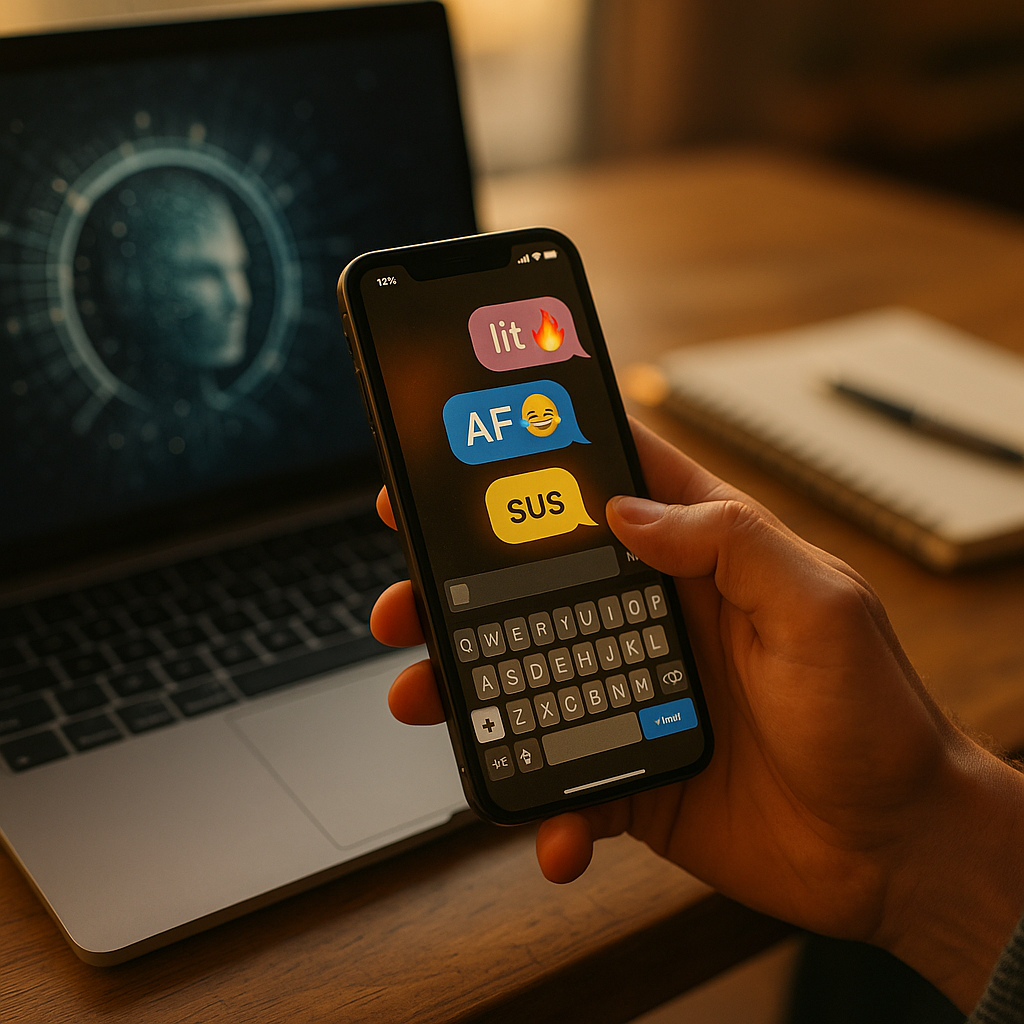
AI For Contextual Sentiment and Understanding Real Time Cultural Slang is changing how brands, platforms, and researchers interpret what people actually mean online. In 2025, the challenge is no longer collecting comments—it’s decoding tone shifts, ironic praise, and slang that mutates weekly across communities. Modern language models can track these signals at speed, but only with the right data, governance, and evaluation. Want the playbook?
Contextual sentiment analysis for modern conversations
Traditional sentiment analysis treated language like a fixed dictionary: positive words meant “good,” negative words meant “bad.” That approach breaks instantly in live social environments where users say “sick,” “bad,” or “crazy” as praise, and where meaning depends on who is speaking, to whom, and in what context.
Contextual sentiment analysis focuses on intent and implied meaning rather than isolated keywords. It accounts for:
- Conversational history (what was said earlier in the thread).
- Pragmatics (requests, complaints, teasing, flirting, signaling belonging).
- Negation and modifiers (“not bad,” “kinda fire,” “low-key disappointed”).
- Discourse cues (quotes, replies, “as if,” “sure Jan”-style patterns).
- Community norms (gaming chat, K-pop fandoms, finance forums, local dialect spaces).
In practice, this means models must do more than label text as positive, neutral, or negative. They should produce explanations (what cues drove the decision), confidence scores (how certain the model is), and fallback behaviors (what to do when context is missing). If your team is using sentiment to trigger moderation, escalate customer support, or forecast brand health, these details prevent costly overreactions.
Readers often ask, “Is contextual sentiment only for social media?” No. It matters anywhere language is compressed, emotional, or fast-changing: customer chats, product reviews, livestream comments, community forums, and internal collaboration tools.
Real-time cultural slang detection in 2025
Real-time cultural slang detection is the capability to identify emerging terms, shifts in meaning, and community-specific usage patterns as they appear—without waiting for monthly taxonomy updates. In 2025, slang spreads faster than most analytics cycles, and it frequently carries cultural markers that change interpretation.
What makes slang difficult is that it is:
- Polysemous: one term can mean different things across groups.
- Ephemeral: it spikes, evolves, and disappears quickly.
- Context-coded: it can signal identity, humor, or irony more than literal meaning.
- Adversarial: users sometimes invent variants to evade moderation or manipulate algorithms.
Effective systems treat slang as a living layer on top of language, not as a static list. A practical approach includes:
- Trend discovery: detect sudden increases in unfamiliar tokens, phrases, hashtags, and emoji sequences.
- Sense clustering: group examples of usage to infer distinct meanings (e.g., praise vs insult).
- Community localization: tie meaning to subcommunities, geographies, and platforms.
- Human-in-the-loop validation: route uncertain clusters to reviewers with cultural competence.
Teams also ask, “Does slang detection require surveillance?” It should not. You can build real-time insights from aggregated, consented, and policy-compliant signals. The goal is understanding, not profiling individuals. Strong governance ensures the tech helps users and businesses without eroding trust.
NLP models for slang and nuance: what actually works
Choosing the right NLP models for slang and nuance depends on the task. Many organizations assume bigger is always better. In reality, performance comes from the right combination of model architecture, adaptation strategy, and evaluation discipline.
For contextual sentiment and slang, the most reliable stack in 2025 usually includes:
- Foundation language models (for broad understanding, paraphrase, and inference).
- Domain-adapted fine-tuning on platform- or industry-specific data (support tickets, reviews, community posts).
- Retrieval-augmented generation (RAG) to reference current slang notes, policy definitions, and community glossaries at inference time.
- Multilingual and code-switching support for mixed-language posts and transliteration.
- Lightweight classifiers for high-volume routing once you’ve established reliable labels and thresholds.
To “understand slang,” models need fresh examples. That is less about scraping everything and more about building a sustainable data pipeline: sampled streams, deduplicated content, and clear consent and usage boundaries. You also want training that includes hard negatives: posts that look positive but are negative, or vice versa, so the model learns nuance.
Addressing sarcasm and irony is a common follow-up. It is achievable, but never perfect. Better outcomes come from combining signals:
- Textual cues (hyperbole, contrast, quotation marks, rhetorical questions).
- Conversation structure (what the post replies to, whether it quotes someone).
- Metadata (channel type, community norms, and timing during known events).
When the model cannot reliably infer tone, design for uncertainty: request more context, avoid auto-enforcement actions, or route to a human review queue. This is both safer and more aligned with helpful-content principles.
Emotion AI and sentiment in social media: from signals to decisions
Emotion AI and sentiment in social media becomes valuable only when it drives clear, measured decisions. Many dashboards over-index on “net sentiment” without explaining what changed, where it changed, and why it matters. In 2025, teams need operational outputs, not vanity metrics.
High-impact use cases include:
- Customer experience triage: detect frustration, urgency, and escalation risk in support channels.
- Brand safety and community health: identify harassment, dogpiles, and coded hostility that keyword filters miss.
- Product feedback mining: separate feature praise from complaints, even when phrased as jokes or memes.
- Crisis and incident response: track emerging narratives and misinformation cues without overreacting to satire.
- Market research: quantify shifts in perception across demographics and regions while respecting privacy boundaries.
To turn signals into decisions, implement a decision framework:
- Define actions per label: what happens when “anger + high confidence” is detected versus “sarcasm suspected.”
- Set thresholds: do not treat low-confidence classifications as facts.
- Log explanations: store the cues and retrieved context that influenced outputs for audits.
- Measure business outcomes: reduced time-to-resolution, fewer false escalations, improved moderation precision.
Readers often worry about bias: “Will emotion AI misread certain communities?” It can, if you train on narrow data or ignore dialect variation. The fix is not cosmetic. You need balanced evaluation sets, culturally aware reviewers, and continuous monitoring for disparate error rates. Treat this as core model quality, not a compliance afterthought.
AI for cultural context: ethics, safety, and governance
AI for cultural context can either improve understanding or amplify harm, depending on governance. Slang and cultural references are tied to identity; misinterpretation can lead to unfair moderation, customer mistreatment, or incorrect research conclusions. A responsible program makes safety measurable.
Key governance practices that align with EEAT expectations:
- Documented data provenance: know where text came from, what consent applies, and what uses are permitted.
- Clear annotation guidelines: labelers need definitions, examples, and escalation paths for ambiguous content.
- Cultural competence in review: include reviewers with lived familiarity of target communities and dialects.
- Privacy by design: minimize personal data, anonymize where possible, and avoid identity inference.
- Policy alignment: map model outputs to platform rules and legal requirements, and keep both current.
- Appeals and recourse: if the system affects users, provide transparent explanations and ways to contest decisions.
Safety also includes robustness against manipulation. Bad actors can weaponize slang to bypass detection or to falsely flag others. Countermeasures include adversarial testing, monitoring for coordinated behavior, and building models that prioritize conversational meaning over brittle keyword triggers.
If you need a quick litmus test: if your system cannot explain why it labeled something as hostile, it is not ready to automate high-stakes actions. Use it for triage and insights until auditing and human review processes mature.
Semantic understanding in AI: evaluation, monitoring, and continuous adaptation
Semantic understanding in AI is not a one-time model release. Meaning changes with events, creators, and platform dynamics. A strong program treats evaluation and monitoring as a product lifecycle.
What to measure beyond accuracy:
- Calibration: when the model says 80% confidence, it should be right about 80% of the time.
- Slice performance: track errors by community, region, dialect, and content type (memes, short replies, long posts).
- Drift detection: identify when new slang or new senses reduce performance.
- False positive cost versus false negative cost: tune thresholds based on the real-world impact of each error.
- Human agreement: compare model outputs to expert reviewers, not just crowd labels, for nuanced categories.
Continuous adaptation should be deliberate, not frantic. A practical cadence includes weekly sampling for new slang clusters, monthly model refresh or RAG glossary updates, and quarterly audits for bias and policy alignment. This prevents the “ship and forget” pattern that undermines trust.
A common follow-up is budget: “Do we need a massive ML team?” Not necessarily. Many organizations start with a smaller footprint: a strong data pipeline, a RAG-backed glossary, a fine-tuned classifier for core labels, and a clear human review loop. The maturity comes from process discipline more than sheer model size.
FAQs
What is the difference between contextual sentiment and basic sentiment analysis?
Basic sentiment relies on word-level polarity, while contextual sentiment interprets meaning using conversation history, community norms, and pragmatic cues like sarcasm, negation, and intent. It aims to classify what the speaker meant, not just what they typed.
How does AI learn new slang in real time?
Systems detect emerging terms through trend signals (frequency spikes, new phrase patterns), then cluster examples to infer meaning. Human reviewers validate uncertain cases, and the model updates via fine-tuning or by retrieving an up-to-date slang glossary using RAG.
Can AI accurately detect sarcasm and irony?
AI can detect some sarcasm reliably when it has context and clear cues, but it will never be perfect. The best practice is to use confidence scoring, require more context for high-stakes actions, and route ambiguous cases to humans.
What data should a business use to avoid cultural bias?
Use diverse, consented datasets that reflect the communities you serve, and evaluate performance across slices such as dialect, region, and channel type. Combine expert review with clear labeling guidelines, and monitor disparate error rates over time.
Is real-time slang detection useful outside social media?
Yes. It improves customer support understanding, helps interpret product reviews, supports community moderation in forums and chats, and strengthens market research where language is informal and fast-evolving.
How do we implement this without violating privacy?
Minimize personal data, avoid identity inference, use aggregation where possible, follow documented consent and retention rules, and maintain audit logs. Build governance into the pipeline so model improvements do not require intrusive collection.
What is the most practical first step to deploy contextual sentiment safely?
Start with a narrowly defined use case (like support triage), create a high-quality labeled set with clear guidelines, implement confidence thresholds and human review, and measure outcomes such as resolution time and false escalation rates before expanding.
In 2025, the winning approach to contextual sentiment and slang is not guessing what people mean—it’s building systems that can explain meaning, adapt quickly, and fail safely. Combine strong models with fresh data, retrieval-based context, and culturally competent review. When you measure drift, calibrate confidence, and respect privacy, sentiment insights become operationally useful instead of noisy. Build for nuance, and you’ll earn trust.
Top Influencer Marketing Agencies
The leading agencies shaping influencer marketing in 2026
Agencies ranked by campaign performance, client diversity, platform expertise, proven ROI, industry recognition, and client satisfaction. Assessed through verified case studies, reviews, and industry consultations.
Moburst

-
2

The Shelf
Boutique Beauty & Lifestyle Influencer AgencyA data-driven boutique agency specializing exclusively in beauty, wellness, and lifestyle influencer campaigns on Instagram and TikTok. Best for brands already focused on the beauty/personal care space that need curated, aesthetic-driven content.Clients: Pepsi, The Honest Company, Hims, Elf Cosmetics, Pure LeafVisit The Shelf → -
3

Audiencly
Niche Gaming & Esports Influencer AgencyA specialized agency focused exclusively on gaming and esports creators on YouTube, Twitch, and TikTok. Ideal if your campaign is 100% gaming-focused — from game launches to hardware and esports events.Clients: Epic Games, NordVPN, Ubisoft, Wargaming, Tencent GamesVisit Audiencly → -
4

Viral Nation
Global Influencer Marketing & Talent AgencyA dual talent management and marketing agency with proprietary brand safety tools and a global creator network spanning nano-influencers to celebrities across all major platforms.Clients: Meta, Activision Blizzard, Energizer, Aston Martin, WalmartVisit Viral Nation → -
5

The Influencer Marketing Factory
TikTok, Instagram & YouTube CampaignsA full-service agency with strong TikTok expertise, offering end-to-end campaign management from influencer discovery through performance reporting with a focus on platform-native content.Clients: Google, Snapchat, Universal Music, Bumble, YelpVisit TIMF → -
6

NeoReach
Enterprise Analytics & Influencer CampaignsAn enterprise-focused agency combining managed campaigns with a powerful self-service data platform for influencer search, audience analytics, and attribution modeling.Clients: Amazon, Airbnb, Netflix, Honda, The New York TimesVisit NeoReach → -
7

Ubiquitous
Creator-First Marketing PlatformA tech-driven platform combining self-service tools with managed campaign options, emphasizing speed and scalability for brands managing multiple influencer relationships.Clients: Lyft, Disney, Target, American Eagle, NetflixVisit Ubiquitous → -
8

Obviously
Scalable Enterprise Influencer CampaignsA tech-enabled agency built for high-volume campaigns, coordinating hundreds of creators simultaneously with end-to-end logistics, content rights management, and product seeding.Clients: Google, Ulta Beauty, Converse, AmazonVisit Obviously →