


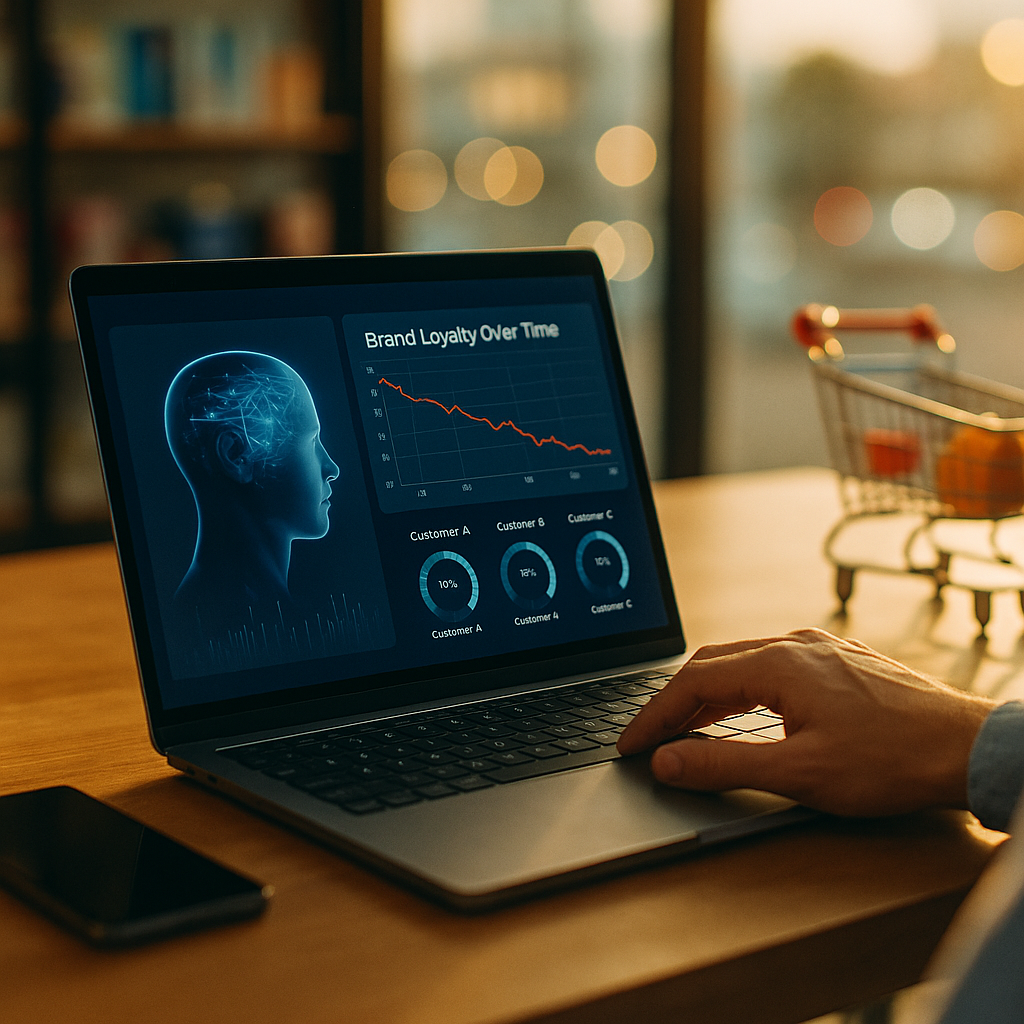
Using AI To Detect Brand Loyalty Drift In Real-Time Customer Data is becoming a core capability for customer-centric teams in 2025. Loyalty rarely collapses overnight; it erodes quietly through small shifts in sentiment, behavior, and expectations across channels. AI can surface those shifts early, explain likely causes, and recommend actions while there’s still time to recover trust. Want to spot churn before it happens?
Understanding brand loyalty drift and why it’s hard to see
Brand loyalty drift is the gradual weakening of a customer’s preference for your brand, even when they continue purchasing. It shows up as subtle changes: lower engagement, reduced basket size, fewer referrals, more price sensitivity, or a shift to competitors for certain categories. Drift is difficult to detect with traditional dashboards because the signals are distributed across many systems and often lag behind reality.
Many organizations still rely on monthly reports, aggregated retention metrics, or annual surveys. Those approaches miss two critical facts:
- Drift is multi-signal. A customer can keep buying but complain more, use fewer features, or shift to promotions.
- Drift is time-sensitive. The best intervention window can be days, not quarters, especially in subscription and high-frequency retail.
AI helps by continuously analyzing customer events as they happen, learning what “healthy loyalty” looks like for each segment (or each customer), and flagging meaningful deviations. This goes beyond a single churn score: it’s about detecting direction, velocity, and drivers of loyalty change.
Building real-time customer analytics pipelines that AI can trust
AI detection is only as good as the data feeding it. To identify loyalty drift in real time, you need a pipeline that captures customer signals quickly, resolves identities accurately, and preserves context. In 2025, leading stacks typically combine event streaming, a customer data platform (CDP) or lakehouse, and feature stores for machine learning.
Focus on these building blocks:
- Event instrumentation: Track meaningful actions (search, add-to-cart, purchase, renew, cancel, support contact, returns, feature usage) with consistent schemas.
- Identity resolution: Join anonymous and known profiles across devices and channels using deterministic identifiers where possible and carefully governed probabilistic matching where necessary.
- Low-latency processing: Stream events into a warehouse/lakehouse with minutes-level freshness for timely interventions.
- Data quality controls: Validate event volumes, field completeness, and outliers. Drift detection fails when upstream data “drifts” too.
- Consent and governance: Store consent status and purpose limitations alongside profiles; enforce access controls and retention policies.
A practical rule: if your teams can’t confidently answer “what happened to this customer in the last 24 hours across all channels?” then your loyalty-drift AI will either miss early signs or generate noisy alerts.
How AI loyalty prediction finds drift: models, signals, and thresholds
Detecting loyalty drift is not one model; it’s a set of complementary techniques that catch different patterns. The goal is to quantify “loyalty health” and its change over time, then attribute likely causes.
Common model approaches:
- Behavioral anomaly detection: Learns normal patterns for a customer or cohort (purchase cadence, session depth, feature usage) and flags unusual drops or volatility.
- Survival and hazard models: Estimate churn risk as a function of time and events, useful for subscriptions and repeat purchase cycles.
- Sequence models: Use ordered events (clickstream, app events, service interactions) to detect trajectory changes, not just static features.
- Uplift modeling: Predicts which customers are likely to respond to an intervention, preventing wasted offers and avoiding over-incentivizing.
- LLM-based intent and sentiment classification: Extracts themes from support tickets, chat transcripts, and reviews to identify dissatisfaction drivers.
Signals that often predict drift early:
- Engagement decay: Fewer sessions, shorter time on task, lower email/SMS interaction, or reduced feature adoption.
- Value leakage: Rising returns, increased discount usage, reduced add-ons, or downgrades.
- Service friction: Repeated contacts, long resolution times, escalation to supervisors, or “contact after purchase” spikes.
- Competitive behavior: Price matching requests, browsing competitor pages (where you can measure it), or switching within a category.
- Sentiment shift: Neutral-to-negative language changes in conversations, not only explicit complaints.
Setting thresholds without annoying customers: The best systems score drift on two axes: severity (how far the customer deviates from baseline) and momentum (how quickly it’s changing). This reduces false alarms. Pair those scores with guardrails, such as “do not send discounts unless there is evidence of price sensitivity” and “do not escalate to human outreach unless predicted value and churn risk justify it.”
Answering the question teams always ask: “How do we know the model is right?” Use back-testing on historical cohorts, measure lead time (how many days earlier you detect issues vs. existing reporting), and track precision/recall for drift alerts. Also monitor fairness and segment performance so the model doesn’t under-serve smaller or newer cohorts.
Turning customer churn prevention into immediate, personalized actions
Detecting drift is only valuable if you respond in ways that rebuild confidence and remove friction. In real time, teams can intervene while the customer is still engaged, rather than after the cancellation or the last purchase.
Action patterns that work well:
- Friction removal: If drift correlates with service issues, prioritize fast resolution, proactive shipping updates, or instant refunds rather than incentives.
- Experience personalization: Adjust recommendations, onboarding flows, or in-app guidance when usage drops on key features tied to retention.
- Value reinforcement: Remind customers of benefits they already have (warranty, loyalty points, free returns, premium support) when sentiment weakens.
- Targeted outreach: Route high-value, high-risk accounts to a human specialist with a concise “drift explanation” summary.
- Selective incentives: Use offers only when models indicate price sensitivity or competitive shopping, and cap frequency to protect margin and brand positioning.
Closed-loop design is essential: Every intervention should feed back into the model as a labeled outcome: did engagement recover, did the customer renew, did complaints stop, did NPS or CSAT improve? This creates a learning system rather than a static churn dashboard.
Common follow-up concern: “Will customers feel surveilled?” They will if interventions are overly specific or poorly timed. Keep messaging benefit-led and general (“We noticed you might need help getting the most from X”) rather than describing exact behaviors. Make preference controls easy and honor consent.
Applying sentiment analysis for brands across voice-of-customer signals
Behavioral data explains what customers did; voice-of-customer explains why. Combining both is where AI excels, especially with modern language models that can summarize themes at scale while preserving traceability to source text.
High-value text and speech sources:
- Support tickets, chat, and call transcripts: Identify recurring pain points, escalation triggers, and unresolved issues.
- Product reviews and survey comments: Spot shifting expectations and emerging competitor advantages.
- Social listening (where permitted): Detect sentiment swings after launches, policy changes, or incidents.
- In-app feedback and community forums: Find early dissatisfaction in power users before it spreads.
What to extract with AI:
- Sentiment and emotion: Not just positive/negative; include frustration, confusion, disappointment, urgency.
- Topic clustering: Group feedback into actionable categories (billing, delivery, fit, reliability, UX friction).
- Intent detection: Cancellation intent, refund intent, competitor comparison, complaint escalation likelihood.
- Root-cause hints: Link language patterns to operational metrics (e.g., “late” + carrier region + warehouse shift).
Make it credible (and EEAT-aligned): Maintain an audit trail by storing source snippets and confidence scores. Use human-in-the-loop review for new topics, sensitive categories, and any automated decisions that could materially affect customers. This keeps insight generation fast without turning your program into an opaque black box.
Governance, privacy, and marketing AI ethics for loyalty intelligence
Loyalty programs rely on trust. If drift detection undermines trust, it defeats the purpose. Ethical, well-governed AI strengthens your brand by improving relevance while reducing unnecessary outreach.
Key governance practices in 2025:
- Purpose limitation: Use customer data only for the purposes customers agreed to; don’t repurpose sensitive signals without clear consent.
- Data minimization: Collect and retain only what is needed for loyalty measurement and service improvement.
- Explainability: Provide internal explanations for why a customer was flagged (top drivers), and keep messaging to customers respectful and non-creepy.
- Bias monitoring: Test model performance across regions, acquisition channels, tenure, and demographic proxies where legally permitted.
- Security controls: Encrypt data in transit and at rest, limit access by role, and log model and data access for audits.
Operational accountability: Assign named owners for data quality, model performance, and intervention policy. Document what actions are allowed for which risk tiers, including when a human must approve outreach. This reduces brand risk and keeps teams aligned.
FAQs
What is the difference between churn prediction and brand loyalty drift detection?
Churn prediction estimates the likelihood a customer will leave (cancel or stop buying). Loyalty drift detection focuses on earlier, subtler deterioration in preference and engagement, often before churn risk spikes. Drift systems track direction and speed of change and link it to likely causes so teams can intervene sooner.
What data do I need to detect loyalty drift in real time?
You typically need streaming events from web/app behavior, transactions, loyalty activity, customer service interactions, and marketing engagement. Add voice-of-customer text (tickets, reviews, surveys) to explain “why.” Identity resolution and consistent event schemas are as important as model choice.
How quickly can AI detect loyalty drift after a negative experience?
With low-latency pipelines, models can flag drift within minutes to hours after events like failed payments, repeated support contacts, delayed deliveries, or negative chat sentiment. The practical timing depends on how fast your systems ingest events and how sensitive your thresholds are to short-term volatility.
How do we reduce false positives so we don’t spam customers?
Use severity-plus-momentum scoring, add guardrails on outreach frequency, and require evidence-based triggers (for example, only discount when price sensitivity signals are present). Validate alerts with back-tests and route borderline cases to softer interventions like in-app help instead of messages.
Can small businesses use AI for loyalty drift, or is this only for enterprises?
Smaller teams can start with fewer signals: purchase cadence, email engagement, and support tags. Many analytics and CDP tools support near-real-time updates and basic anomaly detection. The key is to begin with a clear intervention playbook and expand signals as you prove value.
How should we measure success?
Track lead time gained (earlier detection vs. prior reporting), recovery rate after intervention, churn/retention lift, repeat purchase rate, complaint recurrence, and margin impact. Also monitor customer experience metrics like CSAT and message opt-out rates to ensure actions improve trust rather than erode it.
AI-driven loyalty drift detection turns scattered customer signals into timely, actionable insight. When your pipeline is reliable, models are calibrated, and interventions are respectful, you can recover wavering customers before they disengage. The strongest programs connect behavior with sentiment, learn from outcomes, and follow clear governance. In 2025, the takeaway is simple: detect early, act wisely, and protect trust.