


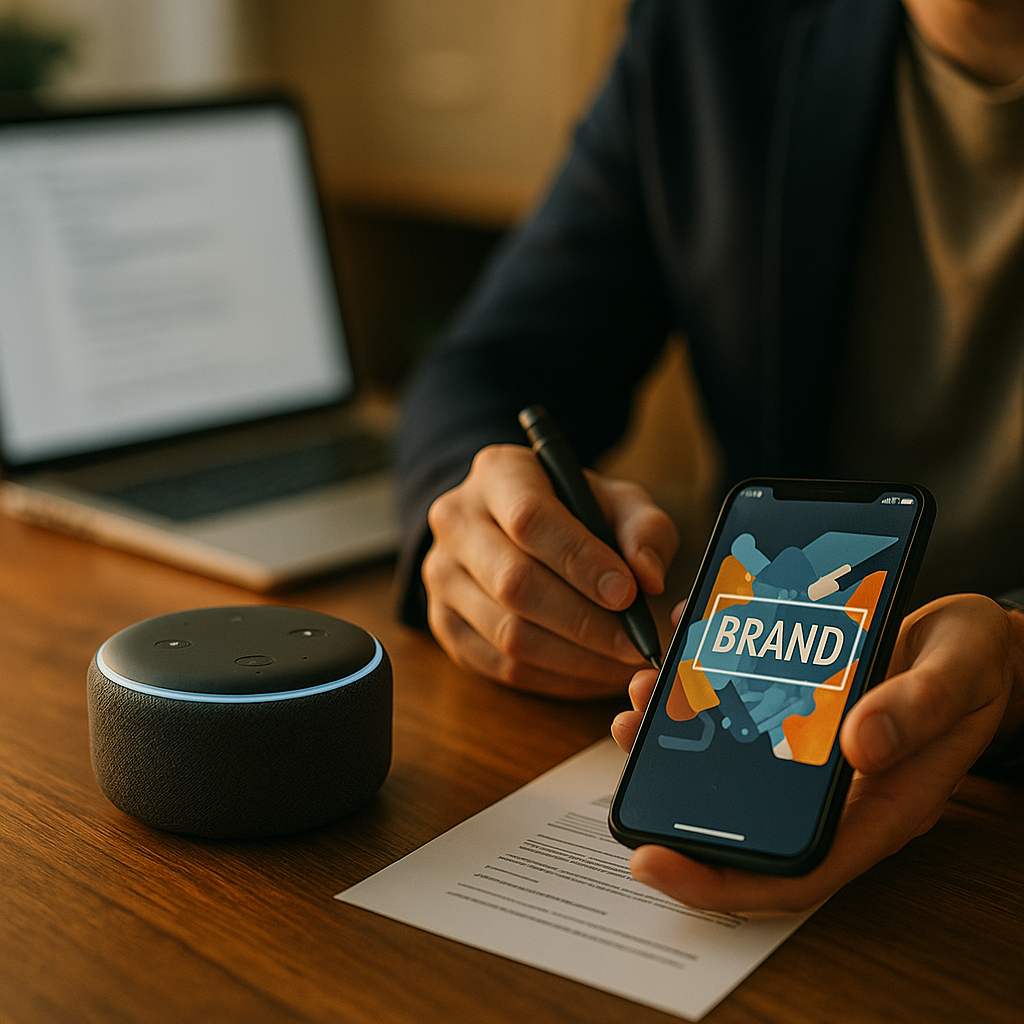
Consumers increasingly rely on personal AI assistants to filter choices, summarize options, and recommend what to buy, trust, or ignore. That shift makes marketing to personal AI assistants a practical brand priority in 2026. If your company is not understandable, verifiable, and easily retrievable by machines, it risks disappearing from recommendation layers. So how do you earn machine preference without losing human trust?
Why AI discoverability matters for brand visibility
Personal AI assistants now act as interpreters between people and the web. They answer product questions, compare services, shortlist vendors, explain policies, and even complete transactions. For brands, this means discoverability is no longer limited to search engine rankings or app store placement. A new layer has emerged: AI discoverability.
When a consumer asks an assistant, “What’s the best project management software for a remote team under a specific budget?” or “Which skincare brand has fragrance-free options with strong reviews?” the assistant may not present ten blue links. It may generate one recommendation, three options, or a concise comparison. That compressed decision environment raises the stakes for brand positioning.
To be selected by an assistant, your brand must be easy for systems to parse, verify, and trust. That requires more than clever copy. It requires structured information, credible third-party signals, accurate product data, transparent policies, and clear expertise indicators. Brands that still treat content as a persuasion-only asset will struggle. In 2026, content also functions as machine-readable evidence.
This matters across industries:
- Retail: assistants compare price, availability, shipping, and reviews.
- SaaS: assistants summarize features, integrations, and security posture.
- Healthcare and finance: assistants look for reliability, source quality, and compliance-friendly explanations.
- Travel and hospitality: assistants weigh inventory, flexibility, and reputation signals.
The practical implication is simple: if you want to shape recommendations, you must shape the underlying signals machines use to make them.
How conversational search optimization changes brand strategy
Conversational search optimization is the process of preparing your brand so AI systems can accurately retrieve, interpret, and present your information in response to natural-language queries. It overlaps with SEO, but it is not identical to SEO. Traditional optimization often targets rankings for specific keywords. Conversational optimization targets meaning, context, and answer quality.
Consumers do not speak to assistants in the clipped language of legacy search queries. They ask layered questions. They provide constraints. They ask for comparisons, exceptions, and personalized recommendations. Your content strategy should reflect that behavior.
Start by mapping real customer questions across the funnel:
- What problem does the customer want solved?
- What alternatives are they comparing?
- What objections usually block conversion?
- What details do they need before they trust a recommendation?
- What follow-up questions naturally come next?
Then create content assets that answer these questions directly. Product pages should explain use cases, limitations, pricing logic, compatibility, setup time, and support access. Service pages should define deliverables, industries served, proof of outcomes, and who the solution is not right for. Comparison pages should be balanced and evidence-based, not thinly disguised sales pitches.
AI systems respond better to clarity than hype. If your website says your platform is “revolutionary” or your service is “world-class,” that language adds little machine value. If it states “supports SSO via SAML, integrates with Slack and Salesforce, deploys in under two weeks for mid-market teams, and offers 24/7 chat support,” that is useful. Specificity improves retrieval and trust.
Formatting also matters. Write short explanatory paragraphs. Use lists when listing features or steps. Keep product specs consistent across pages. Maintain a single source of truth for pricing, return policies, credentials, and contact information. Contradictions across your site can weaken machine confidence and create poor user experiences when assistants synthesize your content.
Finally, align content to intent types. An assistant may need:
- Informational content for definitions and education
- Comparative content for evaluation
- Transactional content for action
- Support content for troubleshooting and retention
If one of these layers is missing, your brand may be visible in one stage but absent in another.
Building machine-readable content with structured data
If conversational optimization improves meaning, structured data for AI improves interpretability. Personal AI assistants benefit from content that is not only well written but also systematically organized. Structured data helps machines identify entities, attributes, relationships, and intent with less ambiguity.
For brands, this starts with disciplined information architecture. Your site should clearly connect your company, products, services, authors, policies, and support resources. Important facts should not be buried in PDFs or images. They should appear in accessible HTML text on authoritative pages.
Key areas to strengthen include:
- Organization information: legal name, location, customer service channels, leadership, certifications, and about-page details
- Product data: specs, pricing, availability, variants, reviews, FAQs, shipping, and returns
- Service data: market served, scope, process, deliverables, industries, and case studies
- Authorship: named experts, credentials, editorial review, and update dates where appropriate
- Policies: privacy, security, refunds, warranties, compliance, and accessibility commitments
This is also where EEAT becomes operational. Experience, expertise, authoritativeness, and trust are not abstract quality goals. They become visible when your content shows who created it, why they are qualified, what evidence supports the claims, and how users can verify those claims independently.
For example, a financial services brand should not publish generic advice without naming qualified contributors and explaining review standards. A health brand should make it easy to identify medical reviewers, sourcing standards, and safety limitations. A software company should support product claims with documentation, use-case examples, and transparent security information.
Brands often ask whether technical markup alone is enough. It is not. Structured data can strengthen signals, but it cannot rescue weak source material. If your content is vague, outdated, or unsupported, markup will not make assistants trust it. Start with factual, user-centered content. Then make it easier for systems to process.
Strengthening entity authority through digital trust signals
Personal AI assistants rarely rely on a single source. They synthesize information from websites, reviews, forums, listings, marketplaces, media mentions, and public knowledge graphs. That means entity authority depends on consistency and corroboration across the wider web.
Your brand should appear as a coherent, verifiable entity wherever machines might encounter it. In practice, that means aligning the following:
- Brand naming: use the same official brand name and product naming conventions across properties
- Descriptions: keep your company summary accurate and consistent on social profiles, app stores, directories, and partner pages
- Reputation signals: gather authentic reviews on relevant platforms and respond to legitimate concerns
- Editorial mentions: earn coverage from credible publications and niche experts
- Citations: maintain accurate listings in industry databases, associations, and local or vertical directories where relevant
This is especially important for brands that want assistants to recommend them in high-trust decisions. If a machine sees your site claiming expertise but finds little independent validation elsewhere, it may rank your claims lower than those of a better-documented competitor.
Trust signals should also include proof of real-world experience. Original research, product demos, implementation guides, customer stories, benchmark reports, and transparent methodology pages all help. These assets demonstrate that your brand contributes substance, not just promotion.
Another common question is whether user-generated content helps or hurts. The answer depends on quality and governance. Strong review systems, active community discussions, and transparent Q&A content can expand your machine footprint and capture natural language patterns customers actually use. But spam, outdated threads, and unmanaged misinformation can undermine trust. Moderate carefully.
In 2026, machine preference often mirrors documented credibility. If you want assistants to predispose toward your brand, build a web presence that confirms your expertise from multiple angles.
Using answer engine optimization to influence AI recommendations
Answer engine optimization focuses on making your brand the best source for concise, complete, and reliable answers. This matters because many personal AI assistants do not simply “rank pages.” They generate responses. Your content needs to supply answer-ready material.
The first rule is to answer important questions early and clearly. Do not force users or machines to hunt through long introductions. If a page targets a question, provide the direct answer near the top, then expand with detail, examples, caveats, and next steps.
The second rule is to design for follow-up questions. If someone asks an assistant about your platform’s pricing, the next questions may concern implementation, hidden fees, support levels, contract terms, and compatibility. If your ecosystem already addresses those questions, assistants can continue drawing from your materials instead of switching to another source.
Useful answer formats include:
- Definition pages for category terms and concepts
- Comparison pages for alternative evaluation
- Explainer pages for process and methodology
- FAQ hubs for practical objections and policy details
- Troubleshooting content for support and product adoption
Depth matters, but so does restraint. Assistants favor content that is complete without being inflated. That means removing unnecessary repetition, clarifying jargon, and separating facts from opinion. If a claim needs evidence, provide it. If something depends on customer context, say so. Honest limitations can increase trust because they reduce the chance of misleading recommendations.
Brands should also prepare modular content for syndication and retrieval. Product summaries, feature bullets, policy snippets, executive bios, and company descriptions should be consistent and reusable. When assistants pull from multiple sources, modular consistency reduces misinterpretation.
One overlooked tactic is to optimize support and documentation content, not just marketing pages. AI assistants frequently retrieve setup instructions, compatibility notes, troubleshooting steps, and policy answers. A clear help center can influence pre-purchase trust just as much as a polished landing page.
Measuring AI referral performance and governance in 2026
As this channel matures, brands need disciplined measurement. AI referral traffic is one signal, but it is not enough on its own. Personal AI assistants may reduce clicks while still shaping awareness, shortlists, and conversions. Your analytics model should therefore combine direct and indirect indicators.
Track performance across these dimensions:
- Referral patterns: visits from AI interfaces, browsers with embedded assistants, and answer-driven discovery sources
- Branded search lift: increases in searches for your company, product lines, or named experts after publishing authority content
- Conversion quality: lead quality, assisted conversions, retention, and customer fit from AI-originating journeys
- Share of recommendation: whether your brand appears in AI-generated comparisons and summaries versus competitors
- Content retrieval tests: regular prompt-based audits to see how assistants describe your brand, features, pricing, and differentiators
Prompt testing should be systematic. Use realistic customer queries across awareness, evaluation, and support stages. Document how major assistants respond. Check for inaccuracies, missing details, outdated claims, and competitor displacement. Then trace those issues back to source gaps. Sometimes the problem is weak content. Sometimes it is inconsistent public data. Sometimes it is a trust deficit.
Governance matters too. Assign ownership across marketing, SEO, product, PR, support, legal, and analytics. If pricing changes but summaries do not, assistants can spread outdated information. If a policy changes but support content lags, machine answers may create friction or compliance risk. An AI-facing content program needs review workflows, update schedules, and clear source-of-truth standards.
It is also wise to establish editorial principles for machine-readable content:
- Prioritize factual accuracy over persuasive language.
- Document expertise and review processes.
- Update sensitive content quickly.
- Separate verified claims from estimates or opinions.
- Monitor external reputation sources continuously.
The brands that win in this environment will not be the loudest. They will be the clearest, most trustworthy, and easiest for machines to validate.
FAQs about personal AI assistant marketing
What does it mean to market a brand to personal AI assistants?
It means structuring your digital presence so AI assistants can accurately understand, verify, and recommend your brand. This includes clear website content, strong trust signals, consistent brand data, expert authorship, and answer-ready pages.
Is this just another name for SEO?
No. It overlaps with SEO but goes further. SEO often focuses on visibility in search results, while personal AI assistant marketing focuses on retrieval, interpretation, summarization, and recommendation in conversational interfaces.
What types of brands benefit most from this strategy?
Any brand that depends on digital research benefits, especially ecommerce, SaaS, healthcare, finance, travel, education, and professional services. High-consideration purchases see strong value because assistants often help narrow options.
How can a brand improve its chances of being recommended?
Create specific, accurate content; show real expertise; maintain structured product or service information; earn quality reviews and media mentions; and keep all public brand data consistent. Machines favor sources they can verify.
Do reviews still matter if AI assistants summarize everything?
Yes. Reviews remain a core trust signal. Assistants often consider ratings, sentiment, review themes, and reputation consistency when forming recommendations or comparisons.
Should brands create dedicated FAQ pages for AI assistants?
Yes, if the FAQs answer genuine customer questions. Well-written FAQ content helps assistants retrieve concise answers and handle follow-up questions. Avoid filler questions written only for keywords.
How do you measure success if AI assistants reduce clicks?
Use a wider measurement framework: assisted conversions, branded search growth, recommendation visibility, customer quality, and prompt audit performance. Clicks matter, but they no longer tell the full story.
Can inaccurate AI summaries harm a brand?
Absolutely. That is why brands need regular audits, consistent source data, updated content, and strong governance. If assistants rely on outdated or conflicting information, customers may receive misleading recommendations.
What is the biggest mistake brands make in 2026?
Treating AI visibility as a technical shortcut. Markup and automation help, but they cannot replace evidence, clarity, reputation, and trust. Helpful content remains the foundation.
Marketing to personal AI assistants requires a shift from attention-seeking to evidence-building. In 2026, brands earn machine preference when they publish clear answers, prove expertise, maintain consistent data, and reinforce trust across the web. The takeaway is practical: make your brand easy to understand, easy to verify, and easy to recommend. That is how you influence machines without compromising human credibility.