


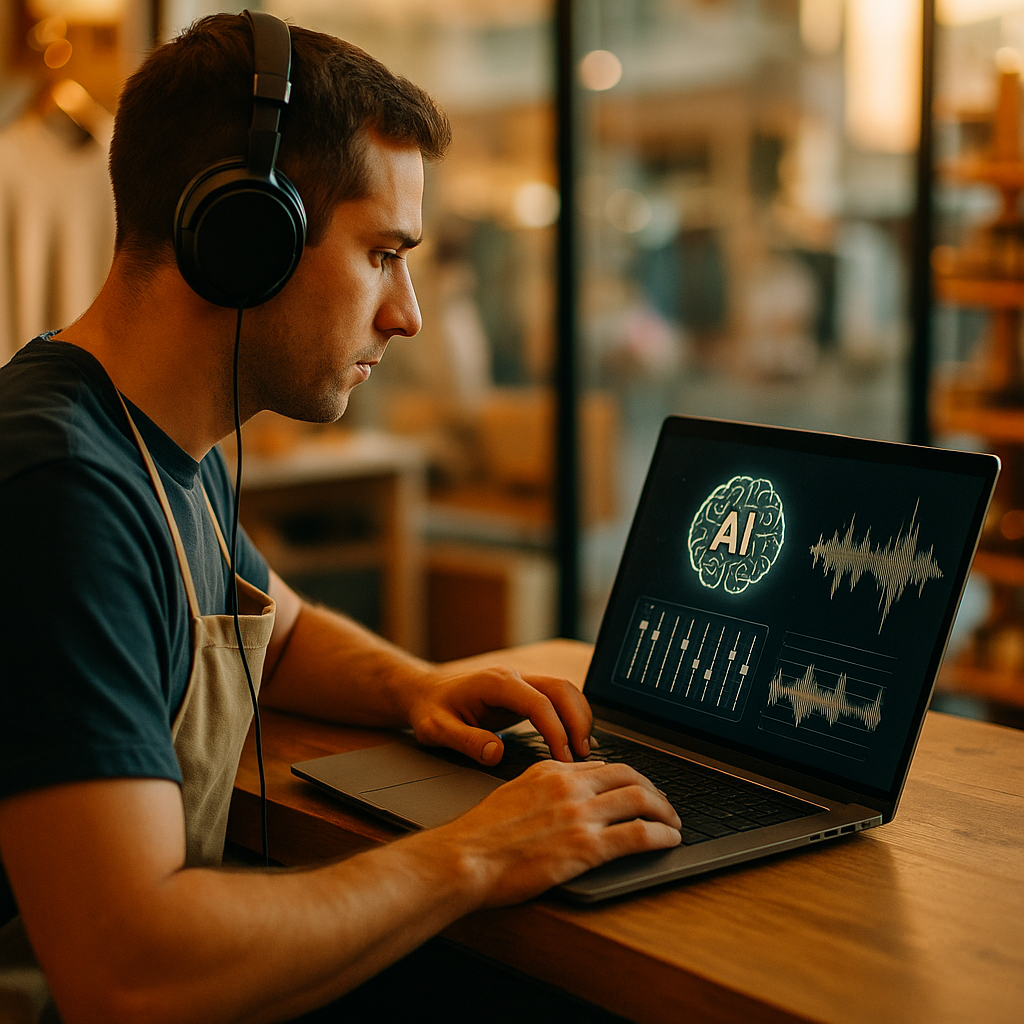
Using AI to Generate Hyper Niche Audio Soundscapes for Retail Spaces is changing how brands shape attention, comfort, and purchasing behavior in 2025. Instead of looping generic playlists, retailers can craft precise, adaptive ambience that matches store layout, customer intent, and even product categories—without sounding synthetic. The result is a controllable “audio architecture” that supports brand identity and measurable outcomes. Ready to design sound that sells?
AI soundscapes for retail: why hyper-niche audio now matters
Retail audio has moved beyond “music in the background.” Shoppers interpret sound as a signal for quality, pace, and belonging—often before they read signage or touch products. Hyper-niche soundscapes are purpose-built environments: subtle textures, micro-rhythms, spatial cues, and genre-adjacent motifs that reinforce a specific retail concept (for example, “Japanese minimalist skincare,” “mountain trail running,” or “heritage espresso bar”).
AI makes this level of specificity practical at scale. Instead of commissioning bespoke compositions for every location and seasonal shift, teams can generate variations that maintain brand coherence while fitting local context. That matters because different zones inside one store often need different behavior prompts: browsing in apparel, deliberation in cosmetics, calm in customer service, energy near promotions.
In 2025, the strongest use cases focus on behavioral intent rather than novelty. A well-designed soundscape can reduce perceived waiting time, support staff focus, and encourage deeper exploration. The “hyper-niche” advantage is relevance: sound aligns to the customer’s mental model of the brand, which increases comfort and reduces friction.
What readers often ask: Is this just “AI music”? Not necessarily. Many retail soundscapes are not songs at all. They are designed ambiences—light melodic fragments, environmental textures, and spatialized layers—that create a mood without demanding attention.
Generative audio design: building blocks of a brand-consistent soundscape
Generative audio design uses algorithms and AI models to produce audio elements that can evolve over time while staying within defined creative boundaries. To keep soundscapes brand-safe and recognizable, treat them like a visual identity system: rules first, generation second.
Core building blocks to define before generating:
- Brand sonic palette: tempo ranges, instrumentation families, tonal warmth, “clean vs textured” production, and emotional adjectives (e.g., grounded, luminous, playful, premium).
- Zone mapping: entrance, hero display, browsing aisles, fitting rooms, service desk, checkout queue—each with a target energy curve and attention load.
- Time dynamics: morning softness, midday clarity, evening warmth; weekday vs weekend intensity; promotional windows vs baseline ambience.
- Spatial strategy: stereo width, reverb size, and frequency shaping that fits ceiling height and materials. A marble-heavy boutique needs different decay and brightness than a textile-rich concept store.
- “No-go” rules: avoid harsh transients, distracting hooks, lyrical content in sensitive zones, or frequencies that mask staff communication.
From there, AI can generate variations that feel handcrafted. A practical approach is to generate stems (beds, percussive textures, tonal pads, subtle motifs) and mix them programmatically. This keeps the soundscape flexible while preserving the brand’s signature.
Follow-up question: How do you prevent repetition fatigue? Use controlled randomness: rotate stem combinations, introduce micro-variations every few minutes, and ensure no “recognizable loop point.” Also set a maximum motif recurrence rule (e.g., no motif repeats more than once per 20 minutes).
Adaptive in-store audio: integrating AI with footfall, zones, and intent
Adaptive in-store audio responds to real conditions—traffic density, queue length, dwell time, and even weather—while staying subtle. The goal is not to “gamify” shoppers, but to support comfort and flow.
Typical adaptive triggers (privacy-first):
- Footfall levels: higher density can handle slightly more rhythmic clarity; low traffic can use warmer, slower textures to invite browsing.
- Queue state: when lines build, use calmer harmonic motion and reduce rhythmic urgency to lower perceived waiting stress.
- Zone occupancy: if fitting rooms are full, shift nearby audio to less distracting ambience; if a hero display is under-visited, add gentle “attention cues” (not loudness—contrast and tonal focus).
- Time-on-site patterns: if dwell drops in a zone, adjust to a more inviting sonic texture, then measure the change.
Implementation usually connects the audio engine to store analytics via an API. Retailers can use aggregated sensor data (people counters, queue management tools) without identifying individuals. Keep changes gradual. Abrupt shifts feel manipulative; gentle evolution feels natural.
What readers often ask: Will adaptive audio distract staff? It shouldn’t. Build a “staff comfort baseline” by testing audio during real operations, ensuring speech intelligibility and limiting sharp frequency peaks. Include staff feedback as a formal KPI, not an afterthought.
Retail sound branding: aligning AI soundscapes with customer experience
Retail sound branding is the disciplined practice of making audio express your brand values consistently—across locations, seasons, and campaigns. AI expands what’s possible, but branding discipline keeps it coherent.
How to align soundscapes with customer experience:
- Start with customer states: discovery, evaluation, decision, and aftercare. Map each state to an audio intention (calm focus, confident energy, reassurance).
- Match product psychology: technical products often benefit from clarity and minimalism; artisanal goods can carry organic textures and subtle imperfections.
- Use “sonic wayfinding” carefully: gentle shifts between zones can guide movement without signage. Think of it as lighting, not a siren.
- Protect brand equity: define a signature motif family (intervals, timbres, rhythm shapes) that appears lightly across soundscapes, similar to a logo mark.
- Localize without fragmenting: allow regional textures (instruments, ambience) within a controlled palette so customers still recognize the brand anywhere.
EEAT in action means grounding creative decisions in expertise and evidence. Document your rationale: why these tempos, why this spectral balance, why these zones. When a stakeholder asks, “How do we know this helps?” you can point to a test plan and measured outcomes, not just taste.
Follow-up question: Should you include recognizable songs at all? Sometimes, but be strategic. Songs can spike attention and create licensing complexity. Many premium retailers reserve songs for specific moments (events, launches) and rely on soundscapes for daily operations.
Audio analytics and A/B testing: proving ROI without guesswork
Audio is often treated as subjective, but you can measure its impact with the same rigor as visual merchandising. In 2025, retailers increasingly run audio A/B tests across comparable stores or time blocks, using clear success metrics.
Practical metrics to track:
- Dwell time by zone (do shoppers linger where margin is higher?)
- Conversion rate (overall and category-level)
- Average transaction value and add-on rates
- Queue abandonment and perceived wait feedback
- Staff sentiment (fatigue, focus, communication clarity)
- Customer experience signals (post-visit surveys, review language themes)
How to run a clean test:
- Hold volume constant across variants; test composition and texture, not loudness.
- Control for promotions and staffing differences when possible.
- Use time blocks (e.g., alternating weeks) to reduce bias from day-of-week effects.
- Pre-register success criteria so you don’t “hunt” for a positive number after the fact.
To follow Google’s helpful content principles, be transparent about uncertainty. Audio effects vary by category, region, and brand positioning. The most reliable approach is iterative: deploy, measure, adjust, and keep a clear audit trail of changes.
Follow-up question: What if results are neutral? Neutral can still be valuable if the soundscape reduces licensing costs, increases brand consistency, or improves staff comfort. ROI is broader than conversion alone.
Ethical AI music licensing and compliance: what retailers must get right
Ethical AI music licensing is not optional. Retail spaces are public performance environments, and AI generation introduces extra layers: training data provenance, rights to outputs, and agreements with technology providers.
Key compliance and risk areas to address in 2025:
- Public performance rights: ensure your playback method and venue type are covered by the appropriate licenses or a properly licensed provider.
- Output ownership terms: confirm whether generated stems/tracks are exclusive to your brand, and whether the vendor can resell similar outputs.
- Training data transparency: prefer vendors who can explain model training sources and provide contractual assurances around infringement risk.
- Artist and composer ethics: if you want a human touch, consider hybrid workflows that commission composers to create source motifs that AI then variations—paid and credited appropriately.
- Privacy-first adaptivity: avoid biometric or identity-based triggers. Use aggregated, non-identifying store signals and document your data handling.
Practical procurement checklist:
- Get licensing terms reviewed by counsel experienced in music and tech contracts.
- Require indemnification language and clear responsibility boundaries.
- Demand a takedown and replacement process if any output is challenged.
- Maintain a content registry: what was generated, when, with which model/version, and where it was deployed.
This is where EEAT matters most: retailers that treat AI audio as a governed system—rather than a creative toy—move faster with fewer surprises.
FAQs
-
What is a hyper-niche audio soundscape in retail?
A hyper-niche soundscape is a custom-designed ambient audio environment tailored to a specific brand concept, product category, and in-store zone. It uses subtle musical and environmental elements to shape mood and behavior without dominating attention.
-
How is an AI-generated soundscape different from a playlist?
A playlist sequences finished songs. An AI soundscape can be generated from stems and rules, evolving continuously with controlled variation. It can also adapt to store conditions like traffic and queue levels while staying within a brand-defined sonic identity.
-
Do AI soundscapes work for small boutiques, or only big chains?
They work for both. Small retailers benefit from affordable customization and reduced repetition without hiring a full-time audio team. Chains benefit from consistent brand sound across many locations with controlled local variation.
-
How long should a retail soundscape run before repeating?
Many retailers aim for at least 60–120 minutes of perceived non-repetition. With generative stems and micro-variation rules, you can extend that significantly while keeping the sound cohesive and non-distracting.
-
Can adaptive audio feel manipulative to customers?
It can if changes are abrupt or designed to pressure decisions. Best practice is subtle, comfort-first adaptation: smooth transitions, consistent loudness, and changes that support navigation and reduced stress rather than urgency.
-
What equipment do retailers need to deploy AI soundscapes?
At minimum: reliable speakers, a playback device (player or in-store PC), and a management console. For adaptive audio, add people-counting or queue data integrations via API. Acoustic tuning and zone-based speaker placement make a bigger difference than exotic hardware.
-
Is AI-generated retail audio automatically “royalty-free”?
No. “AI-generated” does not guarantee freedom from public performance licensing requirements or infringement risk. Retailers should confirm public performance coverage and review vendor contracts for output rights, training data assurances, and indemnification.
Conclusion: AI-driven soundscapes give retailers in 2025 a practical way to craft hyper-specific ambience that supports brand identity, shopper comfort, and measurable performance. The winning approach combines clear sonic rules, zone-based intent, privacy-first adaptivity, and disciplined testing. Treat audio like a governed design system—then generate variations confidently. The takeaway: design the rules, prove the impact, and scale the experience.