


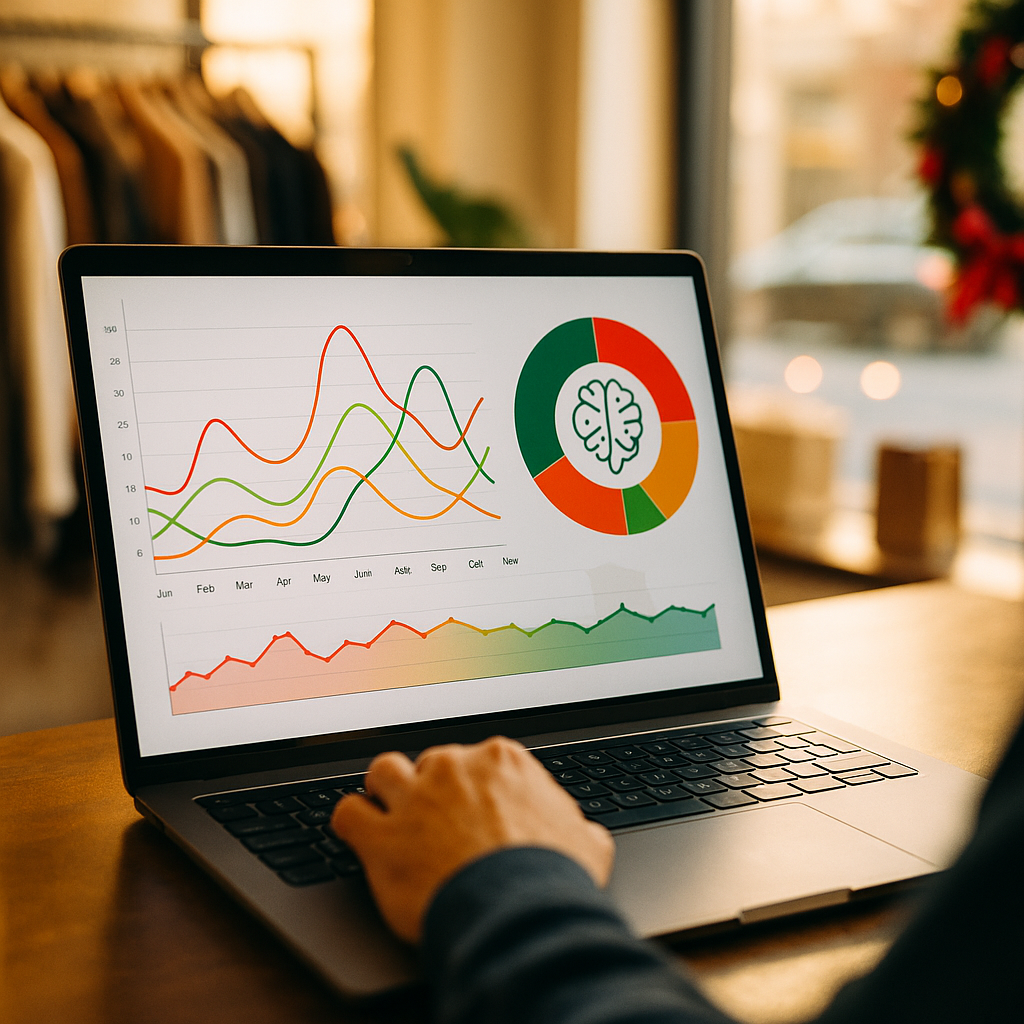
Using AI To Predict Seasonal Shifts In Customer Sentiment And Demand is now a practical advantage for teams that plan inventory, pricing, campaigns, and staffing. In 2025, shoppers move faster, react to macro and micro trends in real time, and signal intent across reviews, social posts, search, and support tickets. AI helps you see those signals early, quantify them, and act before competitors do—so what exactly should you build and trust?
AI demand forecasting for seasonal patterns
Seasonality is rarely “once a year and predictable” anymore. Weather volatility, platform algorithm changes, influencer cycles, and regional events can compress or extend peaks. AI demand forecasting improves seasonal planning by combining structured business data (sales, stockouts, pricing, promotions) with external drivers (search interest, weather, events, competitor pricing). The result is a forecast that adapts as conditions change.
In practice, high-performing teams use a layered approach:
- Baseline seasonal model: Learns repeating patterns by week and region (for example, back-to-school, holiday gifting, spring refresh).
- Promotional and price elasticity layer: Estimates how discounts, bundles, and pricing shifts change demand versus normal seasonality.
- Exogenous signals layer: Adds weather, shipping cutoffs, local events, and search trends to anticipate surges and dips.
- Real-time correction: Updates forecasts daily (or intra-day for fast-moving categories) as new sales and intent data arrives.
To avoid “AI that sounds smart but isn’t useful,” define forecast horizons tied to decisions: next 2 weeks for staffing and replenishment, 4–8 weeks for marketing calendars, and 12–26 weeks for procurement commitments. Then measure accuracy at the level you operate (SKU-store-week, category-region-day, or subscription plan-cohort-month) and link it to outcomes like reduced stockouts, fewer markdowns, and improved on-time fulfillment.
Follow-up you’re likely asking: Do I need tons of data? You need enough history to learn seasonality and enough granularity to separate true demand from stock constraints. If you have limited history, use category-level models plus external signals, then progressively drill down to SKUs as data accumulates.
Customer sentiment analysis to detect seasonal mood shifts
Demand changes when people’s emotions and expectations change. Customer sentiment analysis uses natural language processing (NLP) to quantify how customers feel and what they value—then tracks how those themes move with the calendar. This matters because the “same” product can succeed or fail depending on seasonal context: giftability, urgency, comfort, convenience, and budget sensitivity all fluctuate.
Useful sentiment systems go beyond positive/negative scores. They extract:
- Aspect sentiment: How customers feel about shipping speed, quality, sizing, durability, packaging, or customer service.
- Emotion and intent: Frustration vs. excitement; “need it by Friday” urgency; “comparing options” consideration.
- Topic trends: Emerging complaints (“runs small in winter layers”) or new motivators (“perfect for travel”).
- Seasonal vocabulary shifts: Gift, holiday, party, school, travel, outdoor, allergy, flu, heat, cold.
Data sources should match your customer journey:
- Reviews and Q&A: High signal on product fit and quality; slower but reliable.
- Support tickets and chat logs: Early warning for returns, defects, shipping issues, and policy confusion.
- Social and creator comments: Fast-moving signals; needs robust filtering for bots and sarcasm.
- On-site search and zero-result queries: Direct evidence of demand gaps and seasonal intent.
Answering the likely follow-up: How do I make sentiment actionable? Tie aspect sentiment to operational levers. If “late delivery” sentiment rises before peak season, you can adjust carrier mix, shipping cutoffs, and inventory positioning. If “gift packaging” sentiment spikes, you can add bundle options and merchandising changes before the rush.
Seasonal marketing analytics that connects sentiment to revenue
Forecasting demand and monitoring sentiment are only valuable if they change decisions. Seasonal marketing analytics connects what customers feel and do to what your business earns. The key is building a common measurement layer that marketing, merchandising, and operations can all use.
Start with a unified model of seasonal drivers:
- Customer-level signals: browsing depth, repeat visits, cart adds, email engagement, churn risk, loyalty tier behavior.
- Channel signals: paid search query shifts, organic content traction, referral sources, creator campaign lift.
- Product signals: conversion rate, return rate, stock availability, margin, shipping constraints, review velocity.
- Sentiment signals: aspect scores and topic trends mapped to categories and SKUs.
Then use AI to answer specific, seasonal questions your team actually faces:
- Which message will resonate this season? Generate and test creative themes that match current sentiment (value, reliability, comfort, gifting, wellness).
- Where will incremental demand show up? Allocate budget to geos and audiences where intent is rising earlier than usual.
- What will reduce returns during peak? Identify sentiment topics that predict returns (fit confusion, misleading images) and fix content before volume spikes.
To keep analysis honest, separate correlation from causation. Use controlled experiments where possible (geo tests, holdouts, incrementality tests), and for the rest, use causal inference techniques and clear guardrails. Your goal is not a perfect model; it’s reliable directionality that improves decisions week after week.
Follow-up you’re likely asking: What metrics should I track? Track a blend of business outcomes and leading indicators: contribution margin, stockout rate, forecast error, return rate, NPS/CSAT by topic, creative fatigue, and search-to-purchase lag. Seasonal wins often come from reducing friction, not just increasing spend.
Machine learning inventory planning and smarter supply decisions
When demand shifts, inventory is where profits are won or lost. Machine learning inventory planning uses probabilistic forecasts and constraints to decide how much to buy, where to place it, and when to replenish—while accounting for lead times, minimum order quantities, and supplier reliability.
Effective seasonal inventory AI typically includes:
- Demand distributions, not single numbers: Plan for ranges and confidence intervals, especially for peak weeks.
- Stockout-aware modeling: Corrects for lost sales when items were unavailable, preventing under-forecasting next season.
- Substitution effects: If a best-seller is out of stock, what do customers buy instead? This matters for assortment planning.
- Constraint optimization: Chooses inventory actions that maximize margin under warehouse capacity, budget, and supplier limits.
- Dynamic safety stock: Raises buffers when volatility is high (new trend, uncertain weather) and lowers them when demand stabilizes.
To make this useful in the real world, integrate decision outputs directly into workflows: purchase order recommendations, transfer suggestions, and exception alerts (for example, “forecast spike + low cover + long lead time”). Teams should be able to override with reasons, and those reasons should feed the learning loop.
Follow-up you’re likely asking: How do I avoid expensive mistakes? Use phased deployment. Start with a “recommendation mode” and compare outcomes to business-as-usual. Apply guardrails such as maximum buy limits for low-history SKUs, and require human approval for large commitments during the first seasonal cycle.
Retail predictive analytics with real-time signals and early warnings
Seasonal shifts rarely announce themselves politely. Retail predictive analytics becomes more accurate and more valuable when it incorporates real-time signals and turns them into early warnings your team can act on quickly.
High-impact early-warning signals include:
- Search and browse intent: Rising on-site searches for seasonal terms, increasing view-to-cart rates, and shorter decision times.
- Sentiment inflections: Sudden increases in negative sentiment about delivery, packaging, or quality—often a precursor to returns and churn.
- Competitive changes: Competitor price moves, out-of-stock patterns, and shipping promises that shift customer expectations.
- Operational stress: Support volume spikes, warehouse cycle time changes, and carrier delays.
- Local drivers: Weather anomalies and event calendars that move demand earlier or later by region.
Build an “insights-to-action” playbook so alerts do not become noise. Each alert should answer: what changed, why it matters, who owns the response, and what action is recommended. For example: “Gift wrap sentiment up + review mentions rising; add gift wrap upsell module, update PDP images, and prioritize packaging supplies.”
Follow-up you’re likely asking: How fast should updates be? For most retailers, daily refresh is enough for planning, but intraday monitoring helps during peak weeks. The right cadence depends on lead times: if you can change ads instantly but inventory takes weeks, prioritize faster actions (messaging, channel allocation, substitution merchandising) when time is tight.
Data governance and model validation for trustworthy AI predictions
AI only improves seasonal decisions when leaders trust it. Trust comes from strong data governance, clear validation, and transparent communication. In 2025, this also includes privacy-safe handling of customer data and responsible use of generative AI in analysis workflows.
Apply these EEAT-aligned practices:
- Define data ownership: Assign owners for sales, inventory, marketing, and customer experience data, with documented definitions (what counts as a return, a stockout, a campaign).
- Build a reliable data pipeline: Track latency, missing fields, and anomaly detection so models aren’t trained on broken inputs.
- Validate with season-aware testing: Use backtesting that respects seasonal cycles and avoids leakage (for example, don’t train on future promotional calendars).
- Monitor drift: Detect when customer behavior changes and models need retraining—common after platform shifts or major product changes.
- Explain outputs: Provide interpretable drivers (weather, price, search trend, sentiment topics) so teams understand what moved the forecast.
- Protect privacy: Minimize personal data, use aggregation where possible, and ensure vendors meet your compliance and security standards.
Answering the likely follow-up: What’s a minimum validation bar? Require consistent improvements over a simple baseline (seasonal naive or last-year same-week), track error by segment (region, channel, category), and measure business impact (stockouts, markdowns, service levels). A model that improves accuracy but hurts margin is not a win.
FAQs
What is the difference between predicting sentiment and predicting demand?
Demand forecasts estimate quantities customers will buy. Sentiment prediction estimates how customers will feel and what they will talk about (for example, delivery speed, quality, value). Sentiment often moves first and explains why demand rises or falls, making it a strong leading indicator for seasonal planning.
Which data sources work best for seasonal sentiment signals?
Support tickets and chat logs are usually the fastest operational signal, while reviews provide durable product-level insight. On-site search terms and zero-result searches show immediate seasonal intent. Social data can be valuable but needs careful filtering and brand-safety controls.
How early can AI detect a seasonal shift?
For many categories, AI can detect meaningful changes 2–6 weeks earlier than traditional reporting by combining leading indicators like search trends, engagement patterns, and topic-level sentiment. The practical “lead time” depends on how quickly you can act on inventory and campaigns.
Do small businesses need advanced AI to benefit?
No. Many benefits come from simpler models plus better signals: clean sales history, a basic seasonal baseline, and lightweight NLP topic tagging on reviews and tickets. You can expand to more sophisticated approaches as data volume and decision complexity grow.
How do you handle new products with no seasonal history?
Use analogs: map new items to similar products, categories, price tiers, and audiences. Combine that with external signals (search interest, creator engagement) and early on-site behavior. Use wider confidence intervals and tighter guardrails on inventory commitments until real data arrives.
What KPIs prove that AI forecasting is working?
Track forecast error by horizon, stockout rate, markdown rate, return rate, service levels, and contribution margin. Also track “time to action”: how quickly teams respond to early warnings, because speed is often the biggest seasonal advantage.
AI turns seasonal planning from reactive to predictive by connecting demand patterns with real customer emotion and intent. In 2025, the strongest teams combine probabilistic forecasts, aspect-based sentiment insights, and real-time signals to guide inventory, messaging, and operations. The takeaway: build a closed loop—detect shifts early, act with clear playbooks, and validate impact with disciplined metrics before scaling.