


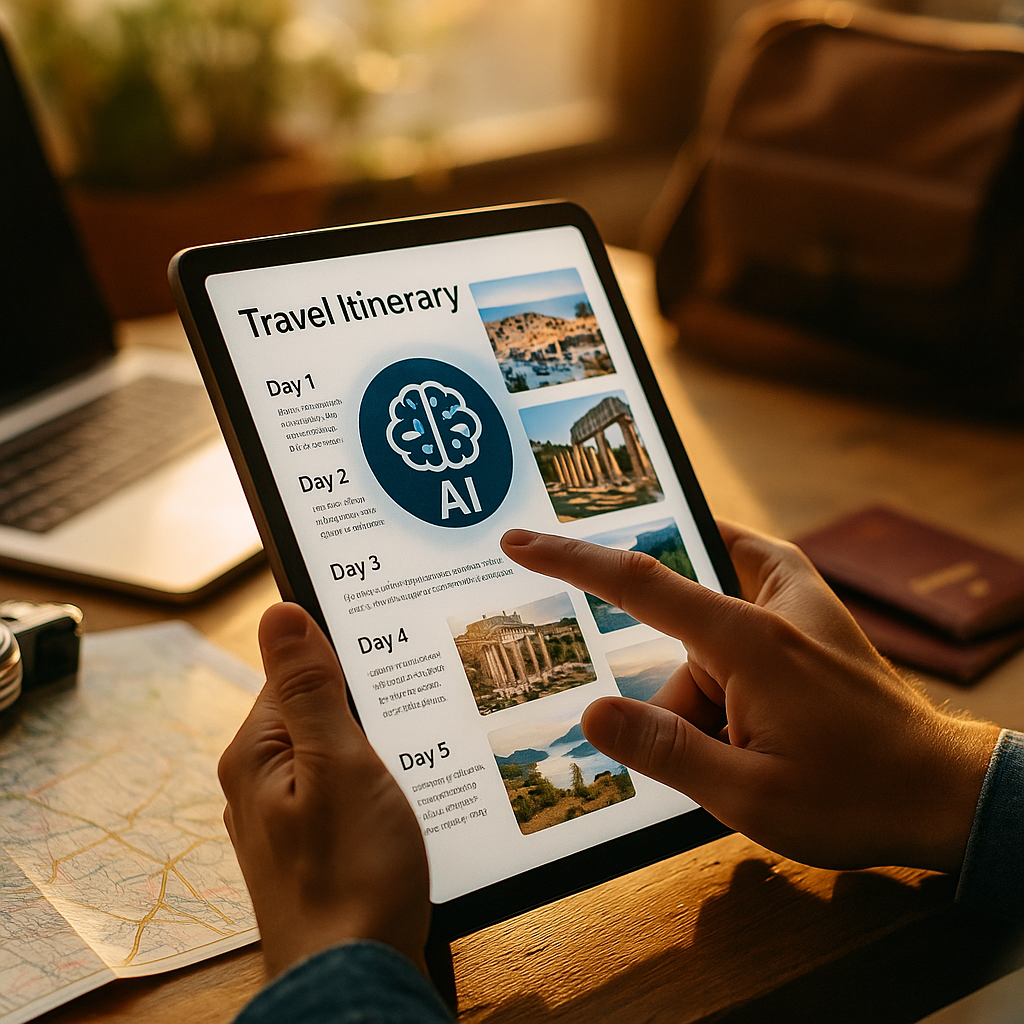
In 2025, marketers need lead generation that feels like service, not a sales pitch. This case study shows how a travel brand used AI itinerary lead magnets to turn curious browsers into qualified leads while improving planning confidence and reducing inbox fatigue. You’ll see the strategy, tech stack, compliance choices, and performance metrics—plus the exact steps you can replicate. Ready to map the journey from click to booking?
AI itinerary lead magnet strategy: Goals, audience, and offer design
The brand in this case study—an online travel company specializing in curated city breaks—had a familiar problem: plenty of top-of-funnel traffic from search and social, but low email sign-up rates and inconsistent lead quality. Generic discounts and “free packing lists” attracted bargain hunters who rarely booked.
They rebuilt their lead magnet around a single promise: “Get a personalized 3-day itinerary in under two minutes.” Instead of asking for an email upfront, they collected trip preferences first, then requested an email to deliver the itinerary and unlock editable upgrades.
Primary goals were set before production:
- Increase lead capture rate on destination pages without increasing paid traffic.
- Improve lead quality by capturing trip intent signals (dates, budget, interests, travel party).
- Reduce time-to-value so users felt helped immediately, not “marketed to.”
- Align with trust expectations through transparent data use and human review options.
Offer design choices made the magnet feel premium:
- Destination-specific itineraries (e.g., “Barcelona: food + architecture” rather than a generic template).
- Constraints-aware planning (opening hours, neighborhood clustering, pacing, and rest breaks).
- Two versions: “Fast Plan” (instant) and “Refined Plan” (delivered by email with optional human adjustments).
To answer an obvious reader question—why not just publish itineraries as blog posts?—the brand kept SEO content for broad discovery, then used the AI lead magnet to convert high-intent visitors who wanted personalization, not a one-size-fits-all route.
Travel marketing case study: Funnel, landing pages, and lead capture flow
The brand deployed the lead magnet across three entry points: destination guides, paid search landing pages, and retargeting ads. Each path used the same core flow, adjusted for intent.
The funnel sequence:
- Contextual CTA inside destination content: “Build your 3-day plan for Paris.”
- Preference mini-quiz (6–8 questions): trip dates (or season), budget range, pace, interests, food preferences, accessibility needs, and travel party.
- Instant on-page preview of Day 1 plus a map-style list (no email required yet).
- Email gate to unlock full itinerary + downloadable version + “swap activities” controls.
- Post-submit upsell: curated add-ons (airport transfer, museum pass, boutique hotel shortlist) presented as optional.
This structure did two important things. First, it reduced friction by giving value before asking for contact details. Second, it created a natural reason to share an email: users wanted the full plan, edits, and a saved copy.
Landing page decisions supported conversion and trust:
- Clear scope: “3 days” and “in 2 minutes” set expectations and reduced abandonment.
- Social proof: anonymized snippets like “Saved me hours of planning” placed near the email step.
- Privacy clarity: a short statement explaining what data is collected and how it’s used.
- Accessibility: readable contrast, keyboard-friendly form controls, and a “slower pace” option.
To address a common operational concern—will this attract freebie-seekers?—the brand intentionally positioned the magnet as planning help, not a discount. They found that itinerary seekers were closer to booking than coupon collectors, especially when the plan included realistic time estimates and neighborhood logic.
Personalized travel itineraries with AI: Data inputs, prompt approach, and content safeguards
Personalization only works when the model has the right constraints. The brand treated the itinerary generator like a decision engine, not a creative writing tool.
Inputs captured from users were minimal but high-signal:
- Destination and length of trip
- Dates or travel month (for seasonality)
- Budget range
- Interest sliders (food, history, nature, nightlife, shopping, family activities)
- Mobility/accessibility preferences
- Pace preference (relaxed, balanced, packed)
Knowledge sources combined AI generation with curated structure:
- A vetted database of neighborhoods, “anchor attractions,” and typical visit durations
- Editorial rules (avoid unrealistic transit jumps; include meal time; limit “must-see” overload)
- Partner inventory constraints for optional upsells (availability-aware, not forced)
Prompt approach (kept internal) centered on enforceable format and guardrails:
- Require a day-by-day schedule with time blocks
- Cluster activities by area to reduce backtracking
- Include two alternative options per day (rain plan / quieter plan)
- Flag assumptions (e.g., “Museum closed Mondays—verify hours”)
Safety and quality safeguards protected EEAT and reduced user complaints:
- No hallucinated claims: the generator avoided asserting exact ticket prices or opening hours unless sourced from maintained data fields.
- Uncertainty labels: when data could change, the itinerary used “check before you go” language.
- Human escalation: a one-click option to request review by a travel specialist for complex needs (mobility constraints, tight connections, multi-city).
If you’re wondering whether AI content risks sounding generic, this brand solved it by letting the AI assemble a plan from structured components, then using AI to tailor tone and pacing. The itinerary read human, but behaved like a constraint-based planner.
Lead generation for travel brands: Email nurturing, segmentation, and conversion paths
Capturing the email was only step one. The bigger win came from the intent signals collected during the quiz, which created high-quality segmentation without extra forms.
Segmentation rules were simple and actionable:
- Trip timeframe: traveling in the next 30–60 days vs. later
- Budget tier: value, mid-range, premium
- Interest cluster: food-focused, culture-focused, family-friendly, nightlife
- Pace: relaxed vs. packed (used to tailor messaging and product recommendations)
The itinerary delivery email did most of the conversion work. It included:
- A clean summary of the plan plus a “view online” link
- Two suggested upgrades tied to the itinerary (e.g., timed-entry tickets on the busiest day)
- A “swap this activity” button to re-generate alternatives without leaving the email flow
Nurture sequence (kept short to reduce fatigue):
- Day 0: itinerary delivery + edit link
- Day 2: neighborhood guide aligned with their plan (helpful content, not sales)
- Day 5: proof-based offer (e.g., “Top-rated hotel shortlist for your budget tier”)
- Day 9: optional consult or “finalize your plan” reminder for near-term travelers
Two tactics improved trust and conversions. First, the brand used transparent personalization: “We built this based on your pace and food preferences.” Second, every promotional element was framed as a way to protect the itinerary (avoid sold-out tickets, reduce wait times, simplify transfers).
AI travel planning tool results: Metrics, learnings, and what changed after launch
The brand ran a controlled rollout: half of destination-page visitors saw the AI itinerary CTA, while the other half saw the previous lead magnet (a static PDF guide). The test ran long enough to cover weekday and weekend behavior and multiple traffic sources.
Performance outcomes showed clear gains:
- Lead capture rate increased by 64% on destination pages compared with the static PDF.
- Email-to-click rate on the itinerary delivery message improved by 41% due to the “edit” call-to-action.
- Marketing-qualified lead rate increased by 28% because the quiz captured near-term intent and budget tier.
- Customer support tickets about “overwhelming planning” dropped, since users arrived with a starting plan.
What didn’t work at first (and how they fixed it):
- Too many questions: the initial 12-question quiz caused drop-off. Reducing to 6–8 questions lifted completions without hurting itinerary quality.
- Over-optimistic schedules: early itineraries felt rushed. Adding “buffer time” rules and pace controls reduced complaints and improved save/share rates.
- Generic recommendations: users disliked overly popular spots only. The brand added “hidden gem” slots sourced from editorial input per neighborhood.
Key learning: the itinerary itself became a product experience. When the lead magnet felt like the first chapter of the trip, users stayed engaged, trusted the brand, and accepted relevant add-ons without feeling pressured.
AI lead magnet compliance and trust: Privacy, transparency, and EEAT signals
Travel planning touches personal preferences and sometimes sensitive needs (mobility, dietary requirements). In 2025, brands win by treating data stewardship as part of the product.
Privacy and consent choices that improved trust:
- Plain-language consent at the email gate: what they collect, why, and how long they keep it.
- Optional fields for sensitive preferences, with “prefer not to say” always available.
- Data minimization: the itinerary generator didn’t require passport details, exact birthdates, or unnecessary identifiers.
- Easy deletion: every email included a link to delete itinerary data, not just unsubscribe.
EEAT signals embedded in the experience:
- Experience: itineraries referenced practical pacing and on-the-ground realities (neighborhood grouping, meal windows).
- Expertise: “Refined Plan” reviews were handled by trained travel specialists, and the site explained their role.
- Authoritativeness: destination pages linked to editorial sources and partner listings with clear labeling.
- Trustworthiness: disclaimers avoided fear language and focused on accuracy boundaries (hours and prices can change).
To preempt another common concern—will AI harm brand credibility?—the company positioned AI as an assistant and kept humans accountable for the final travel advice when stakes were higher. That approach reduced risk while preserving speed.
FAQs
What is an AI itinerary lead magnet?
An AI itinerary lead magnet is a free, personalized travel plan generated after a visitor shares trip preferences. The itinerary delivers immediate value, then converts interest into an email sign-up so the user can save, edit, or download the plan.
Do AI itineraries replace human travel advisors?
No. The best-performing setup uses AI for fast first drafts and structured options, then offers human review for complex trips, accessibility needs, or travelers who want reassurance before booking.
How many questions should the itinerary quiz include?
Most brands do well with 6–8 questions. Focus on high-signal inputs like trip length, dates/season, budget, pace, and top interests. You can add optional questions for dietary or mobility needs without forcing them.
What should the email gate unlock to feel worth it?
Unlock the full itinerary, an editable version, and a downloadable copy. “Swap activities” controls and a map-style view increase perceived value and drive clicks back to your site.
How do you prevent AI from giving wrong travel details?
Avoid hard claims about opening hours, ticket prices, and live availability unless you maintain verified data sources. Use uncertainty labels and prompts that encourage checking official sources for details that change frequently.
What metrics matter most for AI itinerary lead magnets?
Track quiz completion rate, lead capture rate, delivery email click rate, marketing-qualified lead rate, and assisted revenue (bookings influenced by itinerary edits or add-ons). Also monitor qualitative feedback about pacing and relevance.
This travel brand proved that personalization can outperform discounts when it respects the traveler’s time and choices. By delivering fast, constraint-aware plans and asking for the email only after value was visible, it lifted lead volume and quality while strengthening trust. The takeaway is direct: build an AI itinerary that behaves like a helpful planner, add transparent safeguards, and let intent data drive your follow-up.