


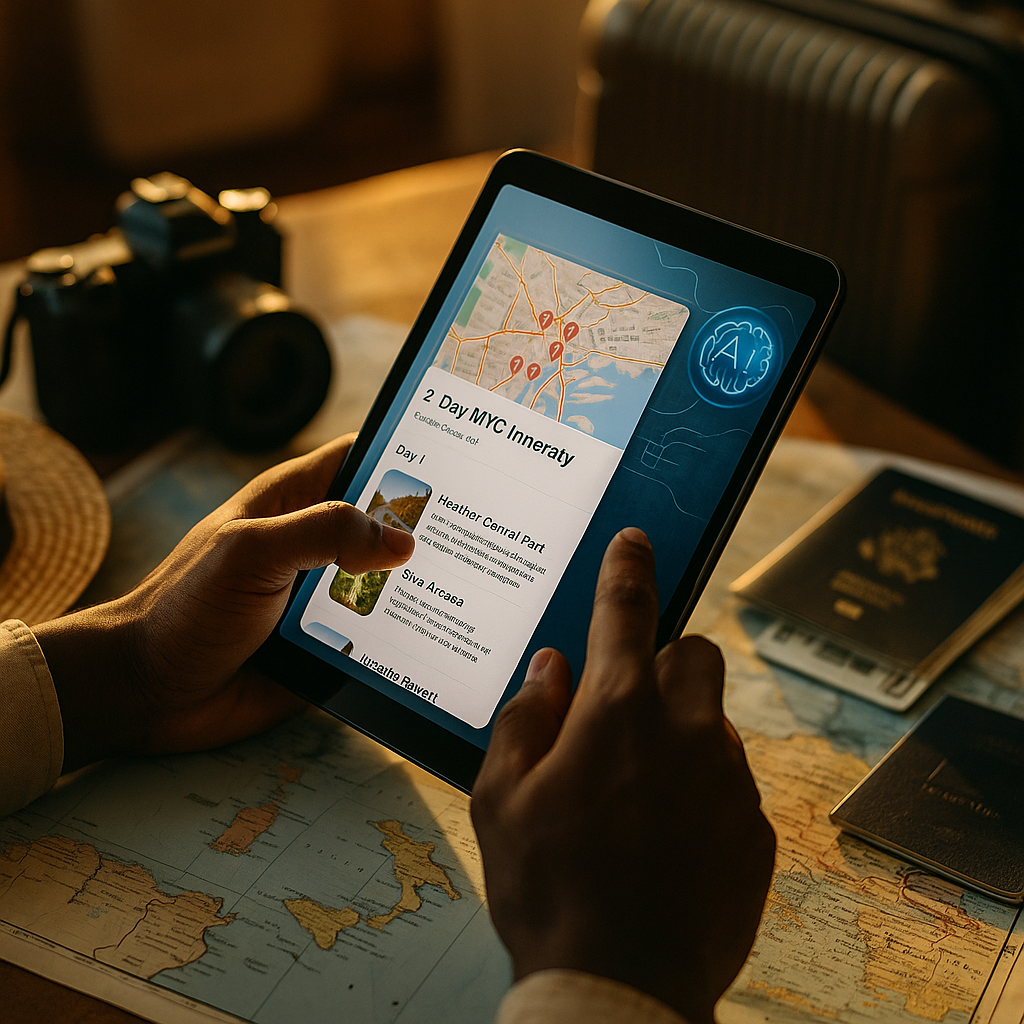
In 2026, travel brands face rising acquisition costs, fragmented intent signals, and shorter booking windows. This case study shows how AI itinerary lead magnets helped one travel company capture high-intent travelers, improve lead quality, and scale revenue without relying solely on paid media. The strategy combined personalization, automation, and disciplined measurement. Here is what made it work.
Why travel lead generation needed a new model
A mid-market travel brand specializing in multi-city vacations had a familiar problem: traffic was growing, but conversions were uneven. Blog content attracted readers researching destinations, while paid campaigns drove expensive clicks from users who were still early in the planning phase. The company offered strong packages and a solid customer support team, yet too many visitors left without sharing contact details or requesting a quote.
The team identified a gap between inspiration and purchase. Travelers wanted help turning broad ideas into practical plans. They were searching for answers to questions like:
- How many days should I spend in each city?
- What is a realistic budget for my trip style?
- Which routes reduce travel time and cost?
- What should I prioritize if I only have one week?
Traditional lead magnets such as generic PDF guides or newsletter sign-ups were not solving that problem. They provided information, but not tailored value. In an industry where every trip is shaped by budget, timing, group size, and interests, generic assets often feel interchangeable.
The brand needed a conversion point that matched actual traveler intent. Instead of asking users to “contact sales” too early, it offered something useful at the exact moment planning complexity peaked: a personalized itinerary generated from a short input form. This shifted the value exchange. Users no longer gave an email for vague future updates. They gave it to receive a trip plan they could use immediately.
From an EEAT perspective, the move also made sense. Helpful content performs better when it demonstrates practical experience and solves a real problem. A custom itinerary tool could reflect destination expertise, route logic, and planning constraints more credibly than a broad downloadable guide.
Building an AI itinerary generator that travelers actually wanted
The brand avoided a common mistake: launching a flashy AI tool without defining user value. Before development, the team mapped the top planning scenarios from customer service transcripts, booking consultations, and search query data. This research revealed the most common inputs travelers were willing to share:
- Destination or region
- Trip duration
- Travel dates or season
- Budget range
- Travel style, such as family, luxury, adventure, or cultural
- Number of travelers
- Must-see interests or activities
Using those fields, the company built an AI itinerary generator that created a customized outline in under a minute. The output included a day-by-day structure, transfer suggestions, estimated pacing, and recommended experiences aligned with the user’s budget and interests. The key was not infinite creativity. The key was controlled relevance.
To maintain quality, the AI system did not generate from an empty slate. It drew from a curated internal knowledge base built by travel specialists. That database included vetted hotels, route combinations, transfer times, seasonal considerations, and destination-specific notes. Human travel experts reviewed the decision framework and set guardrails to reduce poor recommendations.
This is where experience and expertise mattered. The brand’s destination knowledge gave the AI practical grounding. Instead of recommending impossible schedules or overstuffed days, it produced itineraries that reflected how trips actually work. That distinction increased trust and prevented the tool from feeling gimmicky.
The brand also designed the lead magnet with transparency. Users saw that the itinerary was AI-assisted and reviewed against real travel logic. That honest framing improved credibility. In sectors involving major purchases, trust often matters more than novelty.
How personalized travel marketing improved lead quality
The itinerary tool did more than capture emails. It segmented intent. Every input became a useful signal for future messaging. Rather than placing all new subscribers into the same nurture stream, the brand built audience groups based on trip characteristics and buying readiness.
For example:
- A user requesting a 10-day luxury Italy itinerary for June entered a high-intent European summer sequence.
- A traveler exploring “Japan in spring” with a moderate budget received educational content, fare alerts, and sample package options.
- A family planning a school-break trip saw messaging focused on convenience, room configurations, and child-friendly experiences.
This structure improved both relevance and timing. Sales teams did not waste effort on leads with weak signals, and marketing automation became more precise. The CRM now held richer first-party data than a standard newsletter form could provide.
The brand also introduced a lead scoring model tied to itinerary depth and follow-up behavior. Users who completed the form, opened the itinerary email, clicked accommodation options, and returned to pricing pages received higher scores. Those users moved faster to consultation offers. Lower-intent users stayed in educational sequences until they showed stronger buying signals.
As a result, the company saw a meaningful shift in lead quality. The total number of leads mattered less than the percentage likely to book. That is an important lesson for travel marketers. If a lead magnet increases volume but lowers intent, sales efficiency declines. Personalized travel marketing works when personalization extends beyond the asset itself into the full nurture journey.
The tool also created stronger internal alignment. Marketing could show exactly which itinerary categories generated qualified demand. Sales could prioritize outreach based on user-stated needs. Product teams could identify rising destination interest and adjust package emphasis accordingly. One lead magnet became a source of demand capture, customer insight, and content intelligence.
Using marketing automation for travel to scale without losing relevance
Once the AI itinerary lead magnet proved initial traction, the next challenge was scale. More leads are only useful if the follow-up experience remains timely and relevant. The brand built a multi-step automation system to ensure every itinerary request triggered the right actions.
The workflow included:
- Instant email delivery of the itinerary summary
- A follow-up email with pricing ranges and package options based on destination and budget
- Dynamic content blocks featuring relevant hotels, tours, or add-ons
- Retargeting audiences built from itinerary topics and trip windows
- Sales alerts for high-intent users who met score thresholds
- Remarketing flows for users who engaged but did not book
The company also tested where the lead magnet should appear. It did not rely on one landing page. Instead, it embedded the offer across destination guides, paid search pages, exit-intent prompts, and social campaigns. Different channels emphasized different value propositions:
- Search traffic saw “Get a custom trip plan in 60 seconds”
- Blog readers saw “Turn this destination guide into your own itinerary”
- Paid social audiences saw “Plan your exact route, budget, and must-sees”
This channel-specific framing raised conversion rates because it matched user context. Someone reading a long-form guide needed a next step. Someone coming from a bottom-funnel ad needed proof that planning help would be immediate and specific.
Importantly, the automation logic included human intervention at the right points. When a lead hit a threshold suggesting high purchase intent, a travel consultant could review the AI-generated plan before contacting the user. That created a better customer experience and reduced the risk of pushing unsuitable offers. Automation handled speed and scale; humans protected nuance and trust.
This balance is essential for EEAT. AI can accelerate personalization, but brands still need accountable processes, subject-matter oversight, and clear standards for accuracy.
Measuring conversion rate optimization for travel with the right KPIs
The travel brand did not judge success by email capture alone. It built a measurement framework tied to commercial outcomes. That prevented the team from overvaluing vanity metrics and helped leadership understand whether the initiative deserved more budget.
The most important KPIs were:
- Itinerary form completion rate
- Lead-to-consultation rate
- Qualified lead rate
- Email engagement by itinerary segment
- Booking conversion rate from itinerary leads
- Revenue per lead
- Paid media efficiency, including lower cost per qualified lead
During testing, the team learned several practical lessons. Shorter forms increased completion, but removing budget and travel style reduced downstream quality. Including too many itinerary details in the first email lowered click-through to consultation pages because some users felt “done.” Adding a “refine my plan” option increased repeat engagement and surfaced stronger intent.
Landing page copy also mattered. Pages that promised a “free personalized itinerary” performed well at the top of the funnel, but pages that added proof points such as “based on real route planning and travel expert input” performed better with higher-consideration audiences. Trust language improved conversion among users closer to purchase.
The company ultimately reported gains in three areas:
- Higher lead capture from destination content that previously converted weakly
- Better sales efficiency due to improved qualification and scoring
- Increased booking revenue from nurture sequences linked to itinerary intent
The broader takeaway is simple: conversion rate optimization for travel must connect content, lead capture, and booking behavior. An AI lead magnet should not be evaluated as a standalone widget. It is part of a revenue system.
Lessons in AI in travel marketing for brands planning their own rollout
This case study offers several lessons for travel companies considering a similar strategy.
Start with a real planning problem. Do not build AI for novelty. Build it where customer friction is highest. In travel, that often means route planning, budgeting, trip duration, or seasonal decision-making.
Use expert-curated data. Generic AI outputs are rarely enough for high-consideration purchases. Travel brands need structured destination knowledge, pricing logic, and review processes to keep recommendations useful.
Design for post-capture value. The itinerary itself is only the beginning. The strongest results come from segmented nurture flows, lead scoring, and coordinated sales follow-up.
Be transparent. Tell users what is automated, what is based on travel expertise, and how they can refine the plan. Clear communication builds trust.
Measure business impact. Focus on qualified leads, consultations, bookings, and revenue contribution. More leads do not automatically mean better growth.
Keep a human layer. Travel purchases involve emotion, logistics, and risk. AI can speed up planning, but expert human review still matters for premium service and conversion confidence.
For brands asking whether this model works only for large companies, the answer is no. Smaller travel businesses can start with a narrower use case, such as one destination, one trip type, or one seasonal offer. What matters is the quality of the planning logic and the relevance of the follow-up, not the size of the tool.
In 2026, first-party data is more valuable, personalization expectations are higher, and travelers want useful answers fast. AI in travel marketing works best when it helps people make better decisions, not just when it produces content at scale.
FAQs about AI itinerary lead magnets
What is an AI itinerary lead magnet?
An AI itinerary lead magnet is a conversion asset that gives users a personalized travel plan in exchange for contact details and planning inputs such as destination, budget, and trip length. It attracts higher-intent travelers because the value is specific and immediate.
Why do AI itinerary lead magnets perform better than generic travel guides?
They match traveler intent more closely. A generic guide offers broad information, while a personalized itinerary helps users solve a real planning problem. That usually leads to better engagement, stronger qualification signals, and more relevant follow-up marketing.
Do travelers trust AI-generated itineraries?
They are more likely to trust them when brands are transparent and combine AI with expert travel knowledge. Curated destination data, realistic route logic, and human review options all improve credibility.
What data should a travel brand collect in the itinerary form?
Collect only the inputs needed to create meaningful personalization. Usually that includes destination, travel duration, season or dates, budget, travel style, and number of travelers. Extra fields should be added only if they improve lead quality or routing.
Can small travel companies use this strategy?
Yes. A smaller brand can launch a limited version focused on one destination or niche, such as honeymoon trips, adventure tours, or family holidays. Starting narrow often improves quality and makes testing easier.
How should success be measured?
Track form completion, qualified lead rate, consultation bookings, booking conversion, revenue per lead, and cost per qualified lead. These metrics show whether the lead magnet contributes to actual growth rather than just email volume.
What are the biggest implementation risks?
The main risks are low-quality AI outputs, weak segmentation after capture, overcomplicated forms, and poor alignment between marketing and sales. Brands should use expert-reviewed content sources, clear scoring rules, and continuous testing.
This case study shows that AI itinerary lead magnets scale when they are built around genuine traveler needs, powered by trustworthy travel expertise, and connected to smart automation. The clear takeaway is not to deploy AI for appearance, but to solve planning friction in a measurable way. When personalization, data, and human judgment work together, travel brands can grow faster and convert better.