


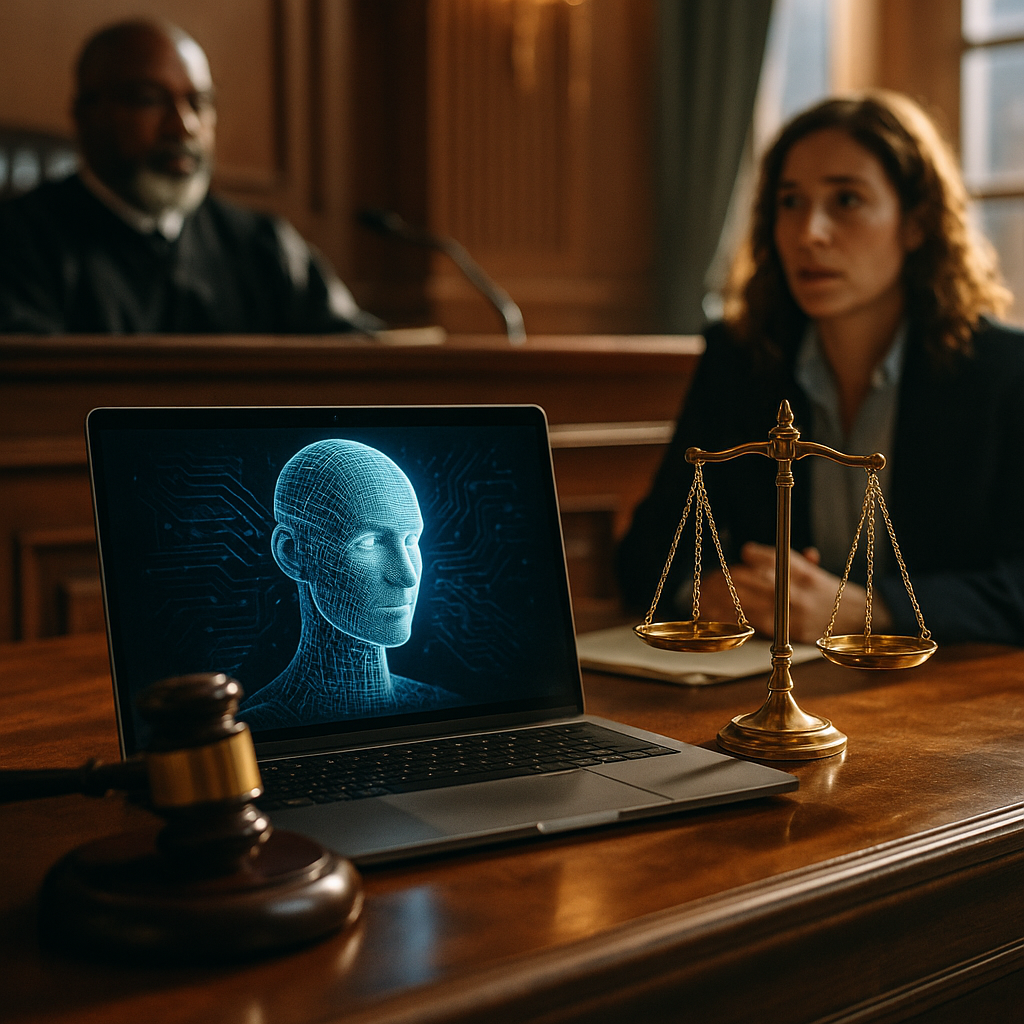
In 2025, many companies deploy autonomous AI agents to greet customers, recommend products, negotiate terms, and post on social media. These systems can act quickly, but speed does not remove legal risk. Legal liabilities for autonomous AI brand representatives now touch privacy, advertising, contracts, IP, and product safety. Understanding who is responsible—and how to prove compliance—protects revenue and reputation. Ready to see where the real exposure hides?
Agency and accountability: secondary keyword — AI agent legal responsibility
An autonomous AI brand representative can appear to “speak” for your business: answering questions, offering discounts, issuing apologies, and sometimes making promises. Legally, the key question is not whether the AI has intent, but whether its actions are attributable to the company. In most jurisdictions, the business remains the accountable actor because it deployed the system, set objectives, provided training data, and benefited from outcomes.
Attribution risk shows up in four common ways:
- Apparent authority: If the AI is presented as “our assistant” and customers reasonably rely on it, statements can bind the company even if the AI was wrong.
- Negligent deployment: If a business releases a brand agent without adequate testing, monitoring, or safety controls, regulators and plaintiffs may argue the business failed a reasonable duty of care.
- Vicarious liability for vendors: Using a third-party model does not automatically shift responsibility. If the vendor is a processor or service provider, your company may still be the primary accountable party to consumers and regulators.
- Misrepresentation by design: If the agent’s interface implies a human is speaking—or it exaggerates capabilities—liability can attach under consumer protection and unfair practices theories.
Practical takeaway: treat your AI brand representative as a high-impact employee who needs clear permissions, training, supervision, and audit trails. That framing helps align legal, security, and customer-experience teams around measurable controls rather than vague “AI policy” statements.
Consumer protection and advertising: secondary keyword — AI marketing compliance
Autonomous brand agents increasingly produce marketing claims on the fly: “best price,” “guaranteed results,” “clinically proven,” “limited-time offer,” or “fastest shipping.” If those claims are unsubstantiated or misleading, your company can face enforcement and private claims. The legal exposure is amplified because autonomous systems can generate high volumes of content rapidly across channels.
Primary liability triggers in AI-driven marketing:
- Unsubstantiated claims: Health, finance, sustainability, and performance statements typically require evidence before publication. “The AI made it up” is not a defense.
- Dynamic pricing and discriminatory outcomes: Personalized offers can create allegations of unfair discrimination, especially if segmentation correlates with protected traits or proxies.
- Dark patterns and manipulation: Agents that nudge users into subscriptions, hide cancellation paths, or apply pressure tactics can violate consumer protection rules.
- Influencer-style endorsements: If an AI persona reviews or “recommends” products, disclosures may be required when there is a material connection (the brand benefits from the recommendation).
Build compliance into the generation loop: maintain a claim library with pre-approved language, require citations for regulated categories, and block the model from generating certain claims without documented substantiation. Pair that with automated post-generation scanning for restricted terms and a human escalation path for edge cases.
Answering the follow-up question—do disclosures matter? Yes. Clear disclosures that the customer is interacting with an AI, plus transparent terms for promotions, pricing, and limitations, reduce deception risk. Disclosures do not cure false claims, but they help prevent misunderstanding about who is speaking and what is guaranteed.
Privacy and data security: secondary keyword — AI chatbot privacy law
Autonomous brand representatives often collect personal data, infer preferences, and connect to CRM systems. That makes privacy compliance a core liability area, not an afterthought. Risks increase when the agent operates across multiple jurisdictions, handles sensitive data, or retains conversation history for training.
Key privacy and security exposure points:
- Data minimization failures: If the agent asks for more information than necessary to fulfill a request, you increase breach risk and regulatory exposure.
- Unlawful processing: Using chat logs for model training or analytics may require consent or other lawful bases, depending on the jurisdiction and the nature of the data.
- Sensitive data collection: Health details, biometrics, precise location, children’s data, and payment information trigger heightened obligations.
- Security incidents: Prompt injection, data exfiltration, and insecure tool integrations can expose customer records, pricing rules, or internal documents.
Controls that reduce liability in 2025: implement privacy-by-design with short retention windows, redact or tokenize identifiers in logs, and segregate training data from support transcripts unless explicitly authorized. On the security side, constrain tool access with least privilege, validate and sanitize tool outputs, and deploy monitoring for unusual access patterns and data egress.
Vendor management is part of privacy compliance: document whether providers act as processors or independent controllers, confirm subprocessor chains, and require security commitments, breach notice timelines, and data-use limitations. Without tight contracts and evidence of oversight, “we outsourced the model” can worsen your risk posture.
Contracts and transactions: secondary keyword — AI agent contract liability
When an AI brand representative offers discounts, accepts returns, books appointments, or negotiates service terms, it can create contractual obligations. The most common disputes arise when the AI makes an unauthorized promise, misstates a key term, or completes a transaction under ambiguous consent.
Where contract liability tends to form:
- Quote and acceptance mistakes: An AI might propose a price or timeline outside policy, and a customer may claim a binding agreement.
- Modification of terms: Agents can inadvertently “agree” to custom terms that conflict with standard terms of service.
- Refunds and warranties: A brand agent that expands warranty coverage or authorizes refunds outside policy can trigger reliance claims.
- Cross-border commerce: Different consumer rights and cooling-off rules apply, and an AI may not correctly apply location-based rules without guardrails.
How to keep autonomy without accidental commitments: design the agent to operate under explicit authority levels. For example: “informational only,” “can apply pre-approved promotions,” “can execute refunds up to a threshold,” and “must escalate any contract modification.” Combine that with transaction confirmations that restate essential terms and require clear user consent before finalizing.
Answering a common follow-up—do disclaimers prevent contract formation? Disclaimers help but rarely eliminate risk if the customer can show reasonable reliance and the business benefited from the interaction. Stronger protection comes from technical controls that prevent the agent from offering unauthorized terms and from clean records showing what was said, what was confirmed, and what was executed.
Intellectual property and content risk: secondary keyword — AI-generated content IP liability
Brand agents generate text, images, slogans, and code-like snippets, and they may also reference competitors. That creates IP and content risks: copyright infringement, trademark dilution, and defamation. Liability can arise from outputs, training inputs you supplied, or the way generated content is used in commerce.
High-risk IP scenarios for autonomous brand representatives:
- Copyright similarity: An agent may output text or creative elements that closely resemble protected works, especially when prompted for “in the style of” a known creator.
- Trademark misuse: Using competitor marks in ads, metadata, or comparisons can trigger infringement or false association claims.
- Right of publicity: AI personas that imitate a celebrity or recognizable individual can violate publicity rights and mislead consumers.
- Defamation and disparagement: Autonomous comparisons (“Brand X is unsafe”) can create legal exposure without substantiation.
Risk management that holds up under scrutiny: establish prohibited prompt patterns, apply similarity and trademark checks for high-visibility campaigns, and require human review for comparative advertising or any use of third-party names and likenesses. Maintain an internal log of content approvals, sources for factual statements, and the rationale for any comparative claim.
EEAT-aligned practice: publish editorial standards for AI outputs, name accountable owners (legal, marketing, product), and document training and fine-tuning datasets you control. When a dispute arises, your ability to show governance and review discipline often matters as much as the contested output.
Governance, audits, and incident response: secondary keyword — AI governance and risk management
Legal liability is not only about what an AI brand representative says today; it’s about whether your organization can prove responsible deployment. Regulators, partners, and enterprise customers increasingly expect evidence of governance: policies, testing, monitoring, and documented decisions.
Elements of a defensible governance program:
- Role-based design: define what the agent can do, what it cannot do, and when it must escalate to a human.
- Pre-deployment testing: evaluate hallucination rates, policy compliance, bias, safety, and security exploits like prompt injection.
- Continuous monitoring: watch for drift, emerging failure modes, and spikes in complaints; sample conversations for quality and compliance.
- Human-in-the-loop for high stakes: require approval for regulated advice, contract changes, sensitive topics, and large refunds.
- Incident response: prepare playbooks for harmful outputs, data exposure, unauthorized transactions, and brand crises; preserve logs for forensics.
Answering the follow-up—what evidence should we keep? Retain versioned model and prompt configurations, policy rules, tool permissions, test results, and a searchable log of user interactions with appropriate privacy protections. If challenged, you want to show: what the agent was designed to do, what controls existed, whether you monitored it, and how fast you corrected issues.
Contractual alignment: ensure your customer-facing terms cover AI use, limitations, dispute handling, and escalation channels. Align vendor contracts with your governance requirements, including audit rights and clear responsibility allocation for security and data use.
FAQs
Who is legally responsible when an autonomous AI brand representative gives incorrect information?
In most cases, the business deploying the AI is responsible because the AI acts as a channel for the company’s communications. Liability depends on the harm, the reasonableness of reliance, and whether you used appropriate controls, disclosures, and monitoring.
Do we have to tell customers they are speaking with AI?
Often yes, and it is a strong risk-reduction step even where not strictly mandated. Clear disclosure reduces deception claims and helps set expectations about accuracy, limitations, and escalation to human support.
Can an AI agent form a binding contract with a customer?
Yes, if the interaction includes offer, acceptance, and consideration, and the customer reasonably believes the agent has authority. You can reduce risk by limiting the agent’s transactional permissions and requiring explicit confirmations for key terms.
Is using a third-party AI provider a shield against liability?
No. Vendor use can shift some responsibility via indemnities and contractual obligations, but regulators and consumers typically look first to the brand that deployed the agent. Strong vendor due diligence and clear data-use terms are essential.
How do we prevent privacy violations in AI chat and voice interactions?
Minimize data collection, apply short retention windows, redact identifiers in logs, secure tool integrations, and restrict access with least privilege. Obtain appropriate consent for training or analytics use of conversations, especially for sensitive data.
What is the fastest way to reduce legal risk without killing performance?
Implement authority tiers, block unapproved claims, add mandatory escalation for regulated topics, and deploy monitoring with rapid rollback capability. These controls preserve speed while preventing the most expensive failure modes.
Autonomous AI brand representatives can accelerate sales and support, but they also concentrate legal risk where marketing, privacy, contracts, and security overlap. In 2025, liability usually follows the deployer: the company that benefits from the agent’s actions must prove it used reasonable controls. Build clear authority limits, compliant content rules, privacy-by-design, and auditable governance. Treat the AI like a regulated operator, and you keep innovation defensible.