


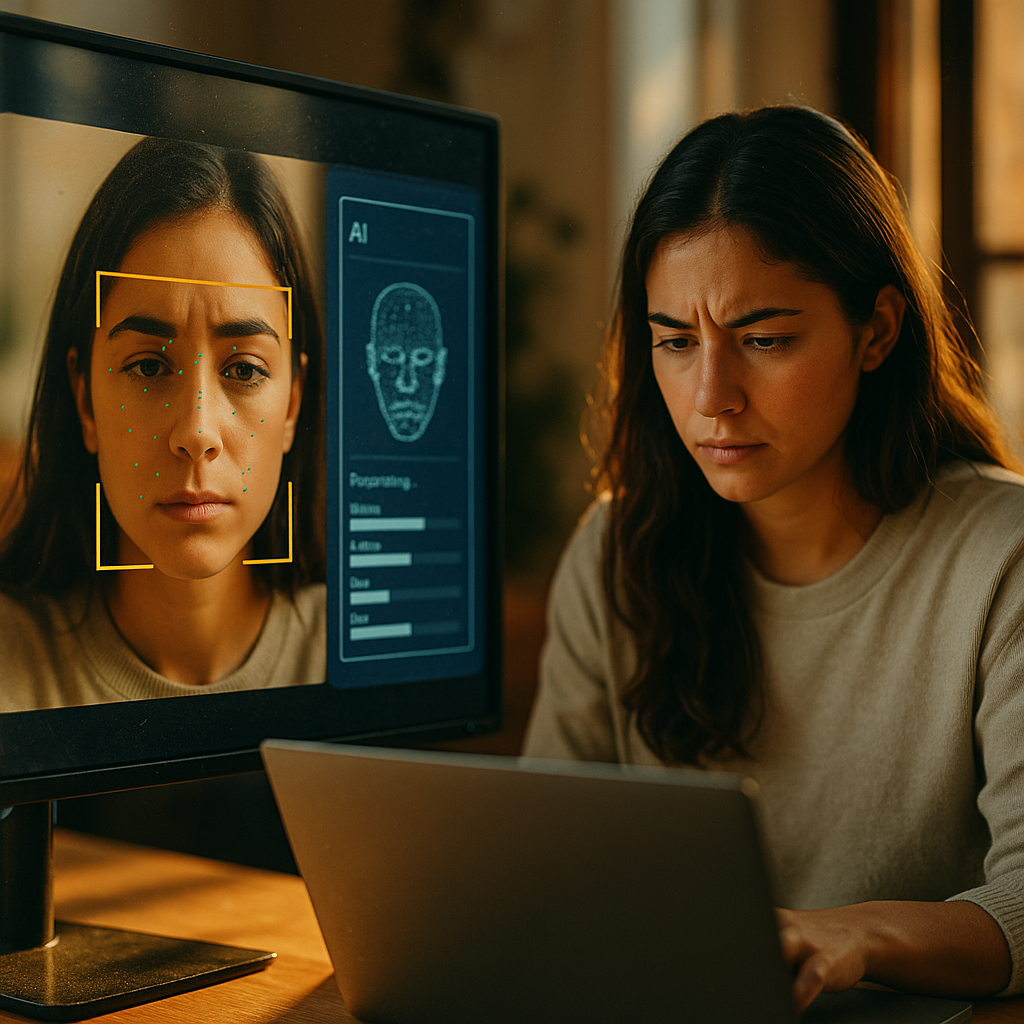
In 2025, research teams want deeper truth from video without over-reading what people say. Using AI To Analyze Micro-Expressions In Consumer Video Interviews can reveal fleeting facial cues that signal confusion, delight, skepticism, or stress—often before a participant finds the words. Done well, it upgrades insight quality and speed. Done poorly, it risks bias, overconfidence, and privacy harm—so how do you do it right?
Micro-expressions analysis for consumer research: what it is and what it is not
Micro-expressions are brief, often involuntary facial movements that can occur in fractions of a second. In consumer interviews, they can appear when a participant sees a price, hears a brand claim, or reacts to a concept—sometimes contradicting their verbal response. Micro-expressions analysis for consumer research aims to detect these short-lived signals and align them with the interview context to generate more complete insights.
It is important to separate what micro-expression analysis can do from what it cannot:
- It can flag moments worth reviewing (e.g., a rapid brow furrow during a “love it” statement), helping moderators and analysts focus their attention.
- It can support triangulation with voice, words, and behavior to strengthen interpretation.
- It cannot read minds, prove intent, or diagnose emotions with certainty. Facial movement is only one signal in a complex system.
- It cannot replace skilled qualitative analysis, especially when culture, context, and interview dynamics shape expression.
For helpful, decision-ready outputs, treat micro-expressions as probabilistic indicators—not verdicts. The strongest practice is to connect micro-expression events to what the participant just saw, heard, or recalled, then validate those events against other data sources (verbatim, follow-up probes, behavioral tasks, and outcomes like choice or purchase intent).
AI video analytics for interviews: how the technology works in practice
AI video analytics for interviews typically combines several components: face detection, facial landmark tracking, action-unit or feature extraction, and classification or scoring. In plain terms, systems identify a face, track key points (eyes, brows, nose, mouth), measure changes over time, and then infer patterns consistent with expressions such as surprise, contempt, confusion, or interest.
A practical workflow in 2025 often looks like this:
- Capture: Remote or in-person interviews recorded at sufficient resolution and frame rate. Good lighting and stable framing improve signal quality.
- Pre-processing: Automatic quality checks for occlusions (hands on face), extreme angles, poor lighting, or dropped frames.
- Event detection: The model identifies short windows where facial movement spikes beyond a baseline for that participant.
- Context linking: Timestamps align events with stimuli (concept boards, ads, packaging, pricing) and transcript segments.
- Outputs: Dashboards show “moments of reaction,” confidence ranges, and clips for human review.
Readers often ask whether these tools “detect emotion.” A more accurate framing is that they detect facial movement patterns that are sometimes associated with emotions, and then estimate likely categories. The best platforms expose uncertainty, provide evidence (e.g., action-unit intensity traces), and allow analysts to verify by watching the corresponding clip and reading the transcript. If a tool provides only a single emotion label without context, treat that as a red flag.
Emotion AI in market research: turning signals into actionable insight
Emotion AI in market research becomes valuable when it improves decisions, not when it produces more charts. To translate micro-expression signals into action, structure your analysis around business questions: Which claims trigger skepticism? Which features create delight? Where does comprehension drop? Which moments correlate with stated preference or choice?
Use micro-expression outputs in three high-impact ways:
- Identify “friction moments” fast: If multiple participants show quick confusion signals during a benefits explanation, rewrite the copy, change the order, or add proof.
- Validate resonance: When spontaneous smiles, attention markers, and positive voice cues cluster around a new value proposition, you have stronger evidence than self-report alone.
- Improve probing in moderation: If the model flags a subtle negative reaction while the participant says “it’s fine,” the moderator can ask a targeted follow-up: “I noticed you paused—what felt unclear or risky?”
To avoid over-interpretation, implement a simple triangulation rule: treat micro-expression signals as “insight candidates” until they are supported by at least one additional source, such as:
- Verbatim evidence (participant language indicating doubt, excitement, or concern)
- Paralinguistics (pauses, pitch shifts, laughter, hesitations)
- Behavioral tasks (choice, ranking, time-to-decision, willingness to pay)
- Outcome measures (concept preference, comprehension checks, recall)
This approach aligns with EEAT expectations: you are not asking stakeholders to trust a black box; you are presenting a transparent chain of reasoning with supporting evidence, clear limitations, and replicable steps.
Facial coding AI tools: choosing vendors and evaluating accuracy
Facial coding AI tools vary widely in reliability, transparency, and suitability for consumer research. Selecting a platform should feel more like choosing an analytics partner than buying software. Ask vendors to show how the model was trained, how it performs across diverse populations, and how it handles real-world interview conditions.
Use this evaluation checklist:
- Measurement transparency: Does the tool report what it measures (landmarks, action units, movement intensity) and provide confidence intervals?
- Bias and fairness testing: Can the vendor share performance by demographic segments and explain mitigation steps?
- Robustness in the wild: How does it handle glasses, facial hair, masks, head turns, screen glare, low light, or compressed video?
- Calibration: Does it establish a participant-specific baseline (neutral/resting face) before scoring reactions?
- Human-in-the-loop features: Can analysts review flagged moments, override labels, and annotate ground truth for continuous improvement?
- Auditability: Are outputs traceable to timestamps and clips so teams can verify findings?
Accuracy questions come up immediately: “What’s an acceptable accuracy rate?” Rather than relying on a single headline metric, request a multi-metric view (precision/recall for event detection, false-positive rates for “negative reaction” flags, and stability across lighting and device types). Also insist on task-relevant validation: performance on consumer interview footage is more predictive than performance on curated lab datasets.
Finally, avoid tools that market micro-expression analysis as definitive emotion detection. In consumer contexts, the goal is improved understanding of reactions to stimuli, not labeling the person. The difference matters for both scientific rigor and ethical risk.
Ethical AI for consumer insights: consent, privacy, and compliance in 2025
Ethical AI for consumer insights is not optional when you analyze faces. Video contains biometric and sensitive information, and micro-expression inference can feel intrusive if participants do not clearly understand what is being measured and why. Trust is also practical: participants who feel respected provide better data.
Build your program around these principles:
- Informed consent: Explain what you collect (video, audio, transcripts), what the AI analyzes (facial movement patterns), and how results will be used (research insights, not individual decisions). Provide opt-out options without penalty.
- Data minimization: Collect only what you need. If you can analyze on-device or on a secure environment and store only derived signals, consider that.
- Security controls: Encrypt data in transit and at rest, restrict access, and log usage. Use role-based permissions for clips that show faces.
- Retention limits: Define how long raw video is kept and when it is deleted or anonymized. Document the policy and follow it.
- Purpose limitation: Do not reuse interview video for unrelated model training or marketing unless consent explicitly covers it.
- Explainability to stakeholders: Provide clear notes on limitations, uncertainty, and the triangulation method used to reach conclusions.
Teams also ask, “Is micro-expression analysis lawful?” The correct answer depends on jurisdiction, contract terms, and how the data is processed (especially if biometric identifiers are involved). In 2025, a safe operational stance is to treat facial analysis as high-sensitivity processing: consult privacy counsel, complete a documented risk assessment, and ensure vendor agreements cover sub-processors, international transfers, breach notification, and deletion.
Best practices for remote video interviews with AI: setup, study design, and reporting
Best practices for remote video interviews with AI start long before you run the model. Your research design determines whether micro-expression analytics will add clarity or simply add noise. Good design improves signal quality, reduces confounds, and makes results easier to defend.
Use these field-tested practices:
- Standardize the camera setup: Ask participants to place the camera at eye level, sit facing a light source, and keep their face in frame. Provide a 30-second setup checklist before recording starts.
- Capture a neutral baseline: Begin with low-stakes conversation to establish resting facial movement patterns. Baselines help interpret later spikes.
- Time-stamp stimuli precisely: When showing packaging, ads, or pricing, log exact start/end times so micro-expression events can be mapped to the right stimulus.
- Use structured probes: Follow key stimuli with consistent questions (clarity, believability, relevance, perceived value). This reduces interpretive ambiguity.
- Plan for confounds: People smile when they are polite, not only when they are delighted. Add questions that separate social comfort from product enthusiasm.
- Report responsibly: Present findings as patterns across participants, not judgments about individuals. Include limitations: sample size, lighting variability, and model uncertainty.
When reporting to stakeholders, connect signals to decisions. A useful format is:
- What we observed: “A consistent micro-reaction of confusion appeared when participants encountered the feature name.”
- Supporting evidence: “Transcript shows repeated ‘I’m not sure what that means,’ plus longer response latency.”
- So what: “Comprehension risk likely suppresses preference.”
- Now what: “Rename the feature, add a plain-language descriptor, and retest.”
FAQs
What are micro-expressions, and why do they matter in consumer interviews?
Micro-expressions are brief facial movements that can reveal immediate reactions to stimuli. In consumer interviews, they help researchers spot moments of confusion, skepticism, or interest that participants may not articulate clearly, improving follow-up probing and interpretation.
Can AI accurately detect emotions from facial expressions?
AI can detect facial movement patterns and estimate likely emotional categories, but it cannot determine emotions with certainty. The most reliable use is to flag reaction moments for human review and to triangulate with speech, transcript content, and behavioral measures.
What video quality is needed for AI micro-expression analysis?
Clear frontal framing, stable lighting, and minimal occlusions matter more than ultra-high resolution. Consistent camera position and a visible face throughout the stimulus moments significantly improve detection and reduce false positives.
How do you reduce bias in facial coding AI tools?
Choose vendors that test and disclose performance across diverse groups, use participant-specific baselines, and support human review. Run your own validation on representative interview footage and monitor error patterns by segment to catch drift or uneven performance.
Is it ethical to analyze participants’ faces with AI?
It can be ethical when participants give informed consent, data is minimized and secured, retention is limited, and outputs are used for aggregated insight rather than individual judgment. Clear explanations and opt-out paths are essential for trust.
How should teams present AI micro-expression findings to stakeholders?
Report them as probabilistic signals, show the timestamps and clips for verification, and tie conclusions to supporting evidence from transcripts and outcomes. Emphasize patterns across participants and provide actionable recommendations linked to the business question.
AI-assisted micro-expression analytics can strengthen consumer video interviews by highlighting subtle reaction moments, accelerating review, and improving probe quality. The strongest teams in 2025 treat facial signals as evidence to validate, not answers to accept. Combine transparent tooling, careful study design, and strict consent and privacy practices. When you triangulate micro-expressions with words and behavior, you get insight you can defend—and decisions you can act on.