


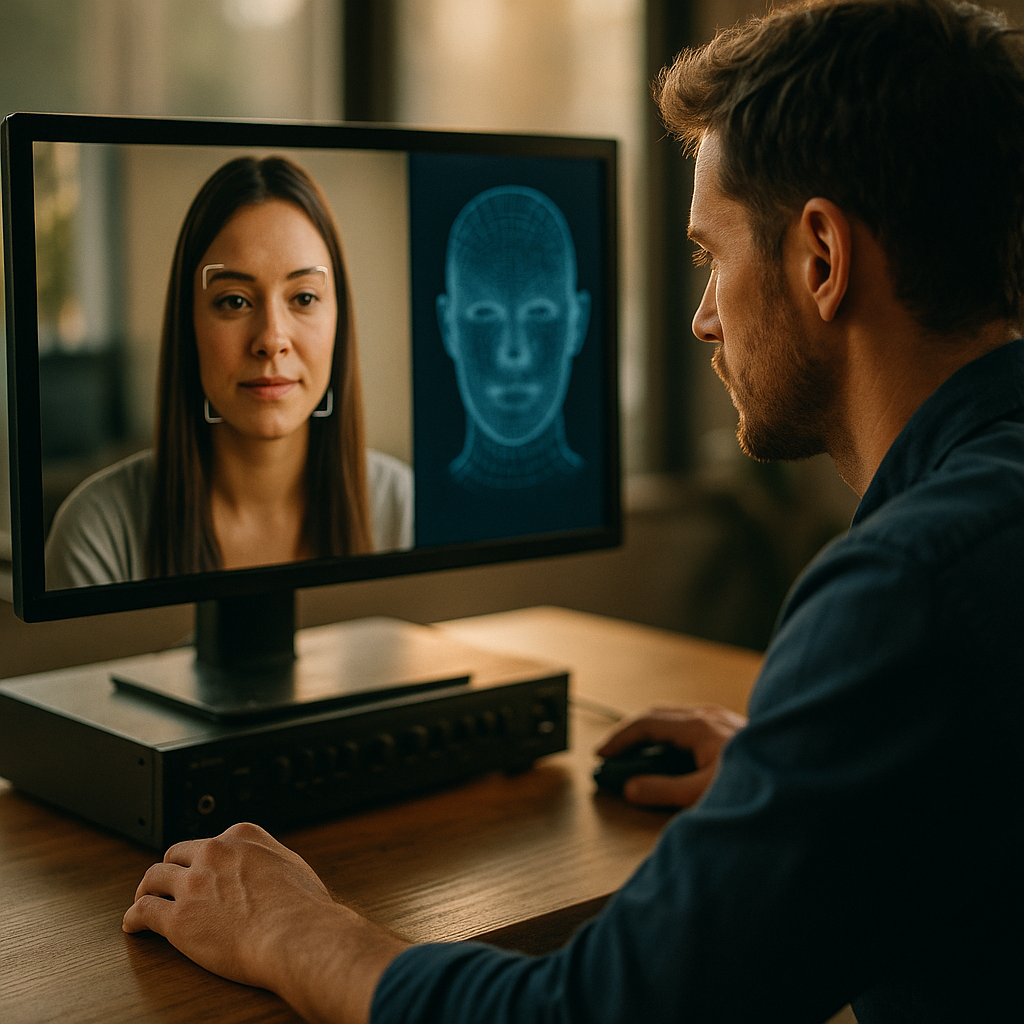
Using AI To Analyze Micro-Expressions In Consumer Video Interviews is changing how insights teams understand emotion at scale in 2025. Instead of relying on memory, selective notes, or self-reported feelings, researchers can detect fleeting facial cues that often surface before people find the right words. When combined with sound methodology, this approach turns video into measurable evidence—and raises new questions about accuracy, privacy, and trust.
AI micro-expression analysis for consumer research: what it is and why it matters
Micro-expressions are brief, involuntary facial movements that can appear when someone experiences an emotion—sometimes even when they try to mask it. In consumer interviews, these signals may occur when a participant sees pricing, handles packaging, reacts to a brand message, or answers a sensitive question about preferences. The practical value is not “mind reading.” It is improving interpretation when spoken feedback and nonverbal reactions diverge.
AI micro-expression analysis for consumer research uses computer vision models to track facial landmarks (eyebrows, eyelids, mouth corners, cheeks) and infer patterns associated with emotional states such as surprise, disgust, confusion, delight, or skepticism. Many systems also incorporate temporal modeling—how expressions change over frames—to avoid overreacting to a single blink or head turn.
Why it matters for insights teams:
- Faster pattern detection: You can review dozens or hundreds of interviews and find where emotion spikes consistently.
- More reliable triangulation: Compare what people say with what their face and voice suggest at that moment.
- Sharper creative and product decisions: Identify moments of friction (confusion, doubt) or genuine pull (interest, delight).
Used responsibly, micro-expression signals become another data layer—like clickstreams, eye tracking, or open-ends—not a standalone verdict.
Emotion AI in market research: ideal use cases and where it fails
Emotion AI in market research performs best when you treat it as an augment to skilled qualitative work. It is most helpful when you need consistent interpretation across many sessions, multiple moderators, or mixed languages.
High-value use cases include:
- Concept and messaging tests: Flag lines that trigger confusion or skepticism, then probe immediately.
- Packaging and shelf simulation: Detect subtle signs of hesitation at claims, ingredients, or price points.
- UX and journey interviews: Capture frustration moments that participants later downplay or forget.
- Competitive comparison: Compare emotional signatures when consumers react to your brand vs. alternatives.
- Post-campaign qualitative: Identify where ads create attention but not trust—two different reactions.
Where it fails is just as important for decision quality. Micro-expression inference can break down when:
- Video quality is weak: low light, low frame rate, heavy compression, or camera angle issues.
- Faces are partially covered: hands, hair, masks, or strong backlight obscure key features.
- Context is missing: a frown could mean confusion, concentration, or even physical discomfort.
- Cultural and individual differences are ignored: people express emotion differently; baselines vary widely.
- It is used as “truth”: treating a score as definitive can amplify bias and lead to overconfident decisions.
A practical rule: use emotion signals to decide what to ask next and where to look, not to declare what a person “really feels” without corroboration.
Facial coding AI from video interviews: how the technology works (and what to demand)
Facial coding AI from video interviews typically includes four stages: detection, tracking, feature extraction, and inference. Understanding these stages helps you evaluate vendors and set realistic expectations.
1) Face detection and landmarking
The system locates the face and maps points around eyes, brows, nose, lips, and jaw. Stable landmarking is foundational; if it drifts, downstream emotion inference becomes noise.
2) Temporal tracking
Micro-expressions are time-based. Strong systems analyze movement patterns over short windows rather than labeling single frames. Ask whether the tool accounts for head movement, speaking motion, and blinks.
3) Feature extraction
Models transform video into measurable signals: muscle movement approximations, asymmetry, intensity, and onset/offset speed. Some tools also integrate gaze direction and pose to differentiate engagement from avoidance.
4) Inference and scoring
Outputs may include emotion categories, valence/arousal, or “attention/engagement” proxies. Treat these as probabilistic indicators, not diagnoses.
What to demand from any tool in 2025 to align with EEAT and procurement expectations:
- Clear documentation: what labels mean, how they are computed, and known limitations.
- Validation evidence: performance metrics on conditions similar to yours (remote interviews, real lighting, real devices).
- Bias and subgroup testing: evaluation across diverse skin tones, ages, and facial characteristics.
- Confidence reporting: per-clip confidence and “no decision” states when the model can’t see well enough.
- Human review workflow: a way for researchers to audit moments and correct misinterpretations.
If a vendor cannot explain their model behavior in plain language, you cannot responsibly put its outputs in front of business stakeholders.
Behavioral insights from micro-expressions: turning signals into decisions
Behavioral insights from micro-expressions become useful when they connect to a structured research plan. The goal is not to generate more dashboards; it is to improve decision clarity.
Start with a hypothesis map
Before fieldwork, define what emotional responses would indicate success or risk. Example: for a premium pricing test, you might look for surprise followed by recovery (acceptance) versus surprise plus sustained disgust/skepticism (rejection). Pre-defining these patterns reduces cherry-picking later.
Use baselines per participant
People have different resting faces and speaking styles. A practical method is to capture a baseline during neutral questions, then measure deviations during key stimuli. This avoids penalizing participants who naturally frown when thinking.
Triangulate with speech and text
Micro-expression spikes should trigger follow-up questions and cross-checks:
- Verbatim alignment: Did they express doubt verbally at the same time?
- Prosody cues: Did vocal pitch or pace change alongside facial movement?
- Behavioral evidence: Did they hesitate, rewatch, or ask for clarification?
Translate moments into actionable artifacts
Stakeholders act on concrete outputs:
- Emotion timelines by stimulus: show where confusion peaks during a concept read.
- Clip reels with annotated prompts: pair the emotional moment with what was shown/asked.
- Opportunity framing: “This claim creates initial interest but triggers skepticism when the guarantee appears.”
Answer the follow-up question executives ask: “So what do we change?” Tie each flagged moment to a specific improvement: rewrite a line, reorder information, simplify a screen, adjust price framing, or add proof points.
Privacy, consent, and AI ethics in qualitative research: doing it safely and credibly
Privacy, consent, and AI ethics in qualitative research determine whether your program earns trust internally and externally. Because micro-expression analysis processes biometric-like signals from faces, the threshold for transparency should be higher than for standard transcription.
Informed consent that is actually informed
Consent should clearly state: what is being analyzed (face video), the purpose (research insights), what outputs look like (aggregated metrics and clips), and who will see raw footage. Give participants a real opt-out without penalty, and offer a non-video alternative when feasible.
Data minimization and retention controls
- Collect only what you need: avoid recording more than required for research objectives.
- Separate identifiers: store participant identity data apart from video and analysis outputs.
- Limit retention: define deletion timelines for raw video and derived features.
Security and vendor due diligence
Ask where processing occurs (on-device, private cloud, vendor cloud), how data is encrypted in transit and at rest, and how access is logged. Ensure subcontractors are disclosed. For regulated teams, require a documented incident response plan and clear data processing terms.
Bias, fairness, and “no overclaims” policy
Commit to a policy that micro-expression results will not be used to evaluate individuals, screen participants, or infer sensitive traits. Present outputs as probabilistic and context-dependent. A responsible report includes model confidence, known failure modes, and how human researchers validated findings.
Build credibility through transparency
To align with EEAT, document your methodology in every deliverable: sample, devices, interview conditions, prompts, tool settings, and how you triangulated emotion signals with verbal data. Decision-makers trust what they can audit.
Implementing AI video analytics workflows: practical steps for research teams
AI video analytics workflows succeed when you standardize capture, analysis, and interpretation—without slowing teams down.
Step 1: Set minimum capture standards
- Camera framing: full face visible, minimal backlight, stable position.
- Frame rate: ensure adequate smoothness for brief movements; test your platform settings.
- Audio quality: good audio improves triangulation and reduces misreads during speech.
Step 2: Pilot on real-world conditions
Run a small pilot with participants using typical devices and environments. Compare model outputs with human moderator notes. Identify common failure points (glare from glasses, poor lighting, lag) and update guidance before scaling.
Step 3: Define a “signal to action” rubric
Create a shared rubric that specifies what counts as meaningful:
- Frequency: repeats across participants and stimuli.
- Intensity and duration: sustained reactions matter more than single-frame spikes.
- Context alignment: occurs at the same stimulus moment and aligns with verbal cues.
Step 4: Train moderators and analysts
Moderators should learn to probe when the tool flags an emotional shift: “I noticed you paused—what just changed for you?” Analysts should learn to audit clips, reject low-confidence segments, and avoid overgeneralization.
Step 5: Report for decision-making, not novelty
Keep outputs simple: 3–5 key emotional moments, what triggered them, what they predict (risk or opportunity), and what to change. Include a short methods appendix covering consent, processing, and limitations. That combination improves adoption and reduces skepticism.
FAQs about using AI to analyze micro-expressions in consumer video interviews
Is micro-expression analysis accurate enough for business decisions?
It is accurate enough to support decisions when used as a directional signal and validated through triangulation (verbatims, behavior, and moderator probing). It is not reliable as a standalone “truth detector,” especially under poor video conditions or when context is ambiguous.
Do I need high-end cameras for remote consumer interviews?
No, but you need consistent minimum standards: clear frontal lighting, stable framing, and sufficient frame rate. A simple participant setup guide and a quick tech check at the start of the session usually improves signal quality significantly.
How do we explain emotion AI results to stakeholders without overclaiming?
Use plain-language labels, show annotated clips, and report confidence and limitations. Frame findings as “moments of likely confusion/skepticism” tied to specific stimuli, followed by the recommended change and expected impact.
What consent language should we include for facial analysis?
State that video will be analyzed with automated tools to detect facial movement patterns, describe the purpose, how long you keep raw video, who has access, and whether data is shared with vendors. Provide an opt-out and contact details for questions or deletion requests where applicable.
Can micro-expression analysis work across cultures and diverse participant groups?
It can, but only with careful validation and bias testing. Use participant baselines, avoid rigid interpretation of categories, and ensure the vendor can demonstrate subgroup performance and failure modes relevant to your markets.
Should we store derived emotion scores or raw video?
Store the minimum needed to support auditability and learning. Many teams keep annotated clips and aggregated metrics while deleting raw video on a defined schedule, provided consent and governance allow it. Your retention policy should match the sensitivity of the data and the research purpose.
AI-based micro-expression analysis adds a powerful layer to consumer video interviews in 2025, but it only delivers value when paired with strong research design, transparent consent, and careful interpretation. Use it to pinpoint moments that deserve deeper probing, not to label people. The clearest takeaway: treat emotion signals as evidence to triangulate, then convert repeated patterns into specific, testable changes.