


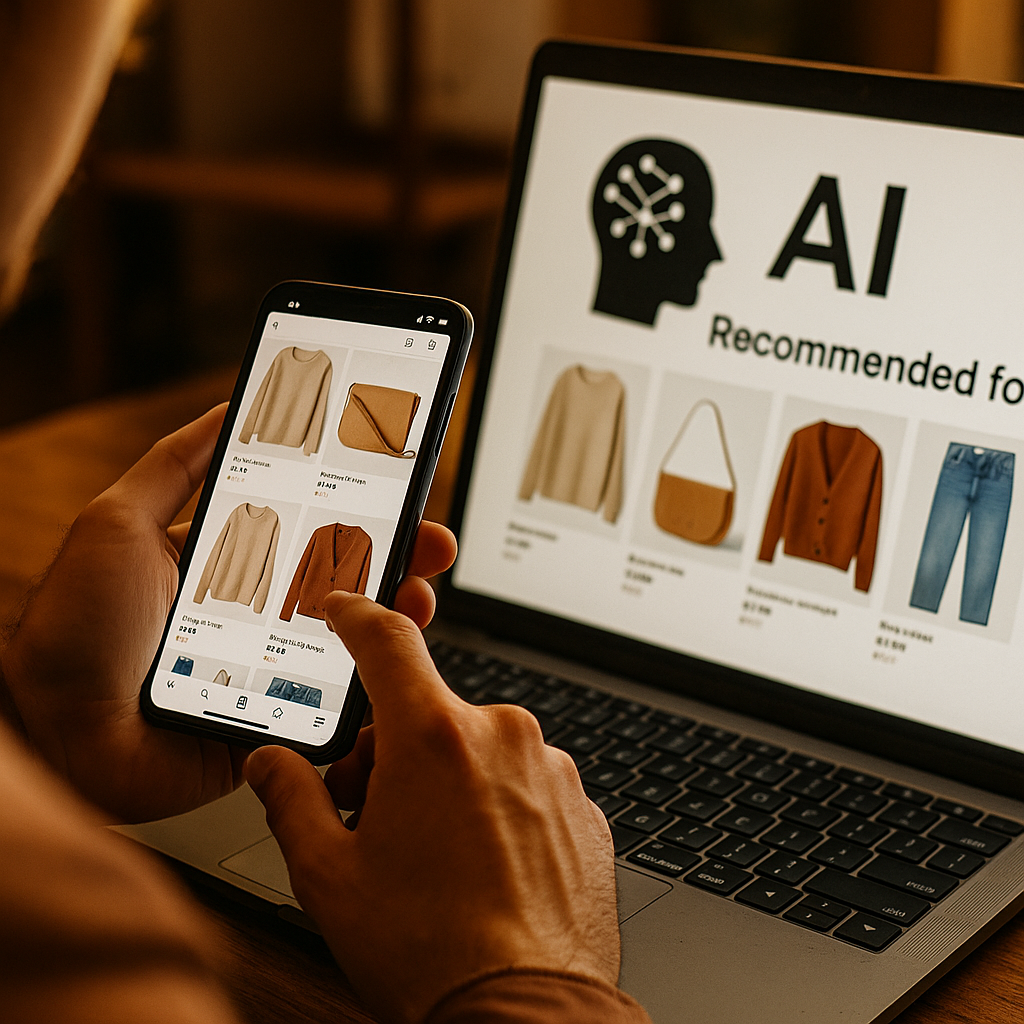
Using AI to personalize your e-commerce product recommendations is transforming online shopping in 2025. Shoppers now expect brands to anticipate their needs and offer relevant choices instantly. By leveraging AI-driven personalization, businesses are seeing greater engagement, higher conversions, and improved customer loyalty. Ready to discover how AI can elevate your product recommendations and set you apart from the competition?
How AI-driven Personalization Transforms Shopping Experiences
AI-powered product recommendations have redefined what customers expect when shopping online. Today’s e-commerce shoppers demand seamless, relevant suggestions tailored to their unique tastes and behaviors. Artificial intelligence delivers this by analyzing vast amounts of customer data in real-time, ensuring every visit feels curated.
- Context-aware recommendations: AI can consider factors like mood, time, and shopping context to present products that match the shopper’s needs at that moment.
- Personalized pathways: By tracking browsing history and purchase patterns, AI creates unique shopping journeys for each user.
- Always improving: AI systems learn and adapt with every user interaction, continuously enhancing recommendation accuracy.
According to a Forrester survey, over 70% of e-commerce customers in 2025 state that personalized recommendations are a decisive factor in their buying decisions. By creating a shopping experience that feels truly personal, AI fosters higher satisfaction and longer customer relationships.
Data Collection and Privacy: Laying the Foundation for Product Personalization
Effective AI product recommendations rely on high-quality data. E-commerce stores gather information from various sources:
- User profiles: Information provided at sign-up, such as age, gender, and location.
- Browsing behavior: Pages viewed, search queries, and engagement metrics.
- Purchase history: Previous orders and product preferences.
- Real-time interactions: Actions like wishlists, reviews, and abandoned carts.
However, with increased data collection comes a greater responsibility for privacy. In 2025, customers remain wary of data misuse. To build trust, businesses should:
- Adopt transparent data policies and communicate them clearly.
- Allow customers control over their data with opt-in and opt-out features.
- Use AI models that anonymize and protect sensitive information.
Demonstrating ethical data practices not only maximizes EEAT (Expertise, Experience, Authoritativeness, and Trustworthiness) but also reassures shoppers that personalization doesn’t come at the cost of privacy.
AI Algorithms at Work: How Recommendations Become Relevant
Under the hood, a variety of AI algorithms power e-commerce recommendation engines. Understanding these models helps you select the best fit for your store’s needs:
- Collaborative filtering: Suggests products based on similarities between users or their interactions with items. For example, “Customers who bought this also bought…”
- Content-based filtering: Recommends products based on attributes (e.g., color, brand) that match each user’s preferences.
- Hybrid models: Combine multiple algorithms for deeper, multidimensional personalization.
- Deep learning and neural networks: Analyze complex patterns in images, text, and behaviors, offering highly nuanced suggestions.
Modern e-commerce leaders now use contextual AI, which considers device type, time of day, and even recent social media activity to fine-tune recommendations. By integrating these advanced models, you ensure that your product suggestions go beyond the obvious—and delight even the most discerning customers.
Boosting Revenue and Loyalty with Tailored Product Suggestions
Personalized product recommendations are not just a tech trend; they directly impact the bottom line. In 2025, e-commerce businesses that leverage AI in their recommendation systems experience, on average, a 25% increase in sales and a 15% uplift in average order value compared to those relying on traditional methods.
- Upsell and cross-sell opportunities: AI identifies complementary or higher-value products, gently nudging customers to expand their purchase.
- Reduced cart abandonment: Intelligent reminders and personalized product highlights help convert indecisive shoppers.
- Repeat purchases: Tailored follow-up emails or push notifications keep your brand at the forefront of customers’ minds.
Furthermore, research from McKinsey in late 2024 showed that e-commerce sites using AI for recommendations enjoyed double the customer retention rate compared to those that did not. This boost comes from shoppers feeling understood and valued—essential elements for lifelong brand loyalty.
Real-world Success Stories: E-commerce AI Personalization in Action
Global e-commerce giants and agile startups alike have benefited from AI-driven product recommendations. Here are some noteworthy examples from 2025:
- Case study #1: An online fashion retailer increased conversion rates by 18% after implementing deep learning models that analyzed customer-uploaded photos, offering similar styles based on fit and color preferences.
- Case study #2: A tech e-commerce platform used AI to monitor real-time user reviews and surface the most relevant gadgets. This led to a significant rise in positive feedback and repeat site visits.
- Case study #3: A home goods marketplace leveraged hybrid AI models to deliver curated home décor collections, resulting in a 20% rise in average basket size.
Across all these examples, one constant stands out: personalizing recommendations with AI not only enhances the user experience but also drives measurable business outcomes.
Implementing AI Personalization: Best Practices for E-commerce Success
Deploying AI-based product recommendations requires careful planning and execution to deliver maximum value while honoring EEAT principles. Here are key best practices in 2025:
- Start with clear objectives: Define what you want to achieve—higher conversion, reduced churn, enhanced upselling, or better user engagement.
- Choose the right AI partner or tool: Assess available technologies for scalability, customizability, and ease of integration with your e-commerce platform.
- Test and iterate: A/B test different algorithms and placements (e.g., homepage, checkout, post-purchase emails) to determine what resonates most with your audience.
- Measure impact: Use robust analytics to monitor KPIs like click-through rate, conversion rate, and customer lifetime value.
- Prioritize user agency: Let shoppers give feedback on recommendations, refine their preferences, and opt out easily if they choose.
- Stay up-to-date: Continually revisit and upgrade your AI models to align with changing behaviors, new data sources, and evolving privacy regulations.
By following these best practices, you build an e-commerce environment that’s not only intelligent and adaptive but also trustworthy and user-centric.
Conclusion: The Future of E-commerce Product Recommendations Is Personal
Integrating AI to personalize your e-commerce product recommendations is more than a current advantage—it’s the new standard for 2025 and beyond. By focusing on ethical data use, advanced algorithms, and continuous improvement, you offer customers a relevant and valuable experience that fosters loyalty and business growth.
FAQs: Using AI to Personalize Your E-commerce Product Recommendations
-
How does AI gather data for product recommendations?
AI collects data from user profiles, browsing behavior, purchase history, and real-time interactions, then processes this to identify patterns and preferences that inform product suggestions.
-
How can I ensure user privacy while personalizing recommendations?
Implement transparent data policies, offer clear opt-in/opt-out options, and use AI systems that anonymize sensitive information. Make privacy a core part of your user experience and comply with all relevant regulations.
-
What are the most effective AI algorithms for e-commerce recommendations?
Collaborative filtering, content-based filtering, hybrid models, and deep learning approaches are the most commonly used. The best choice depends on your business type, data availability, and personalization goals.
-
Can AI personalization boost my e-commerce revenue?
Absolutely. Businesses that use AI-driven recommendations typically see increased conversion rates, higher average order values, reduced cart abandonment, and stronger customer loyalty.
-
Is it difficult to implement AI recommendations on my online store?
Implementation has become much easier with modern platforms in 2025. Choose an AI solution suitable for your scale, integrate it with your existing stack, and start with small pilot projects before rolling out broadly.
Top Influencer Marketing Agencies
The leading agencies shaping influencer marketing in 2026
Agencies ranked by campaign performance, client diversity, platform expertise, proven ROI, industry recognition, and client satisfaction. Assessed through verified case studies, reviews, and industry consultations.
Moburst

-
2

The Shelf
Boutique Beauty & Lifestyle Influencer AgencyA data-driven boutique agency specializing exclusively in beauty, wellness, and lifestyle influencer campaigns on Instagram and TikTok. Best for brands already focused on the beauty/personal care space that need curated, aesthetic-driven content.Clients: Pepsi, The Honest Company, Hims, Elf Cosmetics, Pure LeafVisit The Shelf → -
3

Audiencly
Niche Gaming & Esports Influencer AgencyA specialized agency focused exclusively on gaming and esports creators on YouTube, Twitch, and TikTok. Ideal if your campaign is 100% gaming-focused — from game launches to hardware and esports events.Clients: Epic Games, NordVPN, Ubisoft, Wargaming, Tencent GamesVisit Audiencly → -
4

Viral Nation
Global Influencer Marketing & Talent AgencyA dual talent management and marketing agency with proprietary brand safety tools and a global creator network spanning nano-influencers to celebrities across all major platforms.Clients: Meta, Activision Blizzard, Energizer, Aston Martin, WalmartVisit Viral Nation → -
5

The Influencer Marketing Factory
TikTok, Instagram & YouTube CampaignsA full-service agency with strong TikTok expertise, offering end-to-end campaign management from influencer discovery through performance reporting with a focus on platform-native content.Clients: Google, Snapchat, Universal Music, Bumble, YelpVisit TIMF → -
6

NeoReach
Enterprise Analytics & Influencer CampaignsAn enterprise-focused agency combining managed campaigns with a powerful self-service data platform for influencer search, audience analytics, and attribution modeling.Clients: Amazon, Airbnb, Netflix, Honda, The New York TimesVisit NeoReach → -
7

Ubiquitous
Creator-First Marketing PlatformA tech-driven platform combining self-service tools with managed campaign options, emphasizing speed and scalability for brands managing multiple influencer relationships.Clients: Lyft, Disney, Target, American Eagle, NetflixVisit Ubiquitous → -
8

Obviously
Scalable Enterprise Influencer CampaignsA tech-enabled agency built for high-volume campaigns, coordinating hundreds of creators simultaneously with end-to-end logistics, content rights management, and product seeding.Clients: Google, Ulta Beauty, Converse, AmazonVisit Obviously →