


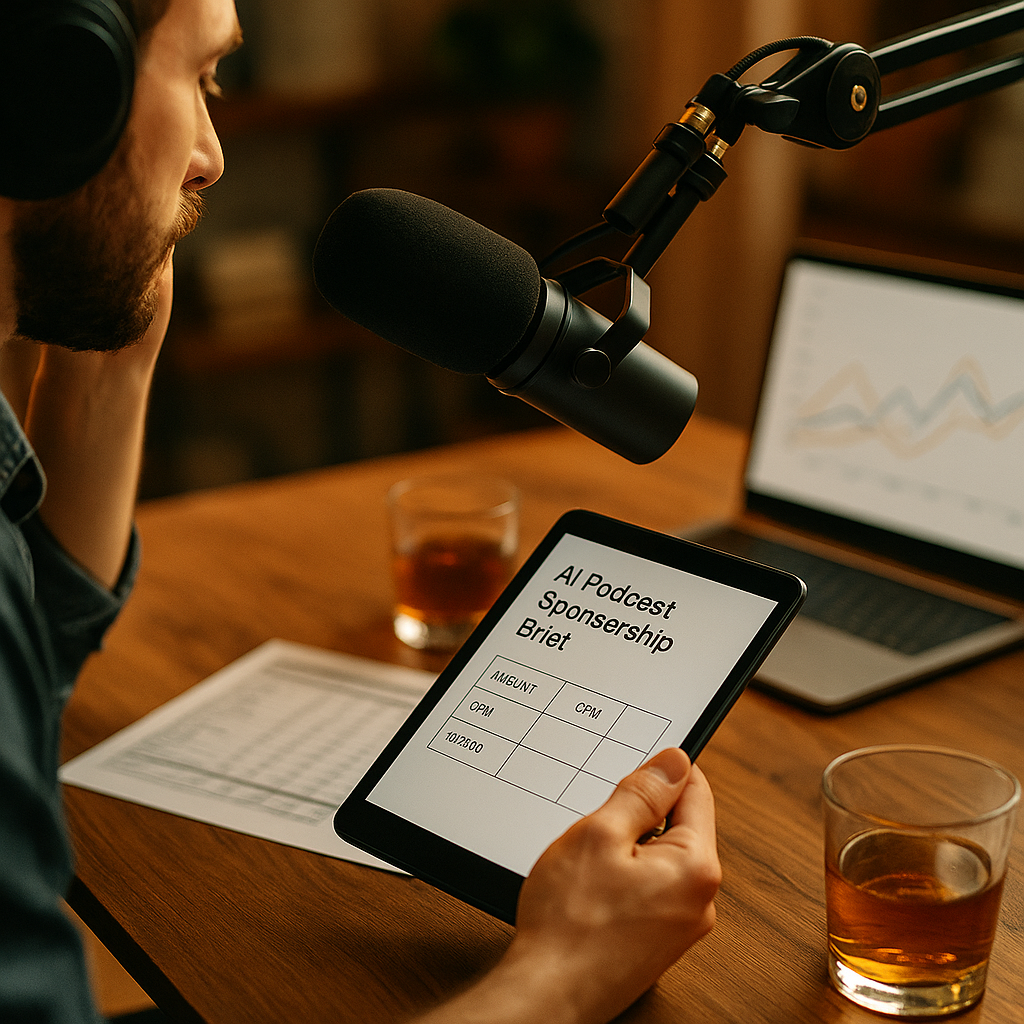
Podcast ad spend crossed $2.5 billion globally, and brands still treat audio sponsorships like they did a decade ago. That miscalculation is getting expensive. AI-enhanced podcast production is collapsing the wall between audio and video, forcing brand sponsors to rethink every assumption embedded in their current sponsorship briefs.
The Hybrid Format Is Not a Trend. It’s the New Default.
Spotify, YouTube, and Apple have all made deliberate moves to bundle video and audio inventory under a single creator umbrella. YouTube’s podcast interface now surfaces video-first content alongside audio-only feeds. Spotify’s video podcast expansion means a listener on a morning commute and a viewer watching on their TV at night could be consuming the same episode in completely different formats. For brand sponsors, that’s not a targeting nuance. It’s a structural change that invalidates traditional sponsorship logic built around ears-only delivery.
The operational implication: your sponsorship brief can no longer assume a single consumption context. A sponsor read that works perfectly for background audio listening lands differently on screen, where the host’s body language, set design, and lower-third graphics become part of the brand message. AI production tools are accelerating this divergence by making multi-format publishing cheap and fast for creators who couldn’t previously afford a production team.
When a creator can produce a broadcast-quality video podcast in a single afternoon using AI editing, noise removal, and auto-captioning tools, the format ceiling for independent podcasters effectively disappears. Brands sponsoring those shows need briefs that account for both environments simultaneously.
How AI Production Tools Are Changing What Creators Can Deliver
Tools like Descript, Riverside.fm, and Adobe Podcast have moved from novelty to production infrastructure. Descript’s AI overdub and scene-cut detection allow a solo creator to produce a polished 60-minute video episode without a post-production team. Riverside automatically generates audiograms, social clips, and transcript-driven show notes from a single recording session. The downstream effect for sponsors is significant: creators now deliver more touchpoints per recording than ever before.
A sponsorship deal that used to mean one mid-roll audio mention now potentially includes a visible on-screen segment, a short-form clip published to YouTube Shorts or Reels, a transcript mention that gets indexed by AI search, and a branded audiogram distributed across social platforms. If your brief wasn’t written to govern all of those outputs, you have no control over how your brand appears across half of them. This is exactly why multi-platform content repurposing has become a core brief design competency, not an afterthought.
The platforms are encouraging this. YouTube’s Creator Studio now provides separate analytics for audio podcast listeners versus video viewers within the same show. That data is starting to flow through to media buying, which changes the conversation around measurement considerably.
Sponsorship Brief Design Has to Catch Up
Most podcast sponsorship briefs were written for a pre-video world. They specify a placement (pre-roll, mid-roll, post-roll), a word count or time duration, a URL and promo code, and maybe a few talking points. That template is structurally inadequate for hybrid formats.
A well-constructed brief for a video-audio podcast in this environment needs to specify:
- Placement behavior by format: Is the mid-roll segment expected to include on-screen graphics, lower thirds, or product visuals when consumed as video? Or does the brief only govern audio delivery?
- Clip licensing rights: Who owns the short-form clip extracted from the sponsored segment? Can the creator post it independently? Can the brand boost it as paid media?
- Transcript and AI indexing permissions: Does the sponsor have approval rights over how AI-generated show notes describe the brand integration?
- Multi-platform distribution scope: If the episode is distributed to Spotify, YouTube, Apple, and Amazon Music simultaneously, does the sponsorship fee account for all four surfaces or just one?
For teams already working through brief modernization, the framework detailed in our coverage of video podcast CPMs and buying strategy provides a useful structural starting point. The key shift is moving from format-agnostic language to explicitly environment-specific deliverables.
What’s Happening to CPM Benchmarks
Traditional podcast CPMs have hovered in the $18 to $50 range for host-read ads, with premium shows commanding higher rates. Video podcast inventory is disrupting that ceiling from above. Sponsors buying into shows with strong YouTube video audiences are seeing CPMs that more closely resemble YouTube pre-roll rates (which can run $10 to $30 for skippable formats) layered on top of audio CPMs, because platforms are beginning to offer bundled inventory packages that span both.
The practical challenge: there’s no clean industry standard yet for how to value a sponsorship when 40% of a show’s audience consumes it via audio and 60% via video. Do you CPM each surface separately? Do you negotiate a blended rate? Do you apply a premium for shows where the host performs a live product demonstration visible only to video viewers?
IAB’s podcast measurement guidelines have not yet caught up with bundled video-audio inventory valuation, which means buyers and sellers are currently negotiating in a gray zone. Sophisticated buyers are using this ambiguity to their advantage by pushing for performance-based components (promo code redemption, landing page traffic) that give them a floor rate regardless of format attribution complexity.
Brands running creator content across CTV are encountering similar valuation friction, as documented in our coverage of CTV creator content briefs. The through-line is the same: when distribution spans multiple screens and consumption contexts, legacy CPM frameworks break down.
Audience Targeting Gets Sharper and More Complicated
The upside of bundled video-audio inventory is richer audience data. When a podcast distributes via YouTube, the sponsoring brand can access demographic targeting data, watch-time analytics, and content affinity signals that simply don’t exist in pure audio distribution. A brand targeting mid-career professionals in financial services can now layer YouTube audience segments onto a podcast buy, something that was impossible when the show only existed on Spotify or Apple.
AI is accelerating the signal quality here. Platforms are using listening and viewing behavior to build contextual targeting that goes beyond keyword matching. A financial planning podcast isn’t just categorized as “finance.” It’s being matched against listener job titles, purchase intent signals, and content consumption patterns that give advertisers much higher confidence in audience quality before they commit spend.
The complication: different platforms surface different audience data, and very little of it is portable. A show’s Spotify audience is largely anonymous to the brand sponsor. The same show’s YouTube audience provides rich demographic and behavioral data. Buying across both simultaneously requires reconciling two incompatible data schemas, which is why more sophisticated buyers are requiring creators to share platform analytics as part of the sponsorship onboarding process.
AI-driven audience matching is making podcast targeting more precise than it has ever been, but only for sponsors whose briefs explicitly require platform-level data sharing as a contract condition.
FTC Compliance in a Multi-Format Environment
This is the risk area most brand teams are underestimating. The FTC’s endorsement guidelines require clear disclosure of material connections. In a pure audio context, a verbal “this episode is brought to you by” disclosure satisfies that requirement. In a video context, that verbal disclosure may need to be accompanied by on-screen text. When AI tools automatically generate short-form clips from sponsored segments, those clips may not retain the original disclosure language, creating a compliance gap that neither the creator nor the brand intended.
Brief design needs to include explicit disclosure requirements for every derivative format. That means specifying what disclosure language appears in AI-generated clips, in transcript-based show notes, and in any social content the creator publishes from the recording. Our coverage on FTC-compliant creator briefs covers the disclosure architecture in more detail, but the headline for podcast sponsors is clear: one disclosure statement in the original episode is no longer sufficient when AI production tools multiply the number of content outputs.
For shows distributed internationally, UK ICO data rules and equivalent regional regulations add another layer of complexity, particularly when audience targeting relies on behavioral data collected across platforms.
What This Means for How You Brief Your Next Podcast Sponsorship
The structural change happening in podcast production is a brief design problem more than a media buying problem. Platforms are moving faster than procurement templates. AI tools are giving creators capabilities that outpace standard sponsorship agreements. And CPM benchmarks are being renegotiated in real time without clear industry standards to anchor them.
The brands navigating this well are doing three things. They’re treating the sponsorship brief as a multi-format production document, not a placement spec. They’re requiring platform analytics sharing as a standard contract term. And they’re building disclosure compliance requirements into the brief for every output format the creator’s AI tools might generate, not just the primary episode. For teams working across multiple creator formats simultaneously, the efficiency approach used in single-session multi-platform shoots offers a useful production model to adapt for the podcast context.
Podcast ad spend continues to climb, but the value is increasingly front-loaded for sponsors who invest in brief infrastructure. Build the brief right, and you’re not just buying an audio ad. You’re buying a multi-surface content asset across every platform your creator publishes to. That’s a fundamentally different, and more valuable, proposition than what podcast sponsorship meant three years ago.
Audit your current podcast brief template against the multi-format checklist above. If it doesn’t address video delivery, clip rights, AI-generated outputs, and cross-platform disclosure, it’s already obsolete. Start there before your next renewal conversation.
Frequently Asked Questions
What is AI-enhanced podcast production and why does it matter for brand sponsors?
AI-enhanced podcast production refers to the use of tools like Descript, Riverside.fm, and Adobe Podcast to automate editing, generate short-form clips, produce transcripts, and publish across multiple platforms from a single recording session. For brand sponsors, this matters because a single sponsorship deal now generates multiple content touchpoints across audio, video, and social platforms. Briefs that only govern the original episode leave sponsors without control over how their brand appears in derivative outputs.
How are hybrid video-podcast formats changing CPM benchmarks?
Hybrid formats are pushing CPMs upward for shows with strong video audiences, as platforms begin bundling audio and video inventory into single packages. Traditional podcast CPMs ranged from $18 to $50 for host-read placements, but video podcast inventory is being valued closer to YouTube pre-roll rates layered on top of audio CPMs. Without clear IAB standards for bundled inventory, buyers and sellers are currently negotiating blended rates, and performance-based components are increasingly common to establish measurement floors.
What should a modern podcast sponsorship brief include?
A modern brief for a hybrid video-podcast sponsorship should specify placement behavior by format (audio versus video), clip licensing and usage rights for AI-generated short-form content, transcript and AI indexing permissions, disclosure requirements for every derivative output format, and the scope of platforms covered by the sponsorship fee. Generic templates built for audio-only placements are structurally inadequate for the current multi-format distribution environment.
How does audience targeting work differently in video-podcast formats?
When a podcast distributes via YouTube in addition to audio platforms, sponsors gain access to demographic targeting data, content affinity signals, and behavioral data that don’t exist in pure audio distribution. AI-driven audience matching on video platforms enables more precise targeting by job title, purchase intent, and content consumption patterns. However, audience data from Spotify and Apple remains largely anonymous, so sponsors buying across multiple platforms must reconcile incompatible data schemas and should require platform analytics sharing as a contract condition.
What are the FTC compliance risks specific to AI-generated podcast content?
When AI tools automatically extract short-form clips from sponsored podcast episodes, those clips may not retain the original disclosure language required by FTC endorsement guidelines. A verbal disclosure in the audio episode may also need to be accompanied by on-screen text in video formats. Sponsors must build disclosure requirements into their briefs for every derivative format the creator’s production tools might generate, including clips, audiograms, and AI-generated show notes, rather than relying solely on the primary episode disclosure.
Top Influencer Marketing Agencies
The leading agencies shaping influencer marketing in 2026
Agencies ranked by campaign performance, client diversity, platform expertise, proven ROI, industry recognition, and client satisfaction. Assessed through verified case studies, reviews, and industry consultations.
Moburst

-
2

The Shelf
Boutique Beauty & Lifestyle Influencer AgencyA data-driven boutique agency specializing exclusively in beauty, wellness, and lifestyle influencer campaigns on Instagram and TikTok. Best for brands already focused on the beauty/personal care space that need curated, aesthetic-driven content.Clients: Pepsi, The Honest Company, Hims, Elf Cosmetics, Pure LeafVisit The Shelf → -
3

Audiencly
Niche Gaming & Esports Influencer AgencyA specialized agency focused exclusively on gaming and esports creators on YouTube, Twitch, and TikTok. Ideal if your campaign is 100% gaming-focused — from game launches to hardware and esports events.Clients: Epic Games, NordVPN, Ubisoft, Wargaming, Tencent GamesVisit Audiencly → -
4

Viral Nation
Global Influencer Marketing & Talent AgencyA dual talent management and marketing agency with proprietary brand safety tools and a global creator network spanning nano-influencers to celebrities across all major platforms.Clients: Meta, Activision Blizzard, Energizer, Aston Martin, WalmartVisit Viral Nation → -
5

The Influencer Marketing Factory
TikTok, Instagram & YouTube CampaignsA full-service agency with strong TikTok expertise, offering end-to-end campaign management from influencer discovery through performance reporting with a focus on platform-native content.Clients: Google, Snapchat, Universal Music, Bumble, YelpVisit TIMF → -
6

NeoReach
Enterprise Analytics & Influencer CampaignsAn enterprise-focused agency combining managed campaigns with a powerful self-service data platform for influencer search, audience analytics, and attribution modeling.Clients: Amazon, Airbnb, Netflix, Honda, The New York TimesVisit NeoReach → -
7

Ubiquitous
Creator-First Marketing PlatformA tech-driven platform combining self-service tools with managed campaign options, emphasizing speed and scalability for brands managing multiple influencer relationships.Clients: Lyft, Disney, Target, American Eagle, NetflixVisit Ubiquitous → -
8

Obviously
Scalable Enterprise Influencer CampaignsA tech-enabled agency built for high-volume campaigns, coordinating hundreds of creators simultaneously with end-to-end logistics, content rights management, and product seeding.Clients: Google, Ulta Beauty, Converse, AmazonVisit Obviously →