


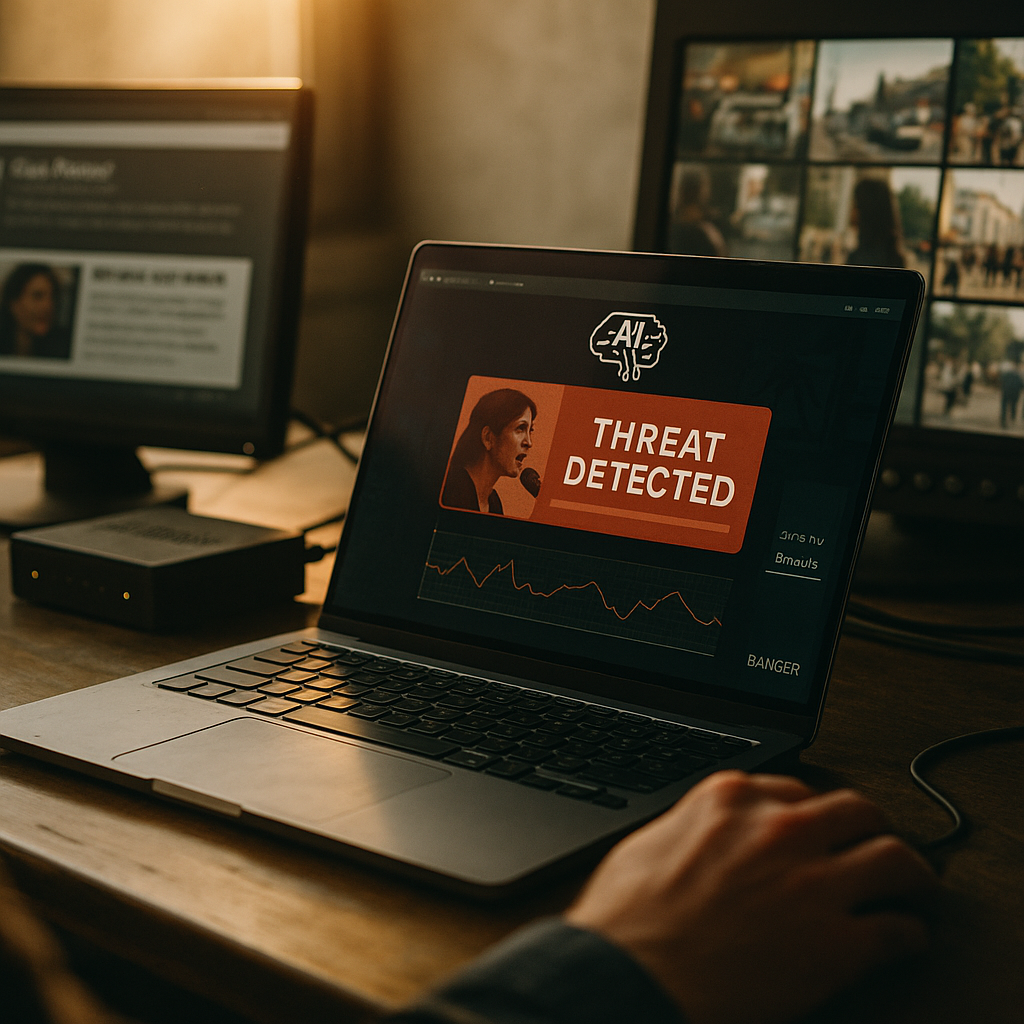
AI Powered Narrative Hijacking Detection for Brand Protection has become essential in 2026 as false stories, coordinated attacks, and synthetic content spread faster than standard monitoring can respond. Brands now need systems that detect manipulation early, identify its source, and guide action before trust erodes, sales drop, or regulators take notice. The real question is how to do it well.
What Is narrative hijacking detection and why it matters
Narrative hijacking detection is the process of identifying when outside actors attempt to distort, redirect, or weaponize public conversation about a brand, executive, product, or issue. This can include fake reviews, coordinated social media campaigns, manipulated videos, misleading articles, impersonation, and AI-generated content designed to trigger outrage or confusion.
Traditional brand monitoring focuses on mentions, sentiment, and share of voice. That remains useful, but it often misses the deeper problem: not all negative attention is organic. Some attacks are engineered to push a false narrative into mainstream discussion. Once that happens, the damage extends beyond marketing. It can affect investor confidence, customer support volume, employee morale, partner relationships, and legal exposure.
In practical terms, narrative hijacking usually follows a pattern:
- Seeding: A false or misleading claim appears in a niche forum, anonymous account, or low-authority site.
- Amplification: Bots, coordinated communities, or opportunistic creators repeat and remix the claim.
- Legitimization: More credible accounts or outlets mention the topic, even if only to question it.
- Entrenchment: The narrative becomes the frame through which the public interprets future brand actions.
AI changes both sides of this equation. Attackers can generate large volumes of convincing content cheaply. At the same time, defenders can use AI to detect linguistic anomalies, network coordination, manipulated media, and unusual velocity patterns far earlier than human teams alone. That is why narrative hijacking detection has become a core part of brand protection rather than a niche reputation task.
How AI brand protection tools detect threats early
AI brand protection combines natural language processing, machine learning, graph analysis, and media forensics to surface risks before they become crises. The strongest systems do more than scan for mentions. They look for signals that indicate intent, coordination, and abnormal spread.
Here are the main capabilities effective teams use in 2026:
- Semantic monitoring: AI understands themes, claims, and framing, not just keywords. This helps brands catch harmful narratives even when the brand name is misspelled, implied, or replaced with coded language.
- Anomaly detection: Models compare current conversation patterns against normal baselines. Sudden spikes in a niche claim, unusual repost timing, or identical phrasing across unrelated accounts can signal manipulation.
- Cross-channel analysis: The system maps how a story moves from forums to social platforms to search and news. This matters because many attacks start off-platform before becoming visible in standard dashboards.
- Source credibility scoring: AI evaluates account behavior, domain patterns, repost networks, and content history to estimate whether a source is authentic, opportunistic, or coordinated.
- Deepfake and synthetic media review: Image, audio, and video analysis can flag likely manipulation, cloning, or out-of-context edits that target executives and spokespeople.
- Risk prioritization: The best tools do not overwhelm teams with alerts. They rank incidents by potential business impact, likelihood of spread, and recommended next action.
For a brand leader, early detection is only valuable if it informs action. A useful system should answer follow-up questions immediately: What claim is emerging? Who is driving it? Is it coordinated? Which audiences are seeing it? Is it likely to reach journalists, customers, regulators, or employees? What should we do in the next hour?
This is where EEAT matters. Helpful, trustworthy content about this topic should reflect real operational needs, not theory alone. In practice, reputation and communications teams need outputs they can defend internally: evidence trails, confidence scores, escalation thresholds, and clear rationale for recommendations. Black-box alerts without context create more risk, not less.
Key brand reputation monitoring signals that reveal hijacked narratives
Brand reputation monitoring becomes far more effective when teams know which signals usually indicate hijacking rather than normal criticism. Not every negative trend is an attack, and overreacting can make a minor issue bigger. The goal is disciplined pattern recognition.
Look for these high-value indicators:
- Message similarity at scale: Multiple accounts use nearly identical wording, hashtags, or emotional framing within a short window.
- Unnatural posting velocity: A topic gains traction faster than your historical baselines would predict for its source type or audience size.
- Bridge accounts: Certain profiles repeatedly move claims from fringe spaces into mainstream channels.
- Low-context visuals: Cropped screenshots, edited clips, or old images recirculate with new captions to change meaning.
- Search leakage: Misleading phrases begin appearing in autosuggest, related searches, or comment threads linked to branded queries.
- Coordinated review patterns: Sudden clusters of negative ratings mention the same issue using similar syntax across marketplaces or app stores.
- Executive impersonation: Fake accounts, cloned audio, or fabricated statements target leadership to create authority around the false narrative.
Human review still matters. AI can flag likely manipulation, but experienced analysts provide the contextual judgment that separates a true disinformation event from a legitimate customer complaint trend. The best operating model is hybrid: AI handles detection and triage, while trained teams validate, classify, and guide response.
Another common question is whether small and mid-sized brands face the same risk as global companies. They do, although the patterns differ. Large brands often attract ideological or financial attacks at scale. Smaller brands may face competitor-driven misinformation, localized review manipulation, or supply-chain rumors. The business impact can be just as severe because these organizations often have fewer crisis resources.
Building a misinformation response strategy for modern brands
A strong misinformation response strategy starts before a crisis. If your team is building the playbook during an attack, you are already behind. The most resilient brands define workflows, ownership, and evidence standards in advance.
A practical framework includes the following steps:
- Set risk categories. Define what counts as misinformation, impersonation, manipulated media, coordinated harassment, or reputational fraud. Tie each category to severity levels.
- Create escalation paths. Determine when alerts go to communications, legal, trust and safety, HR, investor relations, customer support, or the executive team.
- Prepare response options. Not every incident needs a public statement. Some require platform reporting, search suppression tactics, direct stakeholder outreach, or no public response at all.
- Centralize evidence. Preserve screenshots, URLs, propagation maps, timestamps, and forensic outputs. This supports platform complaints, legal review, and internal decision-making.
- Train spokespersons. Executives and community managers should know how to answer questions without amplifying false claims.
- Run simulations. Test deepfake scenarios, review attacks, rumor cascades, and fake employee allegations so teams can respond under pressure.
Brands often ask whether they should “debunk everything.” Usually, no. Public rebuttal can validate a fringe claim if the audience had not seen it before. A better decision process considers reach, audience vulnerability, source credibility, and the likelihood that silence will be misread. AI can support this by forecasting spread and showing where intervention is most likely to work.
Operational readiness also means aligning channels. If a false story breaks, customer support scripts, social responses, executive talking points, and newsroom updates must match. Inconsistency creates openings for attackers to claim the brand is hiding information or changing its story.
Using crisis communication AI without losing trust
Crisis communication AI can help teams move faster, but speed should never come at the expense of accuracy. The safest use of AI is to augment decision-making, not replace accountability.
Used well, AI can support crisis teams by:
- Drafting scenario-based responses tailored to specific audiences such as customers, partners, employees, and media.
- Summarizing evolving conversations so leaders understand what changed in the last hour and why it matters.
- Recommending response timing based on spread patterns and likely amplification points.
- Translating content for multinational teams while preserving legal and reputational nuance.
- Testing message variants against sentiment and misinterpretation risk before publication.
Still, there are clear guardrails every brand should follow:
- Require human approval for all external crisis statements.
- Disclose carefully when synthetic media analysis or AI-supported evidence informs major claims.
- Audit outputs for hallucinations, overconfidence, and unsupported accusations.
- Protect privacy by limiting unnecessary personal data collection during investigations.
- Document decisions so the brand can explain why it acted or chose not to act.
Trust is built when a brand is accurate, consistent, and proportionate. Customers do not expect perfection, but they do expect honesty and competence. If your team uses AI behind the scenes, the outcome should feel more reliable, not more robotic. Clear language, evidence-backed claims, and timely updates matter more than polished phrasing.
How to evaluate digital risk management platforms in 2026
Choosing the right digital risk management platform is now a strategic decision. Many vendors claim to detect misinformation and narrative attacks, but their actual strengths vary widely. Some are excellent at social listening but weak in forensic analysis. Others handle brand abuse well but lack cross-channel narrative mapping.
When evaluating platforms, ask these questions:
- Does the tool detect themes, not just keywords? Keyword-only systems miss paraphrased or coded attacks.
- Can it analyze closed or fringe communities where attacks often begin? Coverage matters.
- Does it provide network analysis? You need to see who is coordinating and which accounts bridge audiences.
- How does it score confidence and severity? Teams need explainable outputs they can trust.
- Can it support image, video, and audio verification? Synthetic media threats are now mainstream.
- What workflows are built in? Alerts should connect to ticketing, evidence capture, approvals, and post-incident reporting.
- How well does it integrate with legal and communications processes? Detection without action orchestration slows response.
- What privacy, retention, and compliance controls exist? Brand protection cannot create new governance problems.
It is also worth measuring success with business outcomes, not vanity metrics. Useful KPIs include time to detection, time to triage, false positive rate, time to stakeholder alignment, reduction in search contamination, and recovery of baseline sentiment or conversion rate after an incident. These metrics make the case for investment and show whether the system is truly reducing risk.
Finally, do not treat implementation as a software purchase alone. The strongest programs combine technology, cross-functional governance, analyst training, and regular scenario review. A platform can improve visibility, but resilience comes from the people and process around it.
FAQs about online narrative threat detection
What is the difference between narrative hijacking and ordinary negative feedback?
Ordinary negative feedback comes from genuine customer experiences or public disagreement. Narrative hijacking involves deliberate attempts to distort the conversation through false claims, coordinated amplification, impersonation, or manipulated media. The distinction matters because the right response is different.
Can AI detect deepfakes targeting a brand executive?
Yes. Modern tools can analyze inconsistencies in voice patterns, facial movement, metadata, compression artifacts, and source history. However, no detector is perfect, so high-risk cases should still be reviewed by trained analysts or specialist forensic teams.
How quickly should a brand respond to a suspected hijacked narrative?
Detection should happen as early as possible, ideally before mainstream spread. Public response timing depends on the risk. Some incidents require immediate action, while others are better handled through platform reporting, stakeholder outreach, or evidence gathering before speaking publicly.
Do smaller brands need AI-powered protection?
Yes. Smaller brands can be vulnerable because they often lack dedicated crisis teams. AI helps them detect emerging threats sooner, prioritize the most serious incidents, and avoid wasting time on low-value alerts.
Will responding publicly amplify the false narrative?
It can. That is why brands should assess reach, audience exposure, source credibility, and potential business harm before issuing a statement. In many cases, targeted intervention works better than broad public rebuttal.
What teams should be involved in narrative hijacking response?
At minimum: communications, social media, legal, customer support, and executive leadership for major incidents. Depending on the situation, HR, trust and safety, investor relations, and IT security may also need to be involved.
How do you measure whether a detection program is working?
Track time to detection, time to triage, false positives, incident containment speed, search result contamination, support volume impact, and how quickly trust indicators return to baseline after an event.
AI-powered brand protection is no longer optional in 2026. Narrative attacks move quickly, cross channels, and often blend human coordination with synthetic content. Brands that combine AI detection, human judgment, and a disciplined response framework can spot threats earlier, act with confidence, and protect trust before false stories take hold. The takeaway is simple: build readiness now, not after the next attack begins.