


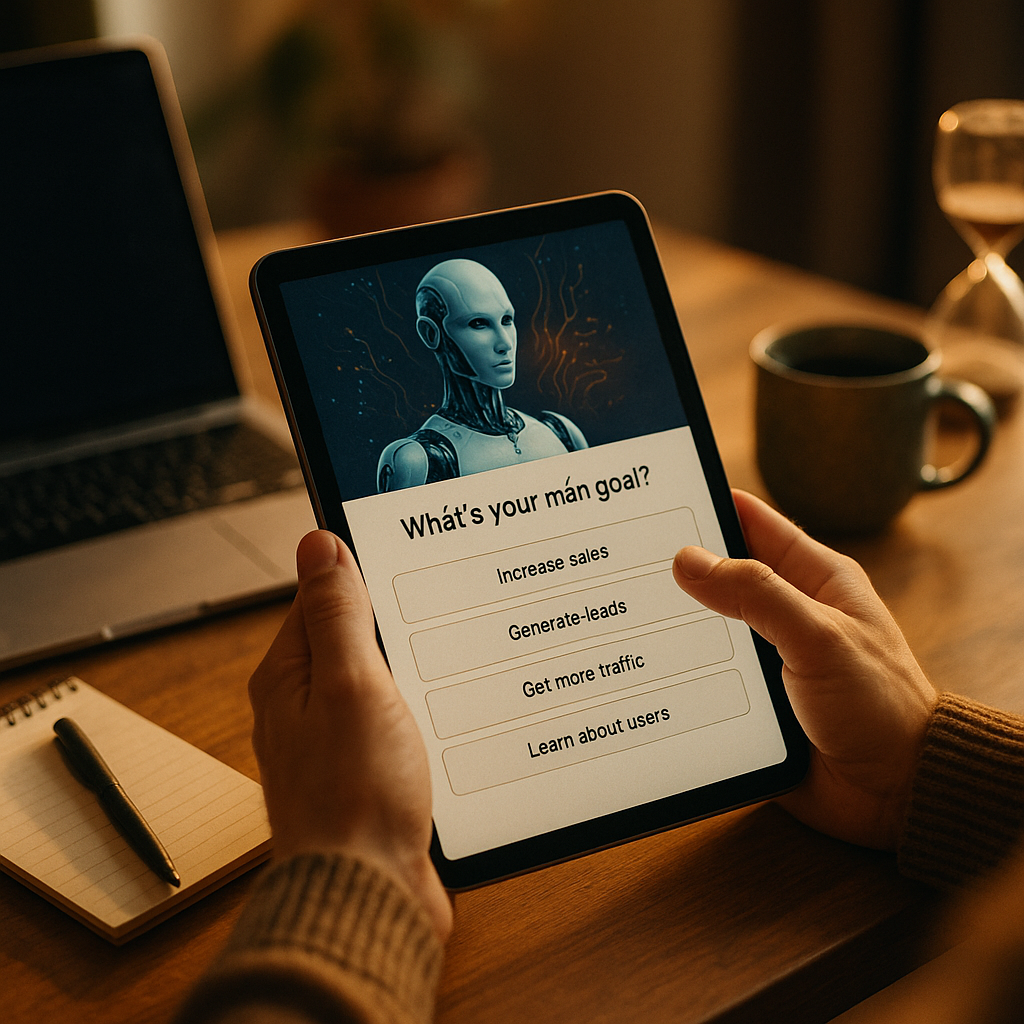
Third-party cookies are dying, again, and this time it’s actually happening. Meanwhile, 78% of consumers say they’re willing to share personal data in exchange for a more personalized experience, according to research cited widely across the industry. So why are most brands still trying to infer intent from behavioral scraps instead of just asking? A zero-party data capture funnel built on AI-powered quizzes turns that guesswork into a growth channel.
Zero-Party Data Isn’t a Buzzword, It’s a Balance Sheet Asset
Let’s define terms, because marketers throw “zero-party” and “first-party” data around interchangeably, and that’s sloppy. First-party data is what you observe: purchase history, site behavior, email opens. Zero-party data is what the customer volunteers, deliberately and proactively, because they trust you’ll use it to serve them better. Skin type. Budget range. Style preference. Fitness goals. That’s gold, and it doesn’t degrade when Apple or Google tighten tracking permissions.
The catch? Nobody fills out a static form anymore. Conversion rates on traditional lead-gen forms have been sliding for years. Interactive content, especially quizzes, flips the exchange. Instead of asking for data upfront, you offer value first: a personalized recommendation, a diagnostic, a styled result. The data capture happens as a byproduct of genuine engagement.
Brands running interactive quizzes report opt-in rates 2-4x higher than static forms, because the data request feels like a service, not a tax.
Why AI Changes the Quiz Game Entirely
Quizzes aren’t new. BuzzFeed built an empire on “Which Sitcom Character Are You.” What’s new is AI’s ability to make quizzes adaptive, branching in real time based on prior answers, and to generate genuinely useful outputs instead of generic buckets.
A skincare brand’s old quiz might have sorted users into four static profiles: dry, oily, combination, sensitive. An AI-powered version can weigh twelve inputs, cross-reference them against ingredient sensitivities, climate data, and even user-uploaded selfies analyzed via computer vision, then generate a genuinely individualized routine. That’s a different value exchange. The user isn’t guessing which bucket fits. They’re getting something that feels bespoke.
This matters for a second reason too: large language models are increasingly the interface between consumers and brand discovery. If your quiz output reads like a templated form letter, it won’t get referenced, shared, or trusted. If it reads like a considered recommendation, it builds the kind of structured, citable content that supports visibility in AI-driven search, a theme we’ve covered in generative search marketing strategy.
The Funnel Architecture, Step by Step
Building this isn’t just “add a quiz plugin.” Treat it as a funnel with distinct stages, each with its own conversion goal.
- Hook stage: The entry point, usually a paid social ad, on-site banner, or influencer-driven link, promising a specific, tangible outcome (“Find your exact shade in 60 seconds”).
- Engagement stage: The quiz itself. Five to nine questions is the sweet spot. Beyond that, completion rates drop sharply.
- Data exchange stage: The moment you ask for an email or phone number to “unlock” or “save” results. This is where the AI-generated specificity earns its keep, generic results don’t justify the ask.
- Delivery stage: The personalized output, delivered instantly and also emailed for retention.
- Activation stage: Segmented follow-up sequences based on quiz answers, not generic drip campaigns.
Miss any one of these stages and the funnel leaks. A brilliant quiz with a clunky email capture form still underperforms. A perfect data capture moment wasted on generic “Thanks for playing!” follow-up emails wastes the entire exercise.
Picking the Right Tools Without Overbuilding
You don’t need a custom-built ML pipeline for a first version. Platforms like Typeform, Outgrow, and Involve.me now bake in AI-driven branching logic and generative result copy. For brands with more technical resources, pairing a quiz front-end with an LLM API (OpenAI, Anthropic, or similar) lets you generate genuinely dynamic, on-brand result copy rather than pulling from a fixed library of outcomes.
Whichever route you choose, the tool needs to integrate cleanly with your CDP or CRM. Zero-party data is only as valuable as your ability to act on it downstream, in email segmentation, in ad audience building, in on-site personalization. A quiz that dumps answers into a spreadsheet nobody checks is theater, not strategy.
This is also where governance discipline matters. If you’re layering agentic AI onto the follow-up sequencing, deciding sends, offers, and timing, apply the same guardrails you’d use in any autonomous system. Our piece on spend caps and circuit breakers for agentic media buying applies almost directly: define boundaries before you let the system run unsupervised.
Compliance Isn’t Optional Anymore
Here’s the part that gets glossed over in most “how to build a quiz funnel” content: consent architecture. Zero-party data collection still falls under GDPR, CCPA, and whatever framework your target markets enforce. The fact that a user volunteered the data doesn’t exempt you from disclosure obligations.
Practical must-haves:
- Explicit opt-in language at the point of data exchange, not buried in a footer link.
- Clear statement of what you’ll do with the data (email marketing, personalization, ad targeting) rather than a vague “we respect your privacy.”
- A documented data retention policy, especially if you’re using quiz answers to train or fine-tune any AI model.
- Region-specific consent flows if you’re running the quiz across US, UK, and EU traffic simultaneously.
Check current guidance from the FTC and, for UK/EU operations, the ICO before launch. Legal review isn’t a bottleneck here, it’s insurance against a much more expensive problem later.
Treat every quiz answer field as a data liability as much as a marketing asset, because regulators increasingly do.
Measuring What Actually Matters
Vanity metrics on quiz funnels are seductive and misleading. Completion rate looks great, opt-in rate looks great, and then three months later nobody can prove the funnel drove revenue. Track these instead:
- Quiz-to-opt-in rate: percentage of quiz completers who provide contact info.
- Opt-in-to-purchase rate: the number that actually matters to finance.
- Segment lift: do quiz-segmented email flows outperform your generic newsletter in open rate and CTR? If not, the segmentation logic needs work.
- Data decay rate: how quickly does quiz-derived data go stale? Skincare preferences shift seasonally; fitness goals shift post-holidays. Build re-engagement quizzes into your calendar, not just a one-and-done capture.
Tools like HubSpot and Sprout Social both offer reporting layers that can ingest quiz-tagged contacts and track them through the full funnel, which beats trying to reverse-engineer attribution from a CSV export. See HubSpot’s segmentation documentation and Sprout Social’s audience tools for integration specifics.
If you’re already tracking brand visibility inside AI search results, tie quiz-driven content back to that effort too. Personalized quiz outcomes, when published as aggregate trend content (“What 50,000 quiz takers taught us about skincare in cold climates”), make excellent citable assets. That connects directly to the discipline covered in LLM citation tracking, worth cross-referencing if GEO is part of your broader content strategy.
Where Brands Get This Wrong
Three recurring mistakes, in order of frequency:
First, treating the quiz as a one-time campaign asset instead of an evergreen funnel. Quizzes decay in novelty fast on social, but as an always-on site feature (linked from nav, product pages, post-purchase flows) they compound value over quarters, not weeks.
Second, over-asking. Nine questions to determine “your ideal candle scent” is excessive. Match question count to the genuine complexity of the recommendation. A skincare routine justifies more depth than a fragrance pick.
Third, and this is the big one: failing to close the loop. You capture the email, segment the contact, and then… send the same generic promo blast as everyone else on the list. The entire value proposition of zero-party data is precision. If your downstream marketing doesn’t reflect what the customer told you, you’ve broken the implicit contract, and they’ll notice, and they’ll unsubscribe.
A Quick Word on AI-Generated Output Quality
Don’t let the AI layer produce results that feel hollow or templated. Test outputs across dozens of answer combinations before launch. If two very different users get suspiciously similar recommendations, your logic tree needs more branching or your prompt engineering needs tightening. Consumers can smell a fake-personalized result, and it erodes trust faster than no personalization at all.
FAQs
What exactly counts as zero-party data?
Zero-party data is information a customer intentionally and proactively shares with a brand, such as preferences, intentions, or personal context, typically in exchange for a better experience. It differs from first-party data, which is observed through behavior, and third-party data, which is purchased or aggregated from external sources.
How long should an AI-powered quiz be for good completion rates?
Five to nine questions typically balances depth with completion rates. Shorter quizzes convert at higher rates but often can’t support genuinely personalized output, while longer quizzes see steep drop-off after question seven or eight unless the topic warrants deep customization, like a skincare or nutrition assessment.
Do I need custom AI development to build this, or can I use existing tools?
Most brands can start with no-code or low-code platforms like Typeform, Outgrow, or Involve.me, which now include AI-driven branching and generative copy features. Custom LLM integration makes sense once you need highly dynamic, brand-specific output at scale.
Is quiz-based data capture compliant with privacy regulations?
It can be, but compliance isn’t automatic just because the data is volunteered. You still need explicit consent language, clear disclosure of intended data use, and a documented retention policy under frameworks like GDPR and CCPA.
How do I know if my quiz funnel is actually driving revenue?
Track quiz-to-opt-in rate, opt-in-to-purchase rate, and segment lift compared to your generic marketing lists. If quiz-segmented campaigns don’t outperform your baseline email flows, the personalization logic needs refinement, not necessarily the quiz itself.
Next step: Audit one existing lead-gen form this quarter and prototype an AI-powered quiz replacement for it, measure opt-in rate and 90-day segment lift against the old form, and let that data decide whether to scale the approach across other funnels.
FAQs
What exactly counts as zero-party data?
Zero-party data is information a customer intentionally and proactively shares with a brand, such as preferences, intentions, or personal context, typically in exchange for a better experience. It differs from first-party data, which is observed through behavior, and third-party data, which is purchased or aggregated from external sources.
How long should an AI-powered quiz be for good completion rates?
Five to nine questions typically balances depth with completion rates. Shorter quizzes convert at higher rates but often can’t support genuinely personalized output, while longer quizzes see steep drop-off after question seven or eight unless the topic warrants deep customization, like a skincare or nutrition assessment.
Do I need custom AI development to build this, or can I use existing tools?
Most brands can start with no-code or low-code platforms like Typeform, Outgrow, or Involve.me, which now include AI-driven branching and generative copy features. Custom LLM integration makes sense once you need highly dynamic, brand-specific output at scale.
Is quiz-based data capture compliant with privacy regulations?
It can be, but compliance isn’t automatic just because the data is volunteered. You still need explicit consent language, clear disclosure of intended data use, and a documented retention policy under frameworks like GDPR and CCPA.
How do I know if my quiz funnel is actually driving revenue?
Track quiz-to-opt-in rate, opt-in-to-purchase rate, and segment lift compared to your generic marketing lists. If quiz-segmented campaigns don’t outperform your baseline email flows, the personalization logic needs refinement, not necessarily the quiz itself.
Top Influencer Marketing Agencies
The leading agencies shaping influencer marketing in 2026
Agencies ranked by campaign performance, client diversity, platform expertise, proven ROI, industry recognition, and client satisfaction. Assessed through verified case studies, reviews, and industry consultations.
Moburst

-
2

The Shelf
Boutique Beauty & Lifestyle Influencer AgencyA data-driven boutique agency specializing exclusively in beauty, wellness, and lifestyle influencer campaigns on Instagram and TikTok. Best for brands already focused on the beauty/personal care space that need curated, aesthetic-driven content.Clients: Pepsi, The Honest Company, Hims, Elf Cosmetics, Pure LeafVisit The Shelf → -
3

Audiencly
Niche Gaming & Esports Influencer AgencyA specialized agency focused exclusively on gaming and esports creators on YouTube, Twitch, and TikTok. Ideal if your campaign is 100% gaming-focused — from game launches to hardware and esports events.Clients: Epic Games, NordVPN, Ubisoft, Wargaming, Tencent GamesVisit Audiencly → -
4

Viral Nation
Global Influencer Marketing & Talent AgencyA dual talent management and marketing agency with proprietary brand safety tools and a global creator network spanning nano-influencers to celebrities across all major platforms.Clients: Meta, Activision Blizzard, Energizer, Aston Martin, WalmartVisit Viral Nation → -
5

The Influencer Marketing Factory
TikTok, Instagram & YouTube CampaignsA full-service agency with strong TikTok expertise, offering end-to-end campaign management from influencer discovery through performance reporting with a focus on platform-native content.Clients: Google, Snapchat, Universal Music, Bumble, YelpVisit TIMF → -
6

NeoReach
Enterprise Analytics & Influencer CampaignsAn enterprise-focused agency combining managed campaigns with a powerful self-service data platform for influencer search, audience analytics, and attribution modeling.Clients: Amazon, Airbnb, Netflix, Honda, The New York TimesVisit NeoReach → -
7

Ubiquitous
Creator-First Marketing PlatformA tech-driven platform combining self-service tools with managed campaign options, emphasizing speed and scalability for brands managing multiple influencer relationships.Clients: Lyft, Disney, Target, American Eagle, NetflixVisit Ubiquitous → -
8

Obviously
Scalable Enterprise Influencer CampaignsA tech-enabled agency built for high-volume campaigns, coordinating hundreds of creators simultaneously with end-to-end logistics, content rights management, and product seeding.Clients: Google, Ulta Beauty, Converse, AmazonVisit Obviously →