


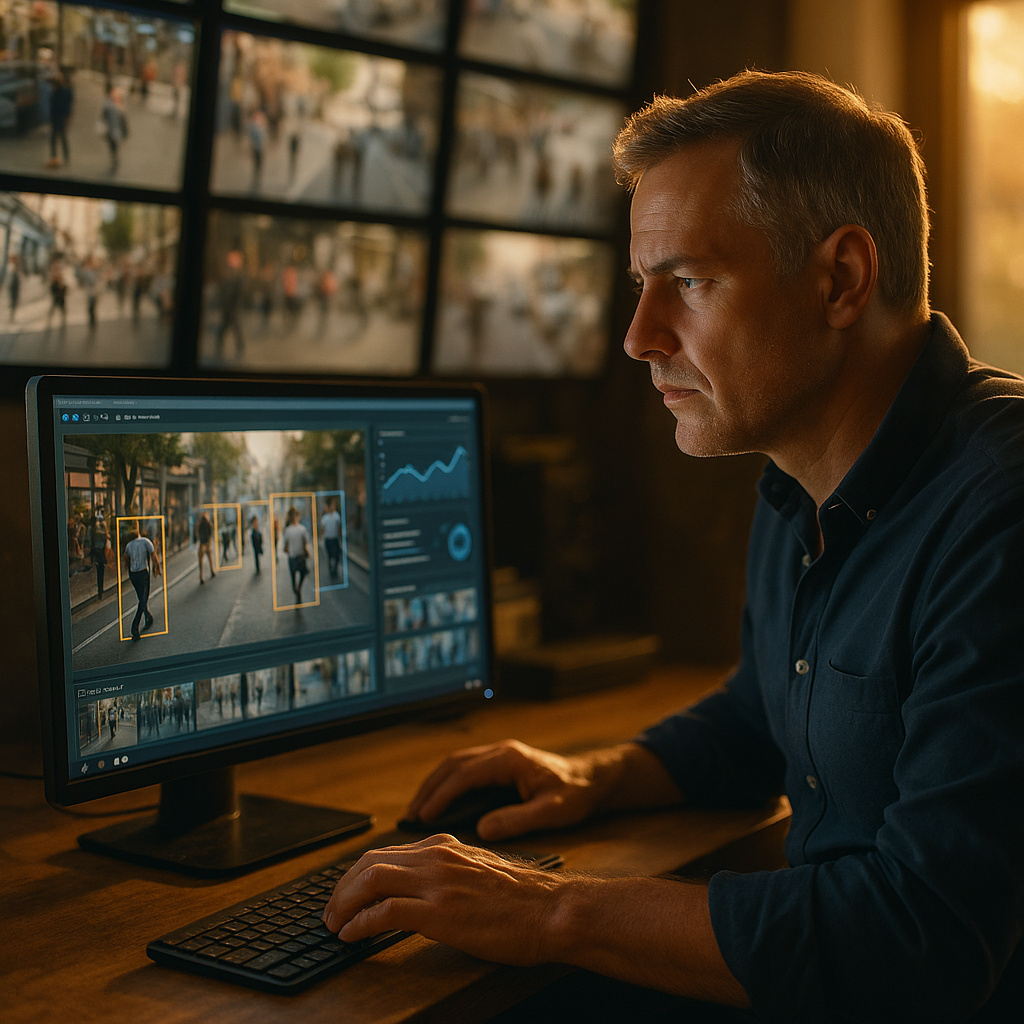
AI for analyzing video visuals and object recognition is redefining the capabilities of digital content analysis. With smart algorithms able to detect, classify, and interpret visuals in real-time, this technology is powering industries from security to entertainment. But how exactly do these AI systems work, and what opportunities and challenges do they present in 2025? Let’s uncover the details.
Understanding the Fundamentals of Video Visual Analysis
Modern AI video analysis combines powerful computer vision algorithms with deep learning to process and interpret complex scenes. Video visual analysis involves breaking down video streams into individual frames, extracting meaningful features, and identifying objects, actions, or patterns within those frames. In 2025, advances in neural network architectures—such as transformers for vision—enable AI to not only spot but contextually understand elements within a scene.
Crucially, these systems can handle spatial and temporal information, meaning they can comprehend how objects interact over time. This holistic perspective allows applications far beyond static image recognition, paving the way for smarter surveillance, real-time content tagging, and dynamic scene understanding.
Object Detection and Recognition in Digital Video Surveillance
Object detection and recognition have revolutionized digital surveillance. Current solutions use AI-driven models to automatically detect intruders, recognize suspicious behavior, and identify vehicles or license plates within live feeds. Major metropolitan areas now deploy AI-enabled cameras that process data in real-time, drastically improving response times and lowering false alarm rates.
These systems employ a mixture of convolutional neural networks (CNNs), YOLO (You Only Look Once), and other advanced detection frameworks. Trained on diverse datasets, they accurately distinguish between people, animals, vehicles, and countless other classes, regardless of environmental variability. For organizations concerned with data privacy, edge AI options are on the rise—allowing video processing directly on cameras without transmitting sensitive footage to the cloud.
Applications in Retail, Healthcare, and Entertainment Sectors
The impact of object recognition extends well beyond security. In retail analytics, AI interprets customer movement, predicts purchasing patterns, and automates shelf inventory checks. In healthcare monitoring, video analytics assist care teams by detecting patient falls or monitoring adherence to hygienic protocols, substantially improving safety without relying on human watchers alone.
In entertainment, streaming platforms use AI for dynamic scene classification, automated captioning, and content moderation—ensuring tailored recommendations and safe viewing environments. Studios also rely on object recognition to streamline editing, automate visual effects generation, and catalogue vast media libraries. By leveraging massive video datasets, these industries innovate faster and serve audiences in more personalized ways.
The Technology Behind Real-Time Visual Recognition
Real-time object recognition hinges on efficient AI models and scalable computing power. Since 2024, transformer-based architectures—originally developed for natural language tasks—have become dominant in visual understanding. These models process video frames in parallel and utilize context from surrounding frames, yielding precise detections with unprecedented speed.
Cloud AI platforms offer elastic scalability, while specialized hardware—like GPUs and edge inference chips—brings ultra-low latency processing to the device level. This enables use cases such as smart cities, autonomous transport, and live sports analytics. Continuous model training ensures that recognition systems evolve as real-world visuals change, making AI not only accurate at launch but adaptive over time.
Addressing Ethical Challenges and Data Privacy in Video AI
As AI for analyzing video visuals and object recognition grows more pervasive, so do concerns around privacy, consent, and bias. The European Union’s AI Act of 2024 codified strict guidelines for video-based AI, mandating transparency, data minimization, and explicit opt-in policies for end users. Solutions now increasingly integrate automated anonymization—such as face blurring—before storing or analyzing footage.
Developers must ensure datasets are diverse and representative to avoid racial, gender, or contextual bias. Human-in-the-loop systems combine algorithmic analysis with expert oversight, providing both accuracy and accountability. For businesses deploying these tools, regular audits, explainable AI methods, and clear user communication are essential for ethical compliance and public trust.
Future Opportunities and Limitations in AI Video Analysis
Looking ahead, the frontier of AI video analysis includes multi-modal understanding—where algorithms synthesize visual, audio, and textual signals for richer insights. Applications like real-time translation, virtual event engagement, and accessible media creation are emerging quickly in 2025. Advances in self-supervised and zero-shot learning mean AI can recognize new objects with minimal human labeling, reducing labor and scaling innovation.
However, challenges remain. Fatigue in edge hardware, adversarial attacks designed to trick recognition systems, and scalability limitations in ultra-high-resolution content must be solved. Collaboration between industry, academia, and regulators will determine how quickly and safely these frontiers are reached.
FAQs about AI for Analyzing Video Visuals and Object Recognition
-
How does AI-based object recognition work in video feeds?
AI applies computer vision and deep learning to break down frames, detect object boundaries, classify objects, and track their movements over time, often using neural networks trained on extensive labeled data.
-
What are the main benefits of using AI in video analysis?
AI enables faster, more accurate detection and classification of objects, automation of repetitive monitoring, reduced human error, and the ability to process vast amounts of content for security, analytics, and entertainment purposes.
-
Which industries benefit most from video object recognition?
Security and surveillance, retail analytics, healthcare monitoring, entertainment/content production, smart transportation, and industrial automation are leading sectors using this technology.
-
Is real-time video analysis possible with today’s AI technology?
Yes. Advances in model efficiency, edge computing, and dedicated hardware now allow for real-time detection, tracking, and alerting, even on lower-powered devices and at scale.
-
What about privacy concerns with AI-enabled video analytics?
Current best practices include data minimization, on-device processing (edge AI), automated anonymization (e.g., blurring), strict access controls, and compliance with data privacy laws such as the EU AI Act.
AI for analyzing video visuals and object recognition is rapidly transforming how we interpret digital content. These tools create smarter, safer, and more personalized experiences across industries while raising new ethical considerations. As technology matures, expect even greater integration, adaptability, and responsibility in the AI video landscape.