


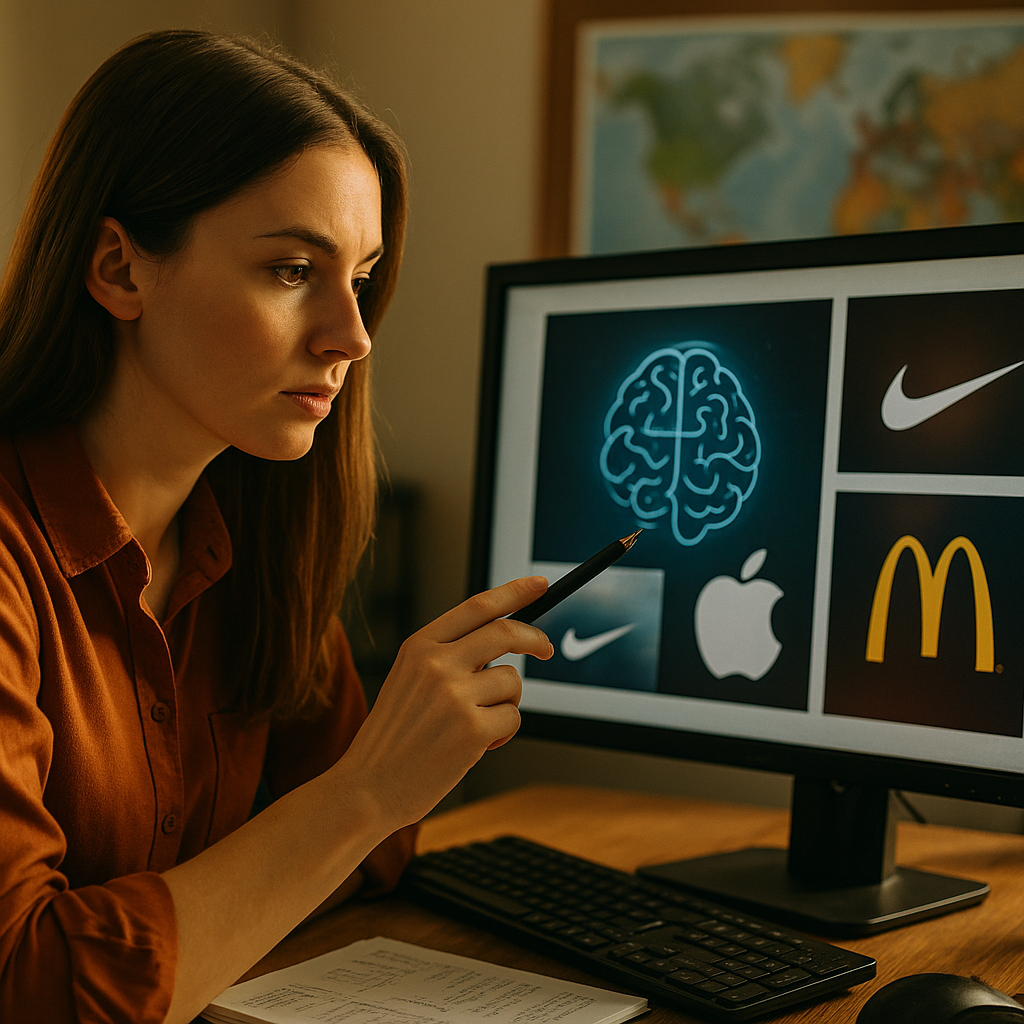
In 2025, brands compete in seconds of attention, and meaning travels faster than copy. AI for analyzing the visual semiotics of global competitor campaigns helps teams decode how colors, symbols, compositions, and cultural cues shape perception across markets. Done well, it turns scattered creative inspiration into evidence-based strategy. What if you could map your rivals’ visual language before your next launch?
Visual semiotics analysis for competitor campaigns: what it is and why it matters
Visual semiotics is the study of how images create meaning through signs—colors, shapes, typography, photography style, icons, layouts, and even what is omitted. In competitor marketing, semiotics answers practical questions: What does this campaign signal about price, quality, identity, or values? and How does it position the brand emotionally?
For global competitor campaigns, semiotics becomes more complex because the same sign can mean different things across cultures. A minimalist black-and-white visual may signal premium in one market, but feel cold or inaccessible in another. A hand gesture, animal motif, or color palette may carry local connotations that change the message entirely.
Why it matters now: competitor parity is high in many categories, and differentiation often happens through brand codes rather than product specs. If you only track slogans and offers, you miss the deeper system of meaning that shapes consumer memory. Semiotic insight helps you:
- Detect category conventions (the “look” of the market) and decide when to follow or break them.
- Understand positioning beyond claims—premium vs. accessible, rebellious vs. trustworthy, modern vs. heritage.
- Reduce creative risk by spotting culturally sensitive symbols and unintended associations before rollout.
- Build durable brand assets by knowing which visual codes competitors already “own.”
Teams often ask, “Isn’t this subjective?” Traditional semiotics can be. AI doesn’t eliminate interpretation, but it does bring scale, consistency, and measurable patterns—then humans validate meaning with cultural expertise.
AI competitive intelligence for global ads: how modern systems work
AI-based competitive intelligence for creative typically combines three capabilities: collection, computer vision, and analysis. The goal is not to “judge” design quality, but to classify and compare visual signals and link them to outcomes (recall, engagement, conversion, sentiment) when data is available.
1) Data acquisition and normalization
- Asset capture: paid social creatives, out-of-home photos, video frames, e-commerce thumbnails, app store screenshots, TV/CTV stills, influencer posts (where permitted), and brand-owned channels.
- Metadata: market, language, channel, date, format, placement, campaign theme, and target segment.
- Normalization: resizing, de-duplication, scene detection for video, and quality checks.
2) Computer vision and multimodal understanding
- Object and scene recognition: products, people, environments, props, settings (home, street, nature, workplace).
- Facial and pose attributes: presence of faces, gaze direction, emotion cues, group composition (handled with privacy-aware settings).
- Color science: dominant palette, contrast ratios, saturation, warmth, and brand color proximity.
- Typography and layout: text density, hierarchy, alignment patterns, logo placement, and whitespace.
- Optical character recognition (OCR): capturing on-image text for claim themes and tone.
- Audio cues (for video): music tempo, voice tone, and sound motifs that reinforce the visual narrative.
3) Semiotic patterning and inference
On top of vision outputs, models cluster creatives into “code families” (e.g., heritage craft, clinical efficacy, community belonging, playful experimentation) by learning recurring combinations: palette + setting + casting + typography + iconography + claim types.
Common follow-up: “Can AI tell what something means?” AI can reliably detect and compare visual features and correlate them with performance signals. Meaning still requires context: category norms, local culture, and brand history. The strongest workflows use AI to surface patterns and anomalies, then trained analysts interpret and validate the semiotic story.
Computer vision for brand semiotics: building a repeatable research framework
To move from ad-hoc inspiration boards to reliable insight, you need a framework that is consistent across countries and channels. A practical approach uses a semiotic codebook that AI can populate at scale.
Step 1: Define your sign system
Create a controlled taxonomy that matches your category and brand questions. Keep it stable so insights accumulate over time. Typical dimensions include:
- Color codes: dominant hues, accent usage, gradients vs. flat, natural vs. synthetic palettes.
- Iconography: shields (protection), leaves (natural), lab glassware (science), medals (authority), hearts (care), arrows (progress).
- Composition: centered product hero vs. lifestyle story, symmetry vs. dynamism, close-up texture vs. wide scene.
- Casting and identity cues: age range, group vs. individual, aspirational vs. relatable styling.
- Setting cues: home, outdoors, urban, clinical, atelier, factory—each implies values.
- Text and claim themes: price/value, performance, sustainability, heritage, innovation, community.
Step 2: Train or configure AI labeling
Use pre-trained vision models to extract baseline attributes, then refine with lightweight human labeling for category-specific elements (pack shapes, signature ingredients, distinctive motifs). This hybrid approach improves accuracy without requiring a full custom model from scratch.
Step 3: Validate with human expertise
Apply spot checks, inter-rater agreement, and market specialist review. For global research, involve local cultural advisors to flag connotations AI can’t infer (e.g., symbolism tied to religion, politics, or regional history).
Step 4: Compare competitors using measurable metrics
- Share of code: how often a competitor uses each code family in a market or channel.
- Distinctiveness index: how unique a code is versus category norms.
- Consistency score: how stable visual assets are across touchpoints and time.
- Novelty tracking: early signals when a competitor shifts style, positioning, or target audience.
Teams also ask, “What about performance?” When you can attach engagement or conversion proxies, you can run creative drivers analysis: which codes correlate with outcomes, by market and by audience segment—then treat the results as hypotheses to test, not universal rules.
Cross-cultural visual cues in marketing: avoiding false conclusions across markets
Global competitor campaigns are rarely “one-size-fits-all.” Brands localize casting, settings, gestures, and even color emphasis. AI can expose these differences quickly, but cross-cultural interpretation must be deliberate to avoid false conclusions.
Key pitfalls and how to prevent them
- Overgeneralizing color meaning: A color’s symbolism varies by region and category. Use AI to detect palette shifts, then validate meaning with local insight and category context.
- Misreading gestures and body language: Hand signs, eye contact norms, and proximity can carry different social signals. Create a “sensitivity list” of gestures and motifs to review manually.
- Assuming the same code signals the same intent: A lab aesthetic could imply trust and efficacy in one market, but “chemical/artificial” in another. Pair visual detection with local consumer research or social listening.
- Ignoring channel context: A bold, meme-like visual on social may be intentional informality, not a brand downgrade. Segment analysis by channel first, then interpret.
How to operationalize cross-cultural semiotics
- Market-specific baselines: Build category norms per country (or cluster of culturally similar countries). Compare competitors against the local baseline, not a global average.
- Localization fingerprints: Track what changes and what stays constant—logo lockups, hero product angle, tagline placement, or signature texture. These are often the true global brand codes.
- Human-in-the-loop approvals: Establish a review step for culturally sensitive motifs and regulated categories (health, finance, children).
This is where EEAT matters: demonstrate competence by documenting assumptions, citing sources for cultural interpretations, and separating AI-detected facts (e.g., “uses high-saturation red backgrounds 62% of the time”) from human interpretation (e.g., “signals urgency/value”).
Competitor creative benchmarking with AI: turning insight into decisions
Analysis only earns its budget when it changes what you do next. The strongest teams translate semiotic findings into creative guardrails, testing plans, and brand asset strategy.
1) Identify white space and overused codes
Start with a heatmap: which code families dominate the category in each market. If everyone uses “clinical blue + lab coat + efficacy claim,” you can decide whether to compete in that trust code or differentiate with “human warmth + lived experience + accessible typography.” AI provides evidence of saturation.
2) Build a “brand code moat”
Benchmark not just competitors’ codes, but their consistency. Brands that repeat a distinct set of cues across channels often win recall. Use AI to audit your own assets versus competitors, then formalize:
- Non-negotiables: color ratios, typography hierarchy, logo clear space, signature shapes or patterns.
- Flexible elements: casting, settings, seasonal palettes, localized motifs (within safety guidelines).
3) Create testable creative hypotheses
Convert semiotic observations into experiments. Examples:
- Hypothesis: In Market A, competitors rely on “premium minimalism,” but engagement favors “textured close-ups + creator-style framing.” Test: two visual systems with the same offer and copy.
- Hypothesis: In Market B, sustainability signals are common but generic (leaves, green gradients). Test: specific proof cues (certification icon placement, materials photography) with restrained green usage.
4) Support stakeholder alignment
Semiotics can be contentious because it touches taste. AI-backed benchmarking helps align teams by showing patterns across hundreds or thousands of assets, reducing “opinion battles.” To keep it responsible, document methods, sampling, and limitations so stakeholders trust the output.
Ethical AI in marketing research: privacy, IP, and governance you need in 2025
Using AI for competitor campaign analysis requires careful governance. Strong practice protects consumers, respects creators, and keeps your organization compliant and credible.
Privacy and data handling
- Minimize personal data: Focus on creative-level attributes rather than identifying individuals. If faces are analyzed, use privacy-preserving settings and avoid identity recognition.
- Respect platform policies: Collect data through permitted sources and document consent and usage rights where applicable.
- Secure storage: Apply access controls, retention limits, and audit logs for datasets and model outputs.
Intellectual property and fair use
- Analyze, don’t replicate: Use insights to understand codes and positioning, not to imitate distinctive brand assets.
- Maintain provenance: Track where each asset came from and how it was used in analysis to support compliance review.
Bias and accountability
- Bias checks: Ensure datasets represent diverse audiences and markets; validate that models don’t misclassify skin tones, cultural dress, or regional contexts.
- Human accountability: Keep a named owner for the codebook, model configuration, and interpretation standards.
Practical governance tip: Create a one-page “AI semiotics brief” template that includes purpose, sources, markets, taxonomy, validation method, and known limitations. This supports EEAT by making your process transparent and repeatable.
FAQs: AI for analyzing the visual semiotics of global competitor campaigns
What types of competitor assets should we analyze first?
Start with high-reach, high-frequency formats: paid social ads, e-commerce hero images, and key video campaigns. These assets usually contain the most standardized brand codes and provide enough volume for pattern detection.
Do we need a custom AI model to do semiotic analysis?
Not always. Many teams begin with pre-trained vision models for objects, scenes, OCR, and color extraction, then add a semiotic codebook and light human labeling for category-specific cues. Custom models help when you need high precision on proprietary pack elements or niche iconography.
How do we measure “meaning” without becoming subjective?
Separate detected features (palette, layout, objects, text density) from interpreted meaning (premium, playful, clinical). Quantify the features, then validate meaning through local experts, consumer research, or performance correlations. Document assumptions and confidence levels.
Can AI detect cultural risks in visuals?
AI can flag patterns and known sensitive symbols if you build a review list, but it cannot guarantee cultural safety. Use AI as an early warning system, then rely on market specialists and legal/regulatory review for final decisions.
How quickly can we generate useful insights?
With a defined taxonomy and clear markets/channels, teams often produce a first benchmarking readout in weeks, then improve accuracy and usefulness as the dataset grows and the codebook stabilizes.
What’s the biggest mistake teams make with AI competitor creative analysis?
Confusing correlation with causation. If a competitor’s “warm lifestyle” visuals perform well, that may reflect targeting, spend, or offer strength. Treat AI findings as hypotheses to test with controlled creative experiments.
AI-driven semiotic analysis turns global competitor creativity into structured evidence you can act on. In 2025, the advantage comes from combining scalable computer vision with disciplined codebooks and local cultural validation. Use AI to detect patterns, quantify category codes, and spot shifts early—then apply human expertise to interpret meaning responsibly. The takeaway: build a repeatable, ethical workflow that guides creative decisions with confidence.