


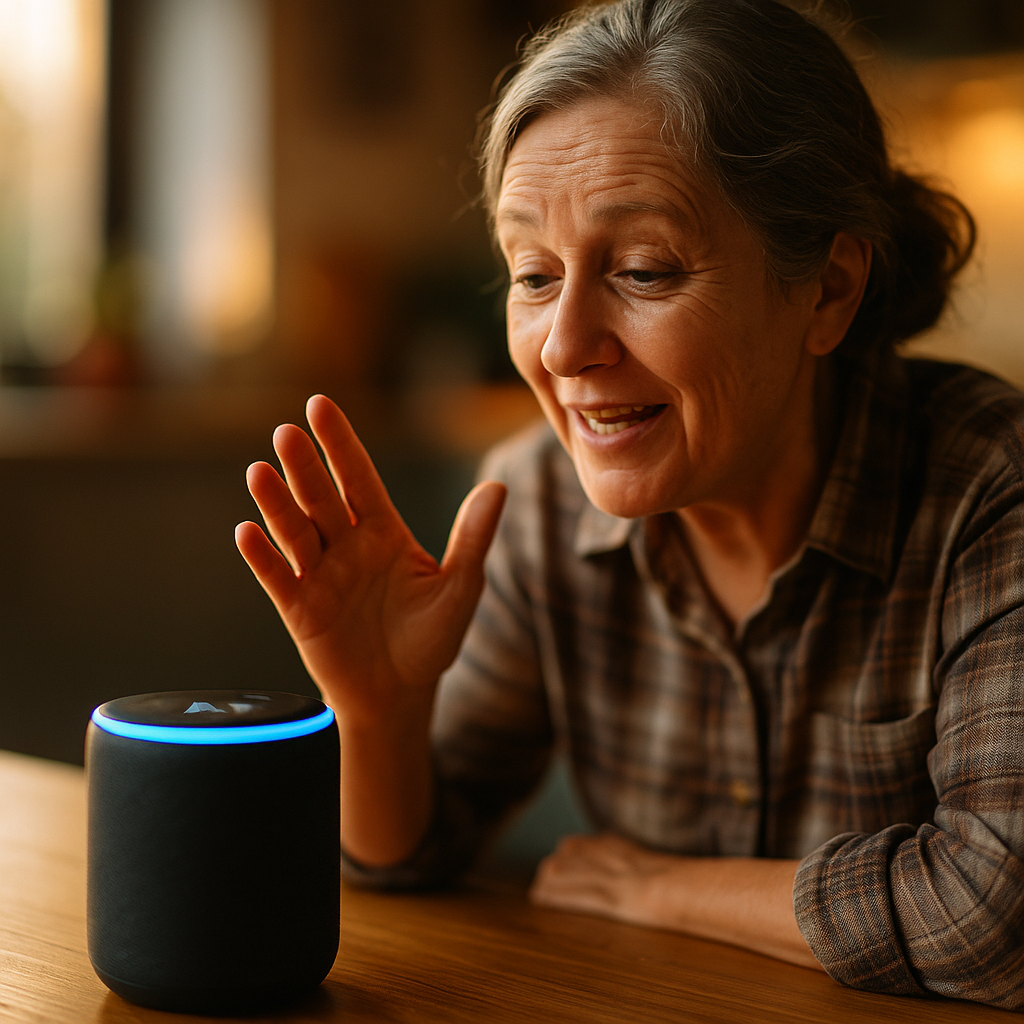
Using AI To Personalize Voice Assistant Brand Personas For Dialects is now a practical way to make voice experiences feel local, inclusive, and on-brand in 2025. Customers expect assistants to understand how they speak—not just what they say. When dialect fit improves, comprehension rises and frustration drops, while brand trust grows. Done well, personalization feels respectful, not performative. What does “done well” actually require?
Dialect-aware voice assistants: why localization is a brand advantage
Dialects shape vocabulary, pronunciation, rhythm, and the social meaning of phrases. When a voice assistant misses those cues, users experience more than a recognition error—they feel misunderstood. That disconnect can damage trust faster than a slow response time.
Brand persona is the assistant’s “character”: tone, formality, warmth, humor boundaries, and the way it handles uncertainty. Dialect personalization means the persona remains consistent while the assistant adapts to local language patterns and cultural expectations.
In practice, dialect-aware personalization supports four business outcomes:
- Higher task success by improving recognition and reducing repair loops (repeated rephrasing).
- Better customer satisfaction because the assistant “sounds like it belongs” in the user’s context.
- Stronger brand alignment by expressing the same brand values across regions without forcing one “standard” voice.
- Lower contact-center costs when more requests are completed in self-service.
Many teams assume dialect handling is just an ASR problem. It isn’t. Even with perfect transcription, a persona can still feel off if it uses the wrong idioms, politeness level, or conversational pacing. The winning approach treats dialect as a full-stack experience: language, speech, and conversational design.
AI voice persona customization: a practical system design
Effective personalization requires a structured pipeline that separates brand intent from dialect expression. This avoids “drift,” where a localized assistant starts sounding like a different brand.
1) Define a persona spec that can travel
- Non-negotiables: brand values, safety stance, prohibited humor topics, privacy language, escalation rules.
- Adjustables: greeting style, level of formality, use of contractions, confirmation phrasing, small-talk boundaries.
2) Build a dialect layer, not a separate persona
Represent dialect behaviors as modular policies and prompts: pronunciation lexicons, locale-specific phrasing, code-switching rules, and politeness strategies. This keeps your assistant recognizable everywhere while still feeling local.
3) Use a multi-model architecture
- ASR (speech-to-text): dialect-tuned acoustic and language models, plus custom vocabulary.
- NLU/LLM: intent, entity extraction, and response generation with persona constraints.
- Guardrails: safety filters, brand tone validators, and hallucination controls for factual domains.
- TTS (text-to-speech): region-appropriate voices and prosody; optional expressive style controls.
4) Add a “persona governor”
This is a lightweight policy layer that checks output against brand requirements: does it match allowed warmth, avoid disallowed slang, follow compliance language, and maintain accessibility standards? If not, it rewrites or routes to a safer template.
5) Design for user control
Users should be able to choose language and dialect preferences explicitly, adjust speech rate, and opt out of personalization. This reduces creepiness and supports accessibility. It also solves a common follow-up question: “What if I don’t want my assistant to sound local?”
Dialect speech recognition and TTS: making speech sound right without stereotypes
Dialect performance lives or dies in the speech layer. Two assistants can share the same text response, yet one feels natural and the other feels like a parody. The difference is prosody, phoneme choices, and the careful handling of culturally loaded expressions.
Improving dialect ASR without overfitting
- Collect representative audio across ages, genders, and speaking contexts (quiet rooms, cars, kitchens). Balance matters more than sheer volume.
- Include natural code-switching if it’s common in the region. Train the language model to expect it rather than “correct” it.
- Use pronunciation lexicons for names, places, brands, and common dialect variants. Keep them versioned and testable.
- Measure WER and semantic error rate by dialect subgroup. A small WER change can still cause large intent mistakes if key entities are missed.
Getting TTS right: clarity first, style second
- Prioritize intelligibility across devices and noise conditions, even if you add regional flavor.
- Control prosody (stress, pitch, timing) to match local conversational rhythm, but avoid exaggerated “accent performance.”
- Test sensitive phrases with native speakers. Some words shift meaning quickly across neighborhoods and generations.
- Support accessibility with adjustable speed and optional “plain speech” mode for users who prefer it.
Avoiding stereotypes in voice selection
Do not equate dialect with a single “type” of person. Offer multiple voices per locale, and ensure the persona stays respectful in wording choices. Your goal is recognition and comfort, not caricature.
Multilingual NLP for dialects: controlling tone, intent, and code-switching
Dialect-aware NLP goes beyond translation. It manages how meaning is inferred, how ambiguity is handled, and how the assistant signals politeness or confidence. It also answers a common stakeholder concern: “Will localization reduce accuracy?” It can increase accuracy—if you design it intentionally.
Key NLP capabilities to implement
- Dialect-sensitive intent models: Train on region-specific paraphrases so “same intent, different words” is recognized reliably.
- Entity normalization: Map dialect variants to canonical forms (for example, local place nicknames) while keeping the user-visible phrasing local.
- Context memory rules: Remember user preferences (speech rate, formality) without storing raw transcripts longer than necessary.
- Code-switch handling: Detect mixed-language spans and decide whether to respond in the user’s dominant language or mirror their pattern based on explicit settings.
Persona-consistent generation
Use constrained generation: templates for high-risk domains (billing, healthcare, safety), and LLM generation for low-risk conversational turns (small talk, guidance) under strict brand and safety constraints. A reliable system also includes fallback behaviors: when confidence is low, the assistant should ask a short, polite clarifying question in the same dialect style rather than guessing.
Answering the follow-up: “Do we need a model per dialect?”
Not always. Many teams succeed with a shared foundation model plus dialect adapters, locale-specific retrieval, and a dialect policy layer. Reserve separate models for cases where regulatory constraints, extreme acoustic differences, or performance targets demand it.
Voice UX localization strategy: research, testing, and measurement
Dialect personalization should be treated like product localization: researched, tested, and continuously improved. This is where EEAT comes to life—showing domain expertise through methodology, transparency, and measurable outcomes.
Research that prevents expensive missteps
- Dialect discovery interviews: Learn what “natural” means locally: directness, humor tolerance, honorifics, and taboo topics.
- Phrase audits: Validate common system phrases (“I didn’t catch that,” “Here’s what I found”) to avoid unintended rudeness.
- Community review panels: Engage local linguists and native speakers, and compensate them fairly.
Testing that reflects reality
- Scenario-based evaluations: Same tasks, multiple dialects, multiple environments.
- Human-in-the-loop scoring: Rate not only correctness, but also perceived respect, clarity, and brand fit.
- A/B tests with guardrails: Compare localized vs. standard outputs, watching for complaint spikes and disengagement.
Metrics that matter
- Task success rate and time-to-completion by dialect group.
- Repair rate (repeats, rephrases, cancellations).
- Escalation rate to human support.
- Sentiment and trust signals from post-interaction prompts, sampled responsibly.
- Brand voice compliance via automated checks plus periodic human review.
Operationalizing updates
Ship improvements in small, reversible releases. Maintain changelogs for pronunciation and phrasing updates, and document why a dialect choice was made. This supports internal governance and helps you explain decisions to users and regulators when needed.
Ethical AI and privacy in voice personalization: governance that builds trust
Dialect personalization can feel invasive if users suspect the assistant is profiling them. Trust depends on clear consent, minimal data retention, and visible user control—especially when voice is a biometric-like signal.
Privacy-by-design essentials
- Explicit preference selection (language/dialect/voice) rather than silent inference when possible.
- Data minimization: Store only what you need; prefer on-device processing for wake word and basic personalization.
- Clear retention policies: Tell users how long audio/transcripts are retained and why.
- Opt-out and delete controls that actually work and are easy to find.
Bias and fairness controls
- Balanced datasets across dialect subgroups to avoid systematic failures for certain speakers.
- Performance parity targets (for example, caps on error-rate gaps) and escalation plans when gaps appear.
- Stereotype avoidance rules in both text generation and voice styling.
Brand safety and compliance
In regulated domains, avoid free-form generation for key statements. Use approved language, cite sources where appropriate via retrieval, and implement “I can’t help with that” responses that remain polite and local. This prevents a dialect-personalized assistant from becoming a liability in sensitive contexts.
FAQs
What’s the difference between an accent and a dialect in voice assistants?
An accent mainly affects pronunciation. A dialect includes pronunciation and vocabulary, grammar, idioms, and social rules. For brand personas, dialect matters more because it changes what sounds polite, natural, or trustworthy.
Should we personalize by automatically detecting a user’s dialect?
Use explicit user choice when possible. Automatic detection can help as an assistive feature, but it can also feel like profiling. If you infer, disclose it, allow easy correction, and avoid storing sensitive inferences.
How many localized personas do we need?
Usually one core persona with a dialect layer is enough. Create multiple localized variants only when research shows meaningful differences in politeness, humor, or regulatory language—or when ASR/TTS performance requires distinct tuning.
How do we prevent the assistant from sounding stereotypical?
Use multiple voices per locale, prioritize clarity, avoid exaggerated prosody, and validate phrasing with diverse local reviewers. Add brand-tone guardrails that reject caricatured slang and overly “performed” accent cues.
What metrics prove dialect personalization is working?
Track task success, repair rate, escalation rate, and satisfaction by dialect group. Also measure brand voice compliance and run qualitative reviews with native speakers to confirm the experience feels respectful.
Does dialect personalization increase legal or compliance risk?
It can if you rely on uncontrolled generation in sensitive domains. Reduce risk with approved templates, retrieval-based answers, audit logs, and a persona governor that enforces compliance language consistently across locales.
AI-driven dialect personalization works when it protects the brand persona while honoring how people actually speak. Treat it as a system: dialect-tuned ASR and TTS, controlled NLP generation, rigorous localization testing, and privacy-first governance. In 2025, the best assistants don’t chase novelty—they deliver respectful, measurable improvements in understanding and trust. Build the dialect layer carefully, and users will hear the difference.