


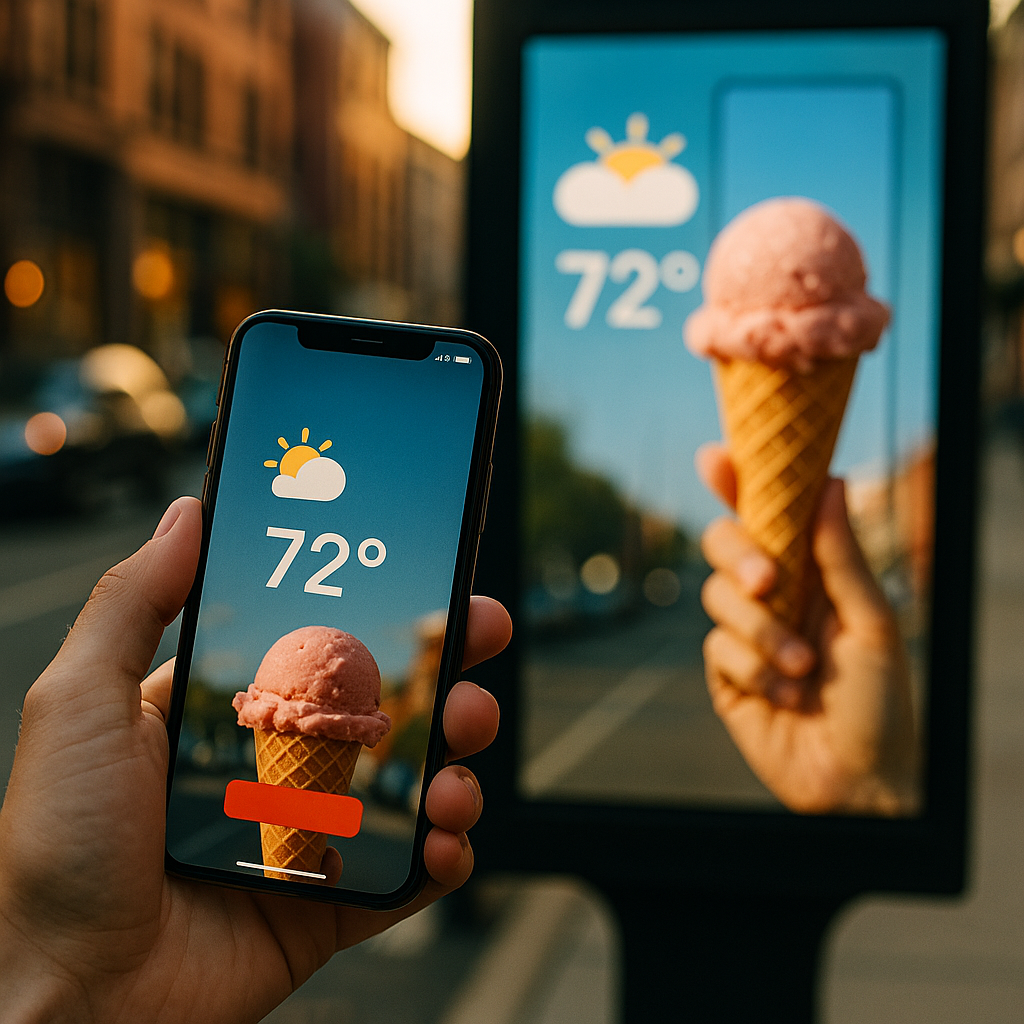
Using AI to personalize dynamic creative based on live weather data gives marketers a practical way to match messaging, visuals, and offers to what people are experiencing right now. When rain starts, heat spikes, or cold fronts arrive, campaigns can adjust instantly and feel more relevant. That relevance improves attention, engagement, and conversion. Here is how to do it well.
Why weather-based advertising works for real-time personalization
Weather affects mood, routines, product demand, and purchase timing. People buy different products, respond to different imagery, and prioritize different needs depending on temperature, precipitation, wind, humidity, or severe conditions. That makes weather one of the clearest contextual signals available to marketers.
Unlike broad audience segmentation, weather-based advertising reflects a changing real-world condition. A customer in a city facing a sudden storm may respond better to delivery-focused messaging, indoor entertainment offers, or urgent convenience benefits. A customer in a heat wave may engage more with hydration, cooling, travel, or flexible service messages. When creative aligns with that context, the ad feels timely rather than generic.
AI strengthens this strategy by turning raw weather inputs into usable creative decisions at scale. Instead of manually building separate ads for every forecast scenario, teams can train systems to select the right headline, image, color palette, CTA, product feed, and bid logic based on live conditions. That reduces manual production while increasing relevance.
From an EEAT perspective, this approach works best when marketers rely on trustworthy weather sources, transparent decision rules, and measurable business outcomes. Helpful content and effective campaigns come from real expertise: knowing which signals matter, which products are weather-sensitive, and which creative choices actually influence performance.
How AI marketing automation turns live weather data into dynamic creative
AI marketing automation connects several moving parts into one decisioning process. First, it pulls live weather data through an API or trusted data platform. Next, it maps that data to defined triggers, such as:
- Temperature bands: cold, mild, hot, extreme heat
- Conditions: rain, snow, fog, clear skies, thunderstorms
- Intensity: light rain versus severe storm warnings
- Timing: current conditions, hourly forecast, weekend forecast
- Location: city, ZIP code, store radius, event area
Once triggers are defined, AI selects or generates the most relevant creative variant. For example, a retail brand can show jackets and waterproof footwear during rain, sunscreen and outdoor accessories during sunny conditions, or same-day delivery messaging when severe weather reduces store visits. A food delivery app can swap meal imagery and copy based on rain, cold evenings, or heat.
The best systems do not stop at one weather variable. They combine weather with inventory, audience behavior, historical conversion patterns, geography, device, and time of day. That matters because weather alone does not guarantee intent. A 90-degree day may increase demand for cold drinks in one region but have less impact in another where that temperature is common. AI can learn those differences from campaign data.
Dynamic creative also needs guardrails. Teams should define brand-safe language, approved visual assets, compliance rules, and fallback ads if data feeds fail. This protects quality while still allowing automation to react quickly.
Best practices for dynamic creative optimization with weather triggers
Dynamic creative optimization works when the strategy is specific. Many campaigns underperform because they react to weather in ways that are obvious but not commercially meaningful. The goal is not to mention the weather for its own sake. The goal is to improve decision-making and user response.
Start with products or services that have a clear weather relationship. Strong candidates include:
- Retail categories such as apparel, footwear, home goods, and seasonal products
- Food delivery, grocery, restaurant, and beverage brands
- Travel, hospitality, and local experience providers
- Health, wellness, skincare, and fitness brands
- Automotive, insurance, utilities, and home services
Then build a trigger matrix. This matrix links each weather condition to a creative response. A useful structure includes:
- Condition: what weather event activates the change
- Audience: who should see the message
- Creative: headline, visual, offer, CTA, and landing page
- Business rule: budget, bid modifier, or inventory filter
- KPI: CTR, conversion rate, ROAS, app installs, or store visits
Keep the message practical. If it is raining, “Stay dry with fast delivery” is stronger than a vague weather pun. If temperatures drop sharply, “Cold-weather essentials available today” tells users exactly why the ad matters now. Context should sharpen the offer, not distract from it.
Creative variety matters too. AI can test multiple combinations within the same weather event, learning whether users respond better to urgency, convenience, product benefits, or location-based messaging. For example, during cold snaps, one audience may respond best to comfort-led copy while another converts more on discount-led copy.
Do not ignore the landing experience. If an ad updates for weather but the landing page stays generic, you create friction. Dynamic landing modules, localized product recommendations, and weather-relevant merchandising help maintain continuity and improve conversion.
Building a weather-triggered ad strategy with reliable data and clear measurement
A strong weather-triggered ad strategy depends on data quality. Use trusted weather providers with dependable geographic coverage, frequent updates, and clear service-level expectations. Marketers should validate how local the data really is. City-level conditions may be enough for some campaigns, while others need ZIP-level or store-radius precision.
Measurement should begin before launch. Define what success means for each use case. Common outcomes include:
- Higher click-through rate from more relevant creative
- Improved conversion rate through context-matched offers
- Higher average order value from better product recommendations
- More efficient spend through smarter bid and budget allocation
- Stronger retention if app users receive timely, useful messages
To isolate the impact of weather-triggered personalization, compare it against a control group or static creative baseline. Measure incremental lift rather than relying only on top-line results. If possible, run geo-split or audience-split tests to see whether AI-driven weather creative outperforms non-weather versions under similar conditions.
Attribution can be tricky because weather often influences demand on its own. A rainy weekend may increase delivery orders whether or not ads change. That is why experimental design matters. Your analysis should answer a precise question: did the personalized creative improve performance beyond the demand created by weather itself?
Operationally, teams should also track feed reliability, trigger accuracy, and creative latency. If weather changes faster than your ad stack can update, the experience loses value. A good system logs every trigger, creative decision, and serving event so teams can audit performance and resolve errors quickly.
Using predictive analytics and machine learning for better campaign performance
Live weather data is useful, but predictive analytics can push performance further. Instead of reacting only after the weather changes, machine learning models can forecast likely demand shifts and prepare campaigns in advance. That allows teams to preload assets, adjust bids, rebalance inventory exposure, and queue messaging before the weather event peaks.
For example, a grocery app may learn that heavy rain in specific neighborhoods leads to a surge in same-day orders between late afternoon and evening. A travel brand may identify that unseasonably warm weekends raise local getaway searches. A home services company may see increased emergency repair intent after extreme weather warnings. Models trained on historical campaign, sales, and weather data can detect these patterns and act on them faster than manual planning.
Predictive use cases often include:
- Demand forecasting: anticipating changes in product or service interest
- Creative preselection: choosing the best likely variants before triggers fire
- Budget pacing: shifting spend toward regions likely to see stronger response
- Inventory alignment: promoting only products available in affected locations
- Customer lifecycle messaging: adjusting retention, upsell, or reactivation campaigns by forecast
Machine learning should still be supervised by marketers. Not every correlation is useful, and not every weather pattern deserves a creative change. Teams should review recommendations, filter out weak signals, and ensure the output remains relevant to the brand and customer need.
This is also where expertise matters most. AI can optimize patterns, but human teams must decide whether the logic reflects real customer behavior, whether the message is responsible during severe weather, and whether the campaign adds value instead of simply exploiting attention.
Privacy, brand safety, and EEAT considerations in contextual advertising
One reason contextual advertising is gaining attention in 2026 is that it can improve relevance without depending entirely on invasive personal data. Weather-based personalization often uses location context and environmental signals rather than deeply personal identifiers. Even so, marketers still need strong privacy practices.
Use only the minimum data required. Be clear about location permissions in apps. Follow platform rules and regional privacy laws. If your strategy combines weather with first-party data, governance becomes even more important. Customers should understand how their data supports a better experience.
Brand safety deserves equal focus. Weather can be sensitive, especially during floods, fires, storms, or extreme heat. Avoid cheerful or sales-heavy language during dangerous events. In many cases, the right move is to suppress promotion, switch to service information, or pause campaigns entirely in affected areas.
Helpful content principles also apply to ad experiences. Clear claims, accurate availability, realistic delivery expectations, and honest offers build trust. If your ad says a product solves a weather-related problem, the landing page should explain how. If weather impacts shipping or service windows, state that clearly.
To align with EEAT, marketers should demonstrate:
- Experience: use insights from actual campaign testing and customer behavior
- Expertise: understand weather sensitivity by product, market, and audience
- Authoritativeness: rely on reputable data sources and sound analytical methods
- Trustworthiness: respect privacy, avoid misleading urgency, and maintain accurate messaging
When these elements are in place, weather-based personalization becomes more than a clever tactic. It becomes a reliable growth lever grounded in context, testing, and customer value.
FAQs about AI-driven weather personalization
What is dynamic creative based on live weather data?
It is an advertising or messaging approach where ad elements change automatically according to current or forecast weather conditions. AI helps decide which version to show based on rules, predictions, and performance data.
Which industries benefit most from weather-triggered campaigns?
Retail, food delivery, grocery, travel, hospitality, home services, automotive, insurance, and wellness brands often see the strongest results because customer needs shift visibly with weather changes.
Do I need AI if I already use dynamic creative optimization?
Not always, but AI makes the system smarter and more scalable. It can analyze multiple variables at once, predict likely outcomes, and optimize creative selection more efficiently than manual rule-setting alone.
What weather signals should I use first?
Start with the most commercially relevant signals: temperature, rain, snow, severe weather alerts, and forecast timing. Add humidity, wind, pollen, or UV only if they clearly affect customer behavior in your category.
How can I measure whether weather personalization actually works?
Use a control group or baseline static creative, then compare incremental lift in CTR, conversion rate, ROAS, or another key KPI. Testing should separate the impact of the weather itself from the impact of the creative change.
Can weather-based personalization work without invading privacy?
Yes. It often relies on contextual signals and general location rather than sensitive personal profiling. Still, brands must follow consent, transparency, and data minimization best practices.
What are the biggest mistakes marketers make?
Common mistakes include using weak weather triggers, overpersonalizing with irrelevant copy, failing to align the landing page, ignoring severe-weather sensitivity, and launching without a clear test design.
How quickly should ads update after weather changes?
The answer depends on the campaign, but speed matters. For fast-moving conditions like storms, near-real-time updates are ideal. For retail or travel campaigns, hourly or forecast-based updates may be enough.
AI-powered weather personalization helps brands deliver creative that matches real-world conditions, not assumptions. The strongest campaigns combine trusted weather data, clear trigger logic, relevant offers, and disciplined testing. In 2026, success comes from using automation responsibly: stay accurate, stay useful, and design every weather-based message to solve a real customer need in the moment.