


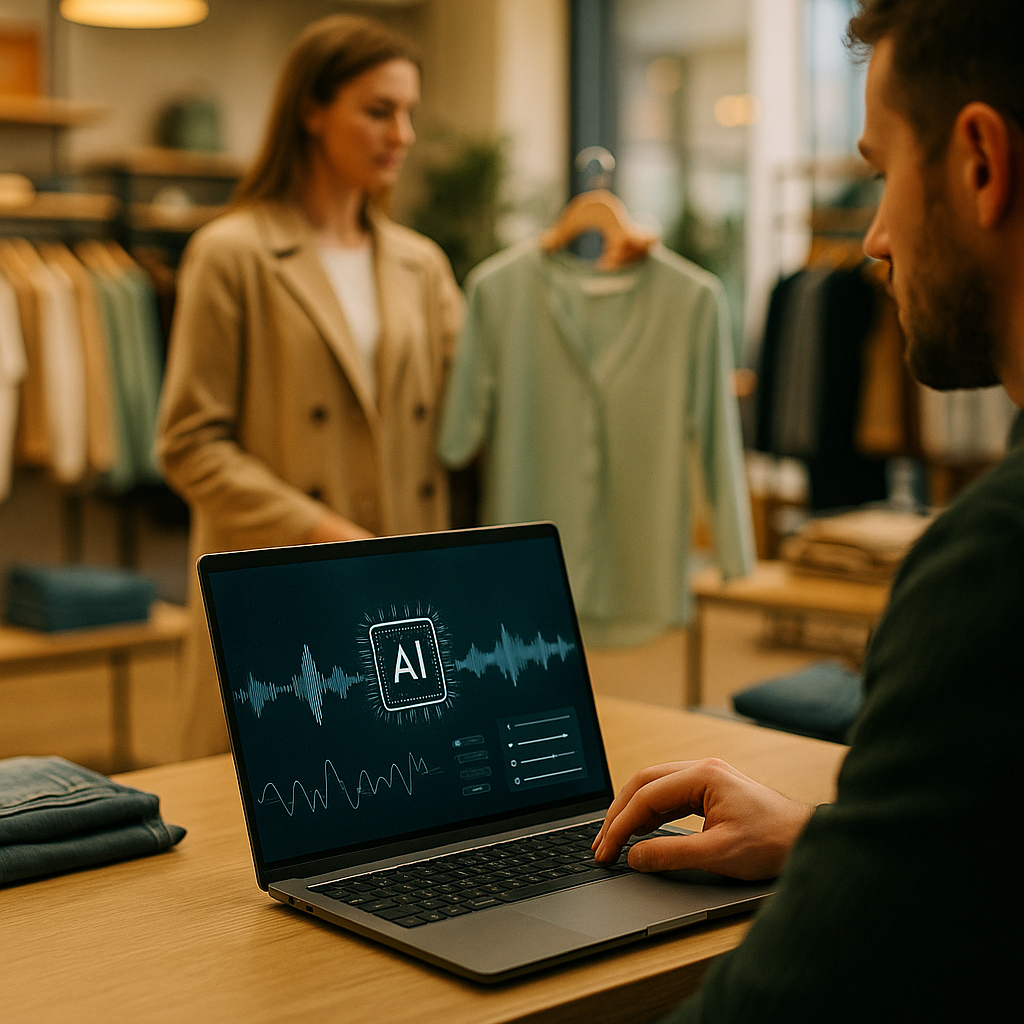
In 2025, retailers are competing on experience as much as price. Using AI to Generate Hyper Niche Audio Soundscapes for Retail Spaces lets brands design atmosphere with the same precision as their visual merchandising—down to product category, time of day, and shopper intent. The result is audio that feels custom, not generic. Ready to turn background sound into measurable strategy?
AI soundscapes for retail: what they are and why they work
Audio in a store is never neutral. It shapes perceived pace, comfort, brand identity, and even how long customers stay. AI soundscapes for retail go beyond playlists by generating an adaptive layer of music, texture, and ambient elements that align with a specific environment: a sneaker launch, a luxury fragrance counter, a minimalist home-goods aisle, or a kids’ science-toy corner.
Hyper niche soundscapes differ from traditional background music in three ways:
- Context specificity: Audio is built for a particular retail moment (e.g., “quiet confidence” for premium skincare consultations) rather than a broad genre like “chill.”
- Control over micro-attributes: Tempo, harmonic density, brightness, rhythmic complexity, and sound texture can be tuned to match shopper energy and space acoustics.
- Dynamic adaptation: The system can shift between scenes (morning restock, lunch rush, evening browsing) with smooth transitions that avoid jarring changes.
Why it works: retail decisions are often fast and emotional. Sound affects attention, stress, and perceived time. When audio aligns with brand and context, it supports browsing and reduces cognitive friction. If you’ve ever noticed a store that “felt right” without knowing why, audio usually played a role.
Retailers often ask whether AI-generated audio risks sounding artificial. In practice, modern systems can produce organic-feeling sound design, especially when teams specify guardrails (instrument palette, dynamics range, “no vocals,” “no recognizable melodies”). The objective isn’t to show off AI—it’s to make the space feel intentional.
Generative music for stores: building hyper-niche atmospheres by zone
Generative music for stores is most effective when you stop thinking in terms of “one soundtrack per store” and instead design for zones. Shoppers behave differently in entryways, hero displays, fitting rooms, service desks, and checkout. AI enables distinct sound “micro-worlds” that remain coherent as a single brand experience.
Common zoning patterns that map well to AI-generated soundscapes include:
- Threshold zone (entrance): Slightly higher clarity and a welcoming tonal center to signal “you’re in the right place.” Avoid heavy bass that can feel aggressive at the door.
- Discovery zone (new arrivals / seasonal): Higher motion cues (subtle rhythmic elements) to encourage movement and exploration.
- Consultation zone (beauty, tech, luxury): Lower complexity, restrained dynamics, and minimal transients to reduce stress and support conversation.
- Fitting rooms: Comfort-forward textures, reduced tempo, fewer high-frequency spikes that can fatigue shoppers already making self-image decisions.
- Checkout: Slight uplift in energy to reduce perceived waiting time, while keeping volume and brightness in check to avoid irritability.
Hyper niche also means matching the audio to merchandise. A heritage watch boutique might use subtle mechanical-tick-inspired percussion and warm, analog textures. A plant shop can emphasize naturalistic field recordings (wind, distant birds) blended with gentle tonal pads—without turning it into a literal rainforest. A streetwear pop-up can lean into tight, percussive minimalism with more sub presence, but tuned to the room so it feels clean, not boomy.
Follow-up question: does zoning require more speakers and cost? Not always. Many stores already have multi-channel audio capability. Even a simple two-zone setup (sales floor vs. consultation area) can deliver meaningful gains in comfort and brand perception when the sound design is intentional.
Adaptive in-store audio: real-time personalization without creepy vibes
Adaptive in-store audio changes the soundscape based on conditions like foot traffic, time of day, staffing levels, or store events—without identifying individuals. In 2025, the best implementations focus on situational adaptation rather than personal profiling, which helps reduce privacy risk and maintain customer trust.
Signals that can drive safe, useful adaptation include:
- Occupancy level: When the store gets busier, shift toward slightly denser texture and a touch more rhythmic stability so the space feels organized, not chaotic.
- Noise floor: If ambient chatter rises, adjust spectral balance (not just volume) so the audio remains present without becoming loud.
- Time-of-day intent: Morning “mission shoppers” may prefer clarity and faster service cues; late afternoon browsing can support warmer, slower sound.
- Event triggers: Product drops, demonstrations, or VIP appointments can swap in a matching scene with consistent brand DNA.
One practical approach is “scene-based adaptation.” You create 6–12 approved sound scenes (e.g., Calm, Steady, Energetic, Luxury Minimal, Weekend Family, Late-Night) and let the system blend between them. This keeps brand control high and reduces the risk of the AI drifting into off-brand territory.
Retail leaders often ask how to avoid “creepy” personalization. Keep adaptation tied to the environment, document your data sources, and ensure staff can explain it simply: “The audio adjusts to store activity so it stays comfortable.” Also, avoid voice capture. If you use sensors, choose privacy-preserving options (aggregated counts, not identity).
Brand sound identity: aligning AI audio with merchandising and values
A strong brand sound identity is as intentional as typography or lighting. AI helps you express that identity consistently across locations and campaigns, but only if you define the creative brief with discipline.
Start by translating brand attributes into sound parameters:
- Modern vs. classic: digital textures and tight transients vs. warmer harmonic content and softer edges
- Bold vs. understated: wider dynamic range and prominent rhythmic elements vs. restrained dynamics and minimal rhythmic complexity
- Playful vs. serious: unexpected melodic intervals and bright timbres vs. stable harmony and subdued brightness
- Local vs. global: subtle regional instruments or field-recording cues vs. broadly familiar tonal palettes
Then add guardrails that protect customer experience and legal safety:
- Speech safety: keep midrange density controlled so staff and customers can talk comfortably
- No distracting hooks: avoid prominent vocals or recognizable melodies that pull attention from products
- Accessibility: limit harsh high-frequency content and extreme compression that can be fatiguing or triggering
- Brand compliance: define “never use” moods (e.g., ominous, chaotic) and “always avoid” elements (e.g., sirens, alarms, crowd screams)
Answering the obvious follow-up: will AI erase the need for music curators? Not if you want consistent quality. The highest-performing programs use a hybrid model—creative direction from humans, generation and variation by AI, and ongoing QA based on customer feedback and business metrics.
Finally, connect sound to merchandising calendars. If your visual team plans seasonal floor sets, your audio scenes should also evolve—subtly. The goal is continuity with fresh energy, not a hard reset that makes regular customers feel disoriented.
Retail audio compliance: licensing, safety, and operational governance
Retail audio compliance is where many promising pilots fail. Generating audio doesn’t automatically remove licensing obligations, and poorly governed systems can introduce brand, legal, or safety risks. Treat audio like any other customer-facing system: specify responsibilities, audit outputs, and document decisions.
Key compliance and governance considerations include:
- Licensing clarity: confirm whether your vendor’s model outputs are royalty-free for commercial public performance, and whether any PRO/public performance obligations still apply in your region.
- Dataset and rights assurances: require written representations about training data provenance and indemnification terms appropriate to your risk tolerance.
- Content moderation: prevent generation of offensive, culturally insensitive, or anxiety-inducing audio. Build an approval workflow for new scenes.
- Volume and hearing safety: set store-level SPL targets, cap maximum output, and prevent “auto-gain creep” over the day.
- Operational controls: give managers an emergency “quiet mode,” plus the ability to lock scenes during sensitive periods (memorial events, local emergencies).
Retailers also ask about consistency across locations. You can standardize the brand sound palette while still allowing store-level tuning for acoustics. A glass-heavy flagship and a carpeted boutique need different EQ and dynamics settings even if the same scene is playing.
When you evaluate vendors, look for transparent documentation, repeatable outputs, and clear human-in-the-loop controls. AI should reduce manual work, not create a new class of untraceable problems.
Measuring in-store experience: KPIs and testing AI-generated soundscapes
To justify investment, connect sound to measuring in-store experience with a testing plan that respects privacy and isolates variables. Audio is part of an ecosystem—lighting, staffing, promotions—so you need a method that avoids attributing every lift to music.
Useful KPIs and measurement methods include:
- Dwell time by zone: compare baseline vs. AI soundscapes during matched dayparts
- Conversion rate: track purchases per visitor, controlling for promotions and inventory changes
- Basket size or attachment: see whether calmer consultation audio increases add-ons in high-consideration categories
- Queue tolerance: measure abandonment or complaints during peak times
- Staff feedback: capture fatigue, ease of conversation, and perceived customer mood
- Customer sentiment: short exit surveys (“The store felt calm/energizing/overstimulating”) tied to time blocks, not identities
A practical test design in 2025 is a four-week rotation:
- Week 1: baseline (current playlist or silence policy)
- Week 2: AI scenes in two dayparts (morning/afternoon)
- Week 3: AI scenes expanded to all dayparts with zoning
- Week 4: optimization (tune tempo, brightness, density; re-test)
Answering “what if results are mixed?” Treat it like any design system. Some categories benefit from higher calm; others need energy. The advantage of AI is iteration speed: you can adjust parameters without rebuilding an entire playlist strategy.
Also consider operational outcomes: reduced staff stress, fewer customer complaints about volume, and smoother peak-hour flow. Even modest gains matter at scale across multiple locations.
FAQs
What makes a soundscape “hyper niche” in retail?
It’s designed for a specific product context, shopper intent, and physical zone—using precise controls like tempo, texture, brightness, and dynamics—rather than relying on broad genre labels.
Do AI-generated retail soundscapes require special hardware?
Often no. Many stores can use existing speakers. The biggest upgrades typically involve zoning control, basic acoustic tuning, and a reliable playback system with scene scheduling.
Is AI-generated audio legally safer than streaming popular music?
It can be, but only with clear contract terms. You still need to confirm commercial usage rights, public performance requirements in your region, and vendor assurances about output rights and governance.
How do you prevent AI audio from distracting customers or staff?
Set guardrails: avoid vocals and recognizable hooks, cap loudness, control midrange density for conversation, and use scene-based blending rather than abrupt track changes.
Can adaptive audio work without collecting personal data?
Yes. Use environmental signals like aggregate occupancy, noise level, and time-of-day schedules. Avoid identity-based tracking and avoid voice capture to reduce privacy risk.
How quickly can a retailer pilot AI soundscapes?
A focused pilot can run in weeks if you already have a playback system. The critical path is defining brand sound guidelines, setting compliance rules, and selecting measurable KPIs.
AI-generated soundscapes give retailers a practical way to design atmosphere with the same rigor as store layout and lighting. When you define brand guardrails, build zone-based scenes, and measure outcomes, audio becomes a controllable lever for comfort, pacing, and conversion. The takeaway: treat sound as a system—then use AI to iterate faster and stay consistently on-brand.