


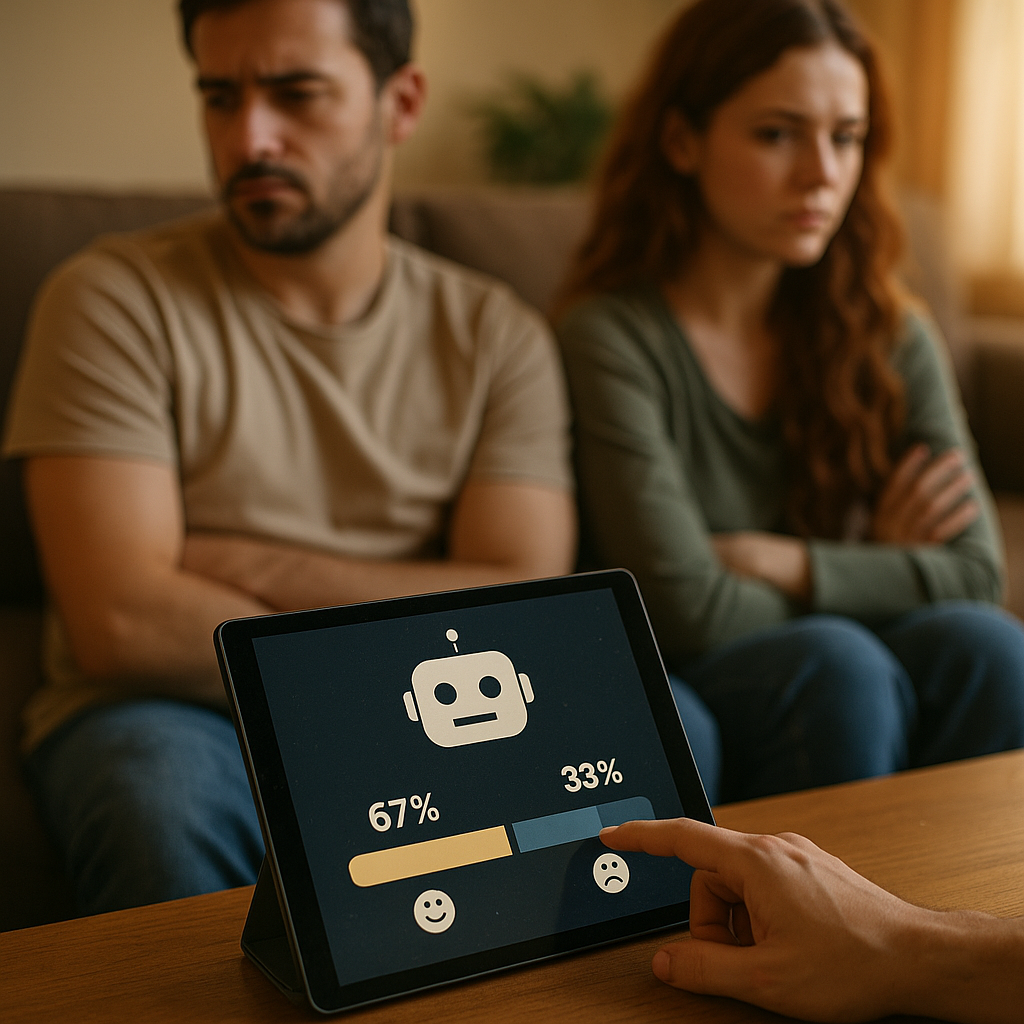
In 2025, long-term partnerships face a subtle risk: the story each person tells about “us” can drift without anyone noticing. AI For Automated Narrative Drift Detection In Long-Term Partnerships offers a practical way to spot early shifts in meaning, expectations, and emotional tone—before they harden into conflict. When the shared narrative changes, do you catch it quickly enough, or only after trust has already thinned?
Understanding narrative drift in relationships
Every long-term partnership runs on a living narrative: shared beliefs about commitment, fairness, intimacy, priorities, and the “why” behind daily choices. Narrative drift happens when that shared story changes over time—often quietly—so partners interpret the same events through different frames. This is not the same as ordinary change or growth; it’s a mismatch in interpretation that accumulates and then surfaces as recurring arguments, disengagement, or resignation.
Common drift patterns include:
- Role drift: One partner begins to see themselves as the default organizer, caregiver, or financial buffer—while the other still believes tasks are shared.
- Value drift: “We prioritize family time” slowly becomes “we prioritize productivity,” and neither names the shift.
- Intimacy drift: The relationship story moves from “we are emotionally close” to “we are operationally efficient,” often masked by busy routines.
- Repair drift: Apologies and conflict repair become less effective because partners disagree on what counts as harm, intent, or accountability.
People rarely announce these changes. Drift shows up in language: the pronouns, the certainty, the attributions (“you always…,” “I guess I’m the one who…”), and the emotional temperature of everyday talk. That makes narrative drift measurable—if you capture and analyze communication with care.
AI relationship analytics: what automated detection actually does
AI relationship analytics uses natural language processing (NLP) and pattern detection to identify meaningful changes in a couple’s communication over time. The goal is not to judge who is “right,” but to surface emerging divergences in story and sentiment so partners can address them while they are still small.
In practical terms, automated drift detection can:
- Track language shifts across weeks or months, such as increasing blame language, shrinking expressions of appreciation, or fewer collaborative phrases (“we can,” “let’s”).
- Detect topic migration, when recurring disagreements move from concrete issues (scheduling) to identity-level critiques (respect, competence, caring).
- Identify asymmetry, such as one partner repeatedly initiating repair attempts or one partner dominating decision talk.
- Flag escalation signatures that precede conflict: shorter messages, more absolute terms, sarcasm markers, or “kitchen-sinking” (bringing in old issues).
Most systems work by analyzing text from consensually shared sources (for example, a relationship journaling app, structured check-ins, or excerpts partners choose to upload). Some tools also incorporate voice features (pace, interruptions, prosody) if partners opt in, but robust programs avoid covert monitoring and emphasize transparency.
What AI does not do well: mind reading, diagnosing disorders, or reliably interpreting humor, cultural nuance, or high-context communication without personalization. Strong solutions therefore combine automated alerts with human reflection and, when needed, professional support.
Longitudinal sentiment analysis: signals that predict drift early
Longitudinal sentiment analysis is less about whether a conversation is “positive” or “negative” and more about trajectory. A single bad week means little; a consistent slope means a lot. Drift detection focuses on patterns that correlate with weakening shared meaning and increasing relational risk.
High-value signals that are practical to monitor include:
- Emotional ratio: A declining proportion of warmth, gratitude, and reassurance relative to complaints and corrections.
- Repair latency: More time between rupture and repair attempts (or fewer repair attempts altogether).
- Attribution shift: Language moving from behavior-specific feedback (“that comment hurt”) to character attributions (“you’re inconsiderate”).
- Hope language: Decreasing phrases that indicate future orientation (“we’ll figure this out,” “I want us to”).
- Certainty and absolutism: Rising use of “always/never” and definitive conclusions about intent.
Effective tools also separate stress spillover from relationship drift. If work or family pressures spike, negative sentiment may rise temporarily without indicating a broken narrative. The best approach compares sentiment trends to context markers partners provide (sleep, workload, health events) and uses that to reduce false alarms.
Answering the next question most couples ask: “Will this make us overanalyze everything?” Not if the system is designed for low-frequency check-ins, trend-based insights, and actionable prompts. Drift detection works best when it focuses on a few stable indicators and recommends small, specific repairs rather than constant scrutiny.
Couples communication monitoring: privacy, consent, and ethical boundaries
Couples communication monitoring must be consensual, minimal, and purpose-limited. Without strict boundaries, it can damage trust—the very thing it aims to protect. In 2025, ethical relationship tech follows principles that align with clinical norms and modern privacy expectations.
Non-negotiable safeguards to require from any tool or program:
- Explicit opt-in from both partners, with equal access to settings, reports, and deletion controls.
- Data minimization: collect only what is needed (for example, structured check-in text rather than full message histories).
- On-device processing where possible or strong encryption in transit and at rest if cloud processing is necessary.
- Clear retention and deletion policies that partners can verify and control.
- No covert scoring that ranks partners, assigns blame, or frames outcomes as deterministic.
- Abuse-aware design: safety features to prevent surveillance, coercion, or manipulation, including quick exit, selective sharing, and resources for support.
Partners should also agree on house rules before using any system: what data is included, how often insights are reviewed, and how to respond to alerts. A useful norm is to treat outputs as “signals to discuss,” not “proof to prosecute.”
When to avoid automated monitoring: if there is active coercive control, fear-based compliance, or credible threats. In those situations, safety planning and professional help come first.
Relationship health AI tools: workflows that turn insights into repair
Relationship health AI tools deliver value only when they convert detection into constructive action. A practical workflow should feel like guided maintenance, not an audit. The most effective setups combine three layers: structured input, trend detection, and repair-oriented prompts.
1) Structured weekly check-ins
Instead of scraping everything, many couples benefit from a 10-minute weekly check-in where each partner answers a few prompts:
- “One moment I felt close this week was…”
- “One moment I felt alone or dismissed was…”
- “One thing I need next week is…”
- “One thing I appreciate about you is…”
AI can analyze these entries for drift signals while preserving autonomy and reducing privacy exposure.
2) Drift dashboards that emphasize trends
Good dashboards avoid sensational alerts. They show slow-moving indicators such as appreciation frequency, conflict topic recurrence, and repair success rates. They also highlight what improved, not just what declined, reinforcing competence and motivation.
3) Micro-interventions that fit real life
When drift is detected, the tool should recommend small actions with a high chance of completion, such as:
- Clarifying the story: “What do you think this conflict is really about?” then reflect back in one sentence each.
- Repair scripts: “When I said/did X, I imagine it landed as Y. What I meant was Z.”
- Boundary resets: Agreeing on a concrete behavior change for one week (screen-free dinner, shared calendar review, bedtime check-in).
- Appreciation targeting: Not generic compliments, but naming effort, impact, and meaning (“It mattered that you…”).
Where professional expertise fits (EEAT in practice): Tools should encourage escalation to qualified couples therapists or counselors when patterns suggest entrenched resentment, repeated repair failure, or safety concerns. The most responsible systems provide evidence-based exercises and clearly label limitations, rather than implying AI is a substitute for clinical care.
NLP drift detection models: implementation, accuracy, and real-world limits
NLP drift detection models typically combine several techniques: topic modeling (to see what partners talk about), semantic shift detection (to see how meanings change), sentiment and emotion classification (to track tone), and conversational dynamics (turn-taking, responsiveness). In real-world partnerships, accuracy depends less on fancy architectures and more on careful design choices.
What improves reliability:
- Personalization: Couples have unique vocabularies, humor, and conflict styles. Calibration periods and user feedback reduce misinterpretations.
- Context capture: Tagging entries with context (stress, travel, illness) helps models distinguish temporary strain from narrative drift.
- Multimodal restraint: Voice features can add value, but only with clear consent and conservative interpretation to avoid overreach.
- Human-in-the-loop review: Partners can label whether an AI-flagged moment was accurate, improving future relevance.
Key limitations to plan for:
- False positives: A blunt texting style or cultural directness can look like hostility.
- False negatives: Some drift occurs in silence, avoidance, or nonverbal behavior that text does not capture.
- Data imbalance: If one partner writes more, the model may overfit to that person’s narrative.
- Risk of “outsourcing intimacy”: Over-relying on prompts can reduce organic conversation unless couples use outputs as a springboard, not a crutch.
For teams building these systems, credibility in 2025 comes from transparent evaluation: reporting what data sources were used, how bias was tested, how privacy is enforced, and how users can correct or contest outputs. For couples choosing a tool, credibility comes from clear consent flows, plain-language explanations, and a focus on actionable, relationship-strengthening behaviors.
FAQs
What is “narrative drift” in a long-term partnership?
Narrative drift is a gradual divergence in the shared story of the relationship—what each partner believes is fair, important, loving, or expected. It often shows up as recurring misunderstandings, escalating interpretations, or a sense of “we’re talking past each other.”
How does AI detect narrative drift without reading all our private messages?
The safest approach uses opt-in, structured inputs like weekly check-ins or selected excerpts. The AI analyzes trends in tone, topics, and repair language rather than storing or scanning everything. Look for tools that support data minimization and user-controlled sharing.
Can automated drift detection replace couples therapy?
No. It can support awareness and early intervention, but it cannot provide a clinical assessment, address trauma safely, or mediate complex relational patterns. The best tools encourage professional help when warning signs persist or safety concerns exist.
What are the earliest signs AI can flag that humans often miss?
Common early signals include declining appreciation, longer delays before repairing after conflict, increased absolutist language (“always/never”), and a shift from behavior feedback to character judgments. Trend direction matters more than a single incident.
How do we use AI insights without turning our relationship into a performance review?
Set a low-frequency routine (for example, weekly), focus on two or three metrics, and treat outputs as prompts for curiosity. Agree in advance: no “weaponizing” reports, no scorekeeping, and no reviewing insights during active arguments.
What privacy features should we demand in 2025?
Require explicit opt-in for both partners, encryption, minimal data collection, clear retention limits, easy deletion, and transparent explanations of what the model does. Avoid tools that allow one partner to monitor the other covertly or that sell sensitive data.
A shared relationship story can change quietly, then suddenly feel impossible to repair. AI-driven drift detection helps couples notice the shift while it is still negotiable: early changes in tone, topics, and repair attempts. Used ethically—with consent, privacy protection, and a bias toward action—it becomes a maintenance tool, not a judge. The takeaway: measure trends, discuss them gently, and repair early.