


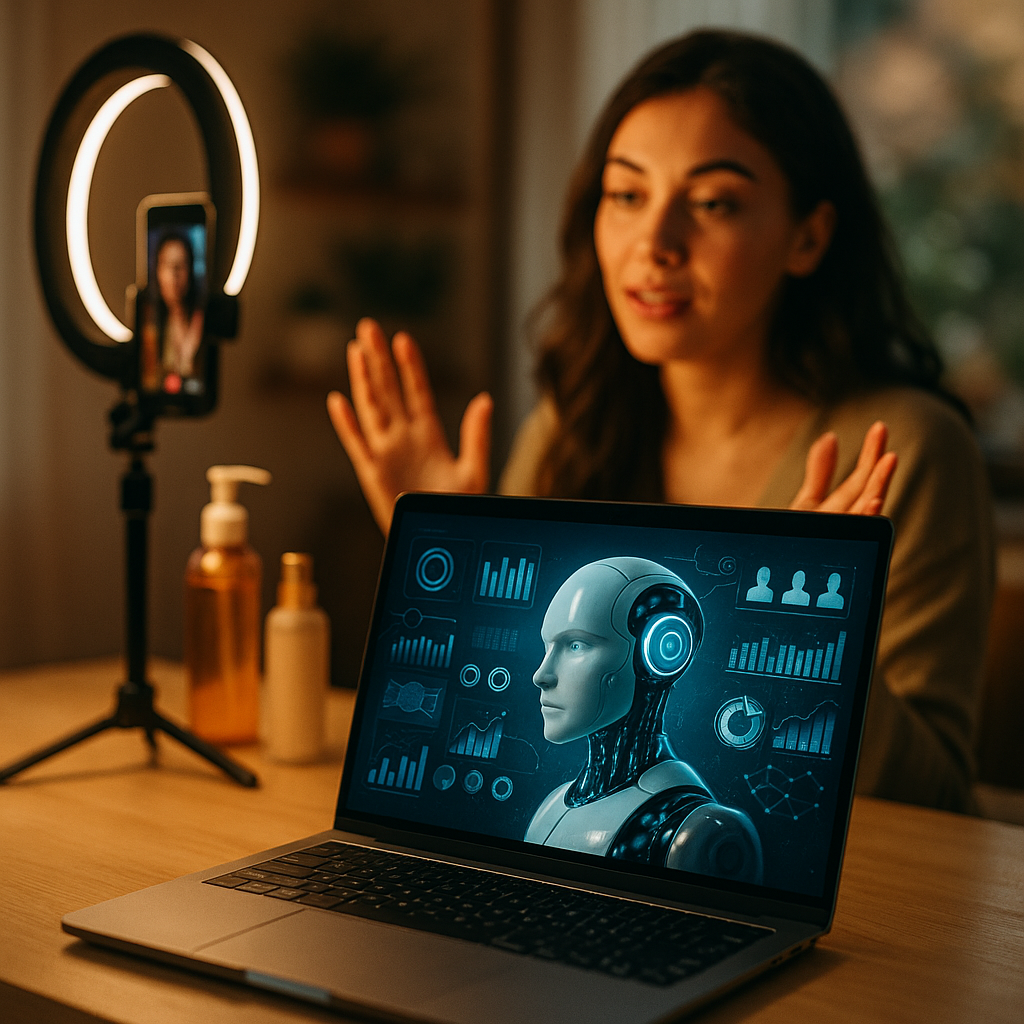
AI tools for predicting influencer saturation points have revolutionized influencer marketing strategy in 2025. Brands and marketers now harness advanced analytics to determine the optimal moment when an influencer’s impact may plateau. Want to ensure your campaigns stay ahead of the curve? Read on to discover how cutting-edge AI is shaping the next era of influencer partnerships.
Understanding Influencer Saturation and Its Impact
Influencer saturation occurs when an influencer’s audience is bombarded with too many sponsored posts, leading to decreased engagement, skepticism, and reduced campaign ROI. In today’s fast-evolving digital landscape, quickly identifying these tipping points is crucial. Marketers need reliable data-driven methods that go beyond surface-level metrics, making AI-powered solutions indispensable for campaign longevity and effectiveness.
According to a 2024 Influencer Marketing Hub report, 73% of brands identified influencer fatigue and audience desensitization as key challenges. Saturation not only dampens campaign results but also risks brand credibility, especially when collaborations appear inauthentic or repetitive. Recognizing the signs early empowers brands to rotate influencers, diversify partnerships, and maintain strong engagement rates.
How AI Tools Analyze Influencer Metrics
Modern AI-driven platforms ingest vast quantities of creator data, from follower growth patterns to audience sentiment. By processing this information, these tools identify subtle shifts that humans may overlook, such as decreasing click-through rates or changes in comment sentiment. This holistic approach offers a predictive edge over traditional analytics.
- Engagement Analysis: AI algorithms track likes, shares, saves, and comments over time, signaling declining enthusiasm or growing distrust.
- Audience Overlap Detection: By identifying shared followers among partnered influencers, AI helps reduce campaign repetition and saturation risk.
- Sentiment Mapping: Natural language processing (NLP) tools scan comments and DMs for sentiment shifts related to sponsored content.
- Content Repetition Recognition: AI checks for repetitive campaign themes, flagging when similar posts saturate a follower’s feed.
This data-led analysis saves marketers time and improves accuracy by surfacing saturation red flags before metrics visibly drop. As campaign complexity grows in 2025, leveraging these capabilities becomes a business imperative for brands seeking scale without sacrificing effectiveness.
The Latest AI Solutions for Predicting Saturation Points
Several advanced AI solutions have emerged in 2025 to help brands stay competitive. Leading platforms such as InfluAIzer and SaturationGuard utilize proprietary machine learning models trained on billions of data points from past influencer campaigns. These platforms provide real-time monitoring and predictive scoring for saturation likelihood.
- InfluAIzer offers dashboard visualizations that highlight at-risk partnerships based on declining engagement velocity and content diversity.
- SaturationGuard features a predictive index that assigns each campaign an “Influencer Freshness Score,” informing when to pause or rotate collaborations.
- Other emerging tools integrate with CRM and e-commerce systems to measure downstream effects—such as sales drop-off—attributed to audience saturation.
These innovations give marketers actionable insights, allowing for proactive strategy adjustments. Importantly, the most effective solutions prioritize data privacy and transparency, ensuring both creators and audiences maintain trust in influencer collaborations.
Best Practices for Using AI in Influencer Campaigns
To extract the greatest value from AI tools for predicting influencer saturation points, brands and agencies are advised to integrate the following best practices across their workflows:
- Combine Human Insight with AI Outputs: While AI flags potential issues, human experts should interpret the results with industry context to avoid false positives.
- Continuously Train Algorithms: Feed real campaign performance data—both successes and failures—into AI models for ever-improving accuracy.
- Set Flexible Campaign Parameters: Use AI predictions to dynamically adjust influencer rosters, campaign cadence, and creative briefs.
- Share Insights Transparently: Keep influencer partners informed about campaign performance and audience trends to foster long-term, authentic relationships.
By adhering to these practices, brands can maximize campaign agility and ensure that influencer marketing remains both impactful and sustainable, even as the digital ecosystem becomes increasingly crowded.
Addressing Common Challenges and Ethical Concerns
The integration of AI for predicting influencer saturation brings new complexities. Privacy is paramount: only anonymized, consent-based data should be used for modeling, and marketers must communicate transparently with influencers about tracking practices.
Another challenge is bias—poorly trained models may inadvertently overlook micro-influencers or diverse creators, skewing saturation predictions. To avoid this, brands should prioritize diverse data sets and regularly audit algorithmic outputs for fairness. Finally, automation should not replace relationship-building; authentic, human connection remains the cornerstone of successful influencer marketing, even in an AI-driven world.
The Future of Influencer Marketing with AI Predictive Tools
Looking ahead, AI tools for predicting influencer saturation points will continue to evolve, integrating seamlessly with omni-channel marketing platforms and even leveraging wearables or augmented reality (AR) environments for richer data collection. Brands able to adapt quickly will benefit from agile, high-ROI influencer partnerships that consistently reach fresh, engaged audiences.
As marketers grow more sophisticated in harnessing AI insights, the focus will increasingly shift toward long-term creator collaborations, ethical data use, and hyper-personalized content. In this landscape, AI serves as both an early warning system and a creative catalyst for deeper audience connection.
FAQs
-
What is influencer saturation?
Influencer saturation refers to a point where an influencer’s audience is exposed to frequent sponsored content, leading to reduced engagement and diminishing campaign effectiveness. -
How do AI tools detect influencer saturation points?
AI tools track engagement, content repetition, audience sentiment, and overlap with other influencers, using these data points to predict when saturation might occur. -
Are AI predictions always accurate?
While highly advanced, AI predictions should be interpreted alongside human insights and contextual factors for best results. -
Is data privacy maintained when using AI for influencer analysis?
Leading AI platforms use anonymized, consent-based data and comply with privacy regulations, ensuring ethical practices in influencer marketing analytics. -
Can small brands benefit from these AI tools?
Absolutely. Many platforms offer scalable solutions suitable for brands of all sizes, enabling even small businesses to optimize their influencer strategies effectively.
AI tools for predicting influencer saturation points empower brands to remain agile, data-driven, and ethical in influencer marketing. By leveraging advanced analytics and following industry best practices, marketers can stay ahead—ensuring authentic, high-impact campaigns that resonate with ever-evolving audiences in 2025 and beyond.