


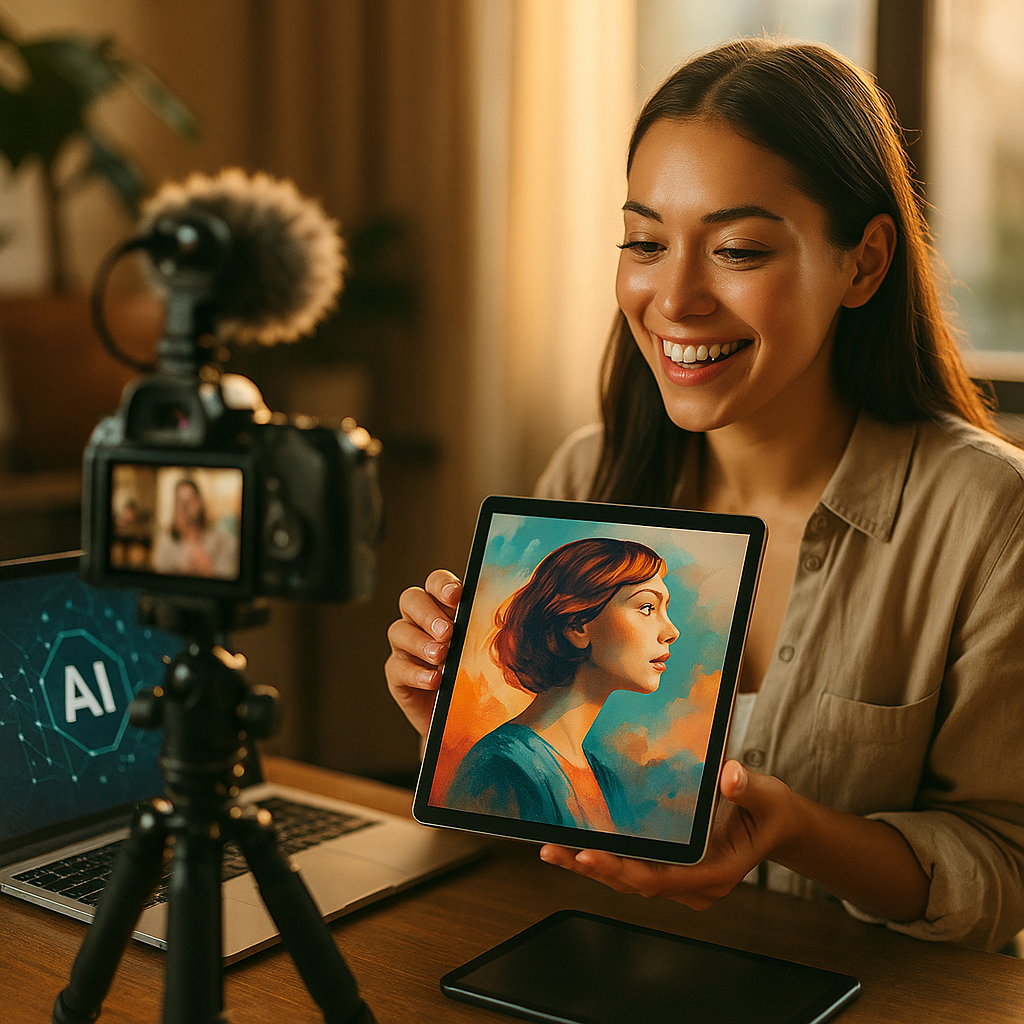
AI tools that analyze influencer creative patterns have become vital for brands seeking to evaluate digital strategies in 2025. Marketers are turning to these technologies to gain actionable insights, predict trends, and optimize influencer partnerships. Curious how AI uncovers creative success? Explore how today’s platforms empower informed decisions, drive ROI, and redefine influencer marketing analysis.
Understanding Influencer Creative Patterns with AI Analysis
Influencer creative patterns represent trends in style, messaging consistency, content formats, posting frequency, and engagement tactics observed across creators’ content. In 2025, specialized AI tools decode these patterns using computer vision, language models, and big data, going beyond vanity metrics to highlight what genuinely works. Brands no longer rely solely on gut feel; instead, they leverage empirical analysis for content resonance and influencer alignment.
This comprehensive analysis includes image motif identification, audience sentiment, video performance breakdowns, and even tracking evolving language trends. By automating repetitive analysis tasks, AI enables marketers and agencies to focus on higher-level strategy, ensuring competitive edge in an ever-saturated influencer landscape. The ability to pinpoint subtle creative nuances across thousands of posts gives brands the intelligence needed for both campaign planning and benchmarking.
Top AI Tools for Influencer Content Performance Analysis
In 2025, several leading AI tools dominate the influencer marketing landscape, each designed with unique approaches to analyzing creative patterns:
- CreatorIQ and Tagger AI: These use multimodal AI to dissect visual, audio, and text content. They score posts based on originality, audience response, and brand affinity—helpful for predicting campaign fit.
- HypeAuditor: With robust deep learning, it maps engagement drivers and flags creative fatigue, empowering marketers to revisit creative briefs proactively.
- LatelyAI: LatelyAI processes years of influencer posts to highlight themes, keywords, and visual motifs that consistently outperform, guiding creative direction for brand collaborations.
- Upfluence & Influencity: Their AI tracks content lifecycle—spotting viral trends or identifying optimal posting windows for maximum reach and authenticity.
These AI tools offer user-friendly dashboards, intuitive reports, and smart suggestions, making data digestible for marketers and creators alike. Continuous improvement powered by machine learning ensures these tools stay aligned with ever-evolving social media platforms and audience behavior patterns.
How AI Decodes What Makes Influencer Content Go Viral
Virality is the result of multiple intersecting factors—timeliness, cultural resonance, originality, and genuine audience engagement. AI models trained on billions of posts now extract signals that predict content virality with increasing accuracy. By analyzing text sentiment, facial expressions, trending music clips, hashtag usage, video length, and even background colors, AI tools reveal which creative attributes consistently outperform benchmarks in specific niches.
For instance, a 2025 study by Social Media Today found that content analyzed with AI for emerging visual cues and meme trends was 42% more likely to achieve above-average engagement. Brands use this knowledge not only to select influencers best primed for campaign success, but also to inform their own creative briefs—resulting in campaigns that rapidly gain traction and drive measurable ROI.
Machine Learning in Optimizing Influencer-Brand Partnerships
Effective influencer-brand partnerships rely on alignment between the creator’s style and the brand’s voice. AI tools now match not only audience demographics but also creative tone, color palette, and storytelling method. By learning from past campaign data, these tools suggest optimal creative strategies for future collaborations. They can flag mismatches early, such as an influencer whose visual style clashes with the brand’s identity or whose humor may not resonate with a desired demographic.
Brands report higher satisfaction and better performance when AI tools suggest creative do’s and don’ts—such as the use of certain themes, pacing for Instagram Reels, or caption length for TikTok. This AI-driven matchmaking reduces costly missteps and helps marketers foster long-term relationships with creators whose output remains both authentic and on-brand. In 2025, well-informed partnerships fueled by AI data are setting new industry best practices.
Integrating EEAT Principles in AI-Driven Influencer Analytics
Trust and accuracy are vital in influencer marketing analytics. By following Google’s EEAT (Experience, Expertise, Authoritativeness, Trustworthiness) guidelines, top AI platforms ensure their insights are actionable and credible:
- Experience: AI is trained on extensive, up-to-date influencer datasets to reflect real-world creative trends in 2025.
- Expertise: Tools frequently consult with experienced marketers and data scientists to refine analysis models.
- Authoritativeness: Platforms rely on verified social account data, avoiding reliance on self-reported influencer stats alone.
- Trustworthiness: Transparency in AI models and clear, auditable metrics increase confidence for brand users.
This alignment with EEAT not only boosts report credibility but also positions AI tools as indispensable assets for compliance in regulated industries, such as healthcare or finance, where influencer campaigns require rigorous vetting and strategy.
Selecting the Right AI Tool for Influencer Creative Analysis
Choosing an AI tool for analyzing influencer creative patterns depends on your goals, budget, and existing tech stack. Key decision factors include:
- Depth of Analysis: Review if the tool covers both surface metrics (like reach and likes) and deeper creative signals (motifs, sentiment, emotion analysis).
- Integration: Assess if the platform harmonizes with other marketing systems (CRM, social listening, reporting dashboards) for seamless workflow.
- Customization: Choose a tool that allows for tailored reports, adjusting analytics weightings per campaign or market segment.
- Data Transparency: Opt for solutions that clearly show how AI models arrive at their conclusions, easing user training and internal buy-in.
Demo several platforms using your own influencer content to test reporting accuracy and user-friendliness. User feedback in 2025 shows that the highest satisfaction comes from AI tools backed by comprehensive training, responsive support, and ongoing model updates reflecting social platform changes.
In summary, AI tools that analyze influencer creative patterns in 2025 provide precise, actionable insights. Brands that embrace these technologies outperform competitors, foster data-driven partnerships, and create content that truly resonates. Evaluate features carefully to unlock the full power of AI in influencer marketing.
FAQs: AI Tools for Influencer Creative Pattern Analysis
-
What does it mean to analyze influencer creative patterns?
AI-powered analysis breaks down influencers’ content style, themes, post timing, and engagement strategies to reveal what drives their online impact. -
How do brands benefit from using AI in influencer marketing?
Brands gain deeper, unbiased insights, improve campaign ROI, reduce costly mismatches, and stay ahead of emerging trends through accurate creative pattern analysis. -
Are AI tools replacing human marketers?
No—AI enhances marketer decision-making by automating complex analysis, while strategic creativity and relationship management remain human strengths. -
Can these AI tools work with micro and nano-influencers?
Yes, leading AI platforms are optimized for every tier of influencer, offering granular analysis for both broad-reach celebrities and niche creators. -
How safe is my data when using these AI platforms?
Reputable AI tools in 2025 comply with international privacy standards, ensuring secure storage and ethical data use, particularly when handling sensitive campaign or influencer information.