


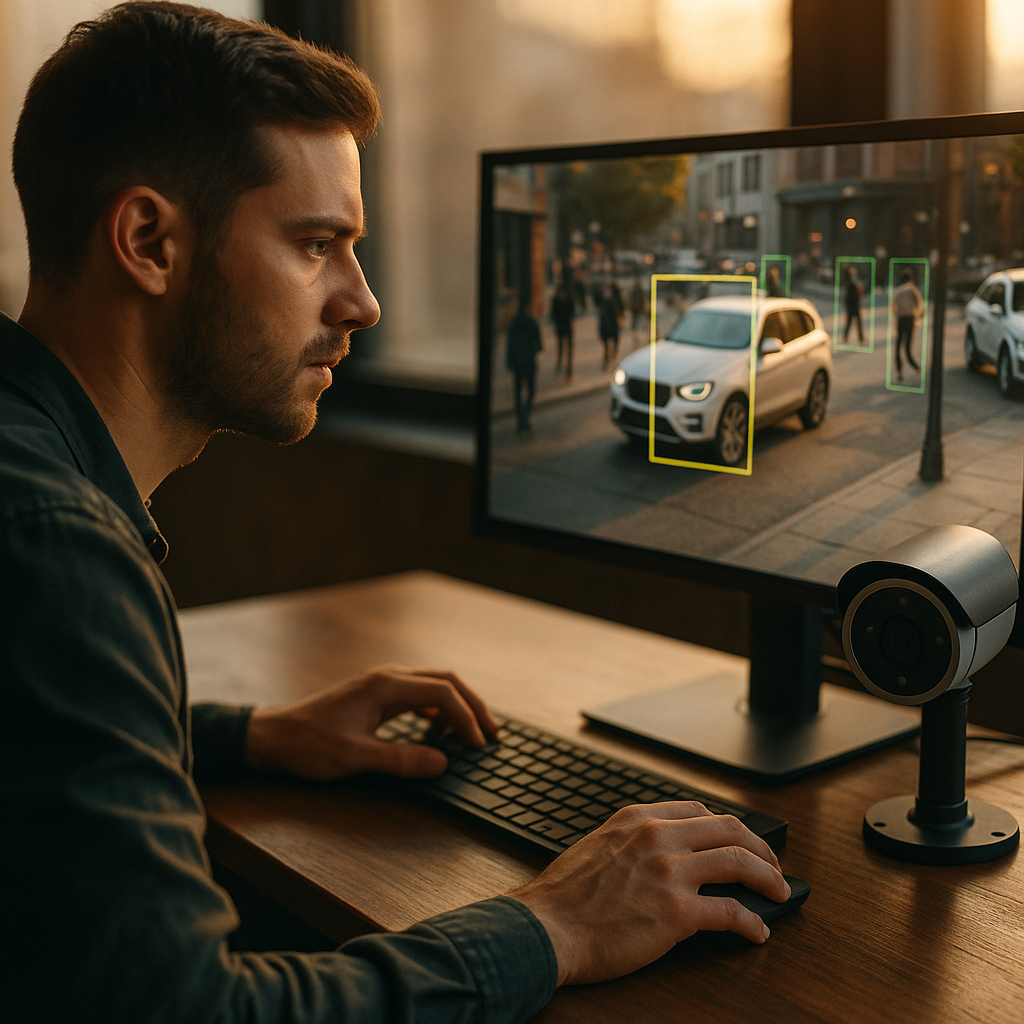
AI for analyzing video visuals and object recognition has rapidly transformed how industries handle and interpret video data. With advancements in machine learning and computer vision, organizations can detect real-time events, automate monitoring, and gain deep insights from massive video archives. Dive into how this technology drives innovation and tackles modern challenges in 2025 and beyond.
Video Analysis in 2025: How AI Sees and Understands Visual Data
Video analysis powered by artificial intelligence has evolved far beyond traditional frame-by-frame review. In 2025, AI can process high-resolution streams, analyze complex movement patterns, and extract metadata almost instantly. Modern algorithms utilize deep learning, combining Convolutional Neural Networks (CNNs) and transformer-based models, to break down each frame for granular inspection.
This sophistication enables not just object recognition, but also activity and event detection. For instance, AI can identify subtle gestures or track the movement flow of people and vehicles across a citywide network. According to a 2025 IDC report, businesses adopting advanced video analysis solutions see a 45% improvement in response time for security and operational incidents, underscoring the technology’s growing importance.
Object Recognition Technology: Core Advances and Applications
Object recognition remains at the heart of AI-powered video analytics. By leveraging annotated datasets and substantially improved neural networks, AI models in 2025 can identify thousands of object categories—including rare items—with near-human precision. This is possible due to:
- Self-supervised learning: Reducing dependence on labeled data, speeding up model training.
- Edge computing: Bringing AI inference closer to video sources for faster, real-time recognition in smart cameras and drones.
- Cross-modal learning: Merging visual and audio cues to enhance accuracy (e.g., detecting the difference between a car and a bike based on engine sound).
Industries from retail to healthcare are using these capabilities for inventory tracking, anomaly detection, and even surgical assistance. For example, logistics companies now deploy AI systems that monitor conveyor belts, flag defective parcels, and measure package dimensions—all autonomously and with unmatched speed.
Enhancing Security and Safety With AI Video Analytics
Security is a leading beneficiary of AI video analytics. Modern surveillance networks can analyze hundreds of live streams, detecting suspicious behaviors, abandoned objects, or unauthorized intrusions. What differentiates 2025 systems is the ability to learn local context—so a person loitering near a secure door after hours will trigger a customized response, while daytime activity is treated differently.
Furthermore, AI assists law enforcement with retrospective video analysis. After incidents, systems can automatically extract relevant clips, identify persons of interest, and map their movement across multiple cameras. This has dramatically reduced investigation times, as verified by several metropolitan police departments reporting at least a 30% decrease in manual video review effort thanks to advanced object recognition AI.
Driving Business Intelligence Through Visual Analytics
Beyond security, video visual analysis generates actionable business intelligence. Retailers use heatmaps derived from customer movement to optimize store layouts and product placement. In manufacturing, AI tracks machinery and personnel to ensure safety compliance and minimize downtime through predictive maintenance.
Emerging use cases also include:
- Event analysis: Sports organizations utilize AI to analyze player movements, strategy effectiveness, and fan engagement in stadiums.
- Traffic management: Cities employ AI-driven systems to regulate lights and prevent congestion by analyzing vehicle and pedestrian flow in real time.
- Healthcare: Hospitals deploy patient monitoring systems that use vision AI to alert caregivers about falls or irregular movements, enhancing patient safety.
Such tools convert video from a passive data source into a rich stream of insights, empowering smarter decision-making and measurable ROI.
Addressing Challenges: Privacy, Ethics, and Accuracy
Despite remarkable advances, applying AI for object recognition comes with nuanced challenges. Privacy concerns are paramount. Regulations in 2025, such as enhanced GDPR-like frameworks, demand anonymization and explicit consent for video analysis in public and commercial settings. AI vendors now embed privacy-by-design principles—face blurring, selective retention, and encrypted processing—directly into solutions.
Accuracy and bias are equally pressing. AI models must be trained on diverse datasets to avoid misidentification across demographics and contexts. Leading providers enable transparent auditing and logging of recognition decisions to conform with industry standards. Regular model retraining and human-in-the-loop validation ensure fairness, explainability, and continuous improvement.
Ethical deployments require careful alignment of technology capabilities with legal and societal norms. Forward-thinking organizations establish AI ethics boards and incorporate multidisciplinary oversight to proactively address emerging issues.
The Future of AI in Real-Time Video and Object Analysis
Looking ahead, AI-powered video object recognition will become even more ubiquitous and seamless. On-device AI chips are unlocking real-time inference for wearables, robotics, and automotive systems. Video analysis will increasingly meld with other modalities: text (captioning), audio (sound localization), and IoT sensors for a holistic situational picture.
Recent breakthroughs point toward self-evolving models that dynamically adapt to new environments and tasks. For example, a retail analytics system could automatically learn to recognize new products as they are introduced, improving inventory tracking with minimal intervention. Zero-shot learning capabilities, where AI correctly identifies previously unseen objects based on descriptive prompts, are rapidly entering mainstream use.
Collaboration between industry, regulators, and academia remains critical to ensure ethical, equitable adoption. Organizations prioritizing transparency, inclusivity, and ongoing human review in their AI video workflows are best positioned to realize long-term benefits and societal trust.
FAQs: AI for Analyzing Video Visuals and Object Recognition
-
What is AI-based object recognition in video?
AI-based object recognition utilizes machine learning algorithms to automatically identify and classify objects within video streams or recordings, enabling automated monitoring and deep visual analytics.
-
How accurate is object recognition technology in 2025?
Thanks to advanced neural networks and larger datasets, object recognition accuracy now rivals human performance for most standard objects and scenarios, generally exceeding 95% accuracy in commercial systems. However, rare or unfamiliar objects may present occasional challenges.
-
Is AI-powered video analysis secure and private?
Modern solutions feature built-in privacy and security protocols like encryption, access controls, face blurring, and compliance with leading regulations. Organizations must still ensure ethical deployment, data minimization, and regular audits to maintain trust.
-
Can AI analyze live video as well as recorded footage?
Yes, with the advent of edge computing and efficient neural architectures, AI can process and analyze live video streams in real time to detect objects, actions, or anomalies as they occur.
-
What industries benefit most from AI video analysis?
Security, retail, healthcare, manufacturing, transportation, and sports are among the sectors gaining substantial benefits, including faster response times, improved safety, business insights, and operational efficiency.
AI for analyzing video visuals and object recognition is reshaping how organizations interpret and use visual data in 2025. By combining speed, accuracy, and automation with ethical safeguards, this transformative technology powers smarter decisions and supports safer, more insightful environments across industries.