When a Machine Wins a Creative Brief, Who Owns the Risk?
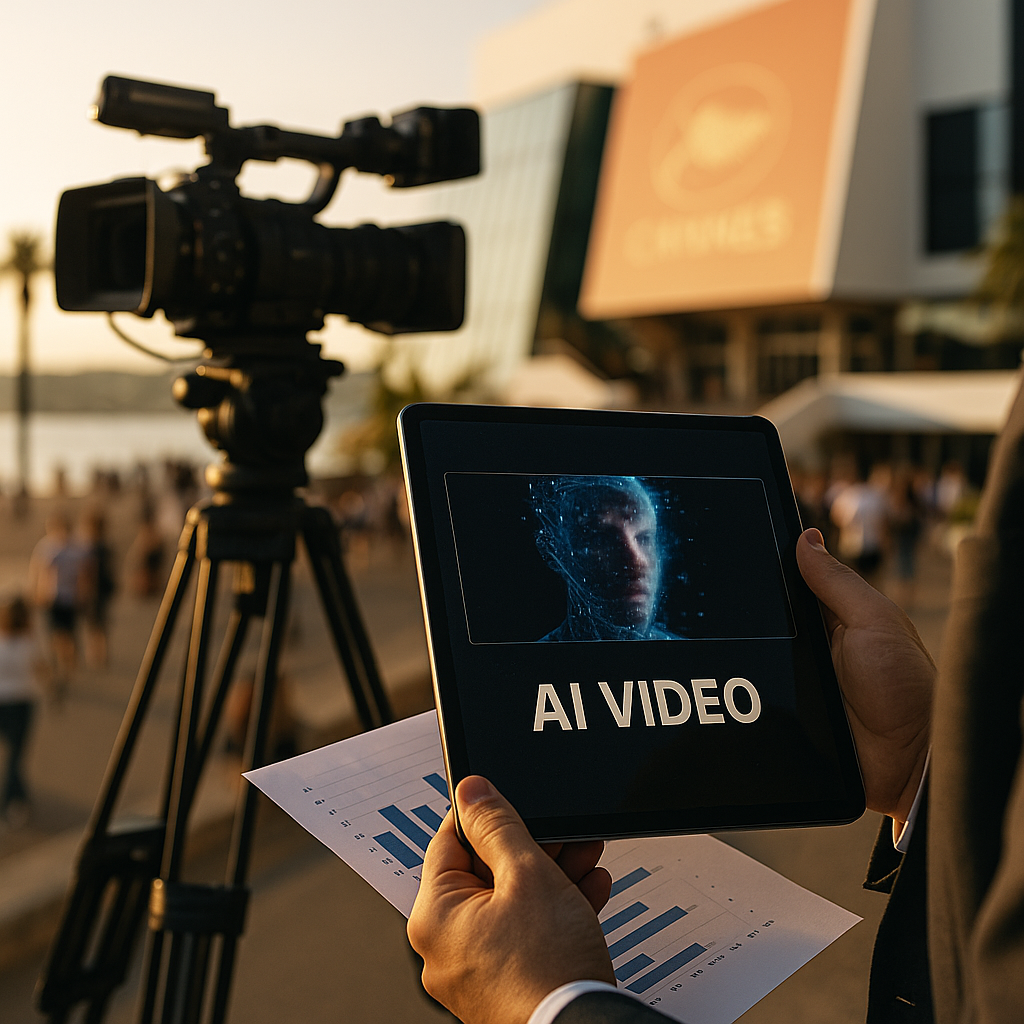
At Cannes Lions this year, Luma AI’s “Dream Brief” competition quietly rewrote the rules of video production. Over 3,000 entries. Twelve finalists. Zero traditional production crews. The resulting AI-generated video advertising showcased spots that rivaled mid-tier agency output at a fraction of the cost — some produced for under $500. For brand marketers watching from the Croisette, the question wasn’t whether this technology works. It was whether they can afford not to understand its constraints.
What the Dream Brief Finalists Actually Looked Like
Let’s dispense with the hype and talk specifics. The twelve Dream Brief finalists demonstrated Luma’s Ray2 model generating 15- to 60-second spots across categories including CPG, automotive, luxury, and nonprofit. Several incorporated photorealistic product shots, dynamic camera moves, and environmental storytelling that would have required location scouts, gaffers, and post-production suites just eighteen months ago.
But here’s what the breathless coverage missed: roughly half the finalists still exhibited visible artifacts. Hands that morphed unnaturally. Text on packaging that flickered or became illegible. Skin tones that shifted between frames. These aren’t nitpicks — they’re brand safety issues. When your logo warps mid-frame or a model’s face glitches during an emotional beat, consumer trust erodes fast.
The Dream Brief finalists prove AI video is production-ready for mood films, social cutdowns, and concept testing — but not yet reliable enough for hero spots where every pixel is scrutinized.
The strongest entries leaned into AI’s advantages: surreal visual metaphors, impossible camera movements, rapid iteration across multiple aesthetic directions. The weakest tried to mimic conventional production shot-for-shot and fell into the uncanny valley. That distinction matters enormously for how marketers should deploy these tools.
The Real Cost Benchmarks — and Where They Mislead
Cost is the headline everyone wants. So let’s ground it.
Traditional video production for a 30-second brand spot ranges from $50,000 to $500,000+, depending on talent, location, and post-production complexity. According to data from Statista’s advertising benchmarks, the average US TV commercial production cost sits around $350,000. The Dream Brief finalists reportedly spent between $200 and $2,000 per finished asset, not counting the hours of prompt engineering and curation.
That last clause is critical. The $500 figure circulating on LinkedIn omits:
- Human curation time: Finalists reported generating 50-200 variations before selecting usable clips. At senior creative rates, that’s not free.
- Legal review: Every AI-generated frame needs clearance for unintentional IP infringement, likeness rights, and trademark visibility.
- Post-production cleanup: Most finalists used After Effects, DaVinci Resolve, or Runway for artifact correction, color grading, and sound design.
- Music and audio: AI-generated visuals still need licensed or original audio. Several finalists used Udio or Suno for music generation, adding another layer of rights complexity.
A more honest all-in cost for a polished, brand-safe 30-second AI-generated spot sits between $5,000 and $25,000. That’s still an 85-95% reduction from traditional production. But it’s not the zero-cost revolution some vendors are selling. Marketers building business cases need the real number, not the demo reel number.
For brands already exploring how generative AI reshapes buying decisions, the production side of that equation is catching up fast.
Emerging Production Standards No One Has Codified Yet
Here’s the uncomfortable truth: there are no industry-standard quality benchmarks for AI-generated video advertising. The IAB hasn’t published guidelines. The 4A’s hasn’t weighed in with production specs. Cannes itself treated the Dream Brief as an exhibition, not a category with judging criteria tied to production quality.
That vacuum is dangerous for brand marketers. Without standards, every stakeholder in the approval chain applies their own threshold. Your CMO might love the creative ambition. Your legal team might flag every frame. Your media agency might question whether platforms will even accept AI-generated assets without disclosure.
From what the Dream Brief finalists reveal, a practical quality framework is starting to emerge organically:
- Temporal consistency: Can the subject maintain coherent form across the full clip duration? Ray2 handles 5-second shots well; longer takes still break down.
- Brand element fidelity: Logos, packaging, and product details must render accurately in every frame. Current models struggle here.
- Human likeness integrity: If faces appear, they must avoid the uncanny valley entirely or use stylization to sidestep it.
- Disclosure readiness: Every asset should be flagged with C2PA metadata. The FTC’s updated guidance on AI-generated commercial content makes this non-negotiable for US advertisers.
Smart brands are building internal rubrics now rather than waiting for industry bodies. The ones who define their own standards first will move faster when the tools improve — and they’re improving quarterly.
Brand Risk Thresholds: Where the Guardrails Still Don’t Exist
Risk is the conversation most AI video vendors don’t want to have. Let’s have it anyway.
The Dream Brief surfaced three categories of brand risk that marketers need to price into every AI-generated video decision:
Intellectual property contamination. Generative video models are trained on vast datasets. If a model produces a frame that inadvertently resembles a competitor’s trademark, a celebrity’s likeness, or a copyrighted scene composition, the brand — not the AI vendor — bears liability. Luma’s terms of service, like those of most generative AI platforms, place commercial use risk squarely on the user. Several Dream Brief entries featured environments and character designs that bore striking resemblance to existing film and advertising properties. Coincidence, perhaps. But “coincidence” doesn’t hold up in court.
This connects directly to broader concerns about data sovereignty challenges facing digital commerce. The provenance of training data is a governance issue, not just a creative one.
Audience perception and authenticity backlash. Research from Meta’s marketing insights team indicates that consumers who recognize content as AI-generated rate it 23% lower on trust metrics compared to equivalent human-produced content. The Dream Brief finalists that performed best in informal audience testing were the ones that didn’t try to hide their AI origins — they embraced a deliberately surreal or stylized aesthetic. Trying to pass AI video as traditional production is a trust gamble most premium brands shouldn’t take.
The smartest play for AI-generated video isn’t mimicking reality — it’s doing things reality can’t. Brands that use AI to create impossible visuals sidestep the authenticity trap entirely.
Platform compliance ambiguity. YouTube, Meta, and TikTok all now require AI-generated content disclosure for ads, but enforcement varies wildly. TikTok’s automated detection flags some AI video and misses others. Google’s policy technically requires disclosure but hasn’t established clear consequences for non-compliance in paid media. Marketers running AI-generated assets across multiple platforms need per-platform compliance playbooks — something most agencies haven’t built yet.
For brands investing in human-labeled content signals, AI-generated video creates a fascinating tension: when do you label, where do you label, and how does that label affect conversion?
How to Build AI Video Into Your Production Workflow Without Getting Burned
The Dream Brief didn’t just showcase what AI can do — it revealed a maturity spectrum that maps directly to use cases marketers should greenlight today versus hold for six months.
Greenlight now:
- Concept visualization and storyboarding (replacing expensive animatic production)
- Social-first content where 3-5 second clips dominate and artifacts are less noticeable
- Internal pitch decks and stakeholder alignment videos
- A/B test variants for performance marketing creative, where volume and speed matter more than polish
Proceed with caution:
- Mid-funnel product demos where brand elements must render precisely
- Influencer collaboration supplements — AI-generated B-roll paired with creator-shot A-roll
Hold for now:
- Hero brand campaigns intended for broadcast or premium CTV
- Any asset featuring recognizable human faces without explicit model release equivalents
- Regulated industries (pharma, financial services) where every frame may need compliance sign-off
Brands exploring immersive spatial storytelling will find AI video generation increasingly useful for prototyping experiences before committing to full 3D production — another near-term use case worth piloting.
The Takeaway for Marketers With Budgets to Protect
Build your internal AI video production rubric this quarter. Define your artifact tolerance, your disclosure protocol, and your IP review process before your creative team shows up with a stunning proof-of-concept that skips every guardrail. The cost savings are real, but only if the risk management is, too.
FAQs
How much does AI-generated video advertising actually cost compared to traditional production?
While raw generation costs can be as low as $200-$2,000 per asset, a realistic all-in cost for a polished, brand-safe 30-second AI-generated spot ranges from $5,000 to $25,000 once you factor in human curation, legal review, post-production cleanup, and audio licensing. That still represents an 85-95% reduction from traditional production averages of $50,000 to $500,000+.
What are the biggest brand risks of using AI-generated video in advertising?
The three primary risks are intellectual property contamination from training data, audience trust erosion when AI content is perceived as inauthentic, and inconsistent platform compliance requirements across YouTube, Meta, and TikTok. Brands bear commercial liability for AI-generated content under most vendor terms of service, making legal review essential before publishing any asset.
Are there industry standards for AI-generated video advertising quality?
No formal industry standards exist yet from bodies like the IAB or 4A’s. However, emerging practical benchmarks from competitions like Luma’s Dream Brief focus on temporal consistency, brand element fidelity, human likeness integrity, and C2PA metadata disclosure. Leading brands are building internal rubrics rather than waiting for industry-wide codification.
What types of marketing content are best suited for AI-generated video right now?
AI-generated video works best today for concept visualization, social-first short clips under five seconds, internal pitch materials, and A/B testing performance marketing creative at scale. Hero brand campaigns, regulated industry content, and assets featuring recognizable human faces should still rely on traditional production until model reliability improves.
Do platforms require disclosure when running AI-generated video ads?
YouTube, Meta, and TikTok all require disclosure of AI-generated content in advertising, but enforcement varies significantly across platforms. The FTC’s updated guidance on AI-generated commercial content makes disclosure functionally mandatory for US advertisers. Marketers should build per-platform compliance playbooks and embed C2PA metadata in all AI-generated assets.