


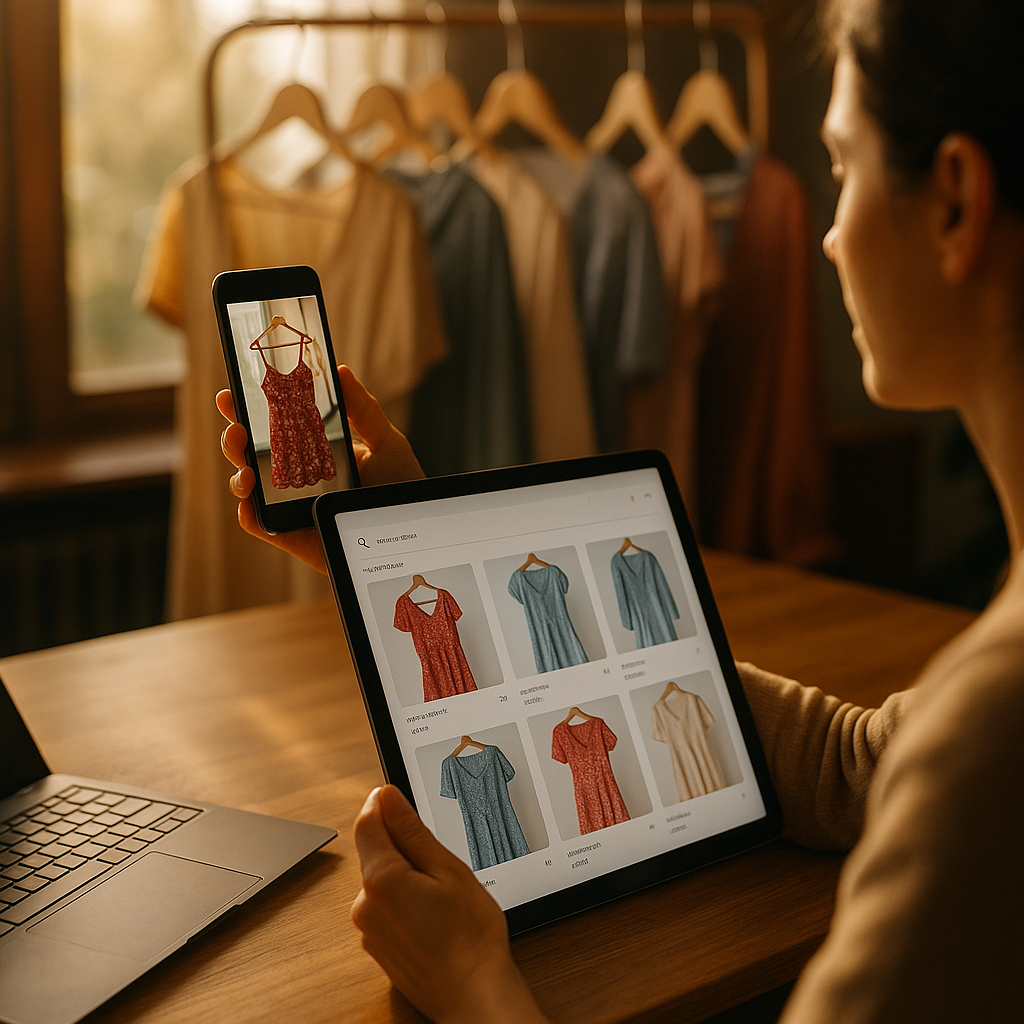
AI Powered Visual Search Optimization for Modern Agent Led Ecommerce is redefining how shoppers discover products, compare options, and complete purchases across digital storefronts. In 2026, brands that optimize images, feeds, and structured data for AI agents gain a measurable edge in visibility, relevance, and conversion. The opportunity is no longer experimental. It is operational, competitive, and growing fast.
Why visual search optimization matters in agent-led commerce
Visual search optimization has moved from a useful enhancement to a core ecommerce discipline. In agent-led commerce, AI assistants do more than respond to typed queries. They interpret product images, infer shopper intent, compare visual attributes, and recommend items across marketplaces, brand sites, retail media environments, and in-app storefronts. That changes the way products must be prepared for discovery.
Traditional SEO focused heavily on text. Modern ecommerce still needs strong copy, but visual search systems now evaluate product imagery, metadata, on-page context, customer behavior signals, and structured product information together. If a shopper uploads a photo of a brown suede ankle boot with a block heel, the agent may look for color, material, silhouette, heel type, seasonality, inventory status, price range, shipping speed, and brand trust signals in one pass.
Brands that fail to optimize these layers leave visibility to competitors. Brands that succeed make their products understandable to both machine vision systems and purchasing agents. That means cleaner image libraries, richer product attributes, stronger taxonomy, and more precise technical implementation.
From an EEAT perspective, helpful visual search content should reflect real product knowledge and real shopping needs. Shoppers want accurate color matching, clear sizing, authentic materials, and reliable availability. AI agents prioritize confidence. The more consistently your catalog communicates those details, the more likely your products are to surface for relevant visual queries.
- Experience: Use original product photography that reflects actual appearance and use cases.
- Expertise: Define product attributes with category-specific precision.
- Authoritativeness: Maintain a trustworthy brand presence across product pages, feeds, and merchant channels.
- Trustworthiness: Keep pricing, stock status, return policies, and image accuracy current.
Core AI ecommerce search signals that influence product discovery
AI ecommerce search relies on a wider signal set than keyword matching alone. To optimize effectively, merchants should understand what the systems are trying to interpret. Most visual search engines and commerce agents combine computer vision, natural language understanding, product graph logic, and real-time commercial signals. The goal is not merely to identify an object, but to recommend the best purchasable match.
Several signal groups matter most:
- Image quality: High-resolution images with clean composition, accurate lighting, and multiple angles improve object recognition.
- Attribute depth: Detailed labels for color, pattern, material, fit, dimensions, compatibility, and use case help AI narrow matches.
- Structured data: Product schema supports interpretation of price, availability, ratings, brand, SKU, GTIN, and variant relationships.
- Contextual relevance: Surrounding copy, internal links, category placement, FAQs, and buying guides help disambiguate products.
- Merchant reliability: Fulfillment speed, return clarity, customer reviews, and feed accuracy influence recommendation confidence.
- User behavior: Click-through rates, add-to-cart behavior, saves, and conversions may reinforce which results appear most useful.
For example, an AI shopping agent evaluating a dining chair will not stop at shape recognition. It may distinguish upholstered from molded seating, compare leg materials, identify modern versus farmhouse style, verify dimensions, and prioritize products that can ship quickly. If your product page says “stylish chair” but omits material, seat height, room type, and assembly details, the agent has less evidence to recommend it.
Optimization therefore starts with catalog hygiene. Standardize attribute naming across your entire inventory. Avoid inconsistent labels like “light gray,” “grey mist,” and “ash” for similar shades unless those distinctions are intentionally meaningful. AI systems perform better when your data model is consistent, complete, and category-aware.
How product image SEO supports visual recognition and conversion
Product image SEO now sits at the center of visual commerce performance. This is not limited to file names and alt text. Effective optimization covers image production, semantic labeling, technical delivery, and shopping context. Your images must help machines identify products while also helping people buy with confidence.
Start with the image set itself. The strongest ecommerce image libraries typically include:
- Primary packshot images on neutral backgrounds for clear recognition
- Multiple angles to show shape, scale, closures, texture, and functional details
- In-use lifestyle images that provide context without obscuring the product
- Variant-specific images for each color, size style, or configuration where visual differences matter
- Close-up detail shots for materials, stitching, ports, finishes, labels, or controls
Next, ensure every image has useful supporting metadata. Descriptive alt text should explain what appears in the image accurately and naturally. File names should identify the product and relevant attributes. Captions, where appropriate, can reinforce usage scenarios or key features. Avoid keyword stuffing. AI systems reward clarity more than repetition.
Technical delivery matters too. Use image formats and compression settings that preserve clarity without harming load speed. Slow pages reduce conversion and can limit crawl efficiency. Make sure image URLs remain stable when possible, especially for core products that accumulate authority over time.
One advanced but practical tactic is image-attribute alignment. If the page says “matte black stainless steel espresso machine” but the image variant shown is silver, trust erodes for users and confusion rises for machine interpretation. Attribute labels, variant selectors, feed data, and visible images should match perfectly.
Also consider the role of authenticity. Over-edited visuals may look polished but can distort color, finish, or texture. In categories such as furniture, beauty, apparel, and home decor, image accuracy directly affects returns. Since AI agents increasingly optimize toward successful outcomes, lower return risk can support stronger long-term performance.
Building structured data for ecommerce that AI agents can act on
Structured data for ecommerce gives AI agents the machine-readable product context they need to rank, compare, and recommend items reliably. In agent-led environments, schema is not just a technical SEO task. It is a trust layer between your catalog and the systems making shopping decisions on behalf of users.
At minimum, product pages should communicate clearly identifiable fields such as:
- Product name and brand
- Description with specific attributes
- Price and currency
- Availability status
- Condition
- SKU, MPN, GTIN, or equivalent identifiers
- Product variants
- Ratings and review summaries, where eligible and accurate
However, high-performing implementations go further. They map category-specific details in a consistent taxonomy, connect variants correctly, and align on-page content with merchant feeds and backend systems. A common failure occurs when structured data says a product is in stock, but the visible page says out of stock, or when pricing differs between feed and page. Those discrepancies reduce confidence.
For modern agent-led ecommerce, think beyond the page. AI agents often synthesize information from product feeds, merchant centers, marketplaces, APIs, and on-site markup. The winning approach is to maintain a single source of truth for product data that populates every endpoint consistently.
It also helps to create supporting content around product entities. Buying guides, comparison pages, compatibility charts, care instructions, and FAQs add semantic depth. If your product is a replacement filter, specify which devices it fits. If your item is a skincare serum, clarify skin types, ingredients, routine order, and expected use. Rich context improves both human confidence and machine understanding.
Practical visual commerce strategy for catalogs, feeds, and AI agents
A successful visual commerce strategy requires operational coordination across SEO, merchandising, creative, engineering, and product teams. It is not enough to optimize a handful of top-selling SKUs. AI agents evaluate entire catalogs, and weak data quality in long-tail inventory can limit total discoverability.
Use the following process to build a scalable program:
- Audit your catalog
Identify missing attributes, weak images, duplicate variants, inconsistent naming, and schema gaps. - Prioritize high-impact categories
Focus first on visually driven categories such as fashion, home, beauty, electronics, and accessories. - Create attribute standards
Define a controlled vocabulary for colors, materials, styles, dimensions, use cases, and compatibility terms. - Align creative production
Develop image guidelines that support both conversion and machine recognition. - Synchronize data systems
Ensure your CMS, PIM, feed management tools, and structured data implementation share the same product truth. - Test visual query paths
Simulate how shoppers and agents might search by image, screenshot, inspiration photo, or comparison request. - Measure downstream outcomes
Track not just impressions, but assisted conversions, variant discovery, return rates, and feed error trends.
Many brands ask whether visual optimization cannibalizes text SEO. In practice, the two reinforce each other. Better product data improves crawlability, stronger copy improves disambiguation, and clearer images improve discovery and conversion. The key is integration.
Another common question is whether every product needs custom lifestyle images. Not always. Commodity products may perform well with excellent packshots and detailed attributes. But for visually differentiated items, contextual imagery often helps AI understand use and style intent. The right mix depends on category behavior and shopper expectations.
Measuring agent-led ecommerce performance and future-proofing your SEO
Agent-led ecommerce performance should be evaluated with broader metrics than classic rankings alone. Since AI systems may introduce products through recommendations, visual matches, conversational assistants, and automated shopping flows, merchants need a fuller measurement framework.
Useful performance indicators include:
- Impressions from image and product discovery surfaces
- Click-through rate from visual results
- Product page engagement by image-rich sessions
- Variant-level conversion rate
- Feed disapproval and data mismatch rates
- Return rates tied to image or attribute accuracy
- Coverage of schema and required attributes across the catalog
- Share of revenue influenced by AI-assisted journeys
Future-proofing in 2026 means preparing for more autonomous shopping experiences. Agents are getting better at narrowing product sets, asking follow-up questions, comparing substitutes, and even completing purchases based on user preferences. To remain visible, your product data must be portable, current, and decision-ready.
This is where EEAT becomes practical, not theoretical. Show expertise through detailed category information. Show experience through authentic imagery and product guidance. Show authoritativeness with accurate brand and merchant signals. Show trustworthiness with transparent policies, stable pricing, and honest representations. When AI agents look for the safest and most useful recommendation, those qualities matter.
The brands that win are not merely publishing more content. They are building product ecosystems that machines can understand and shoppers can trust.
FAQs about AI visual search SEO
What is AI visual search in ecommerce?
AI visual search allows shoppers or agents to find products using images instead of only text. A user can upload a photo, screenshot, or camera image, and the system identifies visually similar or matching products using computer vision and product data.
How is visual search optimization different from traditional SEO?
Traditional SEO relies heavily on text relevance and authority signals. Visual search optimization adds image quality, visual attributes, product metadata, schema, feed accuracy, and variant clarity so AI systems can interpret and recommend products from pictures or multimodal queries.
Does alt text still matter for product images?
Yes. Alt text remains useful because it provides descriptive context for accessibility and search systems. It should clearly describe the actual image and key product attributes without stuffing keywords.
Which products benefit most from visual search optimization?
Products with strong visual decision factors benefit the most, including apparel, footwear, furniture, beauty, home decor, accessories, and consumer electronics. However, nearly any ecommerce category can gain from cleaner product data and stronger image relevance.
What technical elements should be prioritized first?
Start with high-quality images, complete product attributes, accurate structured data, synchronized merchant feeds, mobile performance, and consistent variant mapping. These improvements create the foundation for both visual discovery and better conversion.
Can AI agents use product reviews in visual search results?
Yes. Reviews can influence confidence and recommendation quality, especially when they mention real-world fit, color accuracy, durability, ease of use, or compatibility. Make sure review content is authentic and connected correctly to the relevant product or variant.
How often should ecommerce image and schema data be updated?
Update them whenever products, availability, pricing, or variants change. Ongoing maintenance is essential. In fast-moving catalogs, automated synchronization between your product information systems and frontend pages is the most reliable approach.
Will AI-powered visual search reduce the importance of brand websites?
No. Brand websites remain critical because they provide first-party product data, trustworthy content, and the conversion experience. AI agents still need reliable sources, and well-optimized brand pages often become those sources.
AI-powered visual search is now a practical growth lever for modern ecommerce teams. Brands that combine strong images, precise product data, structured markup, and trustworthy shopping experiences give AI agents what they need to recommend products with confidence. The clear takeaway is simple: optimize your catalog for machine understanding and human trust at the same time to capture more discovery, conversions, and loyalty.
Top Influencer Marketing Agencies
The leading agencies shaping influencer marketing in 2026
Agencies ranked by campaign performance, client diversity, platform expertise, proven ROI, industry recognition, and client satisfaction. Assessed through verified case studies, reviews, and industry consultations.
Moburst

-
2

The Shelf
Boutique Beauty & Lifestyle Influencer AgencyA data-driven boutique agency specializing exclusively in beauty, wellness, and lifestyle influencer campaigns on Instagram and TikTok. Best for brands already focused on the beauty/personal care space that need curated, aesthetic-driven content.Clients: Pepsi, The Honest Company, Hims, Elf Cosmetics, Pure LeafVisit The Shelf → -
3

Audiencly
Niche Gaming & Esports Influencer AgencyA specialized agency focused exclusively on gaming and esports creators on YouTube, Twitch, and TikTok. Ideal if your campaign is 100% gaming-focused — from game launches to hardware and esports events.Clients: Epic Games, NordVPN, Ubisoft, Wargaming, Tencent GamesVisit Audiencly → -
4

Viral Nation
Global Influencer Marketing & Talent AgencyA dual talent management and marketing agency with proprietary brand safety tools and a global creator network spanning nano-influencers to celebrities across all major platforms.Clients: Meta, Activision Blizzard, Energizer, Aston Martin, WalmartVisit Viral Nation → -
5

The Influencer Marketing Factory
TikTok, Instagram & YouTube CampaignsA full-service agency with strong TikTok expertise, offering end-to-end campaign management from influencer discovery through performance reporting with a focus on platform-native content.Clients: Google, Snapchat, Universal Music, Bumble, YelpVisit TIMF → -
6

NeoReach
Enterprise Analytics & Influencer CampaignsAn enterprise-focused agency combining managed campaigns with a powerful self-service data platform for influencer search, audience analytics, and attribution modeling.Clients: Amazon, Airbnb, Netflix, Honda, The New York TimesVisit NeoReach → -
7

Ubiquitous
Creator-First Marketing PlatformA tech-driven platform combining self-service tools with managed campaign options, emphasizing speed and scalability for brands managing multiple influencer relationships.Clients: Lyft, Disney, Target, American Eagle, NetflixVisit Ubiquitous → -
8

Obviously
Scalable Enterprise Influencer CampaignsA tech-enabled agency built for high-volume campaigns, coordinating hundreds of creators simultaneously with end-to-end logistics, content rights management, and product seeding.Clients: Google, Ulta Beauty, Converse, AmazonVisit Obviously →