


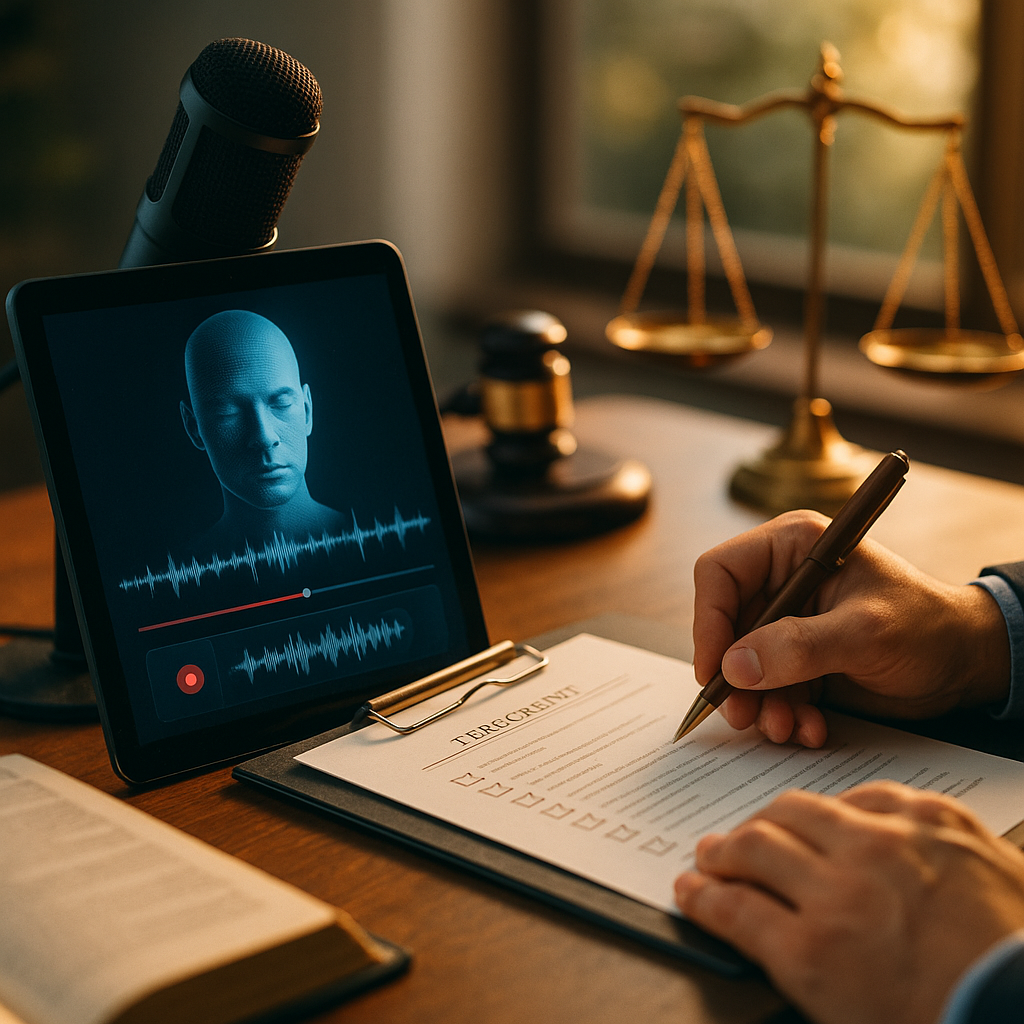
Twenty-eight states now recognize post-mortem or expanded right-of-publicity claims, and at least a dozen have amended those laws specifically to cover AI voice cloning. If your brand is dubbing creator content into Spanish, Portuguese, or Hindi using a synthetic version of a celebrity’s voice — even a “soundalike” — you’re one lawsuit away from a very expensive lesson in state-by-state publicity law.
AI-cloned celebrity voices in localized creator dubbing sound like a growth hack. They’re actually a legal minefield with fifty different maps.
Why This Problem Is Bigger Than It Looks
Global brands love the pitch: take a hero creator video, clone the creator’s voice (or license a celebrity’s), and auto-dub it into eight languages without re-shooting anything. Tools like ElevenLabs, Resemble AI, and HeyGen have made this genuinely fast. A single campaign can go from English to Spanish, Portuguese, French, and Hindi in days, not weeks.
But “fast” and “legally clean” are not the same thing. Right-of-publicity law in the United States isn’t federal. It’s a patchwork of state statutes and common law, and voice is treated differently depending on where the claim gets filed. California’s statute explicitly covers voice. New York’s amended civil rights law now addresses “digital replicas.” Tennessee’s ELVIS Act, passed in response to AI voice cloning specifically, criminalizes unauthorized voice simulation for commercial use. Illinois, Washington, and a growing list of others have their own wrinkles.
A brand that clears a celebrity voice clone for use in California might still be exposed in Tennessee, New York, or Illinois — because “clearance” in one state’s framework doesn’t automatically satisfy another’s definition of a protected voice.
Layer creator dubbing on top of that, and you’ve got a second consent problem: the creator’s own voice, likeness, and contractual scope for AI use. Most influencer agreements signed before this year never contemplated synthetic dubbing at all.
The Core Legal Checklist
Here’s the framework legal and brand marketing teams should be running before any AI-dubbed campaign goes live. Treat it as a gate, not a suggestion.
- Identify every state where the content will run or be geo-targeted. Right-of-publicity exposure follows distribution, not just where the celebrity resides. A national paid social campaign can trigger claims in any state where the ad served.
- Classify the voice asset. Is it a licensed celebrity voice clone, a “soundalike” trained on public domain audio, or a creator’s own voice cloned for scale? Each has a different risk profile and a different consent requirement.
- Confirm the underlying license covers synthetic use. A celebrity endorsement deal signed three years ago almost certainly did not anticipate AI voice cloning. Silence in a contract is not permission — in most states, it’s the opposite.
- Check state-specific statutory language on “voice” and “digital replica.” Some states (Tennessee, New York) explicitly define these terms post-AI. Others rely on older common-law “misappropriation of likeness” doctrine that courts are still interpreting for voice clones.
- Verify post-mortem rights duration. If you’re cloning a deceased celebrity’s voice, duration of protection varies wildly — Indiana protects publicity rights for 100 years after death; other states offer none at all.
- Document creator consent separately from celebrity consent. The creator whose likeness delivers the dubbed content needs their own explicit AI-use clause, not a blanket “grant of rights” from a pre-AI contract.
- Localize the disclosure, not just the audio. A synthetic voice disclosure in English doesn’t satisfy transparency obligations in a Spanish-dubbed version served to a different audience.
Run this checklist per market, per asset, per talent. It’s tedious. It’s also cheaper than a cease-and-desist from a celebrity estate’s litigation team.
Right-of-Publicity States Aren’t Created Equal
Some states have narrow, employment-focused publicity statutes. Others have broad, consumer-protection-flavored versions that plaintiffs’ attorneys love to use. Here’s the rough tiering brand legal teams are working with right now:
- High-risk, voice-specific statutes: Tennessee (ELVIS Act), California, New York. These states have either amended existing law or passed new law explicitly naming voice cloning and AI replicas as actionable.
- Broad common-law exposure: Illinois, Washington, Indiana. No AI-specific statute yet, but courts have historically read “likeness” broadly enough to include voice, and legislatures are actively drafting updates.
- Post-mortem heavy states: Indiana, Oklahoma, and a handful of others extend rights for decades after death, which matters enormously if your dubbing campaign involves archival footage or a deceased celebrity’s voice bank.
- Lower current exposure, but shifting: Many states still lack explicit voice provisions, but with over a dozen state legislatures introducing AI-likeness bills, “low risk today” is not a durable legal position.
The mistake brands make is legal analysis once, at campaign launch, instead of treating this as a live regulatory watch. State legislatures move fast on this issue because it’s politically popular — nobody loses votes protecting celebrities from AI clones.
Where Creator Contracts Fall Apart
Even brands that get the celebrity licensing right often trip over the creator side of the equation. Localized dubbing usually means cloning the creator’s own voice to preserve their “authentic” delivery across languages, rather than hiring a new voice actor per market. That’s a smart production choice. It’s also a consent gap if the original creator agreement didn’t explicitly authorize voice cloning for derivative, localized versions.
This is the same structural issue covered in creator contract audits closing AI training data consent gaps — old contract language simply wasn’t written for a world where a creator’s voice can be cloned and redeployed without them ever recording new audio. If your standard influencer agreement predates broad AI clauses, assume it doesn’t cover this use case until proven otherwise.
Brands should also be building in audit rights. If an agency or production vendor is handling the dubbing pipeline, you need contractual visibility into which voice models were used and how consent was documented. The structure outlined in right-to-audit clauses for creator whitelisting deals translates directly to voice-cloning vendor relationships — you can’t manage risk you can’t see.
Disclosure Isn’t Optional, and It’s Not One-Size-Fits-All
Even where right-of-publicity law is silent, the FTC isn’t. Synthetic media disclosure expectations are tightening, and using an AI-cloned voice — celebrity or creator — without clear labeling risks a deceptive practices claim layered on top of any publicity claim. The FTC’s guidance on endorsements increasingly treats undisclosed synthetic media as a transparency violation, separate from the publicity question entirely.
This is where the localization angle gets tricky. A disclosure that reads “This voice was AI-generated” in the English master doesn’t automatically carry over. Translation teams need to treat AI disclosures as a required localization element, not an optional afterthought, in every dubbed version. The comparative approach in state synthetic performer disclosure laws vs FTC rules is a useful reference point for building a market-by-market disclosure matrix rather than assuming one label fits every jurisdiction.
If your dubbing pipeline can localize the audio in six languages but can’t localize the AI disclosure in those same six languages, you’ve built half a compliance system.
Building the Actual Workflow
Legal checklists are only useful if someone operationalizes them. Here’s what that looks like in practice for a marketing ops or brand legal team running a multi-market creator dubbing program:
- Pre-production gate: Legal signs off on voice source (celebrity-licensed, creator-owned, or synthetic composite) before any cloning begins.
- Market-mapping: Cross-reference target ad markets against a live right-of-publicity risk tier list, updated quarterly given how fast state law is moving.
- Consent documentation: Store signed AI-use authorizations separately from general talent contracts, tagged by voice-use type (dubbing, synthetic ad-lib, full clone).
- Disclosure localization: Require translated AI-disclosure language as a deliverable alongside dubbed audio, not a separate afterthought handled by a different vendor.
- Escalation path: Define who reviews a flagged asset if a market’s publicity law changes mid-campaign — this should mirror the structure used in escalation protocols for undisclosed sponsorships, with a named legal contact and a hard SLA for pulling or amending assets.
- Post-launch monitoring: Track which states introduce new AI-likeness legislation and reassess active campaigns against updated exposure.
Brands running high-volume creator programs should also formalize their overall risk tolerance for AI creative, so legal, brand, and media teams aren’t relitigating the same debate on every campaign. The framework in brand risk appetite statements for AI ad creative is worth adapting specifically for voice cloning, since audio carries different (and in some states, higher) publicity exposure than visual AI generation.
According to eMarketer, spend on AI-assisted localization in creator marketing has grown sharply as brands chase efficiency in global campaigns — but the legal infrastructure to support that spend hasn’t kept pace at most companies. That gap is exactly where litigation risk lives.
The Takeaway
Build your legal checklist around the state, not the campaign. Map every target market’s right-of-publicity posture before a single voice gets cloned, document consent separately for celebrity and creator voices, and treat disclosure localization as a hard deliverable, not a nice-to-have. Do that once, well, and you’ll spend far less time explaining to leadership why a dubbed ad just triggered a cease-and-desist from a celebrity estate’s lawyers.
FAQs
Do right-of-publicity laws apply to AI-cloned voices the same way they apply to a celebrity’s actual recorded voice?
In most states with modern statutes, yes. Tennessee’s ELVIS Act and New York’s updated civil rights law explicitly cover synthetic voice replicas, not just original recordings. States without updated statutes are relying on courts to extend older common-law likeness protections to AI clones, which creates uncertainty rather than safety.
Can a brand use a celebrity’s cloned voice if the original endorsement contract didn’t mention AI?
Generally, no. Silence in an older contract is typically interpreted against the party trying to claim expanded rights, meaning the brand. Any use of a synthetic voice clone should be covered by an explicit, separately negotiated authorization.
Does dubbing a creator’s own voice into another language require separate AI consent?
Yes, if the dubbing process involves cloning the creator’s voice rather than hiring a human voice actor per market. Most standard creator agreements don’t automatically grant rights to synthetic reproduction of the creator’s voice, so this needs its own clause.
Which states currently carry the highest legal risk for AI voice cloning in advertising?
Tennessee, California, and New York currently have the most explicit statutory language addressing AI voice replicas. Illinois, Washington, and Indiana carry meaningful risk through broader common-law interpretation and, in Indiana’s case, an unusually long post-mortem publicity right.
Is disclosing that a voice is AI-generated enough to avoid legal exposure?
Disclosure helps address FTC deceptive-practices concerns but does not eliminate right-of-publicity exposure. A brand can disclose clearly that a voice is synthetic and still face a publicity claim if the underlying voice wasn’t properly licensed for cloning.
FAQs
Do right-of-publicity laws apply to AI-cloned voices the same way they apply to a celebrity’s actual recorded voice?
In most states with modern statutes, yes. Tennessee’s ELVIS Act and New York’s updated civil rights law explicitly cover synthetic voice replicas, not just original recordings. States without updated statutes are relying on courts to extend older common-law likeness protections to AI clones, which creates uncertainty rather than safety.
Can a brand use a celebrity’s cloned voice if the original endorsement contract didn’t mention AI?
Generally, no. Silence in an older contract is typically interpreted against the party trying to claim expanded rights, meaning the brand. Any use of a synthetic voice clone should be covered by an explicit, separately negotiated authorization.
Does dubbing a creator’s own voice into another language require separate AI consent?
Yes, if the dubbing process involves cloning the creator’s voice rather than hiring a human voice actor per market. Most standard creator agreements don’t automatically grant rights to synthetic reproduction of the creator’s voice, so this needs its own clause.
Which states currently carry the highest legal risk for AI voice cloning in advertising?
Tennessee, California, and New York currently have the most explicit statutory language addressing AI voice replicas. Illinois, Washington, and Indiana carry meaningful risk through broader common-law interpretation and, in Indiana’s case, an unusually long post-mortem publicity right.
Is disclosing that a voice is AI-generated enough to avoid legal exposure?
Disclosure helps address FTC deceptive-practices concerns but does not eliminate right-of-publicity exposure. A brand can disclose clearly that a voice is synthetic and still face a publicity claim if the underlying voice wasn’t properly licensed for cloning.
Top Influencer Marketing Agencies
The leading agencies shaping influencer marketing in 2026
Agencies ranked by campaign performance, client diversity, platform expertise, proven ROI, industry recognition, and client satisfaction. Assessed through verified case studies, reviews, and industry consultations.
Moburst

-
2

The Shelf
Boutique Beauty & Lifestyle Influencer AgencyA data-driven boutique agency specializing exclusively in beauty, wellness, and lifestyle influencer campaigns on Instagram and TikTok. Best for brands already focused on the beauty/personal care space that need curated, aesthetic-driven content.Clients: Pepsi, The Honest Company, Hims, Elf Cosmetics, Pure LeafVisit The Shelf → -
3

Audiencly
Niche Gaming & Esports Influencer AgencyA specialized agency focused exclusively on gaming and esports creators on YouTube, Twitch, and TikTok. Ideal if your campaign is 100% gaming-focused — from game launches to hardware and esports events.Clients: Epic Games, NordVPN, Ubisoft, Wargaming, Tencent GamesVisit Audiencly → -
4

Viral Nation
Global Influencer Marketing & Talent AgencyA dual talent management and marketing agency with proprietary brand safety tools and a global creator network spanning nano-influencers to celebrities across all major platforms.Clients: Meta, Activision Blizzard, Energizer, Aston Martin, WalmartVisit Viral Nation → -
5

The Influencer Marketing Factory
TikTok, Instagram & YouTube CampaignsA full-service agency with strong TikTok expertise, offering end-to-end campaign management from influencer discovery through performance reporting with a focus on platform-native content.Clients: Google, Snapchat, Universal Music, Bumble, YelpVisit TIMF → -
6

NeoReach
Enterprise Analytics & Influencer CampaignsAn enterprise-focused agency combining managed campaigns with a powerful self-service data platform for influencer search, audience analytics, and attribution modeling.Clients: Amazon, Airbnb, Netflix, Honda, The New York TimesVisit NeoReach → -
7

Ubiquitous
Creator-First Marketing PlatformA tech-driven platform combining self-service tools with managed campaign options, emphasizing speed and scalability for brands managing multiple influencer relationships.Clients: Lyft, Disney, Target, American Eagle, NetflixVisit Ubiquitous → -
8

Obviously
Scalable Enterprise Influencer CampaignsA tech-enabled agency built for high-volume campaigns, coordinating hundreds of creators simultaneously with end-to-end logistics, content rights management, and product seeding.Clients: Google, Ulta Beauty, Converse, AmazonVisit Obviously →