


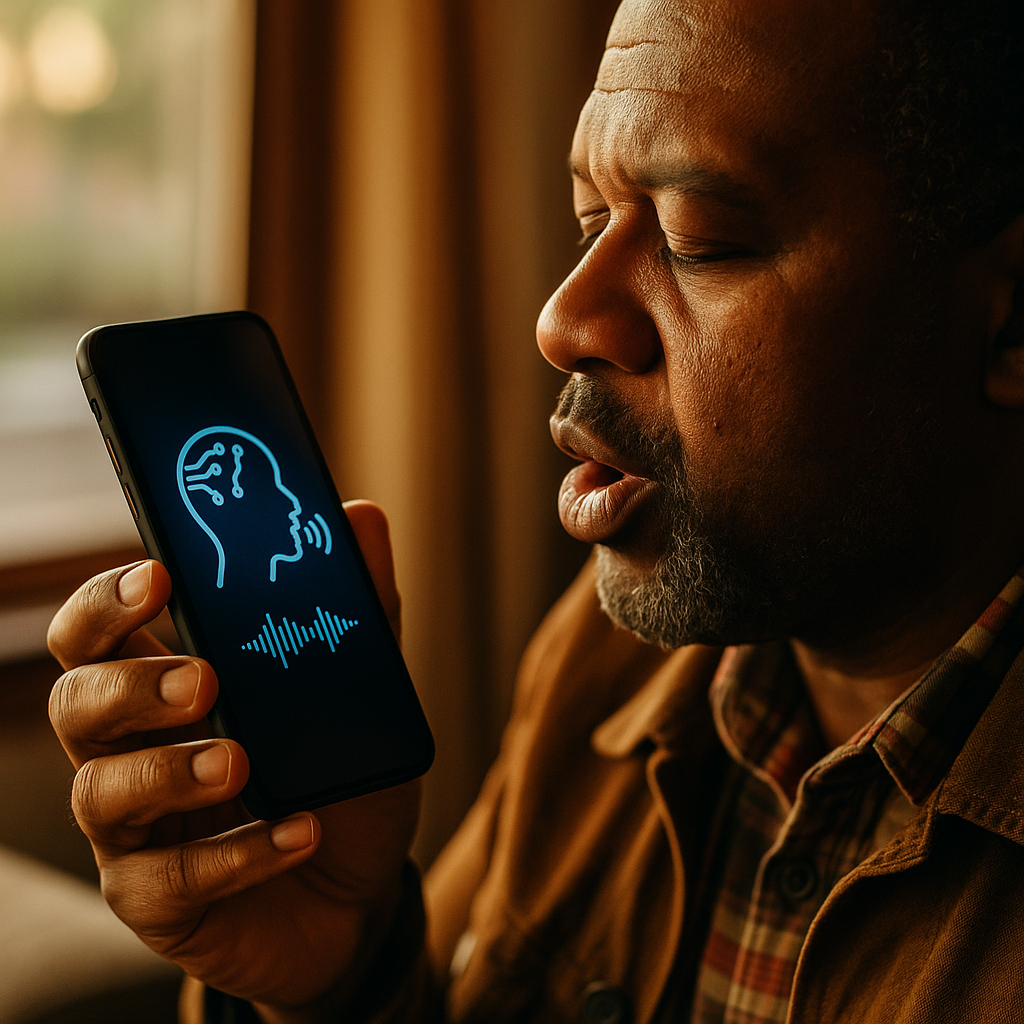
Brands now serve audiences that expect every audio interaction to sound natural, familiar, and locally relevant. Using AI to personalize synthetic voiceovers for local dialect accuracy helps companies deliver that experience at scale across ads, apps, training, and customer support. The opportunity is bigger than convenience: when voices sound genuinely local, trust, comprehension, and conversion can rise dramatically—but how do you get it right?
Why local dialect voice AI matters for audience trust
Synthetic voice technology has matured fast, but realism alone is no longer enough. In 2026, listeners can detect when a voice sounds technically smooth yet culturally off. That gap matters because dialect is more than pronunciation. It includes rhythm, vocabulary, stress patterns, pauses, conversational norms, and even emotional range. When a voiceover misses those cues, the result can feel generic, awkward, or insensitive.
Local dialect accuracy improves three things that matter to businesses and public organizations alike:
- Comprehension: Familiar speech patterns reduce listener effort, especially in education, healthcare, navigation, and customer service content.
- Trust: People tend to respond more positively when a brand sounds like it understands their community rather than merely translating words.
- Engagement: Ads, tutorials, and in-app messages often perform better when the voice aligns with regional identity.
This is especially important in multilingual markets where one language contains many local varieties. A standard accent may work for broad coverage, but a localized synthetic voice can improve resonance for specific regions, cities, or diaspora audiences.
From an EEAT perspective, helpful content on this topic should be grounded in real production realities. Teams that deploy voice AI at scale consistently learn the same lesson: accuracy depends less on selecting a “realistic” model and more on building a careful localization workflow. The best outcomes come from collaboration among linguists, native speakers, voice technologists, and brand stakeholders.
How AI voice personalization actually works
To personalize synthetic voiceovers well, it helps to understand the process behind the output. Modern AI voice systems typically combine several layers: text analysis, phoneme prediction, prosody generation, speaker modeling, and audio synthesis. For dialect accuracy, each layer matters.
Text normalization is the first step. The system interprets abbreviations, dates, currencies, and punctuation. In local dialect work, this stage must also recognize region-specific wording, contractions, honorifics, and slang. If the script says the right words but the engine expands them incorrectly, the final voiceover will sound unnatural.
Phonetic modeling determines how words are pronounced. This is where dialect differences become highly visible. One region may soften consonants, shift vowels, drop final sounds, or emphasize syllables differently. A generic model often flattens those distinctions, which is why dialect-aware phoneme mapping is essential.
Prosody generation shapes pacing, melody, stress, and pauses. This layer is often the difference between a passable output and a convincing one. Two speakers can pronounce the same words accurately but still sound from different places because their intonation patterns differ.
Speaker adaptation gives the synthetic voice a stable identity. Brands may choose a warm narrator, energetic retail voice, authoritative guide, or conversational support agent. The challenge is preserving local speech patterns without turning the voice into a stereotype. Effective personalization respects community norms while staying clear and brand-safe.
Feedback loops then refine performance. Teams should not rely on a single rendering. They should compare variants, test them with native listeners, and feed corrections back into prompts, pronunciation dictionaries, model settings, or fine-tuning workflows. In practice, this iterative step is where quality improves the most.
If you are wondering whether dialect personalization requires building a model from scratch, the answer is usually no. Many projects start with a strong base model and then layer in custom lexicons, regional prompts, prosody controls, and curated reference samples. Full custom training is useful in some cases, but workflow discipline often matters more than raw model size.
Best practices for synthetic voice localization and dialect accuracy
Localization teams often focus on translation first and voice second. That order creates problems. For dialect-sensitive audio, the script should be written or adapted for speech, not just translated literally. Spoken language has a different rhythm than on-screen text, and regional audiences notice when wording feels imported rather than native.
Here are the most reliable best practices for synthetic voice localization:
- Start with audience definition. Be precise about region, age range, context, and channel. “Spanish” or “Arabic” is not enough. Decide which local variety you need and where standard speech is preferable.
- Build a pronunciation guide. Include place names, product terms, brand names, culturally specific words, and common exceptions. Keep the guide updated after each campaign.
- Use native reviewers early. Do not wait until final QA. Native speakers should help shape the script, evaluate sample outputs, and flag subtle issues in tone or phrasing.
- Control prosody intentionally. Adjust speed, pause length, emphasis, and emotional tone based on the use case. Customer support, entertainment, education, and compliance audio need different delivery styles.
- Test small before scaling. Pilot localized voiceovers in one region or content stream, then expand once quality metrics are stable.
- Avoid caricature. Local accuracy should sound authentic, not exaggerated. Overemphasis can reduce credibility and create reputational risk.
Another frequent question is whether one synthetic voice should cover multiple dialects. In some cases, yes, especially for neutral informational content. But if your campaign depends on affinity, persuasion, or emotional nuance, separate voice configurations usually outperform a one-size-fits-all approach.
Accessibility also belongs in this conversation. A locally accurate voice should remain easy to understand across age groups and hearing conditions. That means balancing authenticity with clarity, especially in public-service announcements, onboarding flows, and training content.
Common challenges in dialect accurate voiceovers and how to solve them
Even strong AI systems can struggle with local speech. Most failures fall into a few predictable categories, and each has a practical fix.
Problem 1: Correct words, wrong rhythm.
A voice may pronounce terms properly yet still sound foreign to the audience because sentence melody is off. The solution is prosody tuning combined with native review. Ask reviewers to comment on pace, emphasis, and emotional contour, not just pronunciation.
Problem 2: Inconsistent treatment of local terms.
Brand names, neighborhoods, surnames, and street names often vary from one file to another. Use a centralized lexicon and version control. Every production team should pull from the same approved source.
Problem 3: Overfitting to narrow speech samples.
If a model is tuned on a limited set of speakers, it may mimic idiosyncrasies instead of broad dialect patterns. Curate diverse references within the target dialect and review outputs for flexibility.
Problem 4: Tone mismatch with context.
A dialect can be accurate and still wrong for the use case. An ad voice may sound too casual for finance, while a formal support voice may underperform in social content. Define channel-specific style rules before rendering.
Problem 5: Ethical and legal concerns.
Voice cloning, consent, compensation, and disclosure remain critical issues in 2026. Organizations should document permissions, state when synthetic voices are used where required, and avoid imitating recognizable individuals without explicit authorization.
Problem 6: Bias in evaluation.
Internal teams may approve an output because it sounds “good enough” to non-local ears. Establish a review panel of native speakers from the target audience and score outputs against repeatable criteria such as naturalness, intelligibility, and local authenticity.
These solutions reflect practical experience more than theory. Teams that succeed treat dialect quality as an operational discipline with documentation, checkpoints, and measurable standards.
How to measure regional accent text to speech performance
If you cannot measure localization quality, you cannot improve it. Many teams rely only on subjective approval, but better evaluation combines human review with business metrics.
Start with a structured listening rubric. Ask native evaluators to score the voiceover on:
- Pronunciation accuracy
- Natural prosody
- Dialect authenticity
- Clarity and intelligibility
- Appropriateness for brand and context
Then pair those ratings with performance outcomes. Depending on the channel, useful metrics may include:
- Ad completion rate for video and audio campaigns
- Conversion rate for voice-led commerce or app onboarding
- Task completion time for navigation, support, or training content
- Customer satisfaction for IVR and support experiences
- Drop-off rate in educational or instructional modules
For enterprise teams, A/B testing remains the clearest way to prove impact. Compare a standard-language synthetic voice against a dialect-personalized version in the same region. Monitor not just immediate engagement but also downstream trust signals such as repeat usage, fewer support escalations, or improved learning outcomes.
One more important point: do not optimize only for “human likeness.” A highly human-sounding voice can still fail local expectations. The key KPI is not realism in isolation but whether the target audience accepts the voice as natural, useful, and contextually appropriate.
Future trends in AI voice cloning for local accents
The next phase of voice AI is not just better audio fidelity. It is more controllable localization. We are seeing rapid progress in systems that allow granular control over pronunciation, code-switching, speaking style, and emotional tone while preserving a stable brand voice.
Several trends are shaping this space in 2026:
- Fine-grained dialect controls: Platforms increasingly let teams adjust accent strength, regional vocabulary preference, and prosody settings without retraining full models.
- Dynamic adaptation by audience segment: Brands can now generate multiple localized voice variants for different regions from a single approved script and compliance framework.
- Better multilingual code-switching: In many communities, natural speech moves fluidly between languages. Advanced systems are improving at switching without sounding abrupt or robotic.
- Human-in-the-loop QA at scale: Automation handles rendering and first-pass checks, while native reviewers focus on nuance, edge cases, and high-impact content.
- Stronger governance: Expect clearer disclosure standards, rights management, and internal policy controls as organizations mature their synthetic media practices.
For brands considering adoption, the strategic takeaway is simple: local dialect personalization is becoming a competitive advantage, not a novelty. The organizations that invest now in data hygiene, reviewer networks, pronunciation assets, and ethical guardrails will move faster and with fewer risks as voice interfaces continue to expand.
If you are deciding where to begin, start with one content type that has clear business value, such as app onboarding, regional advertising, or customer support prompts. Build your workflow, measure outcomes, and expand from evidence rather than assumptions.
FAQs about AI voice personalization for local dialects
What is the difference between an accent and a dialect in synthetic voiceovers?
An accent mainly refers to pronunciation. A dialect includes pronunciation plus vocabulary, grammar, rhythm, and local expressions. For realistic localization, AI voice systems should account for both.
Can AI generate dialect-accurate voiceovers without native speakers?
Not reliably. Native speakers are essential for script adaptation, quality review, and cultural validation. AI can accelerate production, but human expertise is still necessary for authentic results.
Do dialect-accurate voiceovers improve marketing performance?
They often can, especially when trust and local relevance influence decision-making. Performance gains vary by market and channel, so the best approach is to test dialect-personalized audio against a standard version.
Is voice cloning the same as synthetic voice personalization?
No. Voice cloning aims to reproduce a specific speaker. Synthetic voice personalization adjusts pronunciation, style, prosody, and regional characteristics for a target audience. A project may use one without the other.
How much training data is needed for local dialect accuracy?
It depends on the model and method. Some platforms can achieve strong results with limited reference material plus pronunciation rules and human review. More complex or less-resourced dialects may require custom data collection.
What industries benefit most from local dialect voice AI?
Media, advertising, e-learning, gaming, telecom, healthcare, travel, public services, retail, and customer support all benefit. Any organization delivering spoken content across regions can gain from better localization.
How can brands avoid sounding stereotypical?
Use native reviewers, define a clear style guide, and aim for authentic everyday speech rather than exaggerated regional markers. The goal is recognition and comfort, not performance or parody.
Should companies disclose when a voice is synthetic?
In many contexts, yes, especially where regulations, consent requirements, or customer expectations apply. Clear disclosure and documented permissions are part of responsible synthetic media governance.
AI can now produce synthetic voiceovers that sound strikingly natural, but local dialect accuracy still depends on process, not hype. Define the audience precisely, localize scripts for speech, involve native reviewers, measure outcomes, and maintain ethical safeguards. When brands combine AI efficiency with human linguistic expertise, they create voice experiences that feel genuinely local, earn trust, and perform better across channels.