


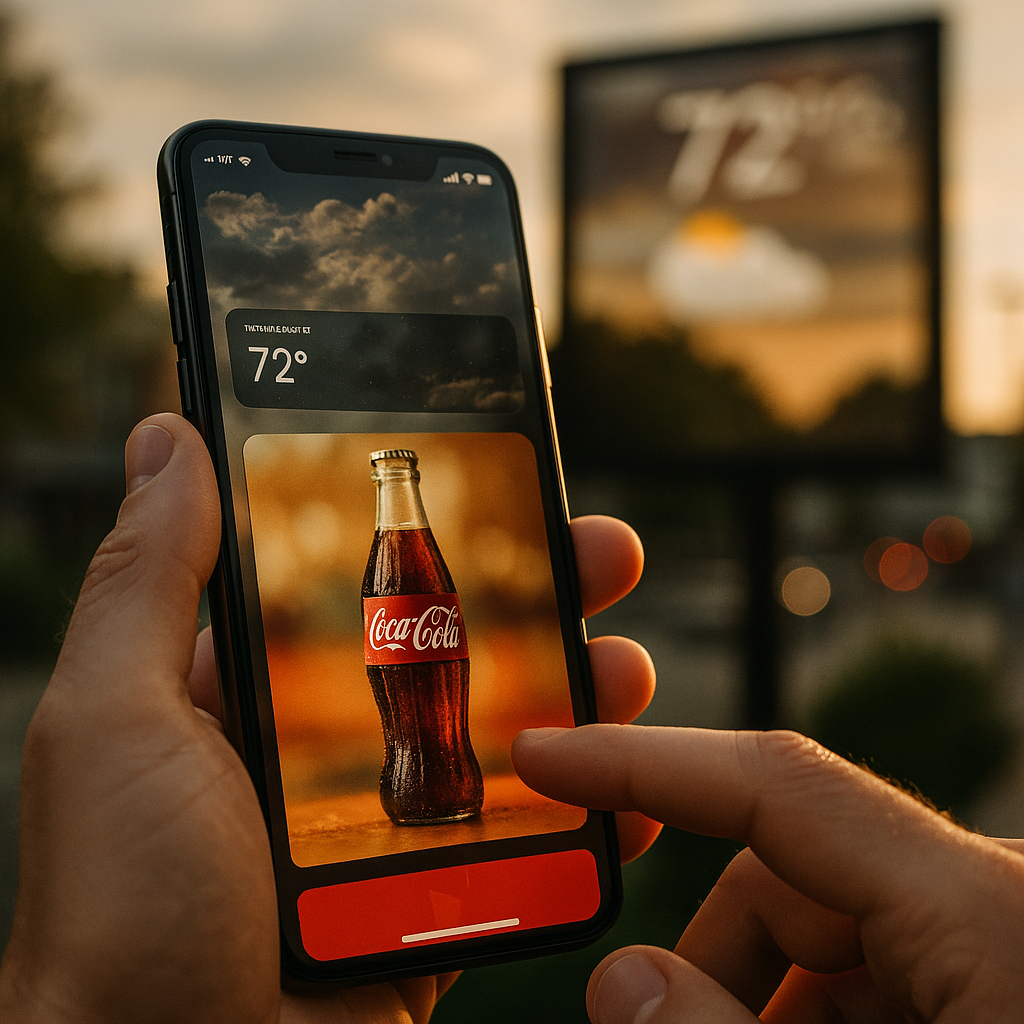
Using AI to personalize dynamic creative based on live weather data helps brands turn changing conditions into timely, relevant ads that feel useful instead of intrusive. In 2026, consumers expect context, and weather is one of the strongest real-time signals available. When combined with AI, it can improve relevance, engagement, and conversion. Here is how to do it well and responsibly.
Why weather-based advertising matters for modern campaigns
Weather influences what people need, want, and buy. A sudden heatwave can increase demand for cold drinks, air conditioners, sunglasses, and indoor entertainment. Rain can boost orders for food delivery, ride-hailing, waterproof apparel, and streaming subscriptions. Cold weather can drive purchases of outerwear, skincare, heaters, and comfort foods. These shifts happen fast, often within hours, which makes static campaigns less effective.
Weather-based advertising gives marketers a practical way to align creative with real-world conditions. Instead of showing the same message to every audience segment, brands can tailor headlines, images, calls to action, offers, and product recommendations based on live local weather. This creates messaging that feels immediately relevant.
AI makes this process scalable. Rather than building a few manual variants, teams can use machine learning and rules-based systems to select the right creative combination for each location, device, audience, and weather trigger. That means a retailer can promote rain jackets in one city, sunscreen in another, and neutral evergreen products where weather is mild, all at the same time.
Done correctly, this approach supports EEAT principles because it is grounded in observable context, measurable outcomes, and user benefit. The goal is not to exploit a condition, but to solve for intent in the moment. If the weather changes what a user is likely to need, then the ad should reflect that need clearly and honestly.
How AI dynamic creative optimization works with live weather signals
AI dynamic creative optimization combines automated decision-making with modular ad assets. Marketers prepare a library of approved creative components such as backgrounds, product shots, value propositions, offer copy, CTAs, and landing page variants. AI then assembles and serves the most relevant version based on incoming data signals, including weather.
A typical workflow includes several layers:
- Data ingestion: The platform pulls live weather data through a trusted API, including temperature, precipitation, humidity, wind, UV index, pollen, air quality, and severe weather alerts where relevant.
- Context mapping: The system translates raw weather conditions into consumer-friendly triggers such as hot, cold, rainy, windy, storm risk, or poor air quality.
- Creative logic: AI or predefined rules match each trigger to specific ad elements. For example, “rainy evening” might activate delivery-focused copy, darker imagery, and a short-form CTA.
- Audience weighting: The model considers other signals like location, device, time of day, recent browsing, loyalty status, or inventory availability.
- Performance learning: The system monitors click-through rate, conversion rate, cost per acquisition, return on ad spend, and post-click engagement to improve future selections.
The strongest setups do not rely on weather alone. They use weather as one signal in a broader decision engine. For example, warm weather may increase interest in iced coffee, but only during relevant hours and only in areas where stores have stock. AI helps prioritize combinations that are both contextually appropriate and commercially sound.
Many marketers ask whether generative AI should create the ad copy itself. It can, but with guardrails. High-performing programs keep brand-approved copy blocks, claims, disclaimers, and design systems in place. AI can then recommend, rank, or assemble variants rather than inventing everything from scratch. This reduces compliance risk while preserving speed.
Building a real-time marketing strategy around weather triggers
A successful real-time marketing strategy starts with clear business goals. Before connecting an API or launching creative variants, define what weather-responsive personalization should improve. That could be online sales, app installs, store visits, subscription trials, basket size, or campaign efficiency.
Next, identify products and services with true weather sensitivity. Not every brand benefits equally. The strongest candidates usually fall into categories where weather changes immediate demand or urgency:
- Retail apparel and footwear
- Food, beverage, and grocery delivery
- Travel, mobility, and hospitality
- Beauty and personal care
- Home services and utilities
- Health, wellness, and fitness
- Entertainment and streaming
From there, map weather events to consumer intent. This step matters because many campaigns fail by reacting to weather without understanding behavior. A hot day does not always mean “buy summer products.” It might mean “avoid going outside,” “need fast delivery,” or “look for indoor activities.” Intent should shape your creative far more than the forecast itself.
Then build a trigger framework. Good trigger design balances simplicity with precision. Examples include:
- Temperature bands: under 45°F, 46–65°F, 66–80°F, above 80°F
- Condition types: rain, snow, clear skies, cloud cover, storms
- Intensity thresholds: light rain versus severe downpour
- Duration: one-hour shift versus multi-day weather pattern
- Combined triggers: hot + weekend, rain + commute hours, cold + high wind
Finally, prepare fallback logic. Weather data is not perfect, and conditions can shift quickly. Your campaign should always have a neutral default creative when the signal is unavailable, conflicting, or not strong enough to justify customization. That protects delivery and keeps the user experience consistent.
Best practices for personalized ad creatives that convert
Personalized ad creatives perform best when they are relevant without feeling overly engineered. The message should acknowledge context naturally and direct the user toward a useful next step.
Start with modularity. Build creatives in interchangeable layers: headline, subheadline, image or video scene, offer, CTA, and landing page message. This makes testing easier and allows AI to mix approved components without compromising brand quality.
Keep the weather cue visible but not forced. “Rainy day essentials delivered fast” is usually stronger than vague copy with no context. But avoid awkward references that distract from the value proposition. The weather should support the product story, not replace it.
Use location carefully. Hyperlocal relevance can improve performance, but it should never feel invasive. In most cases, city-level or regional context is enough. Consumers appreciate relevance when it is useful and dislike it when it feels like surveillance.
Align the landing experience with the ad. If the creative highlights storm-ready gear, the click should lead to a curated page featuring those products, available sizes, delivery estimates, and clear pricing. A generic homepage weakens trust and wastes intent.
Test beyond CTR. High clicks do not always mean strong business outcomes. Measure downstream metrics such as add-to-cart rate, purchase rate, app event completion, lead quality, or retention. AI optimization should learn from what creates value, not only what attracts attention.
Creative examples that often work well include:
- Heat: cooling products, hydration, indoor experiences, same-day delivery
- Rain: convenience, waterproof products, flexible transport, at-home solutions
- Cold: comfort, protection, seasonal care, warm meals, home heating
- Wind or storms: safety, preparedness, schedule flexibility, fast support
- Clear skies: outdoor activities, travel, dining, sports, wellness
The most important creative rule is honesty. Do not imply urgency that does not exist. Do not overstate product benefits based on weather. Helpful content and trustworthy advertising win over time because they build confidence, not just clicks.
Managing data, privacy, and measurement in predictive marketing AI
Predictive marketing AI can be powerful, but it needs disciplined governance. Weather personalization usually relies on contextual data rather than highly sensitive personal data, which is one reason it remains attractive in a privacy-conscious environment. Even so, marketers should follow privacy-by-design principles.
Use only the data necessary to improve relevance. If city or ZIP-level weather context is sufficient, avoid unnecessary granularity. Be transparent in your privacy notices about how contextual and campaign performance data support personalization. Maintain clear vendor agreements for weather APIs, media platforms, and measurement tools.
Brand safety and compliance also matter. Some sectors require extra caution. Health, finance, insurance, and regulated products may need legal review before linking weather conditions to claims or offers. For instance, creative related to air quality, allergies, or severe weather should avoid unsupported promises.
Measurement should include incrementality wherever possible. A weather-personalized campaign may perform well simply because demand was already rising due to the weather event. To separate correlation from causation, use geo tests, holdout groups, or controlled experiments. Compare dynamic weather-responsive ads against standard creative in similar conditions.
Key metrics to monitor include:
- Engagement: CTR, video completion rate, dwell time
- Conversion: CVR, CPA, ROAS, revenue per session
- Operational quality: creative approval speed, API uptime, feed health
- User experience: bounce rate, landing page relevance, repeat visits
- Model performance: lift by weather trigger, confidence scores, fatigue rate
As programs mature, move from reactive to predictive. Instead of responding only when the rain begins, AI can forecast likely demand shifts based on incoming weather patterns and prepare bids, budget allocation, and creative rotations in advance. This is where operational readiness creates a competitive advantage.
Common mistakes in contextual advertising automation and how to avoid them
Contextual advertising automation can fail for predictable reasons. Knowing these pitfalls early saves budget and protects the brand experience.
Mistake one: treating weather as a gimmick. If your message changes but the offer, product, and landing page remain generic, users notice the disconnect. Fix this by aligning the entire funnel around the weather-driven intent.
Mistake two: overcomplicating triggers. Teams sometimes launch with dozens of conditions, regions, and creative variants before proving basic performance. Start with a small number of high-confidence scenarios, then expand based on data.
Mistake three: ignoring inventory and operations. There is little value in promoting umbrellas during a storm if they are out of stock locally. Connect campaign logic to inventory, delivery coverage, store hours, or appointment availability whenever possible.
Mistake four: weak creative governance. AI systems are only as good as the assets and rules behind them. Create approval workflows, maintain brand-safe templates, and define what AI can optimize versus what humans must approve.
Mistake five: missing regional nuance. The same temperature can feel very different by market. Consumers in one region may respond to 60°F as chilly, while another sees it as comfortable. Calibrate triggers to local expectations, not a universal assumption.
Mistake six: measuring too narrowly. Short-term click improvements can hide long-term inefficiency. Evaluate profit, retention, and customer quality, especially if weather events temporarily inflate demand.
The brands that win with weather-responsive creative treat it as a disciplined system, not a one-off tactic. They combine trusted data sources, strong creative strategy, clear guardrails, and continuous testing. That operational maturity is what turns a clever idea into sustainable performance.
FAQs about AI weather personalization
What is AI weather personalization in advertising?
It is the use of AI to adjust ad creatives, offers, and messaging based on live or forecasted weather conditions in a user’s location. The goal is to make ads more relevant to real-world context and likely intent.
Which industries benefit most from weather-based dynamic creative?
Retail, food delivery, grocery, travel, mobility, beauty, home services, wellness, and entertainment often benefit most because weather directly affects demand and urgency in these categories.
Do I need generative AI to run weather-responsive campaigns?
No. Many effective campaigns use approved modular assets and rules-based automation. Generative AI can help scale copy and concept variations, but it should operate within strict brand and compliance guardrails.
What weather data should marketers use?
Start with high-impact signals such as temperature, precipitation, snow, wind, UV index, and severe weather alerts. Add more variables only if they improve performance and can be translated into clear creative logic.
How do I measure success?
Track conversion-focused metrics such as CVR, CPA, ROAS, revenue, and qualified leads, not just CTR. Use controlled testing or incrementality studies to confirm that personalization caused the lift.
Is weather-based advertising privacy friendly?
It can be, because it often uses contextual environmental data rather than sensitive personal information. Still, marketers should minimize data use, choose trustworthy vendors, and communicate personalization practices clearly.
How many creative variants should I launch with?
Begin with a manageable set of variants tied to your strongest weather triggers. A small, well-tested matrix usually outperforms a large, ungoverned asset library. Expand only after you see reliable results.
Can weather-based personalization work for B2B brands?
Yes, especially when weather affects field operations, commuting, event attendance, logistics, or regional demand. The messaging may be subtler, but the contextual relevance can still improve engagement and timing.
What is the biggest success factor?
The biggest factor is alignment. Your weather trigger, creative message, offer, landing page, and operational reality must all support the same user need at the same moment.
AI and live weather data give marketers a practical way to deliver more relevant dynamic creative at scale. The strongest programs start with clear intent mapping, trusted data, modular assets, and disciplined measurement. Treat weather as a meaningful context signal, not a novelty, and your campaigns can become more useful, efficient, and credible in the moments that matter most.