


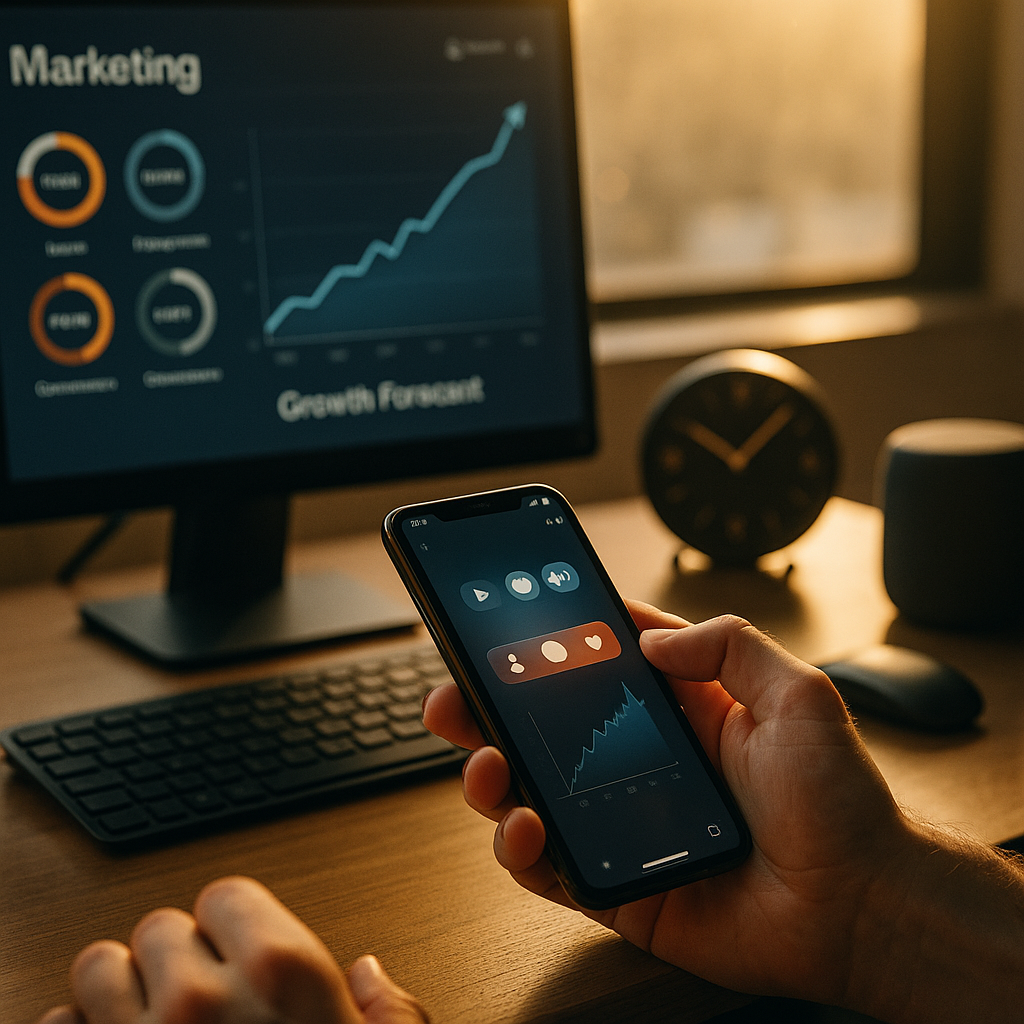
In 2026, marketers face faster buying cycles, fragmented channels, and constant shifts in demand. That is why transitioning from seasonal budgeting to always on growth models has become a strategic priority, not a trend. Brands that spread investment intelligently across the year build steadier pipelines, learn faster, and reduce waste. The real question is how to make the shift without losing control.
Why always-on marketing outperforms seasonal planning
Seasonal budgeting was built for a slower market. Teams would reserve most spend for major sales periods, product launches, or quarterly pushes, then scale back. That model can still support specific campaigns, but it is no longer enough on its own. Customers now discover, compare, and convert across many touchpoints every day. If a brand goes quiet between peak periods, it loses visibility, audience familiarity, and valuable performance data.
Always-on marketing solves this by maintaining a consistent presence across core channels while adjusting spend based on performance, market demand, and business priorities. Instead of relying on a few high-pressure windows, brands create a system that captures intent all year. This improves efficiency because paid, organic, lifecycle, and retention efforts keep working together rather than starting from zero with each new campaign.
From an operational perspective, always-on models also reduce the disruption that comes with stop-start planning. Teams can forecast more accurately, build stronger testing programs, and respond to new opportunities without waiting for the next budget cycle. For leadership, this creates better visibility into what is driving growth month after month.
It is important to note that “always on” does not mean spending at peak levels all the time. It means maintaining the right baseline activity, preserving momentum, and increasing investment when signals justify it. That distinction makes the model financially disciplined, not reckless.
Building a smarter growth marketing strategy for year-round demand
A successful growth marketing strategy starts by replacing fixed seasonal assumptions with a flexible planning framework. Many companies still allocate budget according to legacy patterns: holiday spikes, annual events, or internal planning habits. The better approach is to define investment tiers based on evidence.
Start with three layers:
- Baseline investment: the minimum level required to keep acquisition, remarketing, content distribution, and retention programs active.
- Performance expansion: additional spend deployed when channels meet target efficiency metrics such as return on ad spend, customer acquisition cost, or qualified pipeline contribution.
- Strategic surge budget: reserved funds for launches, competitive moves, partnerships, or proven seasonal demand spikes.
This structure protects core activity while preserving room for high-impact moments. It also creates alignment between finance and marketing because every dollar has a clear purpose. The conversation shifts from “How much do we spend this season?” to “What level of spend is justified by current performance and future opportunity?”
To make this work, brands need reliable measurement. That includes channel-level attribution, blended performance reporting, and a clear view of customer lifetime value. If teams optimize only for short-term conversions, they may underinvest in channels that influence consideration earlier in the journey. An always-on model performs best when decision-makers understand both immediate returns and downstream revenue effects.
Audience strategy also matters. Year-round growth depends on segmenting users by intent, lifecycle stage, and purchase readiness. New prospects need education and demand creation. Engaged users need proof and comparison content. Existing customers need upsell, cross-sell, and retention flows. Always-on growth is not one constant message. It is a continuous system of relevant messaging for different audiences at different moments.
How budget optimization changes in an always-on model
Budget optimization becomes more dynamic when brands move beyond seasonal planning. In a seasonal model, teams often commit large sums upfront and then try to force performance within a fixed window. In an always-on model, budget allocation is reviewed continuously against results, channel saturation, and shifting business goals.
This does not mean changing plans every day. It means setting a regular operating rhythm. High-performing teams often review leading indicators weekly, conduct deeper budget assessments monthly, and revisit strategic allocations quarterly. That cadence balances agility with discipline.
For example, if paid search is consistently capturing high-intent demand efficiently, it may deserve incremental budget. If paid social is generating strong assisted conversions but weak last-click returns, the team should not cut it automatically. They should examine creative quality, audience overlap, frequency, and influence on branded search or direct traffic. The goal is to understand contribution, not just isolated channel metrics.
Brands should also establish guardrails before moving money. Useful guardrails include:
- Maximum acceptable customer acquisition cost by segment
- Minimum conversion rate or pipeline threshold for expansion
- Channel saturation limits based on frequency and diminishing returns
- Retention and payback targets for subscription or repeat-purchase models
These rules prevent reactive decision-making. They also make discussions with finance more productive because budget shifts are tied to predefined operating logic.
Another common question is whether always-on models increase waste. In practice, they often reduce it. Seasonal plans can lead to rushed creative production, inflated media costs during peak periods, and underused customer insights once campaigns end. Always-on systems let brands test continuously, improve creative before major pushes, and enter peak periods with stronger assets and cleaner data.
Using performance marketing and retention together
Many organizations treat acquisition and retention as separate worlds. That split weakens always-on growth. Performance marketing is most effective when it works alongside CRM, lifecycle automation, and customer experience efforts. Acquiring new users at scale is expensive if those users do not stay, buy again, or expand their relationship with the brand.
In an always-on model, acquisition campaigns should be informed by retention outcomes. Which channels bring in high-value customers? Which audiences produce repeat purchases? Which creative themes attract users who convert quickly but churn early? These questions help teams move beyond volume and focus on durable growth.
Retention deserves baseline budget, not leftover budget. Email, SMS, push notifications, loyalty programs, in-app messaging, and post-purchase education all contribute to lifetime value. They also improve media efficiency because stronger retention allows a higher sustainable acquisition cost. Put simply, the better a business retains customers, the more aggressively it can scale customer acquisition without damaging profitability.
This integration is especially important for businesses with long consideration cycles or subscription economics. In those cases, first-touch or last-touch reporting can be misleading. A campaign that appears expensive at the top of the funnel may still be highly profitable when viewed across six or twelve months of customer value. That is why leaders should evaluate channel performance using payback period, retention curve, and lifetime value where possible.
Creative consistency matters too. Prospects should recognize the same value proposition across ads, landing pages, onboarding journeys, and retention messages. An always-on model is not just a media framework. It is a continuity framework that reduces friction from first impression to repeat purchase.
Strengthening customer lifecycle marketing with continuous insights
Customer lifecycle marketing becomes a major advantage in always-on growth models because it turns every interaction into a source of learning. Seasonal campaigns often generate bursts of data that are hard to operationalize before the next push. By contrast, continuous programs produce an ongoing feedback loop that improves targeting, messaging, product positioning, and forecasting.
To build that loop, teams should connect data from media platforms, analytics, CRM systems, product usage, and sales outcomes. This allows marketers to answer practical questions such as:
- Which traffic sources generate the highest-quality leads or customers?
- Where do users drop off between click, sign-up, activation, and repeat purchase?
- Which offers convert best by audience segment?
- How long does it typically take a customer to move from awareness to revenue?
These insights improve more than marketing spend. They often reveal friction in landing pages, pricing, checkout flows, onboarding, or sales follow-up. In other words, always-on growth works best when marketing is allowed to influence the full customer journey, not just top-of-funnel traffic.
Organizations should also document testing programs clearly. A mature always-on system includes hypothesis-driven experiments, defined success criteria, and a process for scaling winners. Without that discipline, teams risk collecting data without generating action.
For EEAT-focused content and trustworthy execution, decision-makers should rely on experienced operators, transparent measurement methods, and current market context. The strongest strategies are grounded in firsthand performance data, realistic financial modeling, and honest reporting on what works and what does not. Readers and stakeholders both benefit when advice is specific, tested, and accountable.
Creating an agile budget planning process that leadership can trust
The shift to an always-on model often fails for one reason: internal resistance. Marketing may understand the value of flexibility, but finance and executive teams still need predictability. The answer is not less agility. It is a stronger agile budget planning process with clear governance.
Start by agreeing on business outcomes. Marketing should connect spending to measurable goals such as revenue growth, qualified pipeline, subscriptions, app installs with retention, or repeat purchase rate. Then define the metrics that indicate healthy progress. This creates a shared decision framework across departments.
Next, establish reporting that leadership can trust. That usually includes:
- Baseline performance dashboard: core KPIs reviewed regularly
- Scenario planning: what happens if spend increases, stays flat, or shifts between channels
- Investment thresholds: the conditions required to unlock additional budget
- Post-analysis: what the team learned from expansions, tests, and surges
This structure gives executives confidence that budget flexibility will not turn into uncontrolled spending. It also helps marketing leaders defend investment during uncertain periods because they can show how the model protects core demand generation and captures upside efficiently.
Teams should expect a transition period. Moving away from seasonal budgeting does not happen overnight. Many companies begin with one business unit, one region, or one channel mix. They test a baseline-plus-flex model, refine reporting, and then expand. That phased approach reduces risk and builds internal proof.
Finally, keep the seasonal moments that truly matter. Always-on growth does not eliminate seasonality. It puts seasonality in the right place. Peak periods still deserve focused planning and stronger spend when justified. The difference is that brands no longer disappear between those moments. They stay present, keep learning, and grow with less volatility.
FAQs about always-on growth models
What is the difference between seasonal budgeting and an always-on growth model?
Seasonal budgeting concentrates spend around specific periods such as promotions, launches, or high-demand windows. An always-on growth model maintains core activity throughout the year and increases investment when data shows strong opportunity. It prioritizes continuity, faster learning, and steadier pipeline creation.
Does always-on marketing require a bigger budget?
No. It requires a better budget structure. Many brands reallocate funds rather than increase total spend. They protect baseline activity, reserve flexible funds for expansion, and reduce waste from rushed peak-period spending.
Which channels should stay active all year?
The answer depends on the business, but common always-on channels include paid search, remarketing, SEO, content distribution, email, SMS, lifecycle automation, and selected paid social campaigns. Channels should stay on when they support demand capture, audience nurturing, or retention efficiently.
How do you measure success in an always-on model?
Use a mix of short-term and long-term metrics. Common indicators include customer acquisition cost, return on ad spend, conversion rate, qualified leads, retention rate, repeat purchase rate, payback period, and customer lifetime value. The right mix depends on the business model.
Can seasonal businesses still use always-on growth models?
Yes. Even highly seasonal businesses benefit from maintaining brand visibility, audience engagement, and retention efforts outside peak periods. The baseline may be lower in off-seasons, but staying active improves readiness and performance when demand rises.
How often should budget allocations be reviewed?
Weekly reviews help monitor performance signals, monthly reviews support tactical budget shifts, and quarterly reviews allow deeper strategic planning. This cadence gives teams enough agility to respond without creating instability.
What is the biggest mistake companies make during the transition?
The biggest mistake is keeping old measurement habits. If teams judge every channel only by immediate last-click returns, they often underinvest in awareness, consideration, and retention. The transition works best when measurement reflects the full customer journey.
Transitioning from seasonal budgeting to always on growth models gives brands a more resilient way to acquire, convert, and retain customers in 2026. The shift is not about spending constantly at high levels. It is about keeping the right channels active, using data to scale intelligently, and aligning finance with real performance. Build a disciplined baseline, add flexibility, and let continuous learning drive growth.