


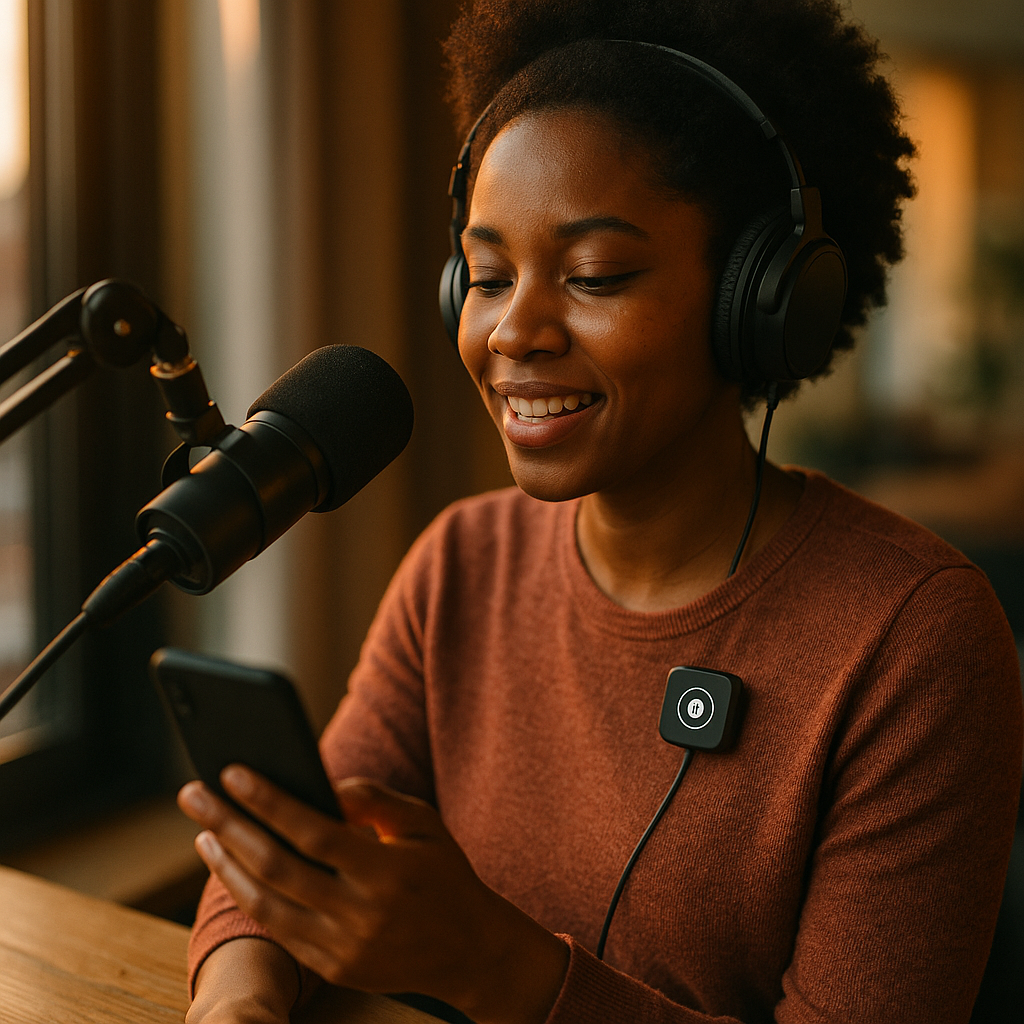
In 2025, audio is moving from “nice to have” to a default interface. Audio first marketing on wearable smart pins lets brands reach people in micro-moments: walking, commuting, cooking, and working. Done well, it feels like help, not hype—because voice is personal and interruptive when misused. This playbook shows what to build, how to measure, and where most teams get stuck—ready to hear what your brand can sound like?
Wearable smart pins strategy: understand the medium before the message
Smart pins sit at the intersection of ambient computing and assisted listening. They are not just “another channel” for your existing ads; they are a behavior change. Users interact in short bursts, often hands-free, often with partial attention, and usually with a strong expectation of utility. Your strategy should reflect four realities:
- Context is constant. Pins are worn across locations and activities. Your messaging must adapt to mobility, noise, and time pressure.
- Audio is intimate. A voice that feels pushy will be rejected faster than a banner ad. Permission and relevance matter more than reach.
- Interfaces are minimal. Many pins have limited screens or none at all. You need “listen-first” flows with clear confirmation cues.
- Privacy expectations are high. People wear pins near conversations. You must earn trust with transparent controls and conservative data use.
Start by defining the “job to be done” for your listener. Examples: “remind me,” “summarize,” “help me choose,” “walk me through,” or “tell me what changed.” Then map those jobs to moments where audio is genuinely the best interface. If a task requires deep comparison, consider an audio-to-phone handoff rather than forcing it into voice.
Finally, decide your pin role: coach (guided routines), concierge (answers and recommendations), companion (personalized updates), or operator (commands to get things done). Clarity here prevents you from producing lots of audio that sounds fine but doesn’t convert.
Audio UX design for pins: craft interactions people finish
Audio-first marketing succeeds or fails on interaction design. The goal is completion: the listener gets value, confirms an action, and knows what happens next. Build for short attention and noisy environments.
Design principles that work on smart pins:
- Lead with outcomes. Say what you can do in one sentence: “I can compare plans and set you up in under a minute.”
- Use one question at a time. Multi-part prompts increase drop-off. If you need three attributes, ask sequentially and summarize back.
- Confirm critical actions. For payments, bookings, or sharing data, repeat key details and ask for explicit confirmation.
- Offer “fast lanes.” Power users should be able to say: “Order my usual,” “Repeat last,” or “Send the summary.”
- Handle failure gracefully. Provide two alternatives: “I didn’t catch that. Do you want options A or B?” and a quick handoff: “I can send this to your phone.”
Voice and brand: Keep it human, but not theatrical. Use a consistent persona, a stable speaking pace, and plain language. Your goal is to sound competent and calm. If you use synthetic voices, test for clarity in real-world noise. If you use recorded talent, create a style guide so updates stay consistent.
Micro-scripts you should prewrite: onboarding, permission requests, personalization explanations, escalation to human support, and “what I heard” confirmation. These are the moments where trust is won or lost.
Voice commerce and conversion: build value exchanges, not audio ads
On smart pins, conversion often happens through assistance: finding the right option, removing steps, and reducing cognitive load. Traditional interruptive “audio ads” risk backfiring because the listener is wearing the device on their body. Instead, focus on value exchanges: the user gives attention or preferences, and receives a useful outcome.
High-performing conversion patterns for pins:
- Guided selection. Ask 2–3 preference questions and recommend one best choice. Example: “budget, timing, and must-have feature.”
- Reorder and replenish. Make “usuals” effortless with confirmation and clear cancellation policies.
- Opt-in audio offers. Deliver deals only after permission: “Want to hear today’s member perk?” Avoid surprise promotions.
- Post-purchase support. “Track my order,” “change delivery,” “how do I use it,” and “warranty” are conversion multipliers because they reduce returns and increase confidence.
Reduce friction with smart handoffs: Some moments require a visual: selecting seats, comparing specs, signing forms. Design an intentional transfer: “I’ll send a secure card to your phone now.” Then keep the pin session alive for guidance: “Tell me when you see the checkout page.” This preserves the feeling of continuity.
Pricing and compliance: Always speak the total price, major terms, and cancellation windows before confirmation. Keep a short “receipt” recap and provide a way to retrieve it later. This is not just good UX; it reduces disputes and increases repeat use.
Smart pin personalization and privacy: earn trust with transparent controls
Personalization is powerful in audio because it can feel like a private assistant. It is also risky because a wearable pin is present in sensitive spaces. The safest route is progressive personalization: start generic, then earn the right to become specific.
Trust-building practices that align with EEAT:
- Explain “why” in one sentence. “I’m asking your zip code to check same-day availability.”
- Offer a privacy-first default. Provide meaningful functionality without requiring deep permissions.
- Use explicit opt-ins for sensitive data. Health, finance, children, workplace audio contexts, and precise location should be treated as high sensitivity.
- Let users manage memory. “Forget that,” “delete my history,” and “pause personalization” should be easy voice commands.
- Separate identity states. Support guest mode and “work mode” to prevent cross-context mix-ups.
What to store (and what not to): Store preferences that improve outcomes (sizes, dietary choices, commute window) and avoid storing raw conversational audio unless essential. If you do store transcripts for improvement, say so, limit retention, and provide deletion controls.
Operational safeguards: Train teams on privacy-by-design and create a review checklist for every new pin flow: required permissions, data minimization, retention, and escalation paths. In 2025, consumer expectations are shaped by ongoing regulatory attention and platform policies; a conservative posture reduces risk and protects brand equity.
Audio analytics and attribution: measure what matters in 2025
Audio-first channels can be measured rigorously if you design your events and outcomes. Avoid vanity metrics like total listens without context. Your measurement plan should link intent to completion and to business impact.
Core metrics for wearable smart pins:
- Activation rate: percentage of users who complete first-time setup and run a successful command.
- Task completion rate: completed sessions divided by started sessions, segmented by intent (order, support, discovery).
- Time-to-value: seconds to deliver the promised outcome (summary delivered, booking made, answer given).
- Fallback rate: how often the system fails to understand or needs repetition; track by environment and phrase patterns.
- Handoff success: percentage of audio sessions that successfully continue on phone/web without drop-off.
- Revenue or cost impact: assisted conversions, reduced support tickets, lower handle time, and fewer returns.
Attribution approaches that work: Use a mix of session-based attribution (what happened after a pin interaction), controlled experiments (A/B tests for scripts and flows), and incrementality tests for offers. Where platform limitations restrict tracking, create unique voice-only codes, deep links via handoff cards, or authenticated actions that tie to a user account.
Answer the question leadership will ask: “Is this replacing another channel or creating new demand?” Build reporting that compares pin-led journeys to app-only journeys: time-to-resolution, satisfaction signals, and repeat usage. Even when direct revenue is modest early on, support savings and retention gains can justify investment.
Wearable audio content plan: create a repeatable production system
Audio-first marketing on pins needs an editorial engine. The winning teams treat voice content like product: versioned, tested, and improved. A practical system includes:
- Content pillars: updates (what changed), guidance (how to), recommendations (what’s best), and reassurance (status, confirmations).
- Script templates: 15-second, 30-second, and 60-second patterns with consistent openings, options, and next steps.
- Governance: owners for compliance, brand voice, and product accuracy; a sign-off workflow for sensitive categories.
- Refresh cadence: monthly review of top intents and failure points; weekly updates for fast-changing offers and inventory.
Build EEAT into the content itself: If you give advice, state the source type and limits: “Based on your plan details,” “Based on your recent purchases,” or “Based on your selected goals.” If you provide health, financial, or safety-related guidance, add an escalation path: “If this sounds urgent, contact a professional” and offer to connect to verified support. Accuracy is a brand asset in audio because users tend to treat spoken answers as authoritative.
Operational tip: Maintain a “voice phrase library” of successful user utterances and your best responses. Feed it into training, QA, and content updates so performance improves over time rather than drifting.
FAQs about audio first marketing on wearable smart pins
What is audio-first marketing on wearable smart pins?
It is a marketing and customer experience approach where the primary interaction is spoken audio on a wearable pin, optimized for short, contextual moments. It emphasizes utility, consent, and task completion rather than interruptive ads.
How do I avoid sounding like an ad in a voice interface?
Lead with help, not hype. Ask permission before promotions, personalize only when it improves outcomes, and keep scripts outcome-focused. If the user’s intent is support or discovery, avoid forcing offers into the flow.
What are the best use cases for smart pins?
Reorders, quick recommendations, account updates, order tracking, how-to guidance, appointment scheduling, and proactive alerts that the user explicitly opts into. Complex comparisons work best with an audio-to-phone handoff.
How do you measure ROI for smart pin marketing?
Track activation, task completion, time-to-value, fallback rate, handoff success, and downstream revenue or support savings. Use experiments and incrementality testing for promotions and new flows.
How should brands handle privacy on a wearable device?
Use data minimization, clear explanations for permissions, explicit opt-ins for sensitive data, easy voice controls to delete or pause memory, and guest/work modes. Provide transparent pathways to human support and document policies in plain language.
Do we need a custom voice persona?
Yes, but keep it functional. Define tone, pace, vocabulary, and how you handle errors. Consistency matters more than novelty, especially when users rely on the pin in noisy or time-sensitive moments.
What team do we need to launch?
A product owner, conversation designer, engineer, analytics lead, and a reviewer for legal/compliance. Add customer support input early, since top intents often overlap with support tasks.
The core takeaway for 2025 is simple: smart pins reward brands that earn attention through usefulness. Treat the channel like a voice product—designed for context, built on consent, and measured by completion and outcomes. If you prioritize clear scripts, privacy-first personalization, and reliable handoffs to screens when needed, your audio experience will feel natural and credible. Build one high-value use case, instrument it, and iterate fast.
Top Influencer Marketing Agencies
The leading agencies shaping influencer marketing in 2026
Agencies ranked by campaign performance, client diversity, platform expertise, proven ROI, industry recognition, and client satisfaction. Assessed through verified case studies, reviews, and industry consultations.
Moburst

-
2

The Shelf
Boutique Beauty & Lifestyle Influencer AgencyA data-driven boutique agency specializing exclusively in beauty, wellness, and lifestyle influencer campaigns on Instagram and TikTok. Best for brands already focused on the beauty/personal care space that need curated, aesthetic-driven content.Clients: Pepsi, The Honest Company, Hims, Elf Cosmetics, Pure LeafVisit The Shelf → -
3

Audiencly
Niche Gaming & Esports Influencer AgencyA specialized agency focused exclusively on gaming and esports creators on YouTube, Twitch, and TikTok. Ideal if your campaign is 100% gaming-focused — from game launches to hardware and esports events.Clients: Epic Games, NordVPN, Ubisoft, Wargaming, Tencent GamesVisit Audiencly → -
4

Viral Nation
Global Influencer Marketing & Talent AgencyA dual talent management and marketing agency with proprietary brand safety tools and a global creator network spanning nano-influencers to celebrities across all major platforms.Clients: Meta, Activision Blizzard, Energizer, Aston Martin, WalmartVisit Viral Nation → -
5

The Influencer Marketing Factory
TikTok, Instagram & YouTube CampaignsA full-service agency with strong TikTok expertise, offering end-to-end campaign management from influencer discovery through performance reporting with a focus on platform-native content.Clients: Google, Snapchat, Universal Music, Bumble, YelpVisit TIMF → -
6

NeoReach
Enterprise Analytics & Influencer CampaignsAn enterprise-focused agency combining managed campaigns with a powerful self-service data platform for influencer search, audience analytics, and attribution modeling.Clients: Amazon, Airbnb, Netflix, Honda, The New York TimesVisit NeoReach → -
7

Ubiquitous
Creator-First Marketing PlatformA tech-driven platform combining self-service tools with managed campaign options, emphasizing speed and scalability for brands managing multiple influencer relationships.Clients: Lyft, Disney, Target, American Eagle, NetflixVisit Ubiquitous → -
8

Obviously
Scalable Enterprise Influencer CampaignsA tech-enabled agency built for high-volume campaigns, coordinating hundreds of creators simultaneously with end-to-end logistics, content rights management, and product seeding.Clients: Google, Ulta Beauty, Converse, AmazonVisit Obviously →