


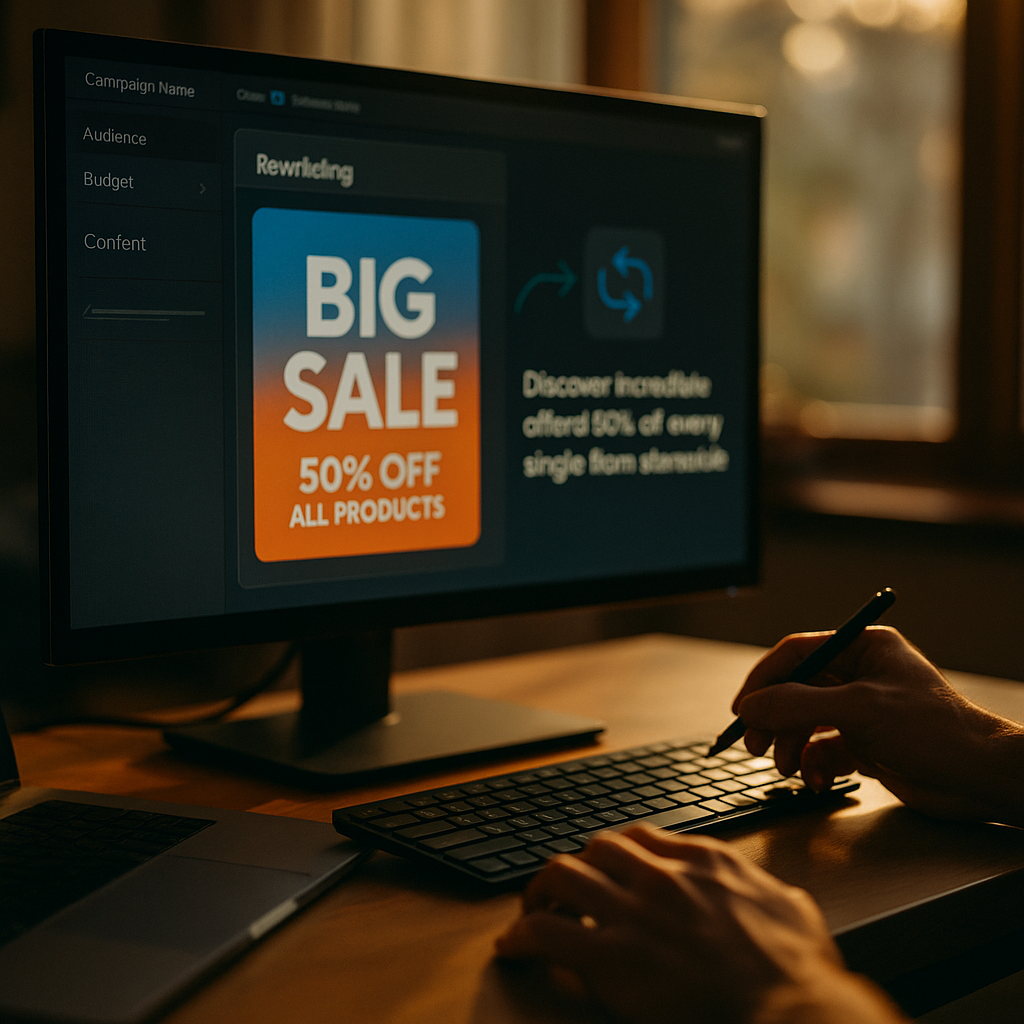
Marketing teams used to spend three weeks turning a creative brief into a live campaign. Now some brands are doing it in three hours — and the campaign keeps rewriting itself after launch. Auxia’s Agent Studio is one of the clearest examples yet of AI collapsing the brief-to-change pipeline into a single automated loop. That’s a massive efficiency win. It’s also a governance headache waiting to happen.
The pitch is simple: feed an AI agent your brand guidelines, audience data, and campaign goals, and it drafts the brief, builds the assets, launches the campaign, and adjusts targeting or messaging in real time based on performance. No more waiting for the Monday status call to hear that CTR dropped. The agent already reallocated budget on Friday night.
What Auxia’s Agent Studio Actually Does
Auxia built its name in lifecycle personalization — the kind of behind-the-scenes engine that decides which push notification or email variant a user sees based on predicted behavior. Agent Studio extends that logic into campaign creation itself. Instead of a marketer manually configuring dozens of audience-message pairings, an AI agent generates and tests them, then promotes winners automatically.
The pipeline looks roughly like this: a marketer inputs a brief (goals, constraints, brand voice, compliance rules), the agent decomposes it into testable hypotheses, generates creative variants, deploys them across channels, and monitors performance signals continuously. When a variant underperforms against a threshold, the agent doesn’t wait for a human to notice — it swaps creative, adjusts targeting, or shifts spend on its own.
Similar logic is showing up across the stack. vertical ML decision engines are already outperforming traditional CDPs at exactly this kind of real-time reallocation, and tools built for cross-platform placement are following the same pattern of continuous, automated adjustment rather than one-and-done setup.
Why This Matters More Than It Sounds
Here’s the uncomfortable part. For decades, the brief was a checkpoint. A human wrote it, a human approved it, a human signed off before anything went live. That checkpoint was slow, but it was also where legal review, brand safety checks, and strategic judgment happened. Compress that into an automated pipeline and you compress the oversight too — unless you deliberately rebuild it somewhere else.
According to eMarketer, marketers now cite speed-to-launch as one of their top three reasons for adopting AI campaign tools, right behind cost reduction. Nobody’s citing “improved compliance” as a reason. That tells you where the industry’s priorities currently sit, and it’s a gap worth closing before regulators close it for you.
When AI agents can change a live campaign without human sign-off, the brief stops being a planning document and becomes a live risk contract — one that needs the same scrutiny as a legal agreement.
The Speed Trade-Off Nobody Wants to Talk About
Ask any brand strategist what worries them about autonomous campaign tools and you’ll get some version of the same answer: it’s not the AI making mistakes, it’s the AI making mistakes at scale, invisibly, overnight. A human media buyer who misreads a brief produces one bad ad set. An agent that misreads a brief can produce five hundred bad variants across three platforms before anyone checks a dashboard.
This isn’t hypothetical. Research summarized in AI media-buying error rate analysis shows autonomous systems introducing errors at rates that would be unacceptable if a human made the same calls — the difference is nobody’s watching in real time to catch them.
Auxia Isn’t Alone — And That’s the Point
Agent Studio gets attention because Auxia has real enterprise traction, but it’s part of a broader wave. Google’s Ask Ad Manager is pushing toward autonomous budget and creative decisions inside Google Ads. Meta’s Advantage+ suite does something structurally similar for social. Startups building on top of GPT-4 and Claude are wrapping brief-to-brief automation around client-specific brand rules.
The common thread: every one of these tools treats the creative brief as a machine-readable input rather than a human-reviewed document. That’s the actual shift. It’s not “AI writes ads now” — marketers have had AI copy tools for years. It’s that the brief itself has become an API call, and the campaign that results from it can rewrite its own parameters without a person in the loop.
If you’ve read Google Ask Ad Manager’s autonomy risk coverage, you already know the pattern: efficiency gains up front, governance debt accumulating in the background.
What Gets Automated, What Doesn’t (Yet)
- Automated reliably: audience segmentation, creative variant generation, budget pacing, A/B test promotion, basic compliance flagging against pre-set rules.
- Automated with caveats: brand voice consistency across variants, cross-platform message coherence, influencer/creator brief alignment.
- Still needs a human: legal review for regulated categories (finance, health, alcohol), sensitive cultural context, crisis-adjacent messaging, final sign-off on anything touching FTC disclosure rules.
That last category is where most brands are still getting burned. The FTC’s endorsement guidelines don’t care whether a human or an AI agent generated the ad copy — the brand is still liable. An agent that autonomously swaps a creator’s disclosure language to “improve engagement” is a compliance incident waiting to happen, and it’s exactly the kind of edge case these tools haven’t fully solved.
Building a Brief That Survives Contact With an Agent
If you’re going to hand a brief to an AI system and let it run, the brief itself needs to change shape. A brief written for a human account manager assumes shared context — “keep it on-brand,” “nothing too edgy,” “you know our audience.” An agent doesn’t know your audience unless you encode it.
Practically, that means:
- Write briefs as structured rule sets, not prose. Explicit constraints (banned words, required disclosures, tone parameters) rather than vibes.
- Define hard stop conditions — spend thresholds, sentiment triggers, competitor-mention flags — that force human review before the agent acts further.
- Build an audit trail. Every autonomous change should log the trigger, the action, and the performance data behind it. If you can’t reconstruct why an agent did something, you can’t defend it to a client or a regulator.
- Test the agent against edge cases before launch, not after. Feed it a brief with an ambiguous constraint and see what it does. That’s cheaper than finding out in production.
This is essentially the same discipline covered in creator brief compliance comparisons between Claude and OpenAI grounding tools — the model matters less than whether your brief was ever specific enough to be enforceable in the first place.
The ROI Case, Honestly Assessed
Let’s not pretend the efficiency gains are marginal. Teams using agentic campaign tools report launch timelines cutting from weeks to days, and iteration cycles that used to take a sprint now happen in hours. For brands running high-volume, always-on programs — lifecycle email, retargeting, always-on social — that speed compounds fast.
But ROI calculations need to include the cost of governance, not just the cost of headcount saved. A HubSpot survey of marketing leaders found trust in AI-driven optimization consistently outpaces trust in AI-driven budget control — marketers are comfortable letting AI suggest, less comfortable letting it spend without a check. That gap is worth taking seriously, and it lines up with what’s covered in why marketers trust AI optimization but not budget control.
The honest ROI model looks like: speed gains minus the cost of building override infrastructure minus the (hopefully rare) cost of a compliance incident. Skip the middle term and you’re not calculating ROI, you’re calculating best-case ROI.
The brands winning with agentic campaign tools aren’t the ones moving fastest — they’re the ones who built the override switch before they needed it.
Where This Is Headed
Expect brief-to-campaign automation to keep expanding into creator and influencer workflows next. If an agent can generate and adjust a paid social campaign autonomously, the logical next step is agents managing creator brief distribution, flagging off-brand creator content, and auto-adjusting usage rights language — territory already being explored in AI distribution agent architecture discussions. The vetting questions brands ask about programmatic ad agents will soon apply to creator-facing ones too.
For now, the practical move isn’t resisting these tools. It’s treating every “autonomous” feature as autonomous-with-a-leash: define the boundaries clearly, log everything, and review the log weekly, not quarterly.
Visible FAQ
Frequently Asked Questions
What is Auxia’s Agent Studio used for?
Agent Studio is an AI system that automates campaign creation and mid-flight optimization, turning a marketing brief into live creative, targeting, and budget decisions that the agent can adjust autonomously based on performance data.
Is autonomous campaign optimization risky for regulated industries?
Yes. Sectors like finance, health, and alcohol face strict disclosure and advertising rules under FTC guidelines, and an AI agent that changes messaging without human review can create compliance exposure even if it improves engagement metrics.
How is this different from earlier AI ad tools like Google’s Performance Max?
Earlier tools automated bidding and basic creative testing within fixed rules set by a human. Newer agentic systems like Agent Studio can rewrite the brief’s underlying assumptions and reallocate strategy in real time, with less human checkpoint involvement by default.
What should a brand require before adopting an agentic campaign tool?
An audit trail for every autonomous action, defined stop conditions that trigger human review, structured (not prose-based) briefs with explicit constraints, and pre-launch testing against ambiguous or edge-case scenarios.
Does automating the brief-to-campaign pipeline reduce marketing headcount needs?
It reduces manual execution work but increases demand for governance, oversight, and brief-engineering skills. Teams typically shift resources from execution to monitoring and compliance rather than eliminating roles outright.
Top Influencer Marketing Agencies
The leading agencies shaping influencer marketing in 2026
Agencies ranked by campaign performance, client diversity, platform expertise, proven ROI, industry recognition, and client satisfaction. Assessed through verified case studies, reviews, and industry consultations.
Moburst

-
2

The Shelf
Boutique Beauty & Lifestyle Influencer AgencyA data-driven boutique agency specializing exclusively in beauty, wellness, and lifestyle influencer campaigns on Instagram and TikTok. Best for brands already focused on the beauty/personal care space that need curated, aesthetic-driven content.Clients: Pepsi, The Honest Company, Hims, Elf Cosmetics, Pure LeafVisit The Shelf → -
3

Audiencly
Niche Gaming & Esports Influencer AgencyA specialized agency focused exclusively on gaming and esports creators on YouTube, Twitch, and TikTok. Ideal if your campaign is 100% gaming-focused — from game launches to hardware and esports events.Clients: Epic Games, NordVPN, Ubisoft, Wargaming, Tencent GamesVisit Audiencly → -
4

Viral Nation
Global Influencer Marketing & Talent AgencyA dual talent management and marketing agency with proprietary brand safety tools and a global creator network spanning nano-influencers to celebrities across all major platforms.Clients: Meta, Activision Blizzard, Energizer, Aston Martin, WalmartVisit Viral Nation → -
5

The Influencer Marketing Factory
TikTok, Instagram & YouTube CampaignsA full-service agency with strong TikTok expertise, offering end-to-end campaign management from influencer discovery through performance reporting with a focus on platform-native content.Clients: Google, Snapchat, Universal Music, Bumble, YelpVisit TIMF → -
6

NeoReach
Enterprise Analytics & Influencer CampaignsAn enterprise-focused agency combining managed campaigns with a powerful self-service data platform for influencer search, audience analytics, and attribution modeling.Clients: Amazon, Airbnb, Netflix, Honda, The New York TimesVisit NeoReach → -
7

Ubiquitous
Creator-First Marketing PlatformA tech-driven platform combining self-service tools with managed campaign options, emphasizing speed and scalability for brands managing multiple influencer relationships.Clients: Lyft, Disney, Target, American Eagle, NetflixVisit Ubiquitous → -
8

Obviously
Scalable Enterprise Influencer CampaignsA tech-enabled agency built for high-volume campaigns, coordinating hundreds of creators simultaneously with end-to-end logistics, content rights management, and product seeding.Clients: Google, Ulta Beauty, Converse, AmazonVisit Obviously →