


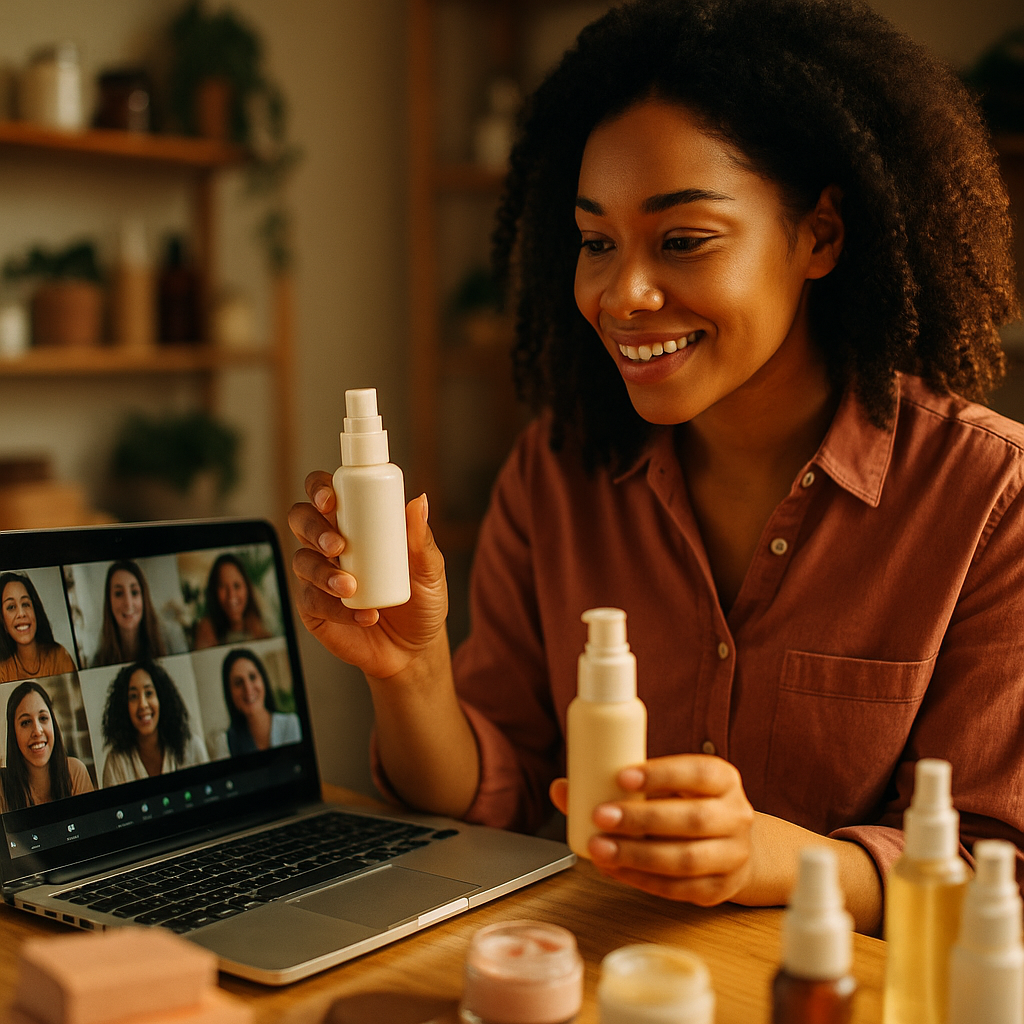
In 2025, many direct-to-consumer brands are rethinking acquisition. This case study shows how one founder-led beauty startup shifted budget, mindset, and metrics to build durable demand without relying on volatile platforms. You’ll learn what broke, what replaced it, and what the team measured to stay honest. The turning point was unexpected—and repeatable.
Why a beauty startup pivoted away from paid ads
Primary keyword: Case Study: A Beauty Startup’s Pivot From Paid Ads To Community Growth is not a trendy storyline; it’s a response to math. The startup in this case sells clean, fragrance-free skincare designed for reactive skin. The product worked, but scaling through paid social didn’t.
The team’s paid-ad playbook looked normal: prospecting on major social platforms, retargeting site visitors, and seasonal bursts for launches. Early results were strong because the brand’s novelty and audience targeting options did the heavy lifting. Then three things happened at once:
- Rising acquisition costs: CPMs climbed, and the effective cost per first purchase rose faster than gross margin could support.
- Weaker signal quality: Attribution gaps made it harder to know which ads created true incremental buyers versus stealing credit from organic demand.
- Fragile retention: Too many buyers arrived discount-trained and didn’t reorder unless pushed by another promotion.
Instead of assuming “better creative” would fix it, the founder asked a sharper question: What if the product is best sold through trust, not interruption? Beauty is intimate. Skin issues are emotional. The team realized they were paying to enter conversations they hadn’t earned—while real conversations were already happening in DMs, comments, and support tickets.
The decision wasn’t “no ads ever.” It was a pivot from ad-dependence to community-led growth, with ads used later as a supplement. The goal: build a stable demand engine the brand could control.
Paid ads performance audit and CAC reality check
Before turning anything off, the team ran a disciplined audit. This matters for EEAT: you cannot claim a pivot “worked” without a baseline, clean measurements, and clear definitions.
They segmented customers by acquisition channel and looked at:
- Contribution margin after marketing: Not just ROAS. They included shipping, payment fees, returns, and customer support load.
- Payback period: How long it took for gross profit to recover acquisition costs.
- 60-day and 120-day reorder rate: A practical window for skincare repurchase cycles.
- Discount dependency: Percentage of orders using codes tied to ads and retargeting.
The red flags were consistent: new customers from heavy-discount ads had lower second-order rates, and the payback period stretched past what cash flow could tolerate. Retargeting looked efficient but overlapped heavily with email and branded search, suggesting inflated attribution.
So they set a clear operating rule: if a channel cannot produce customers with a sustainable payback window at full-price or near full-price, it cannot be the growth foundation. That rule created alignment between marketing and finance and prevented the team from “optimizing” their way into a deeper hole.
They also created a simple dashboard for weekly decisions:
- New buyers: Total and by channel (paid, organic, referral, community).
- Repeat buyers: Volume and rate.
- Gross profit: Not revenue, to avoid vanity spikes from discounting.
- Community health metrics: Participation and response times (explained below).
This audit became the moment the team stopped asking “How do we scale ads?” and started asking “What creates belonging and repeat demand?”
Community growth strategy: building trust, not impressions
The pivot started with a clear promise: the community would not be a broadcast channel disguised as a club. It would be a place where people with reactive skin could get help, share routines, and feel seen.
The startup chose a three-layer community model to fit different comfort levels:
- Public layer: Short educational content on social platforms and a weekly “skin myth” series to attract the right audience.
- Owned layer: An email newsletter plus a private community space where members could post questions and routines.
- High-touch layer: Monthly live Q&A sessions with a licensed esthetician the brand contracted (expert oversight strengthened trust and reduced misinformation).
Instead of chasing follower counts, they focused on participation. Their weekly targets were:
- Post-to-comment ratio: Did the content spark dialogue?
- Median response time: Could a member get a helpful answer within a day?
- Member-generated posts: A sign the community wasn’t dependent on the brand’s output.
They also wrote a lightweight community policy to protect safety and credibility:
- No diagnosing medical conditions; encourage dermatology visits for specific symptoms.
- No shaming routines or skin types.
- Claims must be evidence-based; product benefits framed around experience, not miracles.
This structure did something paid ads rarely do: it made the brand useful before asking for a sale. That shift reduced price sensitivity because buyers understood the “why” behind the routine, not just the “what” in the cart.
Owned channels and user-generated content engine
Community without distribution can stagnate. The startup connected community activity to owned channels so insights turned into assets that compound.
They implemented a simple weekly workflow:
- Collect: Pull the top 10 community questions, objections, and wins.
- Create: Turn them into short videos, carousels, and email sections titled “What members asked this week.”
- Convert: Link to a “routine builder” page with three paths: barrier repair, redness, and post-acne sensitivity.
- Close the loop: Post back the best answers and invite members to share results after two weeks.
This created a steady UGC and education engine without pressuring people to “review the product.” Members shared routines, before-and-after context, and decision criteria. The brand asked for consent and used a clear release process before featuring anyone’s content.
They also rebuilt email around relationship, not blasts:
- Welcome series: A short skin quiz, a routine guide, and a “how to patch test” email that reduced returns and irritation complaints.
- Community highlights: Member tips plus expert commentary from the esthetician to improve accuracy.
- Reorder nudges: Timed around typical usage, framed as “check your barrier” rather than “buy again.”
Critically, they introduced a no-discount default. Discounts became a rare tool for inventory or member appreciation, not the main conversion lever. This protected brand equity and helped clarify whether community activity was driving true demand.
To answer the question most founders ask next—“How do you grow the community without ads?”—they used three acquisition loops:
- Referral loop: Members could invite friends to join the community and both received early access to new content (not automatic discounts).
- Partner loop: Collaboration with micro-creators and skin educators who hosted co-live sessions, sending qualified people into the owned community.
- Search loop: FAQ pages built from community questions, optimized for long-tail queries like “how to patch test new skincare” and “barrier repair routine for sensitive skin.”
Retention and LTV lift from community-led growth
The startup treated retention as the proof of the pivot. If community made customers more confident and consistent, reorder rates would rise without constant promotions.
They introduced three retention mechanics tied directly to community behavior:
- Routine accountability: A monthly “reset week” where members posted their routine and got feedback on consistency, not product stacking.
- Education milestones: Short lessons on irritation triggers, over-exfoliation, and ingredient conflicts, with a printable routine tracker.
- Member status: Recognition for helpful answers and responsible sharing, which increased participation and reduced misinformation.
Operationally, the brand also improved customer experience based on what the community surfaced:
- Packaging updates: Clearer directions for patch testing and frequency of use.
- Support macros: Faster, more consistent responses to sensitivity concerns.
- Product page upgrades: “Who this is for” and “Who should skip” sections to reduce mismatched purchases.
Here’s what changed in the business model, beyond “good vibes”:
- Higher-quality first purchases: Buyers arrived with realistic expectations and better product-fit, reducing returns.
- More predictable reorders: Education improved usage consistency, which made replenishment timing steadier.
- Lower dependence on promotions: Community members valued guidance and results, not just price.
The team still used paid ads, but differently: only to amplify proven community content and to retarget high-intent visitors without heavy discounting. Ads became a distribution layer for trust they had already earned, not a substitute for it.
2025 playbook: metrics, team roles, and common mistakes
To make the pivot sustainable, the startup clarified roles and avoided “everyone posts when they can.” They ran a lean setup:
- Community lead: Moderation, prompts, member onboarding, and weekly insights reporting.
- Customer support liaison: Feeds recurring issues into community content and product pages.
- Expert partner: Licensed esthetician for monthly sessions and review of sensitive claims.
- Content editor: Turns community insights into publishable assets across email and social.
They tracked a tight set of metrics that connected engagement to revenue without forcing artificial attribution:
- Community activation rate: Percentage of new members who post, comment, or attend a live session within two weeks.
- Repeat purchase rate: By cohort and by whether the customer joined the community.
- Support ticket rate per 100 orders: A proxy for product-fit and clarity of instructions.
- Gross profit per visitor: A blended metric that discourages discount-heavy tactics.
Common mistakes they avoided (and you should too):
- Launching a community with no purpose: “Join our group” is not a reason. Solve a specific problem.
- Letting misinformation spread: Beauty advice can get risky. Use expert review and clear boundaries.
- Over-moderating into silence: Keep rules minimal but firm; encourage member-to-member help.
- Measuring only vanity engagement: Track participation and retention, not likes.
- Replacing ads with content spam: Publish less, answer better, and reuse what members actually ask.
If you’re wondering whether this approach fits your brand, a quick diagnostic helps: if your product requires education, routine adherence, or trust (most skincare does), community growth is a natural fit. If your product is purely impulse and low-repeat, community can still help, but the ROI story changes.
FAQs about pivoting from ads to community
- How long does it take for community growth to replace paid ads?
Most brands see meaningful traction when community participation becomes consistent and owned channels (email, SEO) start compounding. The key milestone is not time—it’s when community members create posts and answer each other, and repeat purchase rate rises without added discounting.
- Do you need to stop paid ads completely?
No. In this case, the startup reduced reliance on ads and redeployed spend to amplify community-proven messages. Paid can work best as distribution for validated content and high-intent retargeting rather than as the main engine for cold acquisition.
- What platform should a beauty brand use for its community?
Choose based on member behavior and moderation needs. Many brands pair a private community space with email as the durable owned channel. The platform matters less than consistent prompts, fast responses, and clear guidelines that protect members.
- How do you measure ROI from community?
Track activation (who participates), retention (repeat purchases by cohort), and operational impact (support tickets, returns). Then compare customers who join the community versus those who don’t. This avoids relying on last-click attribution and ties community to real business outcomes.
- What content drives the most community-led conversions in skincare?
Content that removes risk: patch testing guidance, routine-building help, ingredient conflicts to avoid, and “who should skip” clarity. Member stories work best when they include context (skin type, routine, timeline) and are reviewed for accurate claims.
- How do you prevent a community from becoming a customer support backlog?
Set boundaries: route order issues to support, keep medical questions out, and build a searchable library of answers. Use weekly themes and prompts so discussions stay structured and members can help each other without the brand answering every thread.
The takeaway is simple: the startup didn’t “beat” ads—it outgrew dependence on them. By auditing CAC honestly, building a purposeful community, and turning member questions into owned assets, the brand created trust that lowered discount pressure and improved retention. In 2025, the strongest beauty growth comes from usefulness and credibility, not interruption. Build the conversation you want to earn.