


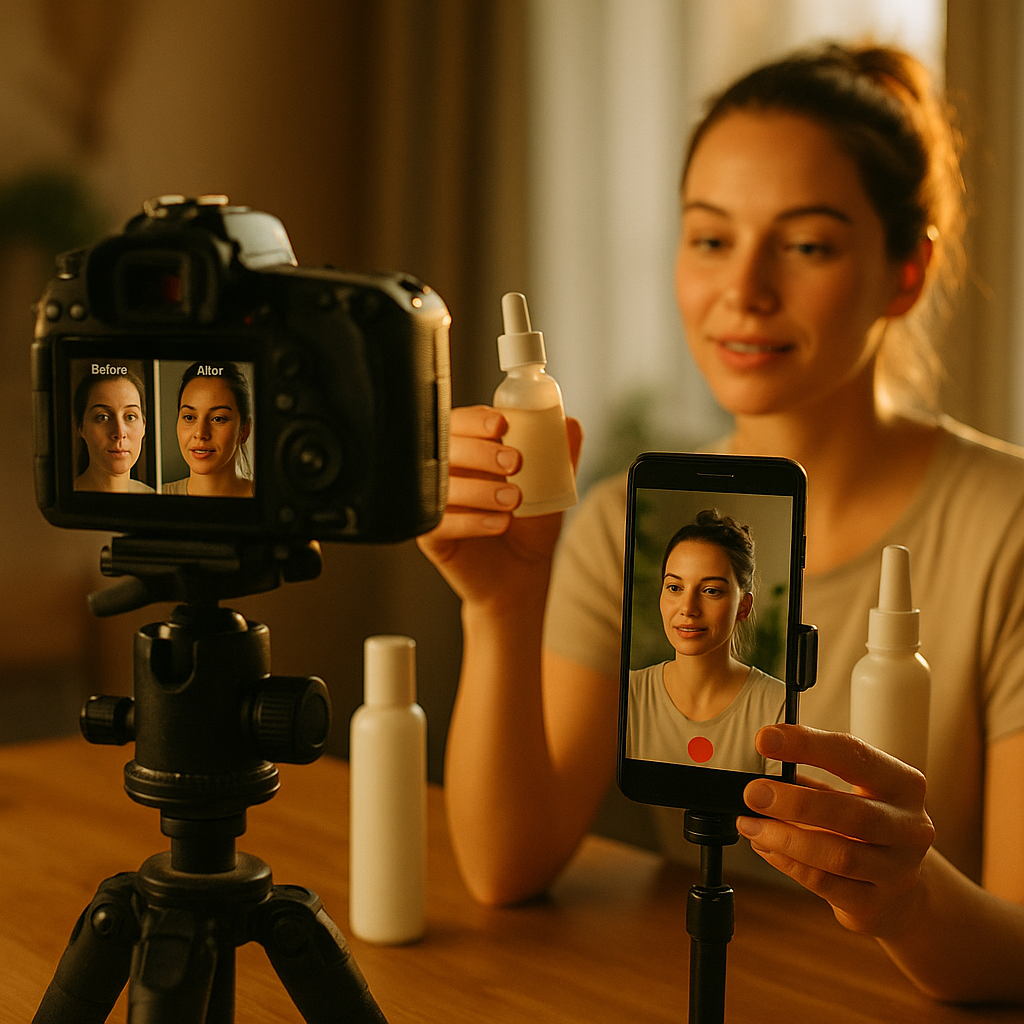
Skincare is the most complained-about category in influencer marketing, and before and after transformation videos are ground zero. The FTC settled multiple deceptive endorsement cases tied to skincare and supplement claims in recent years, several stemming directly from manipulated or unsubstantiated result videos. Before and after transformation videos convert like nothing else in beauty. They also carry more legal and platform risk than almost any other creative format. Here’s how to keep the format profitable without inviting a subpoena.
Why Before and After Content Draws Regulatory Heat
The format works because it’s visual proof. A dull, blotchy jawline in frame one, a glowing, even-toned one in frame two. No voiceover required. That’s exactly why regulators scrutinize it so closely: the claim is implicit, but it’s still a claim.
The FTC doesn’t care whether the “before” and “after” text appears on screen or not. If the visual implies a typical result from typical use, the brand needs substantiation to back it up. Lighting changes, filters, weight-loss-adjacent framing, or a 10-day glow-up that took three months to film all count as material omissions under FTC endorsement guidance.
A before and after video isn’t just creative, it’s a testimonial. And testimonials are regulated speech, not just marketing copy.
The FTC’s Rules Aren’t Suggestions
Three things trip up skincare brands most often:
- Atypical results presented as typical. If one creator’s cystic acne cleared in two weeks and that’s not the norm, the video needs a clear, proximate disclosure saying so, not a buried caption line.
- Undisclosed editing. Ring light swaps, filter stacking, or color grading that exaggerates skin tone evenness can qualify as deceptive even if the product itself works fine.
- Missing material connection disclosures. “Gifted” or “#ad” isn’t optional when the creator received free product, payment, or even long-term discount codes. This applies whether the video lives on TikTok, Instagram, or a brand’s own paid feed.
Brands often assume the creator carries this liability alone. They don’t. The FTC has pursued brands directly for creator content they sponsored, briefed, or amplified through paid media. If your legal team hasn’t reviewed your influencer contracts against current FTC guidance this year, that’s a gap worth closing before your next campaign, not after a complaint lands.
Platform Policies Add a Second Layer of Risk
Even if a video clears FTC standards, Meta and TikTok both maintain separate ad policies restricting “before and after” imagery in health, wellness, and beauty verticals, particularly when the content implies weight loss, body shape change, or medical treatment outcomes. Meta’s health and wellness ad policy explicitly discourages content that implies negative self-perception before the “solution.” TikTok’s community guidelines take a similar stance on health claims that could mislead users about efficacy.
This means a video that’s technically FTC-compliant can still get rejected, demonetized, or shadow-limited in organic reach because it trips an automated content filter. Brands running paid amplification behind creator content need to budget review time for this. Treat platform policy review as a parallel track to legal review, not an afterthought.
For teams building broader paid strategies around creator proof points, it’s worth pairing this with a documented dark post creative workflow so nothing goes live without a compliance pass baked into the spec sheet.
Building a Compliance-Safe Production Checklist
The good news: none of this kills the format. It just requires tighter production discipline. A workable checklist looks like this:
- Match lighting, camera distance, and angle between before and after shots. Shoot both in one session where possible, or document the gap.
- Disclose the timeframe on screen, not just in the caption. “After 8 weeks of daily use” beats a vague glow transition cut.
- Require raw footage submission from creators before final edit approval, so your team can verify no filter or retouching was layered on.
- Standardize the disclosure language creators use, don’t leave “ad” versus “sponsored” versus “gifted” up to individual creator preference.
- Keep signed model releases and usage rights on file for every creator whose face appears in a before/after sequence, especially if the brand plans to repurpose the clip into paid media later.
This is the same discipline that governs claims-heavy formats like ingredient deep dive videos, where science substantiation and visual proof have to line up exactly. Before and after content just adds a visual testimonial layer on top.
What to Do When a Creator’s Results Look “Too Good”
This is the conversation nobody wants to have with a high-performing creator: their results might be too dramatic to run without extra disclosure. If a creator’s skin transformation looks exceptional, ask two questions before greenlighting the content. Was this achieved through typical product use, or did they also change diet, skincare routine, or add prescription treatment alongside your product? And can the result be reasonably expected by an average customer?
If the answer to either is murky, the fix isn’t to kill the video. It’s to add a clear on-screen disclosure: “Individual results may vary. [Creator] also used [other factor].” That single line moves a video from legally risky to defensible, and most audiences don’t even register it as a negative, they register it as honesty. Brands that build this into their brief upfront, rather than editing it in after legal flags it, ship faster and argue less internally.
Documentation: Your Best Defense If Challenged
If a complaint or platform review ever surfaces, the brand’s paper trail matters more than the creative itself. Keep a compliance folder per campaign with: the signed brief, disclosure language approved, raw footage timestamps, and any substantiation data behind the claims shown. This isn’t bureaucracy for its own sake, it’s the difference between a five-minute response to a platform inquiry and a weeks-long legal scramble.
Brands running these campaigns at volume increasingly borrow structure from format libraries built for other high-scrutiny categories, like founder as creator scripts, where authenticity and compliance have to coexist by design rather than by accident.
According to eMarketer research on influencer marketing spend, beauty and personal care remain among the highest-investment categories for creator partnerships, which means regulatory exposure scales right alongside the budget. Sprout Social data on consumer trust also shows authenticity concerns rising fastest in exactly this niche, transformation and results-driven content. That combination, high spend and high scrutiny, is precisely why a compliance-first production process pays for itself.
Some brands also lean on shoppable mini documentaries as a lower-risk alternative, spreading the transformation narrative across a longer arc with more context, rather than compressing it into a single dramatic cut that invites scrutiny. A longer format also gives room for the kind of layered disclosure and routine detail that satisfies both the FTC and platform review teams without diluting the emotional payoff.
Frequently Asked Questions
Do before and after skincare videos always need FTC disclosures?
Yes, if there’s any material connection between the brand and the creator, including free product, payment, or affiliate commission. The disclosure needs to be clear and placed where viewers will actually see it, not buried in a caption or hashtag string.
Can brands use filters or editing on before and after content at all?
Minor color correction for consistency is generally fine, but any edit that changes skin texture, tone evenness, or blemish visibility beyond what the product actually delivers crosses into deceptive territory. When in doubt, keep both shots as close to raw as possible.
What happens if a brand doesn’t disclose atypical results?
The FTC can pursue enforcement action against both the creator and the brand, including fines and required corrective advertising. Platforms may separately flag the content for removal or reduced distribution.
How long should a brand keep documentation for a before and after campaign?
Most compliance teams retain raw footage, briefs, and disclosure records for at least the length of the FTC’s typical lookback period on enforcement actions, generally several years. Keeping records indefinitely for high-performing evergreen content is a safer default.
Are before and after videos banned on any platform?
Not banned outright, but Meta and TikTok both restrict health and wellness before/after imagery in paid ads more heavily than in organic content. Brands should review current platform ad policies before boosting any transformation content.
Before and after transformation videos still convert better than almost any other skincare format. Build the disclosure and documentation into the brief from day one, and the format stays a growth lever instead of a liability.
Frequently Asked Questions
Do before and after skincare videos always need FTC disclosures?
Yes, if there’s any material connection between the brand and the creator, including free product, payment, or affiliate commission. The disclosure needs to be clear and placed where viewers will actually see it, not buried in a caption or hashtag string.
Can brands use filters or editing on before and after content at all?
Minor color correction for consistency is generally fine, but any edit that changes skin texture, tone evenness, or blemish visibility beyond what the product actually delivers crosses into deceptive territory. When in doubt, keep both shots as close to raw as possible.
What happens if a brand doesn’t disclose atypical results?
The FTC can pursue enforcement action against both the creator and the brand, including fines and required corrective advertising. Platforms may separately flag the content for removal or reduced distribution.
How long should a brand keep documentation for a before and after campaign?
Most compliance teams retain raw footage, briefs, and disclosure records for at least the length of the FTC’s typical lookback period on enforcement actions, generally several years. Keeping records indefinitely for high-performing evergreen content is a safer default.
Are before and after videos banned on any platform?
Not banned outright, but Meta and TikTok both restrict health and wellness before/after imagery in paid ads more heavily than in organic content. Brands should review current platform ad policies before boosting any transformation content.
Top Influencer Marketing Agencies
The leading agencies shaping influencer marketing in 2026
Agencies ranked by campaign performance, client diversity, platform expertise, proven ROI, industry recognition, and client satisfaction. Assessed through verified case studies, reviews, and industry consultations.
Moburst

-
2

The Shelf
Boutique Beauty & Lifestyle Influencer AgencyA data-driven boutique agency specializing exclusively in beauty, wellness, and lifestyle influencer campaigns on Instagram and TikTok. Best for brands already focused on the beauty/personal care space that need curated, aesthetic-driven content.Clients: Pepsi, The Honest Company, Hims, Elf Cosmetics, Pure LeafVisit The Shelf → -
3

Audiencly
Niche Gaming & Esports Influencer AgencyA specialized agency focused exclusively on gaming and esports creators on YouTube, Twitch, and TikTok. Ideal if your campaign is 100% gaming-focused — from game launches to hardware and esports events.Clients: Epic Games, NordVPN, Ubisoft, Wargaming, Tencent GamesVisit Audiencly → -
4

Viral Nation
Global Influencer Marketing & Talent AgencyA dual talent management and marketing agency with proprietary brand safety tools and a global creator network spanning nano-influencers to celebrities across all major platforms.Clients: Meta, Activision Blizzard, Energizer, Aston Martin, WalmartVisit Viral Nation → -
5

The Influencer Marketing Factory
TikTok, Instagram & YouTube CampaignsA full-service agency with strong TikTok expertise, offering end-to-end campaign management from influencer discovery through performance reporting with a focus on platform-native content.Clients: Google, Snapchat, Universal Music, Bumble, YelpVisit TIMF → -
6

NeoReach
Enterprise Analytics & Influencer CampaignsAn enterprise-focused agency combining managed campaigns with a powerful self-service data platform for influencer search, audience analytics, and attribution modeling.Clients: Amazon, Airbnb, Netflix, Honda, The New York TimesVisit NeoReach → -
7

Ubiquitous
Creator-First Marketing PlatformA tech-driven platform combining self-service tools with managed campaign options, emphasizing speed and scalability for brands managing multiple influencer relationships.Clients: Lyft, Disney, Target, American Eagle, NetflixVisit Ubiquitous → -
8

Obviously
Scalable Enterprise Influencer CampaignsA tech-enabled agency built for high-volume campaigns, coordinating hundreds of creators simultaneously with end-to-end logistics, content rights management, and product seeding.Clients: Google, Ulta Beauty, Converse, AmazonVisit Obviously →