


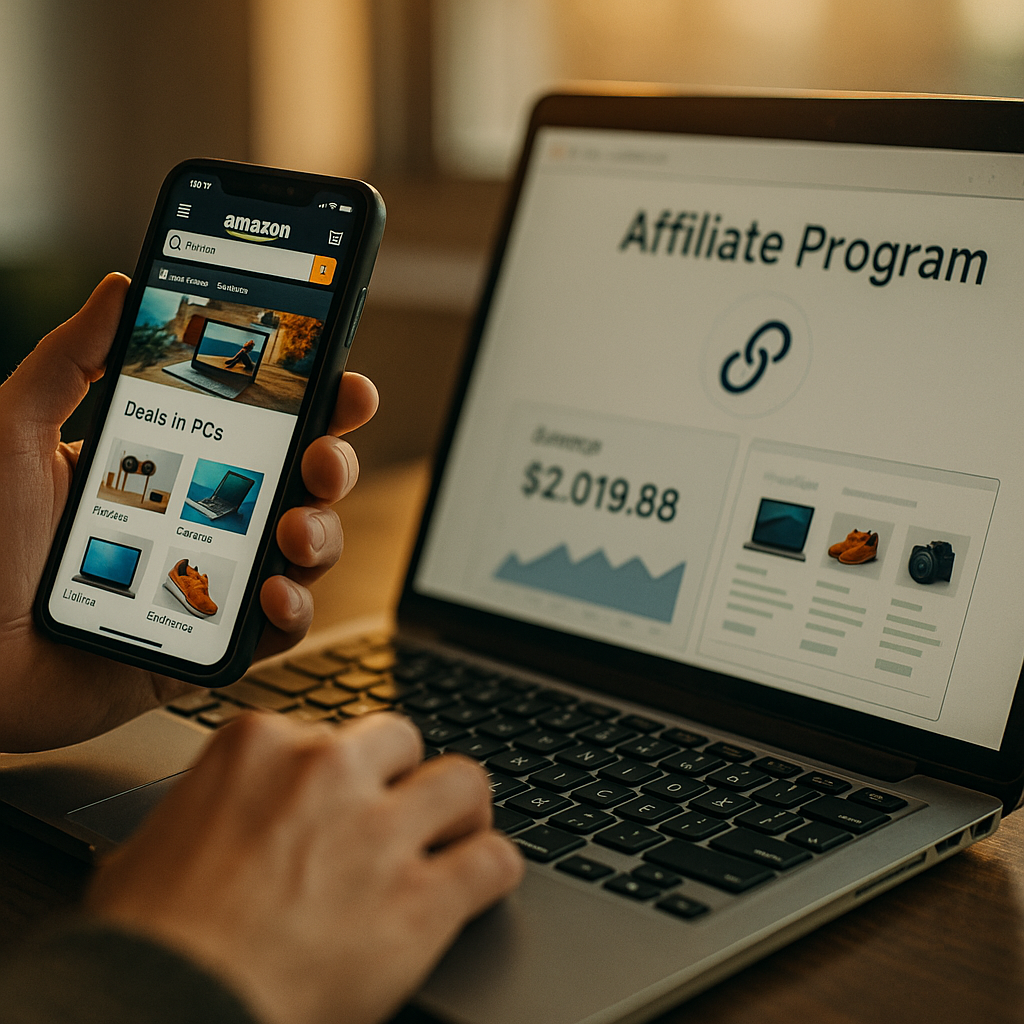
Amazon’s Creator Connections program now works with hundreds of thousands of affiliates pushing product links around the clock, no campaign brief required. Most brands still run affiliate marketing like a seasonal sale: a burst of outreach, a spike in links, then silence until the next launch. That gap is costing you compounding revenue. Building an always-on affiliate program isn’t about matching Amazon’s headcount. It’s about matching its operating logic.
What “Always-On” Actually Means (Beyond a Campaign Calendar)
An always-on program isn’t a bigger version of your Black Friday push. It’s a standing infrastructure: onboarding, commission logic, content rights, and payment rails that run continuously without a campaign manager babysitting every link. Creators join, generate content, get paid, and repeat the cycle without waiting on a brand calendar.
Amazon’s model works because it removed the human bottleneck almost entirely. Creators self-serve their storefronts, product tags auto-generate, and commissions calculate in real time. Your brand doesn’t need Amazon’s scale to borrow that logic. You need the same three ingredients: low-friction onboarding, automated tracking, and predictable payout timing.
Why Amazon’s Creator Connections Is the Benchmark Everyone’s Chasing
Amazon didn’t invent affiliate marketing, but it industrialized it. Creator Connections lets any eligible creator browse a product catalog, generate a trackable link or code in seconds, and start earning commission the same day. No pitch deck. No contract negotiation. That speed is the entire point.
Compare that to the typical brand affiliate program: a manual application form, a week of vetting, a PDF rate card, and a Net 60 payment cycle. By the time a creator gets approved, the trend they wanted to ride is dead. eMarketer’s creator economy research has repeatedly flagged speed to activation as the single biggest predictor of whether a creator sticks with a brand program past the first campaign.
The programs that scale aren’t the ones with the best commission rates. They’re the ones where a creator can go from discovery to first payout in under a week.
The Four Pillars of a Scaled Affiliate Program
Strip Amazon’s approach down and you get four operational pillars any mid-size or enterprise brand can replicate without a nine-figure tech budget.
- Self-serve onboarding. Applications should take minutes, not weeks. Automate identity checks, tax forms, and rate agreements so a creator can go from sign-up to active link in a single session.
- Tiered, transparent commission logic. Publish your rate structure. Amazon’s bounty and category commissions are visible inside the dashboard. Hidden or negotiated rates create resentment and slow decision-making on the creator side.
- Real-time or near-real-time tracking. Creators need to see clicks and conversions inside 24 to 48 hours, not at month end. Delayed visibility kills motivation faster than low commission rates do.
- Reliable, fast payout. This is where most brand programs die. If you’re still running Net 60 or Net 90 terms, you’re losing top affiliates to platforms that pay weekly.
Get these four right and you’ve replicated the mechanics that make Amazon’s program self-sustaining. The rest is scale, not strategy.
Commission Structures That Don’t Bankrupt You
Always-on doesn’t mean unlimited spend. It means predictable, formulaic spend tied to actual performance rather than upfront guarantees. Flat-fee affiliate deals make sense for a handful of anchor creators, but the bulk of your always-on cohort should run on performance-based commission that scales with revenue, not headcount.
A tiered structure works best in practice: a base commission for all approved affiliates, a bonus tier for creators who exceed volume thresholds, and a top tier reserved for consistent high performers who get first access to new product drops. This mirrors the logic in our recurring ambassador program tiering, adapted for pure affiliate mechanics instead of retainer-based ambassador deals.
If you’re running a multi-platform program, don’t assume commission rates should be uniform across channels. TikTok Shop affiliates convert differently than Amazon storefront links or a direct-to-site referral program. Our framework on splitting creator budgets by platform is useful here if you’re deciding how much weight to give each channel before you finalize commission tiers.
Tech Stack and Ops: Build vs Buy
You don’t need to build Amazon’s backend. Affiliate platforms like Impact, PartnerStack, and Awin already handle tracking, tax documentation, and payout automation at a fraction of the engineering cost. The real decision is whether your existing martech stack integrates cleanly or whether you’re stacking another disconnected tool onto an already bloated system.
Before signing another platform contract, run the audit outlined in martech vendor consolidation. Affiliate tracking tools frequently duplicate functionality already sitting inside your influencer relationship management platform, and that overlap quietly drains budget every quarter.
If you’re weighing a fully custom build against an off-the-shelf platform, the build vs buy framework for creator platforms breaks down the cost curve at different program sizes. For most brands under 5,000 active affiliates, buy wins on total cost of ownership. Above that threshold, the math shifts toward custom infrastructure, largely because licensing fees on off-the-shelf platforms scale with creator count in ways that erode margin.
At scale, the platform fee you pay per affiliate matters more than the commission rate you pay per sale. Model both before you sign a multi-year contract.
Payment Speed Is Your Retention Lever
Here’s the uncomfortable truth: creators don’t stay loyal to brands, they stay loyal to whoever pays them fastest and most reliably. Amazon’s affiliate payouts are automated and scheduled. If your program still routes payments through a manual finance approval chain, you’re bleeding top talent to competitors with tighter payment ops.
This is the exact problem covered in fixing late pay before it costs you. Late payment isn’t just a finance inconvenience, it’s a churn driver that shows up in your affiliate retention metrics within a single quarter. Pair that with a clear-eyed look at payment platform speed versus risk tradeoffs before you pick a payout rail for a program running thousands of transactions a month.
Research from HubSpot’s marketing benchmarks consistently shows that creator satisfaction scores correlate more strongly with payment reliability than with commission percentage, a detail brands chasing the lowest possible payout rate tend to ignore.
Compliance Can’t Be an Afterthought
Scale multiplies risk. An always-on program with thousands of affiliates posting continuously creates a much larger disclosure surface than a quarterly campaign ever could. The FTC’s endorsement guidelines apply to every affiliate link and discount code your creators publish, and enforcement attention on undisclosed affiliate relationships has only increased.
Build disclosure checks into onboarding, not into a quarterly audit. Automated flagging tools inside most affiliate platforms can catch missing #ad tags before a post goes live, but someone on your team still needs to own the escalation process when a creator ignores repeated warnings. For programs also running employee or ambassador-adjacent affiliate structures, the wage law and intellectual property questions get more complex fast. Our wage law and IP compliance guide is worth a read before you blur the line between employee advocates and affiliate creators.
Where Most Always-On Programs Stall
Three failure points show up repeatedly across brands attempting to replicate Amazon’s model without Amazon’s infrastructure discipline.
- Onboarding friction. A 20-question application form kills momentum before a creator ever posts a link.
- Flat commission across wildly different performers. Treating a 500-follower niche creator identically to a mid-tier affiliate driving five figures in monthly sales demotivates your best performers.
- No content or performance dashboard for creators. If affiliates can’t see their own numbers, they assume the program is broken and stop posting.
Fixing these three issues alone will move most brand affiliate programs closer to Amazon-level retention, even without matching its creator volume. Scale is a symptom of good mechanics, not the other way around.
FAQs
Frequently Asked Questions
What makes an affiliate program “always-on” instead of campaign-based?
An always-on program runs continuously through automated onboarding, tracking, and payout systems, letting creators join and earn commission at any time rather than only during scheduled campaign windows.
How is Amazon’s Creator Connections different from a typical brand affiliate program?
Creator Connections removes manual approval steps and pays creators through automated, real-time commission tracking, whereas most brand programs still rely on manual vetting and delayed payout cycles.
What commission structure works best for a scaled affiliate program?
A tiered structure with a base commission rate, a bonus tier for volume performers, and a top tier for consistent high earners tends to balance predictable spend with strong creator retention.
Do I need custom-built technology to run an always-on affiliate program?
No. Most brands can run an effective always-on program on existing platforms like Impact, PartnerStack, or Awin. Custom infrastructure typically only becomes cost-effective above a few thousand active affiliates.
What’s the biggest compliance risk in a large-scale affiliate program?
Undisclosed sponsored links and codes are the most common risk. FTC guidelines require clear disclosure on every affiliate post, and enforcement scrutiny increases as affiliate volume grows.
Next step: Audit your current onboarding and payout timelines this week. If a creator can’t get approved and paid within seven days, you don’t have an always-on program yet, you have a slow campaign with a recurring name.
Top Influencer Marketing Agencies
The leading agencies shaping influencer marketing in 2026
Agencies ranked by campaign performance, client diversity, platform expertise, proven ROI, industry recognition, and client satisfaction. Assessed through verified case studies, reviews, and industry consultations.
Moburst

-
2

The Shelf
Boutique Beauty & Lifestyle Influencer AgencyA data-driven boutique agency specializing exclusively in beauty, wellness, and lifestyle influencer campaigns on Instagram and TikTok. Best for brands already focused on the beauty/personal care space that need curated, aesthetic-driven content.Clients: Pepsi, The Honest Company, Hims, Elf Cosmetics, Pure LeafVisit The Shelf → -
3

Audiencly
Niche Gaming & Esports Influencer AgencyA specialized agency focused exclusively on gaming and esports creators on YouTube, Twitch, and TikTok. Ideal if your campaign is 100% gaming-focused — from game launches to hardware and esports events.Clients: Epic Games, NordVPN, Ubisoft, Wargaming, Tencent GamesVisit Audiencly → -
4

Viral Nation
Global Influencer Marketing & Talent AgencyA dual talent management and marketing agency with proprietary brand safety tools and a global creator network spanning nano-influencers to celebrities across all major platforms.Clients: Meta, Activision Blizzard, Energizer, Aston Martin, WalmartVisit Viral Nation → -
5

The Influencer Marketing Factory
TikTok, Instagram & YouTube CampaignsA full-service agency with strong TikTok expertise, offering end-to-end campaign management from influencer discovery through performance reporting with a focus on platform-native content.Clients: Google, Snapchat, Universal Music, Bumble, YelpVisit TIMF → -
6

NeoReach
Enterprise Analytics & Influencer CampaignsAn enterprise-focused agency combining managed campaigns with a powerful self-service data platform for influencer search, audience analytics, and attribution modeling.Clients: Amazon, Airbnb, Netflix, Honda, The New York TimesVisit NeoReach → -
7

Ubiquitous
Creator-First Marketing PlatformA tech-driven platform combining self-service tools with managed campaign options, emphasizing speed and scalability for brands managing multiple influencer relationships.Clients: Lyft, Disney, Target, American Eagle, NetflixVisit Ubiquitous → -
8

Obviously
Scalable Enterprise Influencer CampaignsA tech-enabled agency built for high-volume campaigns, coordinating hundreds of creators simultaneously with end-to-end logistics, content rights management, and product seeding.Clients: Google, Ulta Beauty, Converse, AmazonVisit Obviously →