


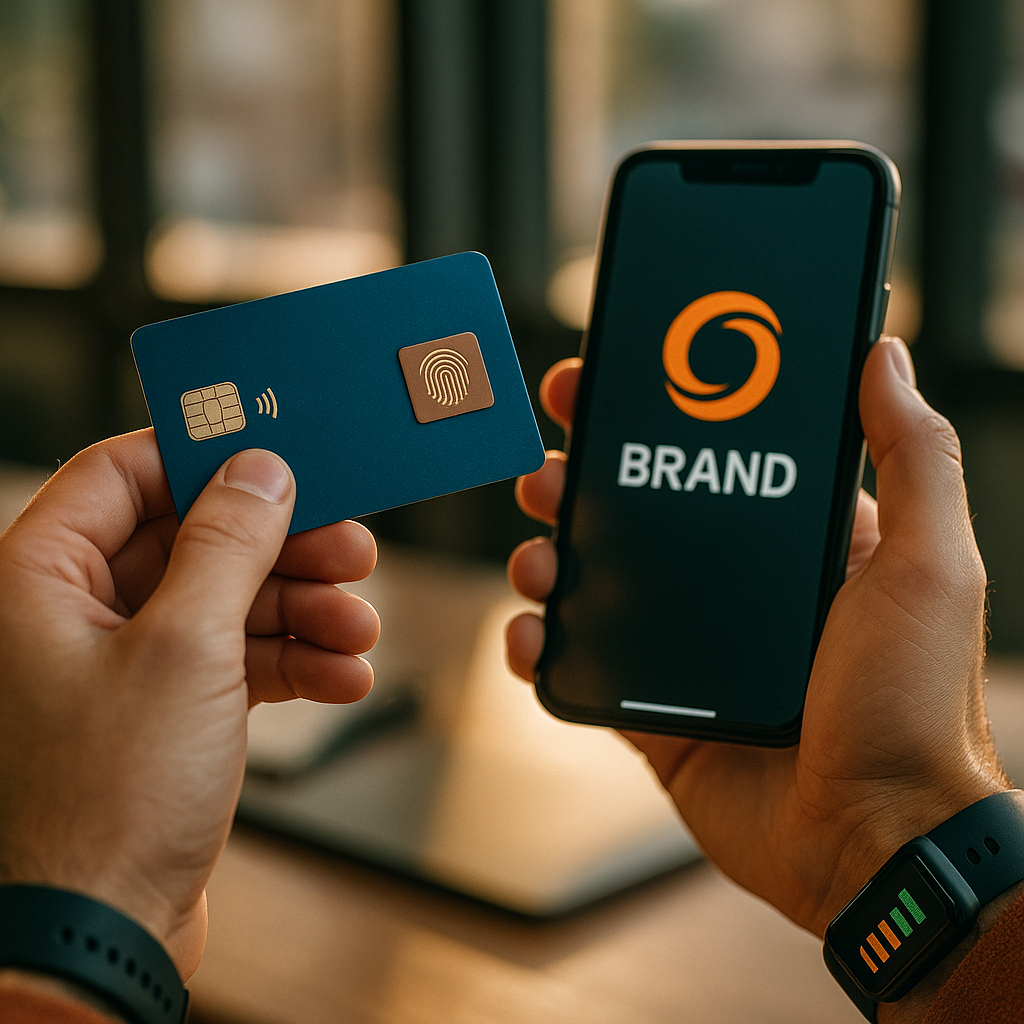
Biometric branding is moving from experimental tactic to practical growth channel as wearables become part of daily life in 2026. Smartwatches, fitness bands, rings, patches, and connected earbuds now generate rich signals about movement, stress, sleep, and attention. For marketers, that creates new possibilities for timely relevance, but only when privacy, consent, and usefulness come first. What does that look like in practice?
Wearable marketing data: what brands can actually use
Wearable-driven marketing starts with understanding the difference between available data and appropriate data. Most brands should not aim to ingest raw heart rate streams or clinical-grade health records. Instead, they should focus on privacy-safe, consented signals that indicate context. In practice, this often means using event-based triggers rather than sensitive health details.
Useful wearable marketing data can include:
- Activity state: walking, running, stationary, or in recovery mode
- Time-of-day routines: commute windows, workout habits, wind-down periods
- Location context: at home, in-store, near a venue, or traveling, when consent is granted
- Device interactions: whether notifications are ignored, opened, muted, or deferred
- Environmental cues: temperature, noise level, or motion intensity from connected devices
- Aggregated wellness states: broad categories like “high activity” or “resting,” not medical diagnoses
The most effective programs translate this input into simple, human-centered moments. A sportswear app might send a hydration reminder after a long outdoor run. A meditation platform could suggest a two-minute breathing session after detecting a high-stress pattern, but only if the user explicitly opted in. A retail brand might delay a push notification until a user finishes a workout instead of interrupting it.
This is where experience matters. Teams that build with wearable signals should work closely with product, legal, analytics, and CRM specialists. The goal is not to collect everything. The goal is to identify the smallest data set needed to improve timing, message relevance, and user value. That approach aligns with Google’s helpful content principles and with modern consumer expectations around trust.
Contextual marketing strategies powered by biometric signals
Contextual marketing becomes more precise when wearable data helps answer a simple question: what is the user likely experiencing right now? Traditional segmentation relies on demographics, past purchases, or app behavior. Those remain useful, but biometric and wearable signals add real-time context that can sharpen decision-making.
Strong contextual marketing strategies generally follow a three-part model:
- Detect context: identify a broad state, such as active, commuting, sleeping, or recovering
- Match intent: map that state to a likely need, such as convenience, motivation, calm, or replenishment
- Deliver value: trigger a message, offer, or experience that fits the moment without being intrusive
Consider a few examples:
- Food delivery: after an evening workout, an app surfaces high-protein meal options and fast reorder buttons
- Travel: a wearable-linked airline app detects airport movement and delivers gate updates or lounge directions at the right moment
- Retail: when a shopper enters a mall after a long walk, a footwear brand offers an in-store comfort fitting appointment
- Streaming: if a user’s wind-down pattern begins, a platform recommends short-form calm content instead of high-intensity programming
These campaigns work best when they are assistive, not exploitative. If a message feels invasive, the strategy fails. The consumer should be able to explain why they received it and what benefit it provides. That is a practical EEAT standard: demonstrate experience by designing real utility, show expertise in data handling, establish authority through transparent practices, and earn trust with explicit consent and clear controls.
Marketers should also build channel logic carefully. Not every trigger belongs in push notifications. Sometimes the best destination is in-app content, an email recap, an on-device widget, or even a suppressed message. Contextual relevance includes knowing when not to market.
Privacy-first personalization and consent in biometric branding
No discussion of biometric branding is credible without addressing privacy. Wearable data can feel deeply personal because it often relates to physical state, routine, and emotion. In many jurisdictions, some biometric and health-related data may be regulated or require heightened protections. Brands should involve legal counsel early and treat privacy architecture as core product design, not a final compliance checklist.
Privacy-first personalization begins with several rules:
- Use clear opt-in flows: explain exactly what data is collected, how it is used, and what the user gets in return
- Avoid vague wording: “improve your experience” is too broad; “send recovery content after exercise” is specific
- Offer granular controls: allow users to enable workout-based prompts but disable stress-related recommendations
- Minimize retention: keep only what is needed for the stated purpose, for the shortest practical time
- Prefer categorization over raw data: “active now” is safer than storing detailed biometric histories
- Make opt-out easy: one tap should pause or stop biometric-triggered marketing
Trust also depends on message framing. A brand should never imply medical knowledge or diagnosis unless it is qualified and authorized to do so. For example, “Need a break after your run?” is generally safer and more useful than “Your elevated heart rate suggests exhaustion.” The first respects context. The second can feel presumptive and risky.
Security matters just as much. Encrypt data in transit and at rest, restrict access internally, maintain audit trails, and vet partners carefully. If a vendor powers identity resolution, notifications, analytics, or CDP workflows, its security posture affects your brand reputation. In 2026, consumers increasingly reward brands that are explicit about safeguards and punish those that hide behind legal jargon.
When brands get privacy right, consent rates improve because the value exchange is visible. Users are more willing to share limited data if they can see immediate, practical benefits and remain in control.
Real-time customer engagement with wearable-triggered journeys
Real-time customer engagement is where wearable marketing shifts from concept to execution. The challenge is operational: how do you transform a wearable signal into a useful journey within seconds or minutes? That requires an event-driven stack, disciplined orchestration, and strong testing practices.
A typical workflow looks like this:
- Signal capture: the app or approved integration receives a consented event, such as “workout completed”
- Context engine: business rules classify the event, such as “post-exercise recovery window”
- Eligibility check: the system verifies permissions, frequency caps, location rules, and customer status
- Decision layer: the platform selects the best action, such as a hydration reminder, product suggestion, or no message
- Channel delivery: the content appears in app, push, email, SMS, or wearable notification
- Measurement: engagement, conversion, retention, and satisfaction metrics feed optimization
The highest-performing teams avoid over-automation. They define guardrails before launch, including quiet hours, sensitivity filters, and suppression logic for emotionally charged or highly personal contexts. For example, if a stress-related signal is noisy or difficult to interpret, the safer move may be to offer optional wellness content inside the app rather than trigger direct outreach.
Creative execution matters too. On a wearable, space is limited. Messages must be short, actionable, and timed appropriately. “Refuel with your saved order?” works better than a generic promotion. A follow-up in the main app can then provide richer content, recommendations, or rewards. In other words, use the wearable as a nudge, not as the entire conversion surface.
Teams should test:
- Trigger timing: immediately after an event versus thirty minutes later
- Channel preference: wearable prompt versus mobile push versus in-app card
- Offer framing: utility-focused copy versus incentive-focused copy
- Frequency: every event versus threshold-based triggers
- Journey depth: one-step prompts versus multi-step personalized flows
This is not just about click-through rate. Real success includes lower unsubscribe rates, stronger retention, better customer lifetime value, and higher satisfaction. If the campaign boosts short-term conversion but erodes trust, it is not a sustainable wearable strategy.
Biometric advertising use cases across industries
Biometric advertising is not limited to fitness apps. The opportunity spans industries, though each category should use different boundaries and standards. The best use cases solve a real need tied to physical context, routine, or attention.
Health and wellness
Fitness brands, recovery apps, and mindfulness platforms can use wearable events to personalize plans, reminders, and rewards. The key is to stay within a supportive, non-clinical lane unless the company is qualified for regulated health activity.
Retail and commerce
Retailers can connect motion, location, and shopping history to store visits, product suggestions, or timing of promotions. Someone finishing a long walk near a store might be shown comfortable footwear inventory, but only if location and activity sharing are enabled.
Food and beverage
Quick-service brands can surface relevant menus after activity windows, commute times, or evening routines. A coffee app might avoid sending offers when the user’s sleep window begins and instead promote breakfast bundles during the morning walk.
Travel and hospitality
Airlines, hotels, and event apps can use wearable-friendly notifications for navigation, schedule changes, queue alerts, or room readiness. In these cases, contextual utility is obvious and often appreciated because it reduces friction in a time-sensitive environment.
Media and entertainment
Streaming and audio platforms can align recommendations with movement patterns, recovery periods, or sleep-adjacent habits. The most effective versions feel like smart curation rather than manipulation.
Insurance and financial wellness
This category requires extra caution. Wearable-linked wellness incentives may be useful, but any perception of surveillance, exclusion, or discriminatory pricing can create immediate trust and regulatory concerns. Transparency and fairness are non-negotiable.
Across all industries, a simple rule helps: if the user can easily describe the benefit in one sentence, the use case is probably on the right track. If the data logic would surprise or unsettle them, rethink it.
Marketing measurement for wearable personalization
Measurement is where many wearable programs stall. Marketers often track opens and conversions but miss the broader impact of context-sensitive personalization. To assess wearable-triggered campaigns properly, define outcomes at three levels: immediate response, behavioral change, and long-term trust.
Start with core KPIs:
- Engagement: open rate, tap-through rate, in-app continuation rate
- Conversion: purchase rate, booking completion, class attendance, subscription upgrade
- Retention: repeat usage, churn reduction, habit formation, loyalty participation
- Customer experience: opt-out rate, notification disable rate, customer feedback, app ratings
- Trust indicators: consent acceptance rate, privacy setting changes, support tickets related to messaging
Incrementality is essential. Compare wearable-triggered journeys against standard lifecycle campaigns to determine whether the added context actually improves outcomes. Holdout groups, geo tests, and trigger-level experiments can reveal whether performance gains come from relevance or from simple overexposure.
Data quality deserves close attention. Wearable inputs are not always stable. Devices may be removed, batteries die, integrations break, and sensors can misclassify activity. Build monitoring for event loss, latency, duplicate triggers, and false positives. In my experience evaluating marketing systems, these operational issues often explain underperformance faster than creative or targeting does.
Finally, include qualitative learning. Review support conversations, app reviews, and user research after launch. Ask whether customers found the interactions useful, timely, and respectful. A smaller campaign with strong trust signals usually outperforms an aggressive program that causes silent opt-outs.
Wearable personalization is valuable when it improves the customer experience in ways users notice and appreciate. That standard should guide reporting just as much as revenue does.
FAQs about biometric branding and wearable marketing
What is biometric branding?
Biometric branding is the use of signals from wearables or connected devices to shape marketing timing, messaging, and experiences based on a user’s real-world context. In practice, brands usually rely on broad, consented signals such as activity state, routine, or location context rather than sensitive raw biometric data.
Is wearable data legal to use for marketing?
It can be, but legality depends on jurisdiction, consent, data type, and how the information is processed. Brands should consult qualified legal counsel, use clear opt-ins, minimize data collection, and avoid making medical inferences unless they are authorized to do so.
What types of brands benefit most from wearable-triggered marketing?
Fitness, wellness, travel, retail, food delivery, event, and media brands often see the clearest fit because they can provide timely, useful interactions tied to movement, routine, or location. The strongest opportunities exist where context directly improves convenience or relevance.
How can brands avoid seeming invasive?
Use transparent consent, limit data use to obvious value-driven moments, choose broad contextual categories instead of intimate details, and make opt-out simple. If a message would surprise the user or reveal more inferred knowledge than they expect, it is probably too invasive.
What are the biggest risks of biometric branding?
The biggest risks are privacy violations, weak consent design, overcollection of data, inaccurate interpretation of biometric signals, and trust erosion from poorly timed or overly personal messaging. Technical issues such as delayed triggers or duplicate messages can also damage the experience.
How should success be measured?
Track engagement, conversion, retention, customer satisfaction, opt-out rates, and trust indicators such as consent acceptance and privacy-setting stability. Use holdout tests to prove incrementality, and combine quantitative results with user feedback to understand whether campaigns feel genuinely helpful.
Do brands need raw biometric data to do this well?
No. Most effective programs work with event-based or categorized signals such as “workout complete,” “active now,” or “commute started.” This approach usually reduces privacy risk while still enabling relevant contextual marketing.
Biometric branding works best when it turns wearable signals into helpful, consented moments instead of intrusive surveillance. In 2026, the brands that win will be the ones that use less data more intelligently, explain their value clearly, and measure trust as seriously as revenue. Build around usefulness, privacy, and restraint, and contextual marketing becomes a durable advantage.