


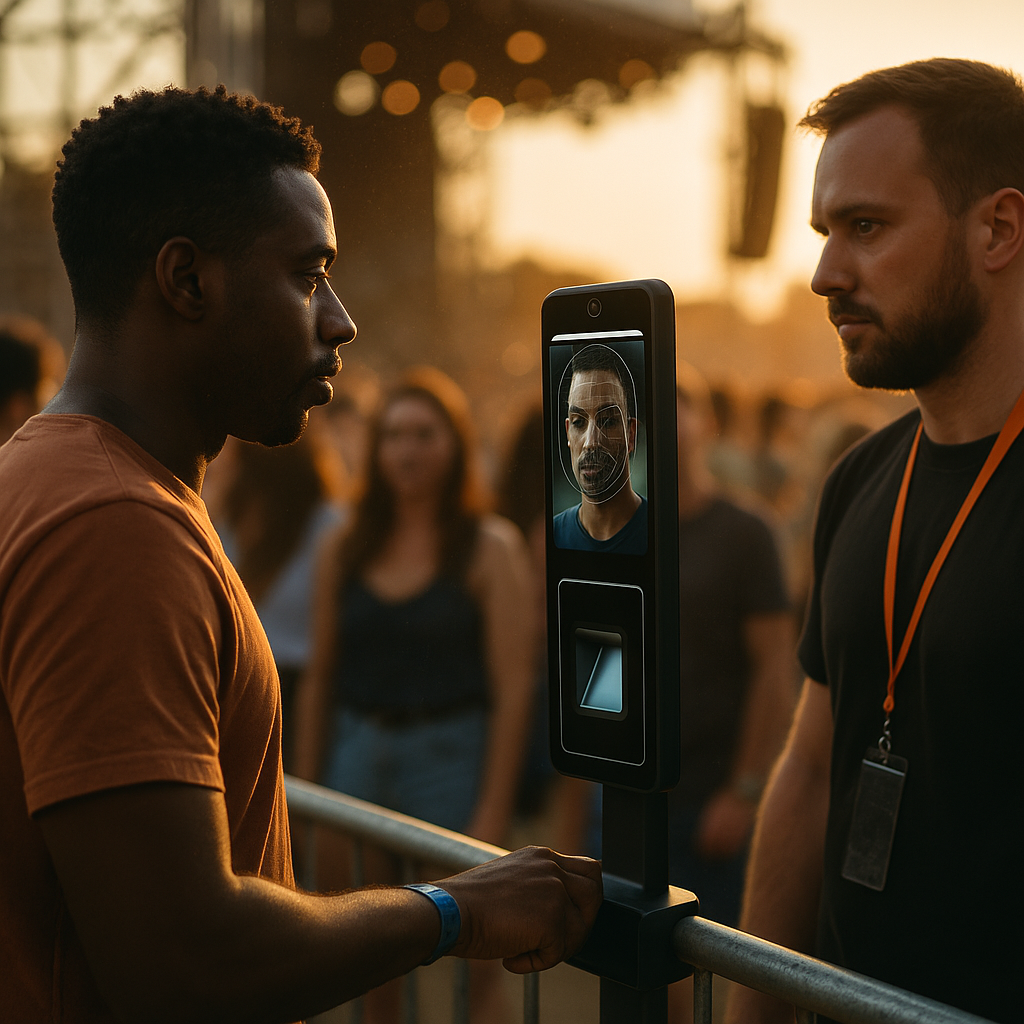
Legal Considerations For Brands Using Biometric Data In Live Events are now front-and-center as venues adopt facial recognition, fingerprint ticketing, and emotion analytics to reduce friction and improve safety. Biometric data can deliver speed and personalization, but it also creates regulatory exposure, reputational risk, and vendor complexity. Brands that get governance right can innovate confidently—so what does “right” look like in 2025?
Biometric privacy laws and venue compliance
Biometric data—such as face geometry, fingerprints, iris patterns, voiceprints, and certain health or emotion indicators—often sits in the most regulated category of personal data. For live events, compliance rarely depends on one law; it depends on where the event takes place, where attendees reside, and how your technology stack processes data across borders.
Start with a jurisdiction map. Before you deploy biometric entry lanes or fan engagement kiosks, identify: (1) event location(s), (2) attendee home markets, (3) data processing locations (cloud regions), and (4) vendor sub-processors. This map informs which legal regimes apply and which contract clauses you need.
Common legal triggers in 2025 include:
- Special-category or sensitive data rules: Many regimes treat biometrics used for identification as sensitive, requiring a higher lawful basis, stronger security measures, and additional transparency.
- Biometric-specific statutes: Some jurisdictions impose explicit obligations such as written consent, retention limits, and bans on profiting from biometric identifiers.
- Consumer privacy rights: Notice, access, deletion, opt-out, and limitation rights can apply—sometimes with stricter requirements for sensitive data.
- Employment and labor implications: If staff, contractors, or performers use biometric timekeeping or access control backstage, workplace privacy and labor laws may impose different notice and consent standards than consumer contexts.
Practical takeaway: treat biometric processing at live events as a multi-layer compliance project. Build a single “compliance packet” per event (or tour) containing your purpose statement, data flows, vendor list, notices, consent records, retention schedule, and incident plan. This packet also helps with sponsor questions and venue negotiations.
Consent and notice for facial recognition at events
Most enforcement and litigation risk in live-event biometrics arises from weak consent design and unclear notice. Brands often assume a ticket purchase covers everything; it usually doesn’t when the processing is biometric identification.
Design consent so it is: informed, affirmative, specific, and revocable. If your use case relies on consent, ensure it is collected separately from general terms. If a jurisdiction allows another lawful basis (such as security interests), you still need clear notice and a defensible proportionality argument.
What “good” looks like at a live event:
- Layered notice: signage at entry points, plus digital notice in ticketing flows and event apps, plus a full privacy notice online.
- Purpose-specific choices: separate toggles for “biometric entry” and “personalized experiences,” rather than a single blanket acceptance.
- Meaningful alternatives: a non-biometric lane or manual ID check that does not penalize the attendee (no excessive delay, no worse seat access).
- Revocation path: an in-app setting, a web form, or a venue help desk option to withdraw and trigger deletion where required.
Avoid dark patterns. Don’t make biometric opt-in the default, hide it behind pre-checked boxes, or create “consent fatigue” with confusing prompts. Regulators increasingly treat manipulative interface design as a compliance failure.
Answer the attendee’s core questions inside your notice: What data is captured? Is it stored as an image or as a template? Who receives it? How long do you keep it? Will it be used for marketing? Can I still attend if I say no? Clear answers reduce complaints, chargebacks, and social backlash.
Data minimization and biometric retention policies
Biometric programs at live events fail when brands collect too much, keep it too long, or reuse it for new purposes without fresh disclosure. A legally resilient approach begins with strict minimization and retention rules that align with your actual operational need.
Minimization checklist:
- Choose templates over raw imagery where feasible, and avoid storing video unless necessary for security incidents.
- Limit capture scope: if the goal is entry authentication, don’t also collect emotion or demographic inferences.
- Restrict matching mode: 1:1 verification (confirming a person is who they claim) typically carries less risk than 1:N identification (finding a person in a crowd).
- Separate systems: keep biometric systems isolated from marketing databases unless you have a clear, consented purpose and robust access controls.
Retention is where brands get exposed. Define retention periods by purpose, not convenience. For example, a “biometric fast entry” template may only be needed for the event day plus a short reconciliation window. If you offer an “express entry membership,” you may keep a template longer, but you should still implement periodic review and deletion for inactive accounts.
Create a retention schedule that specifies:
- Retention period by use case (entry, credential recovery, VIP access, fraud prevention)
- Deletion triggers (event end, withdrawal of consent, account closure, inactivity threshold)
- Technical deletion method (hard delete vs. cryptographic erasure)
- Audit evidence (logs proving deletion occurred)
Prevent “purpose creep.” If a sponsor later asks to use facial data for personalized advertising or to measure audience sentiment, treat that as a new purpose. Re-run your risk assessment, update notices, and obtain fresh opt-in where required.
Security standards for biometric systems and vendors
Security obligations for biometrics are typically stricter than for ordinary personal data because biometric identifiers are hard to change if compromised. A breach can trigger regulatory reporting duties, contractual penalties, and long-term brand damage.
Baseline technical controls brands should require:
- Encryption in transit and at rest for templates, images, and logs
- Strong key management with separation of duties and rotation procedures
- Role-based access control and least-privilege permissions for venue staff and vendor operators
- Segmentation between biometric matching systems and general IT networks at the venue
- Secure device management for cameras, tablets, and edge processors (patching, hardening, remote wipe)
- Logging and monitoring for enrollment events, match events, export attempts, and admin actions
Vendor due diligence is non-negotiable. Live events often involve ticketing providers, venue operators, security contractors, and biometric technology vendors. Clarify who is the controller/processor (or equivalent roles) and ensure responsibilities are contractually assigned.
Contract clauses to prioritize:
- Data processing terms covering instructions, sub-processors, cross-border transfers, and assistance with rights requests
- Security addendum with minimum controls, vulnerability management, and penetration testing expectations
- Breach notification timelines and cooperation obligations, including forensics support
- Deletion and return obligations with verifiable proof
- Audit rights (or independent audit reports) suitable for high-risk biometric processing
Plan for “offline mode.” Venues can lose connectivity. If your biometric entry requires cloud matching, define the fallback method (manual ID, QR codes, on-device matching) and ensure the fallback does not quietly expand data collection or retention.
Risk assessments, bias testing, and accountability
Biometric identification and analysis can create discrimination risk, especially when accuracy varies across demographic groups or under challenging lighting and crowd conditions. In 2025, regulators and plaintiffs increasingly expect brands to demonstrate proactive accountability, not reactive fixes.
Run a documented impact assessment before deployment and whenever you change the model, add a new purpose, or expand to a new venue. Your assessment should cover:
- Necessity and proportionality: why biometrics are needed versus less intrusive options
- Risks to rights and freedoms: false matches, denial of entry, surveillance concerns, chilling effects
- Mitigations: human review processes, appeal paths, accuracy thresholds, staff training
- Residual risk decision: who approved the go-live and why
Bias and performance testing should reflect real conditions. Test across: lighting changes, camera angles, crowd density, masks/sunglasses, and diverse attendee demographics. Document false accept and false reject rates, define acceptable thresholds, and set escalation rules when performance drops.
Build a “human-in-the-loop” process for adverse outcomes. If an attendee is flagged incorrectly or cannot enroll, staff should have a clear, respectful alternative verification method. This reduces discrimination risk and helps protect your event operations from bottlenecks.
Governance that scales: assign an internal owner (privacy, legal, or security), define a cross-functional review board for high-risk features, and maintain a living inventory of biometric deployments. This is also an EEAT lever: you can show stakeholders that expertise and oversight exist, not just technology.
Cross-border transfers, marketing use, and sponsor partnerships
Live events are global: tours, international attendees, cloud hosting, and sponsor activations routinely move data across borders. Biometric data intensifies these issues because transfer restrictions and transparency expectations are higher.
Cross-border transfer readiness:
- Know your data locations: where enrollment happens, where matching occurs, where logs are stored, and where support teams access systems.
- Use approved transfer mechanisms when required, and ensure vendors cannot shift hosting regions without approval.
- Limit remote access: use just-in-time access and geofencing where appropriate for admin tools.
Marketing and sponsorship are the fastest way to create non-compliance. If biometrics are introduced for frictionless entry or safety, using them later to drive targeted advertising, measure attention, or infer emotion can violate purpose limitation and consent requirements. It also heightens reputational risk, especially when sponsors are involved.
Set hard rules for sponsor activations:
- No sponsor access to biometric identifiers unless you have a clear, attendee-facing value proposition and explicit opt-in.
- Separate sponsor analytics from biometric systems; use aggregated, de-identified metrics where possible.
- Contractual controls: prohibit re-identification, onward transfer, and secondary use, with meaningful remedies for breach.
Answer the brand question: “Can we personalize the experience?” Yes, but do it with privacy-preserving design—use app preferences, QR-based opt-ins, or tokenized credentials rather than tying personalization directly to a face template unless you can justify it and obtain unambiguous consent.
FAQs
Is biometric data always considered sensitive personal data?
In many jurisdictions, biometric data used to uniquely identify a person is treated as sensitive (or special-category) data. Even where it is not explicitly labeled “sensitive,” regulators often expect heightened safeguards because misuse or breach can cause serious harm.
Do we need consent to use facial recognition for event entry?
Often, yes—especially when facial recognition is used for identification or authentication. Some contexts may allow other legal bases for security, but you still need prominent notice, proportionality, and a genuine alternative for attendees who decline.
Can we require facial recognition as the only way to enter the venue?
That approach carries high legal and reputational risk. A safer model offers an equivalent non-biometric option (such as QR codes or staffed ID checks) without penalizing the attendee through excessive delays or reduced access.
How long should we retain biometric templates after the event?
Retain only as long as necessary for the specific purpose. For single-event entry, that may be very short. If you offer an ongoing membership, use clear retention rules, periodic deletion of inactive records, and immediate deletion upon withdrawal of consent where required.
What should we do if an attendee requests deletion or access?
Provide a straightforward channel (web form, app setting, or help desk) and confirm identity using a non-biometric method when possible. Coordinate with vendors to complete deletion across systems and keep audit logs proving the request was fulfilled.
Can sponsors use biometric data collected at our event?
Only with strong governance. In most cases, you should avoid sharing biometric identifiers with sponsors. If you proceed, you need explicit opt-in, strict contractual limits, transparent attendee notices, and a clear attendee benefit that justifies the use.
How do we reduce bias and false matches?
Test performance in real venue conditions across diverse demographics, define acceptable error thresholds, and implement a human review and appeal process. Keep staff trained to handle failures respectfully and quickly, and monitor ongoing performance during the event.
Biometric data can improve live-event operations, but it also raises legal obligations that brands must treat as core program requirements. Build compliance around clear purpose limits, informed consent, strict retention, strong vendor controls, and documented risk and bias testing. In 2025, the winning approach is simple: deploy biometrics only when you can explain it, secure it, and justify it to every attendee—before the gates open.