


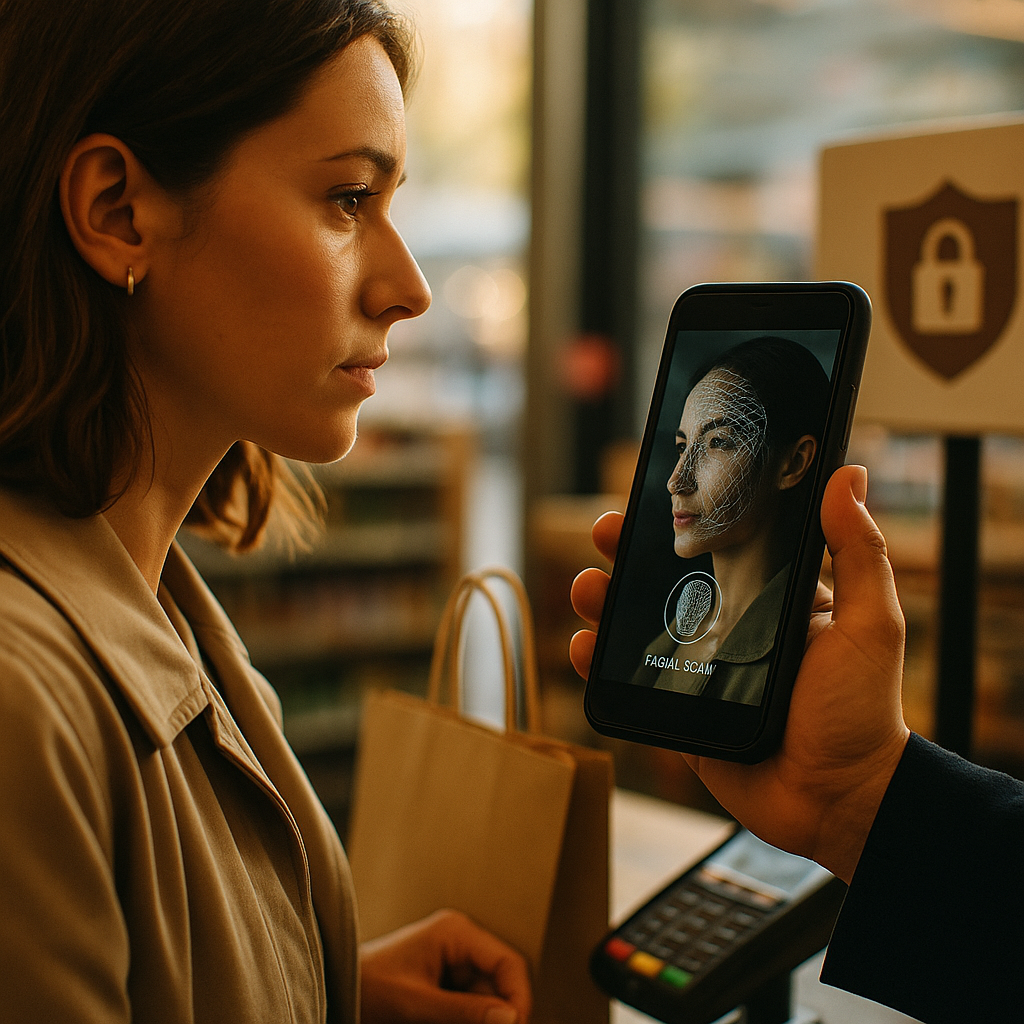
Retail is moving quickly toward facial recognition, fingerprint access, voice analytics, and gait-based loss-prevention. In 2025, understanding regulatory shifts in biometric data collection for retailers matters as much as choosing the right camera or POS integration. Laws are expanding, enforcement is increasing, and consumers expect transparency. Retailers that adapt now can reduce risk, maintain trust, and still innovate—will your program stand up to scrutiny?
Biometric privacy laws for retailers: what changed and why it matters
Biometric data is uniquely sensitive because it is tied to a person’s body and behavior. Unlike passwords, biometrics cannot be “reset” if compromised. Regulators increasingly treat biometric identifiers and biometric information as high-risk data, which drives stricter rules on collection, storage, use, and sharing.
For retailers, the practical shift is that biometrics are no longer a “nice-to-have” security layer that can be deployed with minimal legal review. Many jurisdictions now require clearer notice, stronger consent, shorter retention, and tighter vendor controls. Enforcement also trends toward private rights of action, administrative penalties, and consumer-protection claims when marketing statements or signage do not match actual practices.
Retail use cases most affected include:
- Loss prevention and store security using facial recognition, watchlists, or behavior analytics.
- Employee timekeeping via fingerprint/hand geometry clocks and mobile biometric sign-in.
- Customer experience such as “pay by face,” VIP recognition, personalization, or age estimation.
- Access control to cash rooms, back offices, and distribution centers.
One core change: regulators increasingly evaluate not only whether you obtained permission, but whether your purpose is proportionate and whether less intrusive alternatives exist. Retailers should expect questions like, “Why do you need biometrics here?” and “How long do you keep it?” long before any incident occurs.
Retail facial recognition compliance: consent, notice, and consumer choice
Facial recognition is the most visible (and scrutinized) biometric capability in retail. Compliance now centers on transparent notice, meaningful choice, and purpose limitation. “We use cameras for security” is rarely enough if you are extracting face templates or matching against a database.
Operationally, build your program around these requirements:
- Layered notice: clear entrance signage plus an accessible, plain-language in-store and online notice explaining what is collected, why, how long it is retained, and who receives it.
- Consent where required: obtain explicit opt-in for customer-facing recognition or personalization. For security watchlists, some jurisdictions may allow collection without opt-in, but only with strict limits and strong legitimate-interest rationale.
- Opt-out and alternatives: when biometrics support convenience (checkout, loyalty, store entry), provide a non-biometric path that is comparable in speed and service quality.
- No secondary use: do not reuse security-derived face templates for marketing, analytics, or training unless your notice and legal basis clearly allow it.
Answering a common follow-up: Is video surveillance the same as biometric collection? Not always. Standard CCTV can become biometric processing when software extracts facial templates, performs identification/verification, or infers unique characteristics. If you enable those features, treat the system as a biometric program, not a camera system.
Another frequent question: What about “anonymous” analytics? If a system generates a persistent identifier, face embedding, or any template that can be linked back to a person (directly or indirectly), regulators may still treat it as biometric data. If you truly aggregate at the edge and discard identifiers immediately, document the technical design and retention behavior so you can prove it.
Biometric data retention and security: minimizing risk in the store and cloud
In 2025, regulators and plaintiffs focus heavily on whether retailers keep biometric data longer than needed and whether security controls match the sensitivity. Retention is not an afterthought; it is one of the clearest indicators of a program’s discipline.
Establish a biometric retention schedule that is:
- Purpose-tied: keep data only as long as needed for the specific purpose disclosed (for example, timekeeping payroll cycles, active investigations, or account access).
- Short by default: avoid “keep forever” defaults in vendor dashboards; configure automatic deletion.
- Event-driven: delete when a customer withdraws consent, an employee leaves, or a watchlist record is cleared.
- Auditable: retain deletion logs and policy documentation to demonstrate compliance.
Security expectations also shifted from generic “reasonable safeguards” to more explicit controls. For biometric systems, you should implement:
- Encryption in transit and at rest for templates and matching results.
- Segregation of biometric templates from customer profiles where possible to reduce linkability.
- Strict access controls with least privilege, multi-factor authentication, and role-based permissions.
- Monitoring and incident response tuned to biometric repositories and vendor APIs.
- Secure key management and documented rotation practices.
Retailers often ask: Should we store images or templates? Prefer templates over raw images when feasible, and store only what the system needs. If images are necessary (for example, evidentiary purposes), isolate them, restrict access, and apply shorter retention aligned to incident-handling policies. Document the rationale for any image storage because it increases risk and scrutiny.
Vendor contracts and biometric processors: managing third-party risk
Retail biometric programs almost always rely on third parties: camera platforms, recognition engines, timeclock vendors, cloud hosts, and integrators. Regulators increasingly treat weak vendor oversight as a compliance failure, not a mere procurement issue.
Strengthen vendor governance with contract terms and verification steps tailored to biometrics:
- Defined roles: specify whether the vendor is a processor/service provider and what uses are prohibited (no model training, no resale, no independent profiling).
- Subprocessor controls: require disclosure and approval rights for subprocessors that handle biometric data.
- Security commitments: specify encryption, access controls, logging, vulnerability management, and breach notification timelines.
- Retention and deletion: require deletion on schedule and upon termination, with written certification.
- Audit rights: include the right to review reports and, for high-risk deployments, to conduct targeted audits.
- Data localization and cross-border transfers: define hosting regions and transfer mechanisms if applicable.
Also validate technical claims. If a vendor markets “privacy-safe” biometrics, ask for concrete proof: data flow diagrams, retention settings, test environments demonstrating deletion, and documentation of whether templates can be reversed or re-identified. If a system relies on unique identifiers, treat it as potentially linkable unless proven otherwise.
A critical follow-up: Can we rely on vendor consent flows? You can use them, but you remain responsible for ensuring consent is legally valid, properly captured, retrievable, and matched to the actual processing. Maintain your own records of notices and consent language, and ensure versions are archived for evidence.
Employee biometrics and timekeeping: labor, notice, and fairness concerns
Employee biometrics—especially time clocks—remain a top enforcement target because they involve large numbers of people and repeated collection. In 2025, best practice is to treat workforce biometrics as a formal compliance program with HR, legal, and security aligned.
Key compliance elements include:
- Clear written notice describing what is collected (template vs. image), why it is required, and how long it is retained.
- Appropriate consent where required, mindful that employee “consent” may be challenged if not truly voluntary. Provide an alternative method where feasible, or document why an alternative is not reasonable.
- Union and works council considerations for applicable workplaces; engage early to avoid implementation delays.
- Non-discrimination and accessibility: ensure the system works for diverse populations and accommodates disabilities or religious objections.
Retailers often overlook fairness and accuracy risks. If an employee timekeeping system fails to authenticate certain users reliably, that becomes an operational problem and a potential legal exposure (wage and hour disputes, discrimination claims). Require vendors to provide performance documentation, run pilot testing across representative employee groups, and implement a fast manual override process that does not penalize the employee.
Another common question: Are device biometrics (Face ID/Touch ID) different? If you let employees authenticate using their personal device biometrics and you never receive biometric data—only a yes/no authentication token—that can reduce risk. Confirm the technical architecture: your systems should not collect or store templates, and contracts should reflect that.
Biometric impact assessments and governance: building a defensible program
As rules tighten, the most resilient retailers adopt a governance model that anticipates regulator questions. A biometric impact assessment (often aligned with broader privacy impact assessments) is becoming a practical necessity, even when not explicitly mandated, because it forces clarity on purpose, necessity, alternatives, and controls.
A strong assessment should cover:
- Use case definition: what decision the biometric system supports and what it will not be used for.
- Legal basis and jurisdiction mapping: which stores, customers, and employees are in scope and what local rules apply.
- Data inventory: what data is collected, where it flows, where it is stored, and who accesses it.
- Risk analysis: security, misidentification, bias, chilling effects, and consumer trust risks.
- Mitigations: consent, opt-outs, retention limits, human review, escalation steps, and training.
- Testing and monitoring: accuracy checks, false match review, vendor performance, and change control.
Governance should not end after deployment. Implement ongoing controls:
- Change management: treat any new purpose, dataset, model update, or integration as a re-assessment trigger.
- Training: ensure store associates and loss-prevention teams know when they may act on a match and when they must escalate.
- Human-in-the-loop decisions: avoid automated adverse actions (like banning) based solely on biometric matching; require corroborating evidence and documented review.
This is how EEAT shows up in practice: you demonstrate experience by documenting real operational controls, expertise by aligning to recognized privacy engineering patterns, authoritativeness by maintaining auditable governance, and trust by being transparent and consistent with customers and employees.
FAQs
Do retailers need opt-in consent to use facial recognition for loss prevention?
It depends on the jurisdiction and the specific design. Many places allow certain security processing with strong notice and strict limitations, but customer-facing identification or personalization commonly triggers opt-in requirements. Treat consent as the default for non-essential uses, and document a necessity and proportionality rationale for any security-based deployment without opt-in.
Is biometric data the same as a photo or video recording?
Not always. A photo becomes biometric data when technology extracts unique identifiers (templates/embeddings) or performs identification/verification. If you only record video without biometric analysis, you may fall under surveillance rules rather than biometric rules, but features can change that quickly.
How long should retailers keep biometric templates?
Keep them only as long as needed for the disclosed purpose, then delete automatically. For employee timekeeping, retention often aligns to payroll and dispute-resolution needs; for customer programs, retention should end when the account closes or consent is withdrawn; for security watchlists, retention should be tied to active risk criteria and regular review.
Can we use biometric vendors that train their models on our data?
Only if your notices and legal basis clearly allow it and the risk is acceptable. In most retail contexts, using customer or employee biometric data for vendor training increases compliance and trust risk. Many retailers prohibit it contractually and require model improvements to rely on other datasets or on-device learning that never exports templates.
What should be on in-store signage for biometric collection?
State that biometric technology is used, identify the purpose (security, access control, checkout authentication), direct people to a fuller notice (QR code and URL), and explain key rights (opt-out where offered, how to contact privacy support). Keep wording plain and consistent with actual system behavior.
What is the fastest way to reduce biometric compliance risk without removing the technology?
Minimize data and scope: disable unnecessary features, reduce retention, separate templates from identities, restrict access, and ensure a documented assessment, clear notice, and vendor contract limits. Most risk reduction comes from narrowing purpose and tightening controls rather than adding new collection.
Regulatory attention to biometrics is rising because the data is permanent, sensitive, and easy to misuse. In 2025, retailers succeed by treating biometric tools as governed programs with clear purpose, transparent notice, appropriate consent, tight retention, strong security, and vendor accountability. Do the assessment, document the choices, and keep humans in the loop. The takeaway: reduce data, prove necessity, and earn trust.