


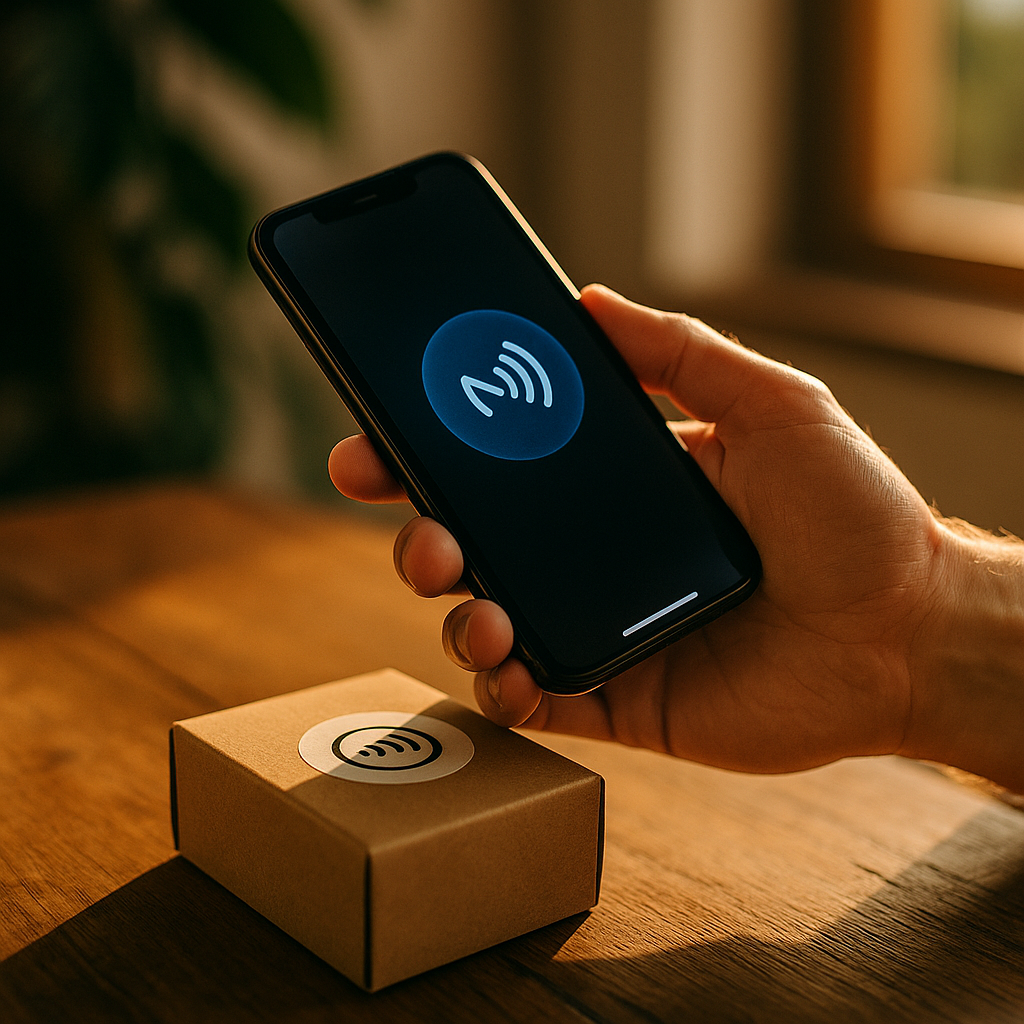
In 2026, brands no longer win app loyalty through downloads alone. This case study on NFC embedded packaging shows how one retailer turned ordinary product boxes into retention drivers, reconnecting shoppers with its mobile app after purchase. By linking packaging, app journeys, and loyalty offers, the retailer increased repeat sessions and customer value. Here’s what changed—and why it worked.
NFC packaging case study: the retailer’s retention problem
A mid-sized specialty retailer with a strong ecommerce and in-store footprint faced a familiar problem: solid app install numbers, weak long-term engagement. Customers downloaded the app during promotions, used it once or twice, then disappeared. Push notifications delivered inconsistent results, email open rates were flattening, and paid reactivation campaigns were getting more expensive.
The retailer’s leadership team realized the issue was not awareness. It was relevance after the transaction. Once a customer completed a purchase, the brand lost a high-value moment to continue the relationship. Packaging, however, remained in the customer’s home for days or weeks. That made it an underused media channel.
The retailer sold consumable and replenishable products, which made retention especially important. Repeat purchases drove margins. The app already included loyalty rewards, personalized recommendations, replenishment reminders, and digital receipts. The problem was that too few customers returned to use those features consistently.
Instead of treating packaging as a logistics cost, the retailer reframed it as a retention asset. It launched a pilot using embedded NFC tags in selected product packaging, connected directly to app experiences designed for post-purchase engagement.
This strategy aligned with a broader 2026 retail trend: blending physical product interactions with owned digital channels. The goal was simple but ambitious—turn the package into a persistent entry point back into the app.
App retention strategy: why NFC fit the mobile journey
NFC, or near-field communication, lets customers tap a smartphone against a package to trigger a digital action. For the retailer, this removed friction that QR codes sometimes introduce. No camera scanning. No visual alignment. No printed URL to type. One tap opened a contextual mobile destination.
The retailer chose NFC for three reasons:
- Low-friction access: A tap felt faster and more seamless than alternate methods.
- Contextual relevance: Each packaging SKU could route customers to product-specific content, not a generic landing page.
- Owned-channel re-entry: The tap could prioritize app deep links for installed users and smart fallback web paths for everyone else.
The retention strategy focused on moments after unboxing. When a shopper tapped the package, they entered one of several experiences based on customer status:
- Installed app users were deep-linked into in-app product tips, reorder tools, and loyalty rewards.
- Lapsed app users were prompted to re-open the app with a tailored incentive tied to the purchased item.
- Non-users were guided to a mobile web page showing the benefit of installing the app, usually with a first loyalty reward or product tutorial.
This mattered because retention rarely improves through one message alone. It improves when the next action is intuitive, timely, and useful. The package gave the retailer a natural trigger point. Customers already had the product in hand. Their intent was high. The brand simply had to make the return journey to the app obvious and worthwhile.
Critically, the team did not position NFC as a novelty feature. It was treated as part of a lifecycle marketing system. Every tap had a job: educate, reward, reorder, or upsell.
Customer engagement technology: how the program was built
The pilot started with three high-repeat product lines. The retailer embedded NFC in outer packaging and included a simple prompt near the tap location. Messaging was direct: Tap for setup, rewards, and personalized offers in the app. That instruction mattered. Even in 2026, customers still respond better when brands clearly explain what a tap will do.
The technology stack connected four layers:
- NFC-enabled packaging: Serialized tags associated with specific SKUs and batches.
- Dynamic routing layer: A mobile decision engine that recognized operating system, app-install state, and campaign logic.
- Deep linking and mobile web fallback: Ensured the customer reached the right destination with minimal friction.
- Analytics and CRM integration: Passed tap data into the retailer’s app analytics, customer profiles, and lifecycle automation platform.
The retailer also aligned the packaging tap journey with existing app features. That reduced development cost and improved speed to market. Instead of building entirely new experiences, the team repackaged current app value into post-purchase moments:
- Product care and usage guidance
- Automatic replenishment reminders
- Loyalty point collection tied to product registration
- Cross-sell recommendations based on purchased item category
- One-tap reorder pathways
To improve trust, the retailer followed privacy-by-design principles. Customers were informed when tapping would open app or web content, and any personalized offers required standard consent rules already present in the app ecosystem. This matters for EEAT because credible programs do not rely on vague tracking. They explain the value exchange clearly.
The pilot also accounted for operational realities. Packaging teams, app product managers, CRM specialists, and store operations had to work from one roadmap. The retailer documented the tap locations, instruction copy, destination logic, QA standards, and analytics naming conventions before rollout. That discipline helped avoid one of the biggest failures in connected packaging: launching the tag without a strong downstream experience.
Post-purchase marketing results: what improved and why
Within the first full measurement cycle, the retailer saw that NFC-enabled packaging outperformed standard post-purchase messaging in several areas. While exact figures varied by product line, the directional impact was clear enough to justify expansion.
The strongest improvements appeared in these metrics:
- App re-open rate: Customers who tapped the package were significantly more likely to re-enter the app than those who only received email or push reminders.
- 30-day active usage: Tap users returned for practical tasks such as tutorials, rewards, and reorder actions, not just promotional browsing.
- Loyalty participation: Product-linked reward journeys increased point redemptions and repeat session frequency.
- Repeat purchase rate: Replenishable items benefited most because the package acted as a bridge to reorder behavior.
- Lower reactivation cost: Owned packaging interactions reduced dependence on paid channels to bring users back.
Why did it work? The answer was less about the tag itself and more about the behavior design behind it.
First, the interaction occurred at a moment of high relevance. Customers had just purchased or opened the product, so educational content and rewards felt useful rather than intrusive.
Second, the tap experience created continuity between the physical and digital journey. Instead of asking customers to remember the app later, the packaging made app access immediate.
Third, the destination experience was tied to customer value. The retailer did not send people to a generic homepage. It delivered product-specific utility, which is far more likely to support retention.
Fourth, the packaging remained available long after the initial purchase. A push notification disappears. A box on a kitchen counter or bathroom shelf can prompt repeated app sessions over time.
The retailer also learned that different customer groups responded to different incentives:
- New customers engaged most with onboarding content and loyalty enrollment.
- Existing loyal customers used quick reorder flows and reward tracking.
- Lapsed users reactivated best when the app delivered immediate practical value, not broad discount messaging.
That insight helped the brand refine segmentation and improve future lifecycle campaigns beyond packaging itself.
Retail app engagement lessons: best practices from the rollout
This case offers practical lessons for retailers considering connected packaging as a retention lever. The most important takeaway is that NFC should support a clearly defined business goal. In this case, the objective was app retention, not packaging innovation for its own sake.
Here are the main lessons the retailer documented after the pilot:
- Start with high-repeat categories: Products with replenishment cycles create the strongest retention opportunities.
- Build around one clear user action: Every tap should point toward a next step that is easy to understand and complete.
- Use app deep links intelligently: Installed users should land exactly where they expect, not at the app home screen.
- Keep the packaging instruction simple: Customers need to know why tapping is worth their time.
- Measure post-purchase outcomes: Focus on re-opens, active days, repeat orders, and loyalty usage instead of vanity metrics alone.
- Test incentives carefully: Utility often beats discounts for long-term engagement.
The retailer also found that staff education mattered in stores. Sales associates who mentioned the tap feature at checkout increased customer awareness and activation. That is a useful reminder that omnichannel success often depends on execution across touchpoints, not just the technology itself.
Another lesson involved packaging design. The NFC prompt needed to be visible without disrupting brand aesthetics. Early versions placed the instruction too subtly, which reduced interaction rates. Later iterations improved visibility and clarified the expected benefit.
From an EEAT perspective, this is where credibility grows. Strong programs document what failed, what changed, and what produced better results. The retailer did not treat the first version as final. It ran tests, reviewed analytics, and optimized creative, routing, and offers over multiple waves.
One often-overlooked factor was customer support alignment. If the tap led to setup instructions or account-linked rewards, support teams needed to understand the journey. This prevented friction when customers had questions. The app, packaging, and service experience all had to tell the same story.
Connected packaging ROI: scaling beyond the pilot
After the pilot proved successful, the retailer developed a phased expansion plan. It prioritized products with strong household visibility, repeat purchase potential, and a clear app utility story. Not every SKU qualified. That selectivity protected ROI.
When evaluating whether to scale NFC embedded packaging, the retailer used a practical decision framework:
- Does the product justify repeat digital interaction?
- Can the app deliver real value after purchase?
- Will the packaging remain accessible in the customer’s environment?
- Can the business attribute tap behavior to retention outcomes?
- Does the added packaging cost compare favorably with paid reactivation costs?
That final question is the one many executives ask first. NFC embedded packaging has a real cost, so the business case must be grounded in measurable retention gains. In this retailer’s model, the economics worked because the app already supported repeat revenue through loyalty and replenishment. The packaging tap simply increased return usage of those existing functions.
Scaling also required governance. The retailer created standards for tag sourcing, serialization, destination mapping, analytics quality control, and campaign ownership. Without these controls, a larger rollout could have produced fragmented customer experiences.
Looking ahead, the retailer planned to combine NFC packaging signals with predictive lifecycle marketing. Customers who tapped multiple times without reordering could receive a different in-app prompt than those who tapped once and immediately purchased again. This kind of orchestration reflects where connected packaging becomes most powerful: not as a standalone channel, but as a source of first-party intent data.
For retailers with an underused app and a physical product footprint, that combination is compelling. Packaging is already in the customer journey. Embedding NFC turns it into a measurable retention touchpoint.
FAQs: NFC embedded packaging for app retention
What is NFC embedded packaging?
NFC embedded packaging includes a near-field communication tag inside or attached to product packaging. When a customer taps the package with a compatible smartphone, it opens a digital experience such as an app screen, loyalty page, tutorial, or reorder flow.
How does NFC packaging improve app retention?
It creates a low-friction way for customers to return to the app after purchase. Instead of relying only on push or email, the package itself becomes a trigger for useful app interactions tied to the product they bought.
Is NFC better than QR codes for retail packaging?
Not always, but it can be more seamless. NFC removes the need to open a camera and scan visually. For retention-focused use cases, that lower friction can improve engagement, especially when paired with deep linking into the app.
What types of retailers benefit most from NFC embedded packaging?
Retailers with repeat purchase categories, strong loyalty programs, and app-based utility tend to benefit most. Consumables, beauty, wellness, household goods, and specialty retail are common fits.
What should the customer see after tapping the package?
The best destination depends on context, but it should be immediately relevant. Examples include setup guidance, product education, rewards enrollment, personalized recommendations, reorder options, or support content.
How do you measure ROI from connected packaging?
Track app re-opens, active users, loyalty engagement, repeat purchase rate, reorder conversion, and reduced reactivation costs. The key is linking tap behavior to retention and revenue outcomes, not just counting interactions.
Are there privacy concerns with NFC packaging?
Yes, so brands should disclose what happens when customers tap and handle any personal data under existing consent and privacy rules. Transparency and limited, relevant data use are essential for trust.
Does every product need NFC packaging?
No. It works best where there is a strong reason for post-purchase digital engagement. Brands should prioritize SKUs with repeat usage, high retention potential, and app features that deliver ongoing value.
This case study shows that NFC embedded packaging works best when it solves a real retention problem. The retailer succeeded because it paired low-friction packaging interactions with useful in-app experiences, clear measurement, and strong lifecycle design. For brands with physical products and underused apps, the takeaway is direct: treat packaging as a retention channel, not just a container.