


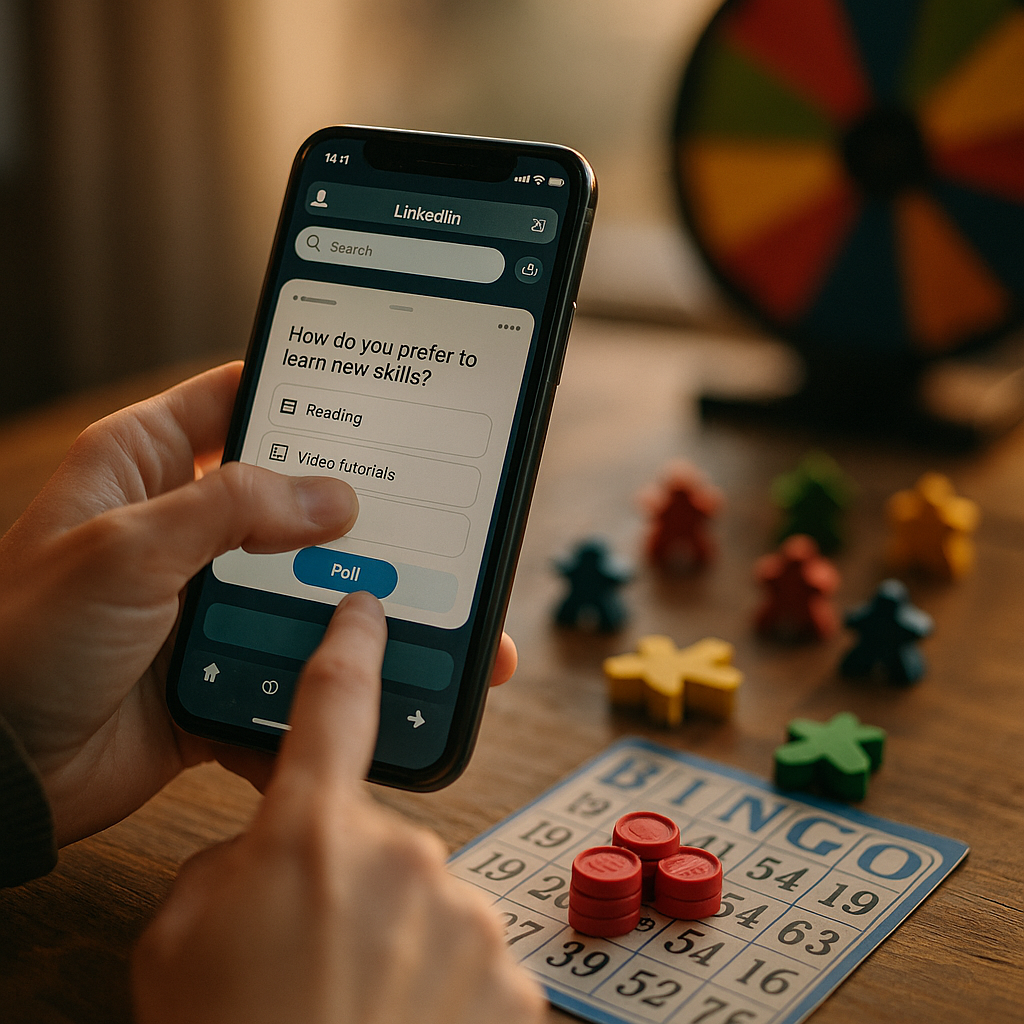
Interactive polls and gamification on LinkedIn can turn passive scrolling into measurable engagement, stronger brand recall, and more qualified conversations. In 2026, audiences reward relevance, speed, and participation, not generic posting. When polls are strategic and gamified mechanics feel natural, brands earn attention without sacrificing trust. Here is the practical playbook that helps you create that momentum consistently.
LinkedIn polls strategy: Start with clear goals and audience intent
Effective engagement on LinkedIn starts before you publish anything. A poll is not just a content format. It is a lightweight research tool, a conversation starter, and a demand-generation asset when it is tied to a specific business goal. The first step is deciding what success looks like.
Use polls for one of four primary objectives:
- Audience research: Validate pain points, priorities, buying barriers, or market trends.
- Engagement growth: Increase comments, reactions, profile visits, and repeat visibility.
- Lead qualification: Segment respondents by maturity, need, or interest level.
- Content planning: Identify what your audience wants you to explain next.
The strongest polls focus on one narrow decision. Broad questions produce vague answers. For example, asking “What is your biggest marketing challenge?” is weaker than asking “Which metric matters most when you evaluate paid social performance?” Specificity gives you usable insight and makes the voter feel understood.
Audience intent matters just as much. A founder, a B2B marketer, and a recruiter all respond to different language and stakes. Build each poll around one audience segment and one likely moment in their workday. If your audience is overwhelmed, make the poll easy and fast. If they care about professional identity, frame the options around strategic choices rather than trivia.
Before publishing, pressure-test every poll with three questions:
- Is the question immediately understandable?
- Do the answer choices feel mutually exclusive and credible?
- Will the outcome lead to a useful follow-up post, comment thread, or direct message?
This planning stage reflects EEAT principles well. Experience and expertise show up when your poll addresses a real operational challenge. Authoritativeness grows when your audience sees that you understand the category. Trust increases when you avoid manipulative wording and share the results honestly.
LinkedIn engagement tactics: Build polls that people actually want to answer
High-performing polls are concise, relevant, and easy to act on. Most users decide within seconds whether to engage. That means your wording must do the heavy lifting quickly.
Use these proven poll design principles:
- Lead with relevance: Put the central challenge at the start of the question.
- Keep options balanced: Avoid one answer that is obviously correct unless you want a debate.
- Create constructive tension: Frame tradeoffs people genuinely face, such as speed versus quality, in-house versus agency, automation versus manual review.
- Write for professionals: LinkedIn users respond better to practical insight than gimmicks.
- Add context in the post copy: Explain why you are asking and what you will do with the results.
A simple formula works well: Question + why it matters + invitation to explain in comments. That last part is important. Poll votes create one layer of engagement, but comments deepen reach and reveal intent. Ask respondents to share why they chose their answer, what is missing, or what changed recently in their workflow.
Here is an example structure:
Which factor delays your content approval process most often?
- Too many stakeholders
- Unclear brief
- Compliance review
- Last-minute edits
Then in the caption:
I am seeing teams struggle to ship consistently even with better tools. Vote, then comment with the bottleneck your team has not solved yet. I will share a framework based on the results.
This approach does three things. It boosts participation, sets up a follow-up asset, and signals that your post is grounded in experience. That combination aligns with helpful content best practices because it prioritizes user value over empty reach.
Avoid common mistakes:
- Questions with obvious vanity answers that make respondents feel managed.
- Overly promotional polls that exist only to push a product.
- Confusing options with overlap or internal jargon.
- No next step after the vote closes.
If you want stronger outcomes, treat every poll like the first step of a content sequence, not a one-off post.
Gamification on LinkedIn: Use mechanics that increase participation without feeling childish
Gamification works on LinkedIn when it respects the platform’s professional context. The goal is not to turn your feed into a game app. The goal is to use game mechanics such as progression, recognition, challenge, and reward to make interaction feel meaningful.
The most effective LinkedIn gamification mechanics in 2026 include:
- Prediction polls: Ask users to forecast an industry outcome, then reveal results later.
- Mini challenges: Invite followers to complete one tactical task and report back.
- Comment-to-unlock content: Offer a checklist, template, or framework to those who engage.
- Series-based scoring: Run weekly question formats where participation compounds over time.
- Recognition loops: Highlight smart responses from commenters in a follow-up post.
The key is professional relevance. A cybersecurity brand might run a weekly “spot the risk” scenario. A sales leader might use role-play objections and ask people to vote on the best response. A B2B SaaS company could run maturity-level quizzes through polls and then publish segmented advice based on the dominant answer.
Gamification also works when the reward is useful, not flashy. On LinkedIn, the best incentives are:
- Exclusive insights
- Actionable templates
- Public recognition for thoughtful contributors
- Access to a benchmark summary
- An invitation to a focused discussion
Be careful with incentives that look like engagement bait. If the mechanic feels manipulative, trust drops fast. Keep the exchange fair: if you ask people to participate, deliver something worth their time. That is where EEAT becomes practical. Demonstrate experience by sharing what you have learned from running these formats. Demonstrate expertise by turning responses into clear guidance. Build trust by avoiding exaggerated claims and by protecting respondent privacy.
Poll ideas for LinkedIn: Formats that drive comments, saves, and follow-up content
If you are unsure what to publish, start with repeatable poll formats. Consistency helps your audience know what to expect, and it makes analysis easier across multiple posts.
Here are reliable poll ideas for LinkedIn that support both engagement and business goals:
- Priority ranking polls: Ask which business objective matters most this quarter.
- Workflow bottleneck polls: Identify where teams lose time or momentum.
- Budget allocation polls: Compare where professionals would invest first.
- Tool adoption polls: Measure which platforms or systems are gaining traction.
- Experience-level polls: Segment your audience by maturity or role.
- Scenario decision polls: Present a realistic challenge and ask what users would do next.
To increase comments, pair the poll with one of these prompts:
- What option is missing?
- What changed your answer in the past six months?
- What would you tell a team facing this problem right now?
- Do you think the majority will get this wrong? Why?
To increase saves, promise a useful synthesis after the poll closes. For example, tell your audience you will post a simple framework, a checklist, or a benchmark summary based on the results. This gives your poll a practical purpose beyond the vote itself.
A strong editorial sequence could look like this:
- Day 1: Publish the poll.
- Day 2: Reply to comments with clarifying questions and insights.
- Day 4: Share the results and what they mean.
- Day 5 or 6: Publish a carousel, text post, or short video expanding on the top takeaway.
- Day 7: Invite direct conversations with a relevant resource.
This sequence turns one interactive post into a micro-campaign. It also improves content efficiency because every engagement signal feeds your next asset.
LinkedIn content analytics: Measure what leads to business results
High engagement is useful only if it leads somewhere. Poll impressions and vote counts matter, but they are not enough on their own. To justify the effort, connect your poll and gamification program to business metrics.
Track performance in three layers:
- Engagement metrics: votes, comments, reactions, reposts, profile visits, follower growth
- Intent metrics: quality of comments, direct messages, content downloads, repeat interactions from the same people
- Business metrics: meetings booked, qualified leads, webinar sign-ups, newsletter subscriptions, influenced pipeline
Look beyond surface volume. A poll with fewer votes but more comments from ideal buyers can outperform a viral post full of irrelevant attention. Review your audience quality after each campaign. Did the right job titles engage? Did existing prospects interact? Did the poll reveal pain points that can strengthen your positioning?
Create a simple analysis routine:
- Log the topic, format, audience segment, and posting time.
- Compare vote rate to comment rate.
- Note which answer option won and whether comments aligned with the vote.
- Track the follow-up post performance.
- Record any downstream conversations or conversions.
This process improves content quality over time. You will identify patterns such as which themes generate high-comment debates, which poll structures underperform, and which gamified mechanisms attract your best-fit audience. That is the kind of practical, evidence-based refinement Google’s helpful content systems favor.
If your organization has multiple contributors, document what you learn in a shared playbook. Include examples, benchmarks, preferred wording styles, and lessons from failed polls. Original experience is a competitive advantage, and documenting it strengthens consistency across your team.
LinkedIn community building: Turn one-time voters into repeat participants
The biggest win from interactive polls is not a temporary spike in activity. It is the ability to build a recurring audience that expects to participate. That takes consistent moderation, fast follow-up, and visible appreciation.
Start by engaging while the poll is live. Respond to early comments quickly. Ask smart follow-up questions. Thank people who add depth. If someone challenges your framing, address it openly. Professional communities trust brands and creators who can handle nuance.
After the poll closes, do not disappear. Publish the results and interpret them honestly. If the outcome contradicts your expectation, say so. That kind of transparency builds credibility. Then give respondents a useful next step. Share a concise takeaway, a practical checklist, or a point of view they can apply immediately.
To create repeat engagement, establish a recognizable cadence. For example:
- Weekly diagnostic poll
- Biweekly challenge or scenario
- Monthly results roundup
- Quarterly benchmark summary based on community responses
Recognition is a powerful retention tool. Mention thoughtful contributors in follow-up posts when appropriate. Quote strong ideas with permission. Turn audience responses into content themes. When people see that participation shapes your content, they are more likely to return.
Keep accessibility and clarity in mind. Avoid dense wording, unexplained acronyms, or insider references that exclude newer professionals. A broader portion of your network should be able to understand the question and feel qualified to answer. Higher inclusion often leads to healthier discussion quality.
Finally, remember that community building on LinkedIn depends on trust. Do not force controversy for reach. Do not overpromise outcomes from a poll. Use interaction to learn, teach, and connect. That is what creates durable engagement rather than short-lived spikes.
FAQs about interactive polls and gamification on LinkedIn
How often should I post LinkedIn polls?
For most brands, one poll per week is enough to maintain quality and avoid audience fatigue. If you also use gamified formats, balance them with insight posts, case studies, and analysis so your feed stays credible and varied.
What makes a LinkedIn poll successful?
A successful poll has a clear question, credible answer options, relevance to a defined audience, and a follow-up plan. Success should be measured not only by votes, but also by comments, audience quality, and whether the post creates useful next-step conversations.
Can gamification hurt a professional brand on LinkedIn?
Yes, if it feels gimmicky, manipulative, or disconnected from business value. Gamification should support learning, recognition, or useful participation. Keep the mechanics simple and the reward relevant to professional goals.
What industries can use LinkedIn polls effectively?
Almost any industry can use them well, especially B2B sectors such as SaaS, consulting, HR, finance, cybersecurity, health technology, education, and recruiting. The key is choosing questions that reflect real decisions your audience faces.
Should I use polls for lead generation?
Yes, but indirectly. Polls are better at starting conversations and identifying intent than at forcing conversions. Use the results to segment interests, create follow-up content, and invite qualified respondents into a more relevant next step.
How long should a LinkedIn poll stay open?
Choose a duration that matches your audience and workflow. In many cases, a short window keeps momentum high, while a slightly longer one can help reach more of your network. The important part is active moderation while it is live and timely follow-up once it closes.
What should I do after a poll ends?
Share the results, explain what they mean, and give your audience something practical based on the outcome. This could be a framework, checklist, short analysis, or invitation to discuss the issue further. Without follow-up, much of the poll’s value is lost.
Are comments more important than votes?
Often, yes. Votes show participation, but comments reveal reasoning, intent, and context. If your goal is thought leadership, relationship building, or lead qualification, comments usually provide the richer signal.
Interactive polls and gamification on LinkedIn work best when they solve a real audience need, not when they chase empty visibility. Set a clear goal, design focused questions, use professional gamified mechanics, and follow up with genuine insight. If you treat each poll as the start of a useful conversation, engagement becomes more consistent, credible, and commercially valuable.