


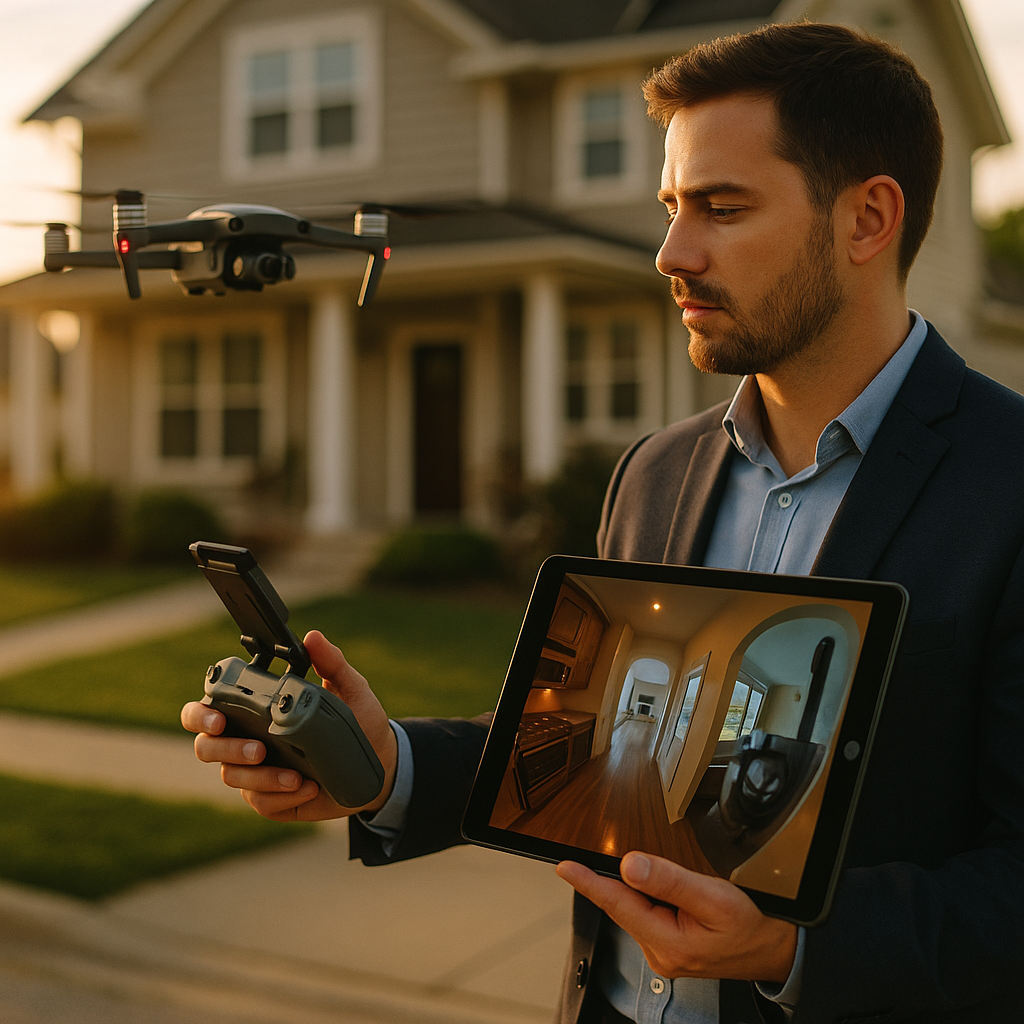
In 2026, buyers expect more than static listings. This case study: how a real estate brand used drones and 360 video for sales shows how immersive media helped one regional developer increase qualified leads, shorten sales cycles, and improve trust before site visits. The results were not accidental; they came from a clear strategy, disciplined production, and sharp measurement. Here’s what changed.
Real estate video marketing: the brand, challenge, and goal
A mid-sized residential real estate brand with new-build communities in suburban and coastal markets faced a familiar problem: strong inventory, weak attention. Its listings had professional photography, floor plans, and standard walkthrough clips, yet online engagement plateaued. Prospects spent time browsing but hesitated to book tours. Sales teams also reported a recurring issue: many on-site visits came from poorly qualified buyers who liked the location but did not understand lot size, neighborhood layout, or views until arrival.
The company’s leadership set three practical goals for its next campaign cycle:
- Increase qualified inquiries from serious buyers, especially remote and relocating households.
- Reduce friction in the decision process by helping prospects understand the property and surrounding area earlier.
- Support sales teams with better pre-visit education so appointments converted at a higher rate.
Instead of adding more standard listing content, the brand tested a richer format built around two assets: drone footage for context and 360 video for immersion. The strategy recognized a simple truth about real estate decisions. Buyers do not purchase square footage alone. They buy sightlines, proximity, atmosphere, privacy, access roads, nearby amenities, and the feeling of moving through a space. Static images can suggest those things; immersive media can demonstrate them.
The campaign covered eight flagship developments and a smaller portfolio of luxury resale homes. The team aligned marketing, sales, legal, and production at the start, which mattered. Real estate media can create compliance issues if views, lot boundaries, or nearby features are shown inaccurately. By defining guardrails early, the brand avoided one of the biggest reasons visual campaigns fail: beautiful creative with weak operational follow-through.
Drone real estate photography: why the team chose aerial storytelling
The aerial component was not designed as visual decoration. It solved specific buyer questions that traditional images could not answer quickly. For master-planned communities, drone footage showed road access, distance between homes, green space, clubhouses, schools, and commercial zones. For luxury properties, it clarified elevation, privacy, waterfront orientation, and neighboring structures. In each case, the footage reduced uncertainty.
The brand’s creative brief focused on utility first. Every aerial sequence had to answer at least one high-intent question:
- What does the property sit next to?
- How close are amenities, schools, or transport links?
- What is the actual relationship between home, lot, and neighborhood?
- How do views change by angle, height, and time of day?
To keep the videos credible, the production team avoided over-editing. They used smooth flight paths, restrained color grading, and clear labeling in distribution versions. That approach supported trust. Overly cinematic edits may win attention, but they can also trigger skepticism when the sales process gets serious. In property marketing, confidence grows when visual polish is matched by visible accuracy.
The team also segmented use cases. Short drone clips were created for paid social and listing portals where attention spans were limited. Longer edits lived on landing pages and in email sequences, where interested prospects wanted context. Sales representatives received property-specific aerial clips inside their CRM so they could send personalized follow-ups after discovery calls.
One overlooked benefit emerged quickly: drone footage improved internal alignment. Marketing used it to attract; sales used it to qualify; development teams used it to explain future phases and amenities. The content stopped being “just advertising” and became a shared sales asset across the funnel.
360 virtual tours for real estate: how immersive content improved buyer intent
The second pillar was 360 video, deployed for model homes, premium units, amenities, and selected resale properties. The brand chose 360 video rather than relying only on point-and-click virtual tours because video better communicated movement, flow, and emotional pacing. Buyers could understand what it felt like to enter a foyer, turn toward a kitchen, walk onto a terrace, or move from a bedroom to a bathroom without the disconnected feel that some static tours create.
Execution mattered. The team mapped each tour to likely buyer behavior. Instead of filming every room in equal detail, they emphasized decision-driving moments: entrance sequence, kitchen-worktop relationship, window views, primary suite privacy, outdoor transitions, and amenity access. This raised completion rates because the content respected buyer priorities.
They also designed multiple versions:
- Listing-page version: concise, fast-loading, optimized for mobile viewing.
- Sales version: a fuller guided 360 video with agent voiceover for follow-up emails.
- Showroom version: displayed on in-office screens and headsets for walk-in prospects.
Accessibility and usability were built in from the start. Every 360 asset included standard playback options for users without headsets, captions for narrated sections, and fallback stills for lower-bandwidth devices. This was essential for performance. Immersive media only helps if it is easy to access. Heavy, slow-loading experiences can increase bounce rates and waste ad spend.
The impact on buyer intent became visible within weeks. Sales reps noticed better-informed conversations. Prospects asked sharper questions about financing, finishes, timelines, and availability rather than broad questions that signaled early-stage browsing. In practical terms, the content moved users further down the funnel before the first live interaction.
Property marketing strategy: campaign rollout, channels, and measurement
The brand did not publish the new assets everywhere at once. It ran a phased rollout to isolate what worked. First, it added immersive media to a controlled set of high-value listings. Then it used A/B testing on landing pages, comparing standard photo-first layouts against pages featuring drone hero sections and embedded 360 previews above the fold.
The distribution plan covered four channels:
- Owned media: property pages, community microsites, email nurture flows, and sales presentations.
- Paid social: short aerial teasers and cutdowns driving traffic to immersive landing pages.
- Search campaigns: listing-specific ads with extensions emphasizing virtual viewing options.
- Portal optimization: where allowed, richer video integrations and links to full experiences.
Measurement focused on business outcomes rather than vanity metrics. Views mattered, but only in context. The dashboard tracked:
- Landing-page engagement and scroll depth
- 360 video starts and completion rates
- Lead form completion rate
- Booked tours
- Appointment-to-offer conversion
- Average days from first inquiry to reservation or offer
To improve attribution, the company tagged each asset by property, channel, audience, and sales stage. This revealed a pattern that would have been missed with simpler reporting. Drone clips generated the strongest top-of-funnel lift, particularly on social and search landing pages. 360 video had the strongest influence on mid-funnel progression, helping prospects move from inquiry to scheduled viewing or deposit conversation.
The sales team’s feedback was folded into weekly optimization. If buyers repeatedly paused at certain points in the 360 journey or asked the same follow-up questions after viewing, the team updated narration, labeling, or scene order. This feedback loop reflected good EEAT practice: content was shaped by real user needs and informed by professionals directly involved in the buying process.
Real estate lead generation: the results and what actually drove sales
After a full campaign cycle, the brand compared the immersive-media listings against a matched group of similar listings marketed with conventional assets. The gains were meaningful because they appeared across several metrics, not just one.
- Qualified lead volume increased by 34%, driven mainly by stronger conversion from landing-page visits.
- Tour bookings rose by 22%, with a noticeable improvement among out-of-area buyers.
- Appointment quality improved, with sales teams reporting fewer low-intent visits and more financing-ready prospects.
- Average time from inquiry to serious negotiation dropped by 18%.
- Luxury and view-dependent properties saw the largest gains, where aerial context added clear value.
However, the most important lesson was not simply “video works.” The results came from matching format to decision friction. Drone footage helped buyers understand the external reality of a property. 360 video reduced uncertainty about interior flow. Together, they answered practical questions earlier, which improved trust and sharpened intent.
The brand also found that not every listing needed the same production investment. Premium homes, large communities, unusual lots, and destination properties generated the highest return from immersive content. Standard units in familiar neighborhoods still benefited, but lighter versions often delivered enough value. This prevented overspending and made the program scalable.
Another key driver was speed. The team cut production turnaround by creating repeatable shot lists, editing templates, compliance checklists, and naming conventions. New listings could be published with immersive assets quickly, preserving momentum when buyer interest was highest. In real estate, delays kill impact. A strong media strategy must support listing velocity, not slow it down.
Video content for real estate agents: best practices, risks, and lessons for 2026
Brands and agents looking to replicate these results should avoid treating drones and 360 video as standalone tactics. They work best inside a larger sales system. Based on this case, five best practices stand out.
- Start with buyer questions. Build each shot around what prospects need to understand before they commit to a call or visit.
- Protect accuracy. Show lot lines, views, distances, and amenities responsibly. Misleading visuals damage trust and can create legal exposure.
- Design for mobile first. Most users will encounter these assets on phones. Fast loading, simple controls, and clear calls to action are essential.
- Measure down-funnel impact. Track booked tours, sales velocity, and close rates, not just plays and impressions.
- Train sales teams to use the content. The highest ROI often comes from follow-up, where agents send the right visual asset to the right buyer at the right time.
There are also risks. Drone operations require compliance with local aviation rules, insurance, and location permissions. 360 video can underperform if scenes are too long, camera height feels unnatural, or navigation is confusing. Production quality matters, but buyer usefulness matters more. An elegant video that fails to answer real questions will not improve conversions.
For 2026, the broader takeaway is clear. Real estate buyers are more comfortable researching remotely, comparing options faster, and ruling out mismatches before they ever speak to an agent. That behavior rewards brands that reduce uncertainty early. Drones and 360 video are effective because they bring reality forward in the funnel. They do not replace agents, site tours, or in-person trust-building. They make those steps more efficient and more productive.
For this brand, immersive media was not a novelty. It became a sales accelerator because the team tied creative choices to buyer psychology, operational discipline, and measurable outcomes. That combination is what other real estate businesses should copy.
FAQs about drone and 360 video in real estate sales
Do drones and 360 video work for all types of real estate?
They work best where context and flow strongly influence value, such as luxury homes, new developments, waterfront properties, large lots, and relocation-focused listings. Smaller or standard units can still benefit, but the production level should match the likely return.
Which performs better: drone footage or 360 video?
They solve different problems. Drone footage is stronger for location, surroundings, and property context. 360 video is stronger for showing interior movement and room relationships. The most effective campaigns combine both based on the buyer journey.
How long should a real estate drone video be?
For ads and social placements, short clips of 10 to 30 seconds usually perform best. For landing pages and sales follow-up, longer cuts can work if every sequence answers a buyer question and supports a clear next step.
Is 360 video better than a standard virtual tour?
Not always. Standard virtual tours can be useful for detailed room-by-room exploration. 360 video often feels more guided and emotional, which can improve engagement. Many brands use both, depending on property type and buyer intent.
What metrics should real estate teams track?
Track metrics that connect to revenue: qualified leads, booked tours, appointment quality, sales cycle length, offer rate, and close rate. Engagement metrics such as play rate and completion rate are helpful only when tied to those business outcomes.
How much production quality is enough?
Content should look professional, stable, accurate, and easy to watch. Beyond that, usefulness matters more than cinematic style. Clear visuals, logical sequencing, and fast delivery usually outperform flashy edits that add little information.
Are there legal or compliance concerns with drones?
Yes. Brands should confirm pilot licensing, insurance, airspace permissions, local regulations, privacy considerations, and truthful representation of property boundaries and views. Compliance should be built into the production process, not reviewed at the end.
Can small agencies or independent agents use this strategy?
Yes. Start with high-value listings or properties where context is difficult to convey with photos alone. Use a repeatable workflow, create shorter assets first, and expand only after tracking clear conversion improvements.
This case shows that immersive property content works when it removes uncertainty at the moments buyers need clarity most. Drone footage explains context, 360 video explains experience, and both can improve lead quality when tied to a disciplined sales process. The takeaway is simple: invest in immersive media where it answers real buyer questions, then measure performance by conversions, not views.