


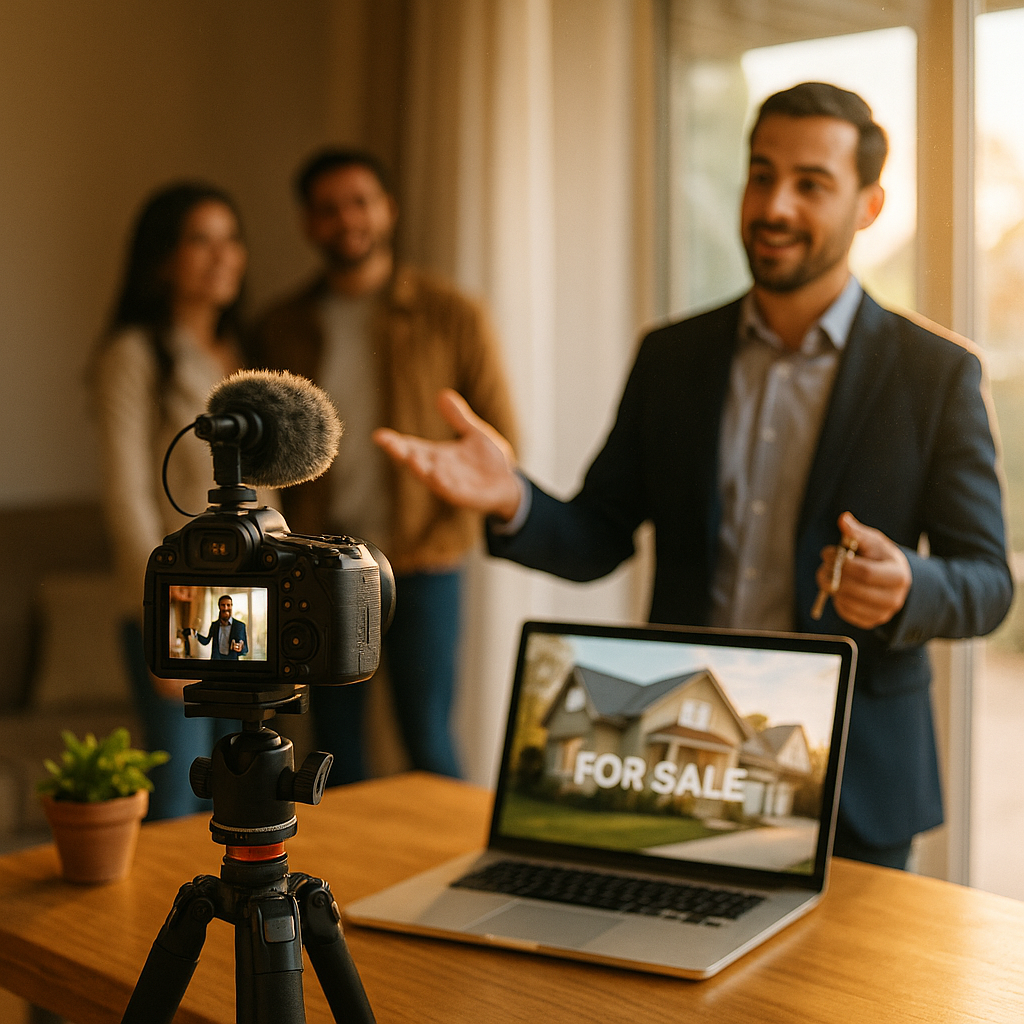
In 2026, property buyers expect immersive digital experiences before they book a visit. This case study on real estate video marketing shows how one mid-sized residential brand combined drones and 360 video to shorten sales cycles, improve lead quality, and raise conversion rates. The results were measurable, repeatable, and grounded in buyer behavior. Here is what happened next.
Brand Overview and real estate marketing strategy
The brand in this case study is a regional real estate developer selling new-build apartments, townhomes, and a limited number of premium villas in a competitive suburban market. Its audience included first-time buyers, move-up families, and remote investors who often could not attend in-person viewings early in the decision process.
Before launching the campaign, the company faced three practical problems. First, standard listing photos made several properties look similar, especially units with comparable floor plans. Second, the sales team spent too much time handling low-intent inquiries from prospects who had not fully understood layout, surrounding area, or property scale. Third, paid traffic costs were increasing, so the brand needed better conversion from every visit to its website and landing pages.
The marketing director and sales leadership aligned on a clear goal: create a digital experience that answered key buyer questions before a viewing was scheduled. They wanted prospects to see the home, understand the neighborhood context, and imagine how the space flowed from room to room. Instead of producing generic lifestyle content, they built a focused real estate marketing strategy around utility, accuracy, and measurable sales outcomes.
The campaign centered on two assets:
- Drone footage to show location, access roads, schools, parks, retail, and building scale
- 360 video tours to let prospects move through the property virtually and pre-qualify themselves
This approach reflected a simple insight from the sales team’s own call logs: serious buyers repeatedly asked about view lines, distance to amenities, parking access, lot positioning, and whether rooms felt smaller than they looked in static photos. Drones and 360 video addressed those questions directly.
Campaign Planning with drone real estate photography
Execution mattered as much as the idea. The brand did not treat drone production as a visual add-on. It mapped each video to a stage in the buyer journey. That planning process is important because many real estate teams invest in aerial shots without deciding what those shots should communicate.
For the awareness stage, the drone team captured broad neighborhood visuals. These clips highlighted commuting routes, green space, nearby shopping, and the relationship between the development and surrounding infrastructure. This helped buyers answer a fundamental question quickly: Does this location fit my daily life?
For the consideration stage, the production plan became more specific. Drone passes were used to show building orientation, balcony views, parking areas, shared amenities, and lot boundaries for villas. Rather than relying on dramatic cinematic sweeps alone, the shots were designed to provide spatial clarity. The sales team reported that buyers often mistrusted content that felt too stylized, so the brand prioritized realism over spectacle.
To maintain credibility and align with EEAT principles, the company used licensed drone operators, documented flight permissions, and worked closely with legal and compliance teams. They also created an internal checklist to avoid misleading framing. For example, no shot could imply a view from a unit that was not actually available from that floor, and any edited sequence had to preserve accurate distances and sightlines.
This decision improved trust. When prospects later visited the site, they found the environment matched what they had seen online. That consistency reduced friction in the sales process. It also supported one of the strongest forms of marketing expertise: content that accurately prepares a buyer for reality.
The final drone package was distributed across:
- Property landing pages
- Paid social ads
- Google Business Profile updates
- Email nurturing sequences
- Sales presentations for remote prospects
Because each clip had a defined purpose, the assets were easier to test and optimize than one long brand film.
Using 360 virtual tours for real estate to qualify buyers
The second pillar of the campaign was 360 video. The brand selected its highest-interest listings first, including model apartments, family-sized units, and two premium homes that tended to attract out-of-area buyers. The objective was not just engagement. It was qualification.
Each 360 experience allowed users to explore major rooms, transition between spaces, and view practical details such as kitchen placement, storage areas, window orientation, and bathroom layout. The team also embedded concise text prompts where buyers typically hesitated, including room dimensions, finish options, and amenity notes.
This was a smart move because buyers do not ask only emotional questions. They ask practical ones. Will my dining table fit? Is there enough natural light? How far is the bedroom from the main living area? Can I understand this floor plan without visiting in person? A good 360 tour answers these questions with less effort than a PDF brochure and more honesty than heavily edited stills.
The company integrated the tours into listing pages with prominent calls to action below the viewer:
- Book an in-person viewing
- Request pricing and availability
- Speak to a sales advisor
- Compare floor plans
This mattered because immersive content alone does not drive revenue. It must connect naturally to the next step. The brand also tracked user behavior closely. Prospects who spent more than two minutes in a 360 tour and clicked at least three hotspots were scored as high-intent. Those leads were routed faster to senior sales reps.
The result was improved lead handling efficiency. Instead of treating every inquiry the same, the sales team could prioritize people who had demonstrated real interest through behavior. Lower-intent leads were moved into automated email sequences featuring financing FAQs, neighborhood guides, and follow-up tour links.
Notably, the brand did not remove traditional content. It kept floor plans, photos, pricing guides, and text descriptions alongside the 360 experience. This balanced approach worked because different buyers process information differently. Some want to explore visually. Others need dimensions, policy details, or financing context before they act.
Performance Results from property video marketing
Within one full sales cycle, the brand saw measurable gains across engagement, lead quality, and conversion. These outcomes came from comparing properties with immersive media against similar listings using standard image-based pages.
The most important improvements included:
- Longer average time on property pages featuring drone and 360 content
- Higher viewing-to-inquiry rate from paid social traffic
- Lower share of unqualified viewing requests
- More remote buyers moving to deposit stage without an initial physical visit
- Shorter time from first website session to scheduled sales call
The sales director reported one especially valuable change: site visits became more productive. Prospects arrived with better expectations and more specific questions. That shifted conversations from basic clarification to decision-making. Sales reps could focus on availability, payment plans, upgrade options, and closing timelines rather than correcting misunderstandings about layout or location.
For premium inventory, drone footage had an outsized impact. It gave buyers a clearer sense of privacy, elevation, landscape, and surrounding development patterns. In suburban and semi-rural markets, these factors often influence price tolerance. When buyers could see context from above, they understood the value proposition faster.
For multi-unit properties, 360 tours produced the strongest efficiency gains. The brand found that users who completed most of a virtual walkthrough were significantly more likely to request a qualified appointment. In practical terms, that meant fewer no-shows and fewer wasted agent hours.
The campaign also improved creative performance in paid media. Short drone-led clips generated stronger thumb-stop rates on social platforms, while retargeting audiences responded well to 360-tour invitations. This full-funnel effect increased the return from existing ad spend rather than relying only on bigger budgets.
Why did these results occur? Because the content reduced uncertainty. Real estate purchases involve high consideration, multiple stakeholders, and emotional as well as financial risk. Content that makes the property easier to understand tends to improve confidence. Better confidence leads to better inquiries.
Lessons for real estate lead generation in 2026
This case study offers practical lessons for brands that want similar outcomes. The first is that immersive media works best when tied to a defined business problem. If your issue is low listing engagement, drone footage may help attract attention. If your issue is poor lead quality, 360 tours may be more valuable. If both are true, combine them with clear conversion paths.
The second lesson is that production quality must support trust, not distract from it. Real estate buyers are highly sensitive to anything that feels exaggerated. Over-edited skies, impossible room brightness, misleading aerial angles, or vague hotspot labels can create disappointment later. Accurate content performs better over time because it filters in the right audience.
The third lesson is to align marketing and sales before production starts. In this case, the best content ideas did not come only from the creative team. They came from repeated objections and questions heard by agents. That is where the strongest messaging lives. If buyers keep asking about traffic flow, school access, or room dimensions, build content that answers those points directly.
Fourth, measurement should go beyond views. Many real estate teams celebrate video impressions that have little connection to revenue. Better metrics include:
- Inquiry rate by content type
- Tour completion rate
- Viewing requests from high-intent users
- Lead-to-appointment conversion
- Appointment-to-reservation or deposit rate
- Sales cycle length by source and asset exposure
Fifth, immersive assets should be repurposed intelligently. A single drone shoot can create listing videos, short ads, neighborhood clips, community overview reels, and sales office screens. A single 360 tour can power website experiences, email campaigns, and remote consultations. This improves content efficiency and lowers the effective cost per asset.
Finally, remember accessibility and usability. The brand in this case compressed files for mobile performance, added clear navigation cues, and ensured key information remained available in standard text. That matters in 2026, when mobile browsing dominates early property research. A beautiful tour that loads slowly or confuses users will hurt results.
Implementation Tips for 360 video marketing and drones
If you want to apply this model, start with a pilot rather than a full portfolio rollout. Choose a small set of listings where the visual story can materially affect buyer understanding. Premium homes, complex layouts, scenic locations, and new developments are good candidates.
Then build a content brief around buyer decisions, not just visual features. Include:
- Top questions buyers ask before booking a viewing
- Which scenes answer those questions best
- What sales action should follow each asset
- How performance will be tracked
- What information must remain precise for compliance and trust
Use drone footage to establish context and 360 content to explain interior flow. That sequence mirrors how many buyers think. First they ask, Is this the right place? Then they ask, Is this the right home?
Operationally, involve your sales staff in review before launch. Ask them whether the content will reduce repetitive objections or create new confusion. Also check whether your CRM can capture engagement signals from video and tour interactions. Without this step, your sales team may not benefit from the qualification insights that immersive media can provide.
On the technical side, host files in a way that protects site speed. Add transcripts or supporting text where useful. Keep calls to action visible without interrupting the experience. Most importantly, revisit performance every month. The strongest campaigns improve because teams refine placement, edit length, thumbnail selection, and follow-up messaging over time.
The brand in this case did not win by using flashy technology. It won by making the buying process easier. That distinction is what separates gimmicks from scalable real estate marketing.
FAQs about real estate video marketing
What is the main benefit of drones in real estate sales?
Drones show location context, property boundaries, access routes, views, and neighborhood assets better than standard photography. This helps buyers understand value faster and improves inquiry quality.
How do 360 virtual tours help a sales team?
They pre-qualify prospects by letting them explore layout and room flow before visiting. As a result, sales teams often receive more informed inquiries, fewer low-intent appointments, and better use of agent time.
Are drone videos and 360 tours worth the investment for mid-sized real estate brands?
Yes, when used strategically. They are most effective for properties where location context, design flow, or premium positioning influences buyer decisions. The return improves when assets are reused across listings, ads, email, and sales presentations.
What metrics should real estate marketers track?
Track page engagement, inquiry rate, tour completion, lead quality, booked viewings, appointment attendance, and final conversion to reservation or sale. Views alone are not enough.
Can immersive content replace in-person showings?
Usually not completely, but it can reduce unnecessary showings and move buyers further down the funnel before they visit. For remote or investor buyers, it can be especially valuable early in the decision process.
What mistakes should brands avoid?
Avoid misleading angles, slow-loading files, unclear navigation, and content without a defined call to action. Also avoid producing assets without input from sales teams who understand buyer objections.
Which properties benefit most from this approach?
New developments, premium homes, scenic properties, larger family units, and listings with strong neighborhood selling points tend to benefit most because visual context plays a major role in purchase decisions.
For this real estate brand, drones and 360 video did more than modernize creative. They improved buyer understanding, filtered stronger leads, and helped sales teams spend time where it mattered most. The clear takeaway is simple: immersive content delivers value when it answers real buyer questions, stays accurate, and connects directly to measurable sales actions at every funnel stage.