


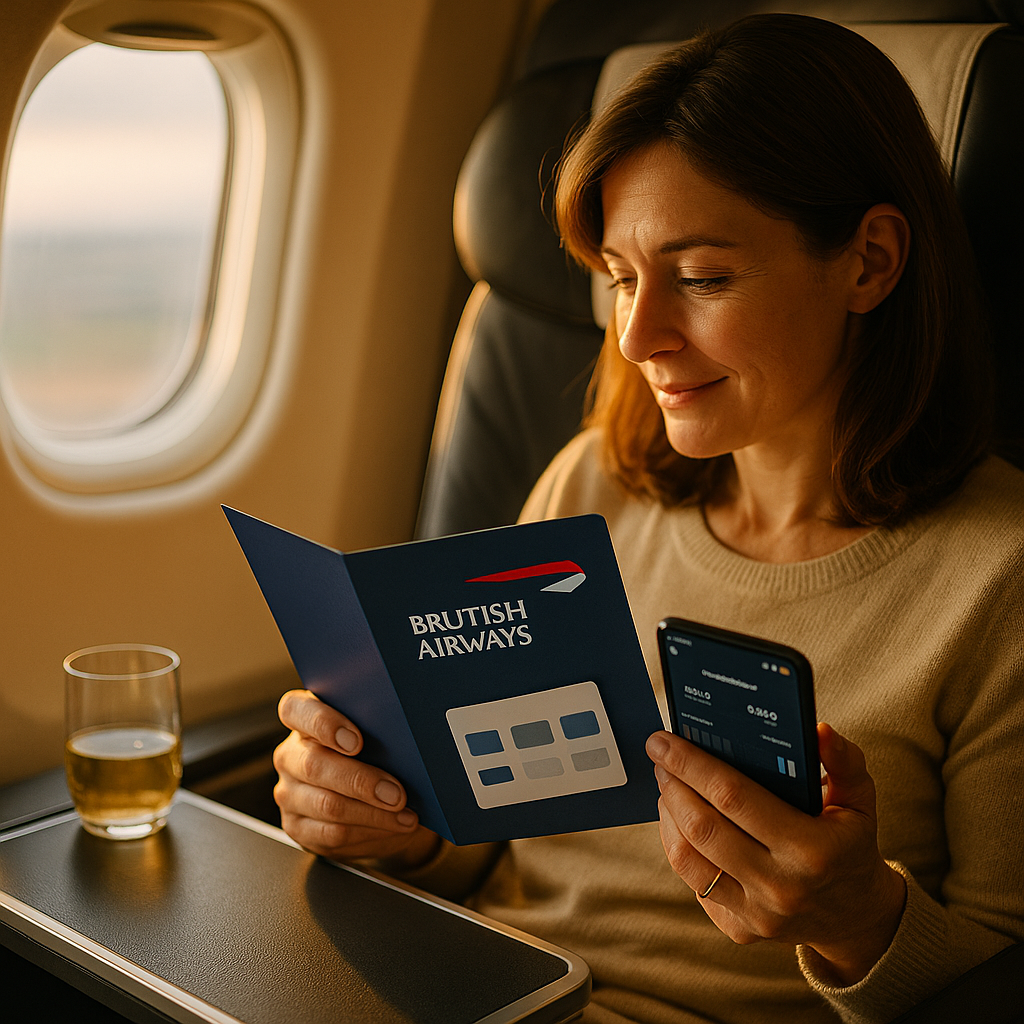
In 2025, loyalty leaders don’t win by promising the biggest rewards; they win by delivering the most consistent value. This case study explains how British Airways used “Small Wins” for loyalty success by redesigning everyday moments around trust, clarity, and customer control. Instead of betting on one dramatic change, BA stacked measurable improvements that kept members engaged. The playbook is practical—ready to borrow?
British Airways loyalty strategy: Why “small wins” beat big launches
British Airways operates in a category where loyalty is fragile: delays, disruption, price competition, and shifting traveler expectations can undo years of brand equity. In that context, a single “grand” program relaunch is risky. It raises expectations, concentrates investment, and can create confusion if benefits don’t land perfectly on day one.
BA’s approach—building loyalty through small wins—treats loyalty as a product that improves continuously. The goal is not to shock the market, but to remove friction and add value in ways customers can feel repeatedly. Small wins work because they:
- Reduce perceived risk: incremental changes are easier for members to understand and trust.
- Create compounding engagement: frequent, tangible improvements reinforce the habit of using BA and collecting Avios.
- Support operational reality: aviation is complex; iterative changes can be tested and stabilized without destabilizing core systems.
- Show respect for member time: less “relearning” and fewer rule changes that feel like moving goalposts.
For loyalty teams, the strategic takeaway is straightforward: loyalty isn’t just a rewards ledger. It’s the sum of dozens of micro-experiences that signal reliability, fairness, and momentum.
Avios & Executive Club improvements: Everyday value members can see
BA’s loyalty ecosystem centers on the Executive Club and Avios, with tier status layered on top. The “small wins” mindset shows up when the program makes earning and redeeming feel less like a puzzle and more like a routine benefit. Practical improvements typically focus on clarity, convenience, and perceived fairness—because those are the levers that keep members active.
Examples of “small win” mechanics that drive loyalty outcomes in airline programs like BA’s include:
- More understandable value cues: members need to know what Avios are “worth” in realistic scenarios. When redemption pathways are easier to compare, confidence increases.
- Fewer dead ends in redemption journeys: if a member searches and can’t find availability, the experience should still offer helpful alternatives (different dates, nearby airports, mixed cabin options).
- Consistency across channels: rules and prices should match between app, web, and customer service to avoid “two truths,” which damages trust fast.
- Better transparency on fees and surcharges: members accept constraints more readily when pricing components are clear early in the journey, not revealed at checkout.
What makes these wins powerful is their frequency. A member might redeem only a few times a year, but they check prices, search availability, read emails, and interact with the app far more often. Each interaction is an opportunity to reinforce that BA is easy to do business with.
Follow-up question readers often ask: “Doesn’t loyalty require richer rewards?” Rich rewards matter, but everyday usability often matters more. If a member can’t confidently earn and redeem without friction, “richer” benefits stay theoretical and don’t change behavior.
Customer experience “small wins”: Fixing friction in the traveler journey
BA’s small wins approach aligns loyalty with the complete customer journey, not just the points account. That is critical because loyalty is emotional as much as financial: travelers remember how they were treated when plans changed, how clearly they were informed, and how quickly issues were resolved.
Small wins in airline loyalty often concentrate on operationally realistic upgrades that improve perceived control:
- Proactive communication: timely, plain-language updates during disruption reduce anxiety and make the airline feel accountable.
- Self-serve changes: enabling customers to manage seats, add bags, adjust itineraries, or apply vouchers without long waits reduces abandonment and complaints.
- Faster, clearer refunds and compensation pathways: members judge brands by how they handle the hardest moments, not the smooth ones.
- Queue management improvements: even when demand spikes, transparency about expected wait times and channel options lowers frustration.
These changes don’t always show up as “loyalty benefits,” yet they increase loyalty outcomes: higher rebooking intent, fewer defections after disruption, and stronger word-of-mouth. In practice, that means the loyalty team must partner with operations, digital, and customer care—because the loyalty promise is delivered by the entire airline.
How this connects to loyalty success: when the traveler journey feels predictable and recoverable, members are more willing to concentrate spend with one carrier. Concentration is where loyalty economics work.
Digital loyalty experience: App-first engagement and personalization
Digital experience is the loyalty program’s daily interface. BA’s small wins logic in digital would prioritize frequent improvements that reduce effort and increase relevance—especially in the mobile app, where members manage trips, track Avios, and check tier progress.
High-impact small wins in digital loyalty typically include:
- Progress visibility: clear tier progress indicators and “what’s next” prompts help members plan behavior (for example, whether one more trip could unlock benefits).
- Personalized nudges with restraint: messages that reflect member history (home airport, typical routes, travel cadence) perform better than generic blasts—provided frequency is controlled to avoid fatigue.
- Frictionless account hygiene: easy password resets, secure identity checks, and simple household account management reduce drop-off and support costs.
- Search and booking continuity: letting customers start on one device and finish on another preserves intent—especially for multi-leg trips.
EEAT matters here because personalization can quickly feel intrusive if it’s not handled with care. A trustworthy loyalty experience respects privacy, explains why a member is seeing an offer, and provides simple preference controls. That trust is itself a loyalty driver.
Follow-up question: “Is personalization only for frequent flyers?” No. Even infrequent travelers respond to personalization when it reduces effort—like surfacing relevant routes, reminding them of unused vouchers, or guiding them to the best redemption choices for their dates.
Tier benefits & retention tactics: Making status feel earned and useful
Status is one of the strongest levers in airline loyalty because it changes the travel experience—priority services, seating options, and recognition. But status can also create resentment if it feels unattainable, confusing, or diluted. Small wins help because they refine the status experience without destabilizing qualification logic.
Effective retention-oriented small wins focus on three principles:
- Make benefits usable, not just prestigious: benefits should solve real problems (time, comfort, flexibility). If members can’t reliably access them, perceived value collapses.
- Reduce “surprise gaps”: members should know exactly when benefits apply and what exceptions exist. Ambiguity turns into complaints.
- Create gentle save paths: when members are at risk of dropping a tier, timely reminders and clear options (earning opportunities, partner activity) can preserve engagement.
For BA’s Executive Club, the loyalty success angle is not just “more elites.” It’s “more satisfied elites who feel their loyalty is recognized.” That satisfaction tends to generate:
- Higher share of wallet: members choose BA even when a competitor is slightly cheaper.
- More premium cabin consideration: status reinforces premium identity and comfort expectations.
- Stronger advocacy: frequent flyers influence colleagues, friends, and corporate travel decisions.
Practical guidance for marketers: audit your top three status pain points (benefit access, clarity, exception handling). Fixing those often delivers more retention impact than adding one new benefit.
Loyalty program KPIs: Measuring the compounding impact of small wins
Small wins only become a strategy when measurement proves they compound. BA’s approach can be understood as a portfolio of micro-improvements, each tied to a behavioral outcome. The strongest programs connect experience changes to measurable loyalty economics, then iterate.
In 2025, a practical KPI system for “small wins” loyalty work should include:
- Active member rate: percentage of members who earn or redeem within a defined window. This is a cleaner health signal than total membership.
- Redemption success rate: how often a member search leads to a completed redemption (and where drop-offs occur).
- Repeat purchase interval: how quickly members return after a trip—especially after disruptions.
- Customer effort score (CES) for key tasks: booking, changing flights, applying Avios, requesting refunds.
- Tier progression velocity: how quickly members move toward status, and whether comms improve completion.
- Contact rate per booking: fewer contacts for basic tasks often signals better digital self-service and clearer rules.
EEAT best practice also means being honest about what you can attribute. Aviation has many external variables (weather, air traffic control, airport constraints). The goal is not perfect attribution; it’s consistent directional improvement with controlled experiments where possible (A/B tests in digital journeys, phased rollouts, and clear pre/post measurement windows).
Answering the key follow-up: “How long before small wins show results?” Some show immediately (drop-off reduction in booking flows). Others compound over quarters (retention, share of wallet). The critical discipline is to keep shipping improvements and reporting outcomes in a single, understandable narrative.
FAQs
-
What does “small wins” mean in airline loyalty?
It means improving loyalty through a steady stream of targeted changes—like clearer redemption flows, better disruption support, and more transparent pricing—rather than relying on one major relaunch. The intent is to build trust and habit through repeated, visible progress.
-
Why are small wins effective for British Airways’ loyalty ecosystem?
Because BA serves a wide range of travelers with varied needs, and the airline environment changes quickly. Incremental improvements reduce customer friction without the risk and confusion that can come with sweeping program overhauls.
-
How do small wins improve Avios engagement?
They make earning and redeeming feel simpler and more predictable—through clearer options, fewer dead ends, consistent rules across channels, and better visibility into what members can do next. Increased confidence typically increases activity.
-
What are the best KPIs to track for a small-wins loyalty strategy?
Track active member rate, redemption success rate, customer effort score for core tasks, repeat purchase interval, contact rate per booking, and tier progression velocity. These capture both behavior and experience quality.
-
Can smaller airlines copy this approach without BA’s budget?
Yes. Small wins work especially well with limited budgets because they focus on removing the biggest friction points first. Start with one journey (redemption search, change flow, or support during disruption), measure improvement, and reinvest savings from fewer contacts and higher conversion.
-
What is the biggest risk of a small-wins approach?
The main risk is shipping disconnected tweaks without a clear narrative. To avoid that, align every win to a loyalty outcome (engagement, retention, trust), communicate changes simply, and report progress consistently.
British Airways’ loyalty lesson for 2025 is that durable growth often comes from disciplined iteration, not spectacle. By stacking small wins across Avios usability, digital journeys, disruption support, and status clarity, BA strengthens trust and keeps members active between trips. The takeaway is actionable: pick the highest-friction moment in your loyalty journey, fix it fast, measure impact, then repeat.