


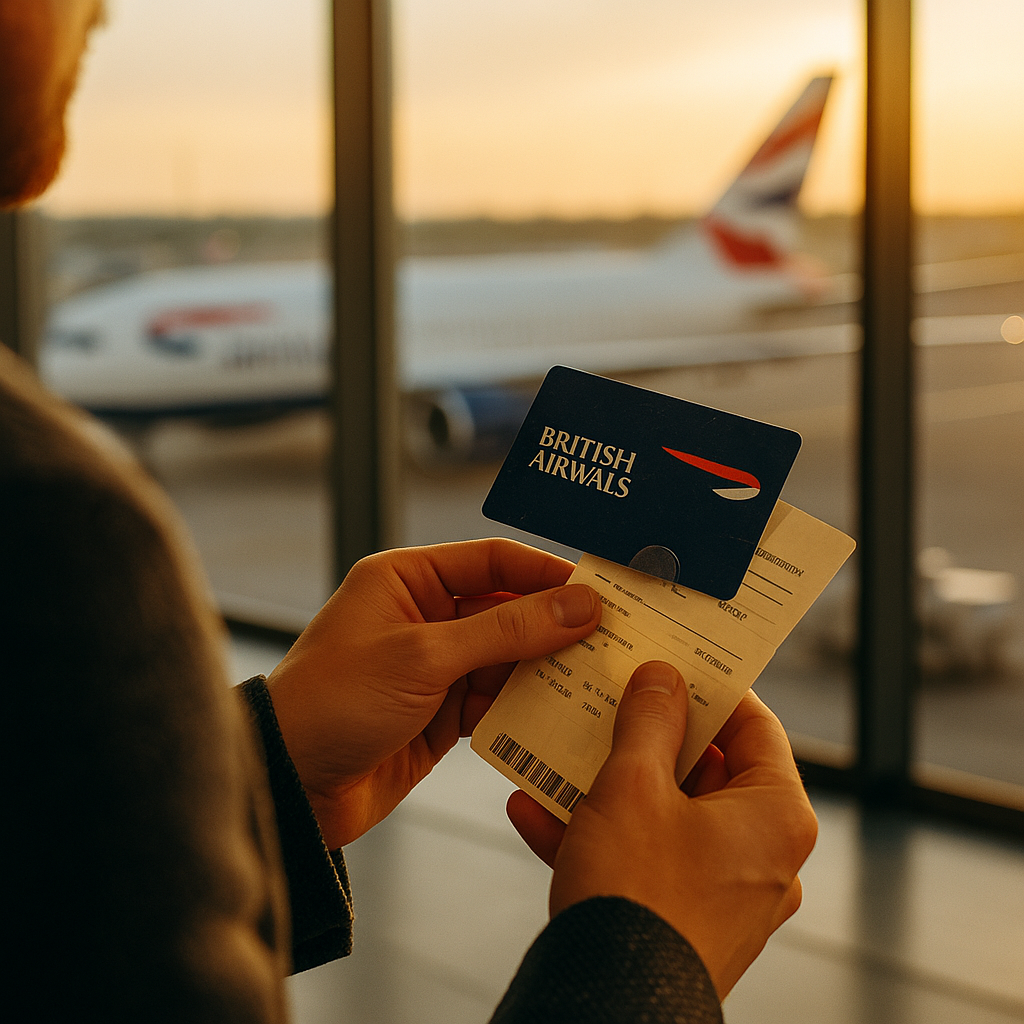
In 2025, loyalty teams face a hard truth: acquisition costs keep rising while customer patience keeps shrinking. This case study shows how British Airways used small, measurable improvements to create compounding impact across the customer journey. By focusing on “Small Wins” instead of sweeping overhauls, British Airways sharpened loyalty ROI, strengthened engagement, and reduced friction. What changed, and why did it work?
British Airways loyalty strategy: why “Small Wins” beat big-bang change
British Airways operates in an environment where loyalty is tested constantly: price comparison is instant, disruption is visible on social media, and competitors can copy features quickly. In that context, a “big redesign” approach often creates risk—long timelines, high costs, and uncertain adoption. British Airways leaned into a different operating model: identify high-friction moments in the customer journey, deploy targeted fixes, measure lift, and repeat.
This is what “Small Wins” means in practice: short-cycle improvements that are tightly connected to customer behavior and business outcomes. Instead of asking, “How do we reinvent loyalty?” the better question becomes, “What is one change we can ship quickly that increases member activity or reduces churn?”
From an ROI perspective, small wins have three advantages:
- Lower execution risk: limited scope makes outcomes easier to predict and manage.
- Faster feedback loops: teams can learn what drives incremental loyalty value within weeks, not quarters.
- Compounding returns: small lifts in multiple steps—search, booking, check-in, on-board, recovery—multiply across the journey.
For readers wondering if this is “just experimentation,” the key distinction is intent: British Airways treated experimentation as a disciplined investment process, not a collection of random A/B tests.
Customer experience improvements: mapping micro-frictions to moments that matter
British Airways’ small-wins approach starts with precise problem framing. Loyalty value is created (or destroyed) in moments that feel minor to an internal team but major to a traveler: unclear baggage rules, confusing seat selection, inconsistent recognition, slow disruption recovery, or a benefits explanation that doesn’t match what customers actually experience.
In 2025, customers judge brands by how easily they can self-serve and how reliably the brand communicates. British Airways focused on practical customer experience improvements that remove friction at high-frequency touchpoints:
- Benefit clarity at decision time: making status benefits and fare inclusions easier to understand during shopping and booking, so members can choose with confidence.
- Fewer dead ends: reducing loops and rework in digital flows (e.g., “start over” moments) that cause abandonment.
- Recognition consistency: strengthening the reliability of status acknowledgement across channels, especially when disruptions occur.
- Proactive service cues: providing timely nudges—what to do next, what’s included, where to find help—before anxiety spikes.
These aren’t cosmetic tweaks. Each is tied to a behavioral outcome that matters for loyalty: more completed bookings, fewer service contacts, higher member engagement, and improved retention. If you’re asking, “How do we find our friction points?” the answer is to combine customer feedback (complaints, surveys, social listening) with behavioral data (drop-off, repeat contacts, refund requests, rebooking time).
Loyalty ROI measurement: turning incremental gains into a business case
Small wins only work when you measure them like investments. British Airways emphasized loyalty ROI measurement by connecting initiatives to specific, observable metrics—then translating those metrics into financial impact. That means tracking both leading indicators (member actions) and lagging indicators (revenue and retention).
A practical measurement stack looks like this:
- Engagement metrics: active members, repeat logins, offer views, and “next trip” planning behaviors.
- Conversion metrics: booking conversion rate for members vs. non-members, and conversion uplift after benefit messaging improvements.
- Cost-to-serve metrics: contact rate per booking, time to resolution, and rebooking time during disruption.
- Retention metrics: repeat purchase rate, time between trips, and tier retention/advancement where applicable.
- Value metrics: incremental margin per member, share of wallet proxies, and redemption breakage/utility balance.
To keep ROI credible, British Airways treated attribution carefully. Not every positive change is caused by loyalty; seasonality, network changes, and pricing all influence outcomes. The “Small Wins” discipline uses controlled comparisons where possible (A/B tests, geo splits, phased rollouts) and relies on pre-registered success metrics to prevent cherry-picking.
For leaders who need to defend budgets, the strongest argument is not a single headline number—it’s a portfolio story: multiple validated improvements, each small on its own, producing a durable lift in member economics.
Data-driven personalisation: using signals without creeping customers out
Personalisation can increase loyalty outcomes, but it can also erode trust if it feels intrusive or inaccurate. British Airways approached data-driven personalisation as a set of small, respectful improvements based on clear customer signals—especially signals customers knowingly provide (booking behavior, preferences, membership status, prior trips).
Examples of “Small Wins” personalisation patterns include:
- Contextual messaging: tailoring pre-trip communications based on cabin, route type, and membership tier to reduce irrelevant content.
- Preference reinforcement: remembering seating or meal preferences when customers opt in, then confirming those choices clearly.
- Service recovery prioritisation: using status and trip context to route disruption support faster, while keeping outcomes transparent.
- Redemption guidance: showing members simpler paths to use rewards (and setting expectations on availability) to avoid frustration.
EEAT matters here: the goal is to increase usefulness while protecting trust. British Airways’ approach aligns with what customers value in 2025—clear explanations, consistent outcomes, and control. If you’re building your own program, a good rule is: personalise only when it improves the decision or reduces effort. Otherwise, it adds noise.
Operationally, small wins reduce the need for massive data projects. Teams can start with a handful of high-quality signals and improve the experience step-by-step, rather than waiting for a “single customer view” that takes years to perfect.
Customer retention tactics: improving tiers, recognition, and recovery
Airline loyalty is not only about points; it’s about perceived fairness, progress, and recognition. British Airways used small wins to strengthen customer retention tactics in three areas where loyalty tends to break down: tier journeys, everyday recognition, and disruption recovery.
1) Tier journey clarity
Status can motivate repeat behavior, but only if customers understand how to earn it and what it delivers. Small wins here focus on simplifying progress communication and reducing “gotcha” moments that cause members to disengage. Clear progress indicators, realistic timeframes, and plain-language benefit descriptions reduce confusion and build confidence.
2) Recognition reliability
Members notice inconsistencies instantly. British Airways emphasized consistent delivery of promised benefits and acknowledgement across touchpoints. This is where operational coordination matters: loyalty teams must work with airport operations, cabin service, and digital product teams. A small improvement in consistency can produce an outsized impact on trust and retention.
3) Disruption recovery
Disruption is a defining loyalty moment. A customer may tolerate a delay; they rarely tolerate silence, uncertainty, or repeated effort. Small wins include clearer rebooking options, faster updates, and better self-serve pathways. From an ROI standpoint, reducing the number of contacts and shortening resolution time protects margins while improving satisfaction—exactly the kind of win that scales.
Readers often ask whether retention tactics should prioritize top tiers. British Airways’ small-wins logic suggests a balanced portfolio: protect high-value members while removing friction for the broader base that fuels future value.
Marketing experimentation framework: how to operationalise “Small Wins”
“Small Wins” only deliver lasting results when the organisation can ship improvements repeatedly. British Airways’ approach resembles a marketing experimentation framework that combines governance, cadence, and learning discipline.
A workable framework includes:
- A single backlog of loyalty opportunities: ranked by customer impact, business value, and effort.
- Clear hypotheses: “If we reduce step count in booking for members, then conversion will rise and contacts will fall.”
- Defined success metrics: one primary metric and a few guardrails (e.g., conversion lift with no increase in refund requests).
- Fast deployment cadence: ship weekly or biweekly where feasible, avoiding long release cycles.
- Cross-functional ownership: product, ops, and loyalty share accountability for customer outcomes.
- Knowledge capture: document what worked, what didn’t, and why, so learning compounds.
To meet EEAT expectations, the framework should be transparent about limitations: not every test will be statistically conclusive; not every uplift will persist. The point is to build a system that learns faster than competitors while staying anchored to customer needs.
If you want to copy this model, start with one journey—booking, rebooking, or redemption—and run a 90-day cycle of improvements. You’ll produce evidence, not opinions, and you’ll create momentum that makes larger changes safer later.
FAQs
What does “Small Wins” mean in a loyalty ROI context?
It means improving loyalty economics through a series of targeted, measurable changes—such as reducing booking friction, improving recognition consistency, or clarifying benefits—rather than relying on one large program overhaul. Each change is validated with defined metrics, then scaled.
How can a brand prove loyalty ROI without over-claiming attribution?
Use controlled comparisons when possible (A/B tests, phased rollouts), define success metrics before launch, and track guardrails like complaints and refunds. Convert measurable behavior changes—conversion, retention, cost-to-serve—into financial impact using transparent assumptions.
Which “Small Wins” usually deliver the fastest return?
High-frequency friction reductions: simplifying booking and check-in flows, improving disruption self-service, and clarifying benefits at decision time. These tend to affect large volumes quickly and often reduce service costs at the same time.
Does personalisation always improve loyalty performance?
No. Personalisation helps when it reduces effort or improves decisions. It hurts when it feels intrusive, confusing, or inaccurate. Start with explicit signals (status, trip context, preferences customers chose) and prioritise usefulness over novelty.
How do “Small Wins” help during flight disruption?
They reduce uncertainty and repeated effort through clearer updates, better self-serve rebooking, and faster routing to help when needed. This protects satisfaction and reduces cost-to-serve, which directly supports loyalty ROI.
Can smaller brands use the same approach as British Airways?
Yes. The method scales down well because it relies on prioritisation and measurement, not massive budgets. Even with limited data, you can track drop-off rates, contact reasons, repeat purchase behavior, and customer feedback to identify the highest-impact fixes.
British Airways’ “Small Wins” approach shows that loyalty ROI in 2025 is built through disciplined iteration, not dramatic reinvention. By targeting micro-frictions, measuring impact with credible attribution, and scaling what works, the airline strengthens trust and member behavior at key moments. The takeaway: build a repeatable system for incremental improvements, and your loyalty economics will compound.