


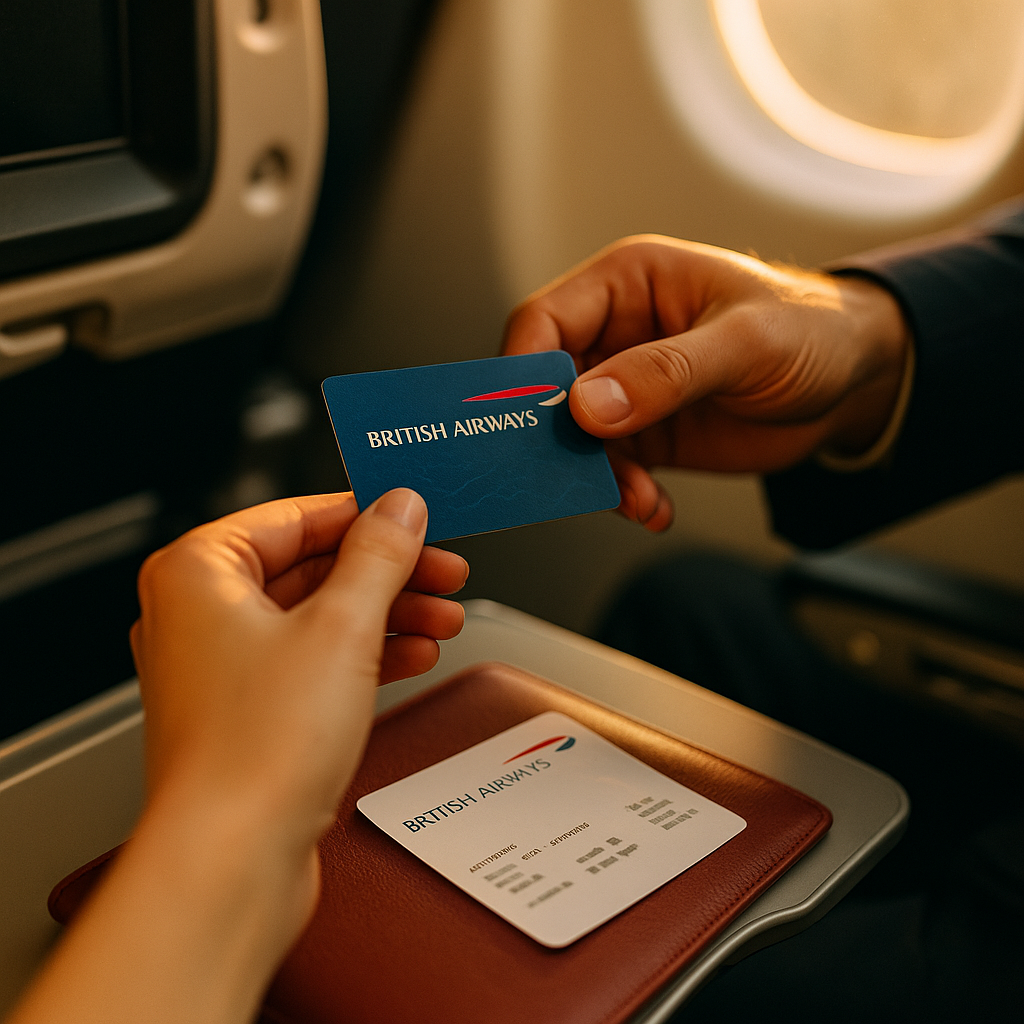
In 2025, airlines win loyalty less through grand gestures and more through consistent, frictionless moments. This case study explores how British Airways used small wins for loyalty success by fixing everyday pain points across digital, airport, and onboard journeys. The lesson is practical: minor improvements compound into trust, preference, and repeat bookings—if you choose the right moments to optimize. Ready to see how?
Customer loyalty strategy: Why small wins beat big campaigns
Airline loyalty is often framed as a race for richer rewards, bigger welcome bonuses, or flashy brand partnerships. Those tactics can help, but they rarely address the real reason travelers defect: uncertainty and effort. A customer loyalty strategy that prioritizes “small wins” targets the moments that silently drive behavior—when a traveler decides whether to book again, recommend the airline, or switch to a competitor.
Small wins work because they reduce cognitive load. Travelers don’t want to “learn” how to fly an airline; they want predictable steps and quick answers. When British Airways focused on removing micro-frictions—unclear bag rules, confusing rebooking steps, slow service recovery, inconsistent lounge access communication—each improvement was modest on its own. Together, they made the experience easier to repeat.
In loyalty, repeatability is the product. A smooth, familiar flow encourages habit. A grand campaign might boost awareness, but a string of reliable experiences earns trust. And trust is the currency that makes loyalty programs matter. When customers believe the airline will keep its promises, they engage more deeply with the program, use the app more, and consolidate spend.
From an EEAT standpoint, “small wins” is also the safest approach: you can test changes, measure impact, and scale only what works. Instead of betting on a single headline initiative, you build a portfolio of measurable improvements.
British Airways loyalty program: Aligning Avios value with everyday behavior
British Airways’ loyalty ecosystem—anchored by Avios—succeeds when members see progress and clarity. A key small-win mindset is making value legible: customers should understand what they earn, what it’s worth, and how to use it without hidden complexity.
British Airways has historically supported multiple earn-and-burn routes, including flights, partners, and upgrades. The small-win approach isn’t simply “add more partners”; it’s making each step feel attainable and transparent. Practical examples of loyalty-aligned small wins include:
- Clearer earning communication: surfacing how many Avios and tier points a booking will earn before purchase, not after.
- More predictable redemption pathways: making it easier to compare cash price vs. Avios options so customers feel in control.
- Tier progress visibility: showing progress to status in a way that motivates action (e.g., “one trip away” clarity rather than abstract totals).
These moves align loyalty incentives with what customers already do: plan trips, compare prices, and evaluate trade-offs. The point is to reduce the “mental tax” of participation. When the loyalty program feels like a helpful tool rather than a puzzle, members engage more often and perceive higher value—even when the underlying economics stay disciplined.
Readers often ask: “Isn’t loyalty mostly about the rewards?” Rewards matter, but confidence matters first. If the redemption experience is confusing or the value feels inconsistent, customers hesitate to commit. BA’s small-win lens focuses on confidence-building behaviors: clarity, comparability, and progress.
Customer experience improvements: Fixing friction in booking, disruption, and service recovery
In airline operations, disruption is inevitable. Loyalty is shaped less by whether disruptions happen and more by how the airline responds. British Airways’ small wins for loyalty success are best understood as a service-recovery system: reduce uncertainty, shorten time-to-resolution, and communicate proactively.
Small-win customer experience improvements typically land in three places:
- Booking and manage-my-booking simplicity: fewer steps to change seats, add bags, or understand fare conditions.
- Disruption workflows: clearer rebooking options, transparent eligibility rules, and faster digital self-service.
- Compensation and care communication: setting expectations, confirming receipt of claims, and providing accurate timelines.
These improvements don’t require a “rebrand.” They require attention to where customers get stuck. In practice, BA’s approach can be modeled as: identify high-volume moments (schedule changes, delays, missed connections), then remove bottlenecks one by one.
To keep this helpful and concrete, here’s a simple measurement framework an airline can use—and BA’s small-win story fits well within it:
- Time-to-clarity: how quickly a customer knows what will happen next after a change or disruption.
- Time-to-action: how quickly the customer can complete a rebooking/refund step without calling.
- First-contact resolution: whether one interaction (app/chat/agent) resolves the issue.
When these improve, loyalty improves because the traveler feels protected. This is especially powerful for business travelers, families, and premium customers—segments that are disproportionately sensitive to wasted time.
If you’re wondering “How do small wins show up to customers?”—they show up as fewer calls, fewer forms, fewer surprises, and fewer moments where a customer thinks, “I’ll try another airline next time.”
Airline digital transformation: Using data and UX to deliver consistent micro-wins
Small wins scale when digital product teams treat the journey like a set of repeatable tasks, not a marketing funnel. British Airways’ loyalty success from small wins depends on turning operational complexity into simple customer actions—especially in the app and website.
Airline digital transformation is not just building features; it’s designing for reliability under stress. Customers often open the app when they’re rushed: in a taxi, at security, or at the gate. A small win in UX might be as simple as persistent boarding pass access, real-time gate updates, or clearer baggage status—features that reduce anxiety and prevent service escalation.
BA’s small-win digital mindset maps well to proven product practices:
- Journey-based prioritization: prioritize steps that happen most often (check-in, boarding pass, seat selection, flight status).
- Edge-case design: optimize for disruption states (rebook, reroute, vouchers, partner flights) rather than only ideal states.
- Progressive disclosure: show the next best action without dumping policy text on the customer.
- Accessibility and clarity: make essential travel info readable and easy to interpret quickly.
From an EEAT perspective, the most credible digital transformation claims are those backed by measurement. While many airlines track app downloads, the metrics that correlate better with loyalty are:
- Digital adoption: percentage of customers completing tasks self-serve.
- Deflection with satisfaction: fewer contacts without worsening CSAT.
- Repeat usage: how often travelers return to the app between booking and travel.
When BA makes these micro-wins reliable, the loyalty outcome is straightforward: customers feel the airline “works.” That perception becomes a differentiator even when schedules and prices are similar.
Brand trust and loyalty: Operational consistency across airport and cabin
Loyalty is ultimately an emotional outcome of operational consistency. Customers don’t separate “the loyalty program” from the airport experience, lounge, cabin, or crew. They judge the whole system. British Airways’ small wins for loyalty success include aligning frontline delivery with the expectations set by Avios tiers and premium positioning.
Small wins in airport and cabin operations often look unglamorous but matter deeply:
- Queue transparency: clear signage and consistent enforcement of priority lanes so status feels meaningful.
- Proactive assistance: empowering staff to solve simple issues quickly (seat conflicts, tight connections, special service needs).
- Consistency in service basics: boarding flow, cabin announcements, and service pacing that match the route and cabin.
- Lounge expectation management: accurate updates on capacity constraints and access rules to prevent surprise denials.
These are “small” because they rarely require new infrastructure; they require operational discipline, training, and feedback loops. They are also high-leverage because they shape perception. A traveler who feels respected at boarding or supported during a tight connection is more likely to forgive a delay and still book again.
To answer a common follow-up: “Can small wins really offset operational problems?” They can’t erase a major irregular operations event, but they can change the narrative from “the airline abandoned me” to “the airline handled it.” That difference determines whether a customer churns or stays.
Loyalty marketing case study: The compounding effect of small wins (and how to replicate it)
This loyalty marketing case study isn’t about a single BA tactic; it’s about compounding. British Airways used small wins to create a flywheel:
- Reduce friction so more customers complete tasks digitally and feel in control.
- Improve clarity so loyalty value is visible and progress feels attainable.
- Strengthen recovery so disruptions don’t automatically create churn.
- Deliver consistency so status and brand promises match reality.
Each piece reinforces the others. Better self-service reduces contact center load, freeing resources for complex cases. Clearer loyalty progress nudges repeat booking. Improved service recovery protects trust when operations fail. Trust increases program engagement, which increases data quality, which improves personalization and targeting—without becoming creepy or intrusive.
If you want to replicate BA’s small-win approach, use this practical playbook:
- Map the “moments that matter”: booking, pre-trip, day-of-travel, disruption, post-trip. Prioritize where dissatisfaction is highest or where volume is largest.
- Pick one measurable micro-friction per moment: for example, “reduce rebooking steps from 9 to 5” or “increase boarding pass retrieval success rate.”
- Ship, measure, refine: run A/B tests when possible; otherwise use cohort comparisons and contact drivers.
- Close the loop with frontline teams: capture recurring issues and empower quick fixes (policy clarity, scripts, signage, tools).
- Make loyalty benefits easier to experience: benefits that exist only in fine print do not build loyalty.
In 2025, the competitive advantage is not “having a loyalty program.” It’s delivering a loyal experience repeatedly, with fewer surprises, across every touchpoint.
FAQs
What does “small wins” mean in airline loyalty?
Small wins are incremental improvements that reduce effort and uncertainty for travelers—clearer information, fewer steps, faster resolution, and more consistent delivery. Over time, these micro-improvements compound into higher trust and repeat booking behavior.
How did British Airways use small wins to improve loyalty?
British Airways focused on practical journey improvements that make travel easier to repeat: clearer loyalty value and progress, smoother digital self-service, better disruption handling, and more consistent delivery of priority and premium experiences. The result is a more reliable end-to-end experience that supports Avios engagement.
Are loyalty points like Avios enough to retain customers?
No. Points motivate, but customers stay when they trust the airline to deliver predictably and resolve problems quickly. Points work best when the earning and redemption experience is transparent and easy to use.
What metrics best show whether small wins are working?
Track time-to-clarity after disruptions, self-service completion rates, first-contact resolution, repeat booking rate by cohort, complaint/contact volume by journey step, and satisfaction measures tied to specific touchpoints (check-in, boarding, rebooking).
How can smaller airlines apply this approach without big budgets?
Start with high-volume pain points and low-cost fixes: clearer communications, simpler rebooking steps, better signage, consistent priority enforcement, and tighter service recovery processes. Small airlines can often move faster than large carriers, which makes micro-iteration a strength.
What’s the biggest risk when pursuing small wins?
Optimizing isolated touchpoints without aligning policy, training, and systems. Small wins must be consistent across channels; otherwise customers experience “it worked in the app but not at the airport,” which undermines trust.
British Airways’ experience shows that loyalty in 2025 is built through repeatable reliability, not occasional spectacle. Small wins—clearer Avios value, smoother self-service, stronger disruption handling, and consistent airport delivery—create a compounding advantage. The takeaway is simple: pick the moments customers feel friction, remove one barrier at a time, and measure relentlessly. Loyalty grows when travel feels predictable and respectful.