


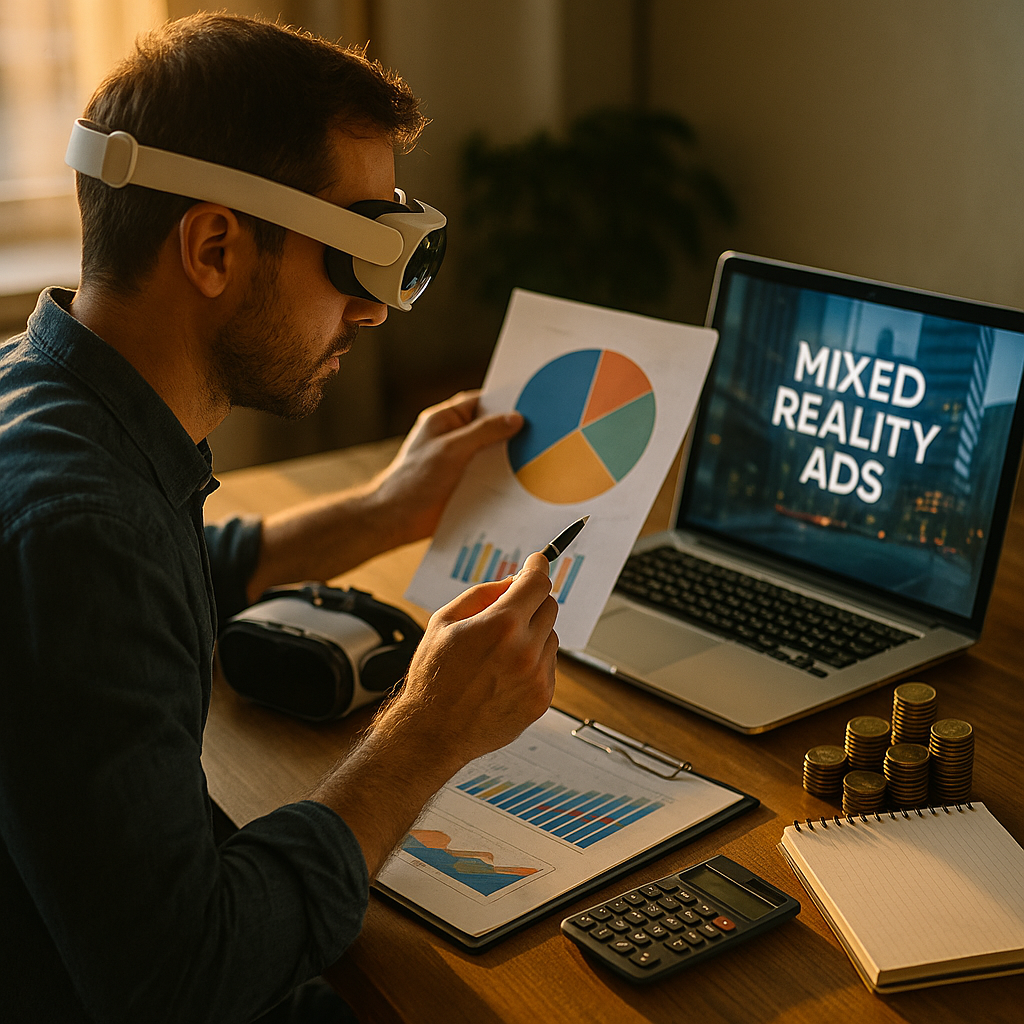
How To Budget For Emerging Immersive And Mixed Reality Ad Slots is becoming a practical skill in 2025 as brands test spatial placements across headsets, mobile AR, and in-world experiences. Pricing models vary, measurement is evolving, and production costs can surprise even seasoned teams. A clear budget framework keeps experimentation disciplined while still capturing upside—so what should you fund first?
Immersive advertising budget: define outcomes, inventory, and constraints
Before you price anything, lock down what “success” means for your business and what kinds of immersive inventory you can realistically access. Immersive and mixed reality ad slots span multiple surfaces, each with different cost drivers, creative requirements, and measurement maturity. A strong plan starts with three decisions: objective, environment, and operating constraints.
1) Choose a primary objective. Most immersive buys in 2025 fall into one of these buckets:
- Awareness and reach: Broad exposure in high-attention environments, often optimized to completed views, viewable impressions, or reach against a defined audience.
- Engagement: Interaction with 3D objects, mini-games, or try-ons; optimized to dwell time, interaction rate, or completed actions.
- Performance intent: Lower-funnel behaviors such as store visits, add-to-cart, lead capture, or app installs—usually requiring tight instrumentation and realistic attribution expectations.
2) Map the inventory types you can buy. Budgeting is easier when you group placements by how they are sold:
- Programmatic XR/AR formats: When available, these behave more like digital display/video with XR-specific viewability and interaction signals.
- Direct IO / sponsorships: Custom placements in games, social worlds, events, live streams, or platform takeovers. These often bundle media + production + integration.
- Retail and location-based AR: In-store or on-premise activations with a mix of media cost and operations cost.
3) Establish non-negotiables. In emerging ecosystems, the cheapest plan can become expensive if it fails privacy, brand safety, or accessibility requirements. Document your constraints early:
- Privacy and consent: What user data can be collected, stored, and shared?
- Brand safety: Which environments are allowed, and what content adjacency rules apply?
- Platform and device coverage: Headset-only, mobile AR, or both?
- Creative and legal approvals: Who signs off, and how long will it take?
This section answers the key follow-up: “Is it too early to set KPIs?” No. In fact, budgeting without explicit KPIs is the fastest way to overspend on novelty and underfund measurement.
Mixed reality media planning: forecast costs across pricing models
Mixed reality media planning requires budgeting for how inventory is priced, not just how much inventory you want. In 2025, you will see multiple pricing models in the same plan, and each one changes risk and pacing.
Common pricing models you may encounter:
- CPM (cost per thousand impressions): Familiar, but ensure the definition of “impression” is clear in spatial contexts (viewable, audible, time-in-view).
- CPV / completed view: Often used for immersive video or interactive story units.
- CPE (cost per engagement): Typically tied to defined interactions (grab, rotate, place, tap-to-try).
- Flat sponsorship fees: High predictability, but requires careful value benchmarking (expected reach, minimum guarantees, make-goods).
- Hybrid deals: A base sponsorship + performance kicker, or a media spend commitment plus creative integration fee.
Budgeting tip: Build your forecast in two layers. First, estimate delivery (impressions, views, interactions). Second, estimate value (brand lift, leads, sales). Keep them separate so you do not “force” ROI assumptions into delivery math.
How to benchmark when rate cards are inconsistent:
- Normalize to attention: Ask for average time-in-view, dwell time, or interaction rate, and compare on “cost per engaged second” or “cost per interaction,” even if you still buy on CPM.
- Demand placement detail: For in-world placements, request coordinates/scene context, average session length, and frequency capping rules.
- Price the risk: If measurement is limited, negotiate minimum delivery guarantees and make-good clauses.
Follow-up question answered: “Should we buy programmatic or direct?” If you need speed, standardized reporting, and test-and-learn iteration, start where programmatic inventory is credible. If you need cultural relevance, custom experiences, or platform-level support, budget for direct buys—but treat them like partnerships with clear deliverables.
XR ad slot pricing: plan for creative, integration, and QA
XR ad slot pricing rarely equals “media only.” Many teams underestimate the total cost to launch because immersive placements often require 3D assets, interactive logic, and platform-specific QA. Your budget should separate reusable asset investment from placement-specific adaptation.
Cost buckets you should include:
- Concept and experience design: User journey, interaction model, and fail states (what happens if tracking fails or the user skips?).
- 3D asset creation or adaptation: Product models, environments, textures, lighting. If you have CAD files, allocate time for optimization rather than rebuilding from scratch.
- Animation and interaction: Rigging, physics, haptics, spatial audio, hand tracking or controller support.
- Engineering/integration: SDK implementation, event tagging, deep links, commerce connectors, or lead capture.
- QA across devices: Performance, comfort (motion sensitivity), occlusion issues, lighting variance in AR, and accessibility checks.
- Compliance and approvals: Platform policies, legal, claims substantiation, and privacy notices.
Reusable asset strategy (saves money fast): Create a “3D master kit” once—core product model(s), materials library, and interaction components—then budget smaller amounts for each new placement. This shifts spend from repeated production to scalable iteration.
Set comfort and performance requirements up front: If your experience causes discomfort or stutters, you pay twice: once to build it, and again to fix it after launch. Require performance targets (frame rate, load time, polygon budgets) in your scope.
Follow-up question answered: “Can we repurpose existing video creative?” Sometimes for immersive video units, yes. But for true mixed reality, expect at least some new production. Budget for a minimum viable interactive version first, then expand if metrics justify it.
Immersive campaign measurement: fund instrumentation and lift studies
Measurement is where immersive budgets succeed or fail. In 2025, you should expect strong engagement signals (views, time, interactions) but variable conversion attribution depending on platform, device, and privacy settings. Budgeting for measurement means paying for the right tools and setting realistic evaluation windows.
Core measurement layers to include:
- Platform reporting: Impressions, viewability, completion, interactions, dwell time. Validate metric definitions.
- Event instrumentation: Custom events like “place object,” “try color,” “open size guide,” “save look,” or “share.” Ensure consistent naming and QA.
- Brand lift or attention studies: Especially for upper-funnel. Budget for a statistically valid sample and clear hypotheses (e.g., ad recall, consideration).
- Incrementality testing: Geo-holdouts, audience split tests, or matched market tests when feasible. This reduces over-crediting last-click signals.
- Offline linkage (if relevant): Store visits or POS lift, but only when consent, governance, and methodology are sound.
Budget rule: Allocate a dedicated measurement line item rather than “hoping analytics is free.” For new formats, measurement often requires additional setup time, vendor support, and research spend. If you do not fund it, you cannot confidently scale.
Define leading indicators for early optimization. Don’t wait for sales data to decide if the creative is working. Track:
- Interaction rate: Are users engaging at all?
- Dwell time distribution: Are most users leaving immediately or staying meaningfully?
- Drop-off points: Which step in the experience causes exits?
- Quality signals: Repeat interactions, saves, shares, or opt-ins.
Follow-up question answered: “What if we can’t attribute conversions?” Then budget for lift and incrementality, and treat immersive as a high-attention channel evaluated like premium video or experiential—while still capturing any measurable downstream actions you can reliably track.
AR/VR ad spend allocation: use a phased test-and-scale budget
AR/VR ad spend allocation works best when you structure your budget like an investment portfolio: a stable base, controlled experiments, and reserved capacity for what wins. This keeps you from underfunding learning or overcommitting before you understand performance.
A practical phased structure:
- Phase 1 — Feasibility test: Small spend to validate inventory access, technical feasibility, and baseline engagement. Keep scope tight and timelines short.
- Phase 2 — Optimization sprint: Increase spend modestly and test creative variants, audiences, and placements. Focus on instrumented learning, not perfection.
- Phase 3 — Scale or redirect: Concentrate budget on the placements and creative mechanics that hit your KPI thresholds. Negotiate better rates using evidence.
Suggested budget splits (customize to your risk tolerance):
- 60–70% core execution: Your best-known placement(s) and creative approach to ensure meaningful delivery.
- 20–30% experimentation: New formats, new platforms, or new interaction mechanics with clear hypotheses.
- 10% measurement and contingency: Lift study, extra QA, make-goods coverage, or rapid creative fixes.
Plan for operational reality. Immersive timelines can slip due to platform approvals, device testing, or asset revisions. A contingency reserve avoids cutting measurement or rushing QA—two decisions that reduce trust in results.
Vendor and partner selection affects budget efficiency. Choose partners who can show:
- Proven delivery and reporting: Sample reports and clear metric definitions.
- Transparent creative scope: What is included vs. billed separately.
- Security and privacy posture: Data handling, retention, and consent practices.
- References and case evidence: Recent examples in similar categories, with honest constraints.
Follow-up question answered: “How do we avoid wasting spend on novelty?” Require a hypothesis for every experiment (what you expect to learn), predefine the success threshold, and stop funding variants that don’t clear it.
FAQs
What is the biggest hidden cost in immersive and mixed reality ad slots?
QA and integration are frequent surprises. Cross-device testing, performance optimization, and platform compliance checks can expand scope if they are not priced into the plan from the start.
How much budget should go to creative versus media?
For early-stage immersive programs, creative and technical production can be a significant share because assets and interactions are not always reusable yet. As you build a 3D asset library and repeatable templates, the balance typically shifts toward media.
Are sponsorships worth it compared to CPM buys?
Sponsorships can be worth it when they deliver guaranteed visibility, strong contextual fit, and bundled integration support. Treat them like partnerships: insist on delivery guarantees, reporting detail, and clear make-good terms.
What KPIs should we prioritize if conversions are hard to measure?
Prioritize interaction rate, dwell time, completed views, and brand lift metrics such as ad recall and consideration. Pair these with incrementality testing where possible to assess real business impact.
How do we keep privacy compliance when using spatial or biometric signals?
Start with data minimization: collect only what you need, prefer on-device processing when possible, and ensure clear user disclosures and consent flows. Confirm vendor data retention and sharing policies before launch.
How long should an immersive test run before we judge results?
Run long enough to reach stable delivery and a meaningful sample for your primary KPI. For lift studies, ensure the study design reaches statistical validity; for optimization, wait until performance stabilizes after early learning effects.
Budgeting for immersive and mixed reality ad slots in 2025 comes down to disciplined planning: define outcomes, price inventory by how it’s sold, and fund production plus measurement as first-class line items. Use a phased approach that protects learning while reserving spend for what performs. When you separate experimentation from scale and measure what matters, immersive becomes a controllable growth channel.